
We ease into the evening almost on tiptoe. The music is so quiet that I find myself leaning forward, ears on full alert, trying to catch the timpani and cellos as they introduce themselves with little musical snippets.
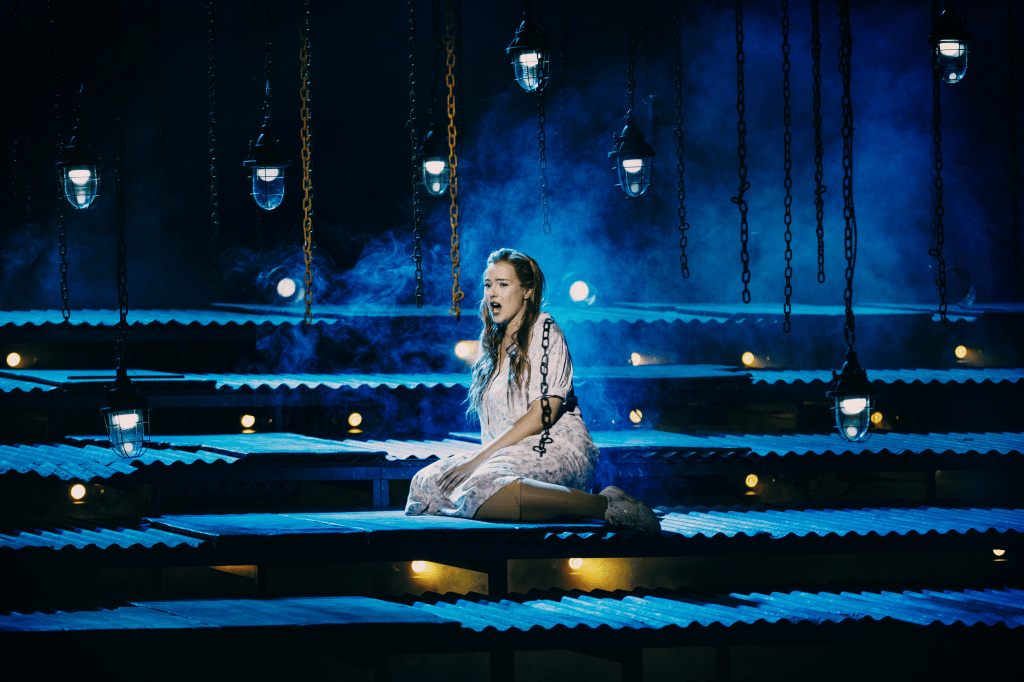
On stage, we follow the same couple on a tour through life: falling in love, having a baby, growing old together – and then, suddenly, there’s just the man, standing all alone with a white rose. Talk about a lifetime in fast-forward! Is this Rusalka dreaming up her very own happily-ever-after with the prince? Cute. Although that final image is giving slightly ominous vibes…
The water nymph, Rusalka, is head over heels and ready to get her feet wet in the human world. All she wants is a pair of legs and a shot at true love. But the witch Ježibaba doesn’t hand out legs for free: Rusalka must give up her voice in return. So she’s got a chance to land her prince – but she’ll have to do it without saying a word. The prince may have to judge this book by its cover, after all.
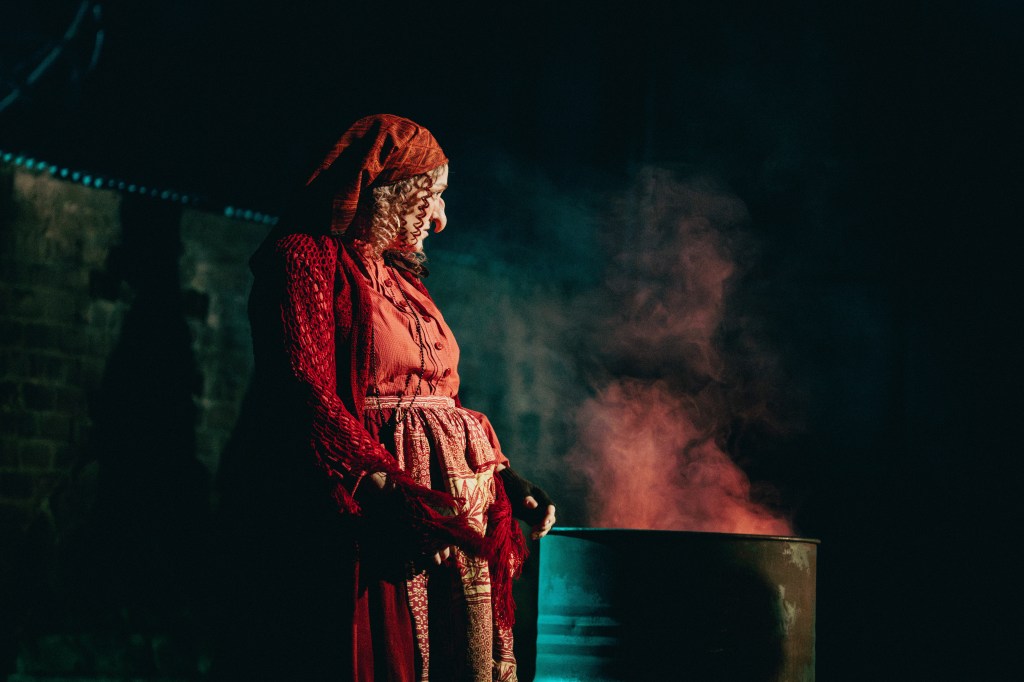
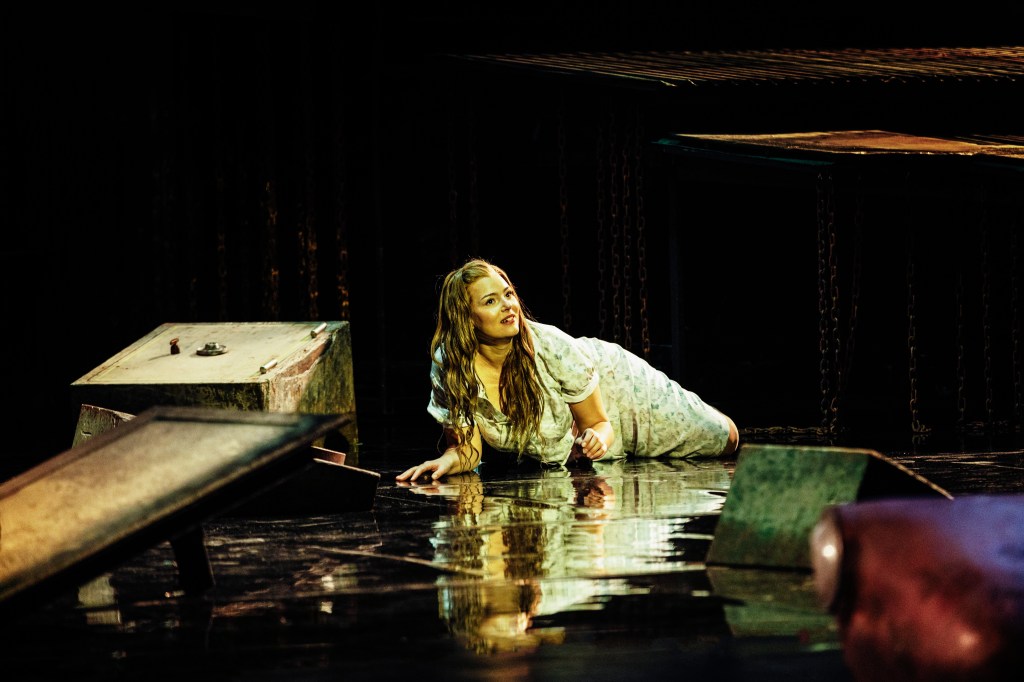
Irish director Orpha Phelan drops us straight into a pond filled with washing machines and discarded household appliances. Rusty odds and ends are scattered around the water, and at the very end of the sewer, Ježibaba has made herself at home.
Ježibaba is dressed in devilish red – a colour that practically screams danger, desire and damnation. Rusalka, meanwhile, is wrapped in green, blending right in with the murky waters she calls home. The two colours sit opposite each other on the colour wheel, and the contrast is hard to miss. But there’s more going on than just a clever colour scheme. When Rusalka finally ditches the green to become human, she also sheds the colour of her old life. Out with the green, in with the legs – but is the grass really greener on the other side?
This production marks Swedish soprano Matilda Sterby‘s first outing as Rusalka. Her lyric soprano has a lovely, full-bodied sound, and her chest voice is convincing. There is plenty to like, even if the performance occasionally feels a little too carefully controlled, as though she’s keeping her cards close to her chest. Still, I get the feeling this is a role she could grow into.
Wagner in the Water?
When the other water nymphs start singing, you might want to check your programme: no, the Norns from Wagner’s Götterdämmerung haven’t accidentally wandered onto the wrong stage. And when we later arrive at Ježibaba’s lair, we’re not in Fafner’s cave – even if the tuba and those rumbling low strings sound as though they’ve come straight from a Wagnerian dragon’s basement. Dvořák has clearly been listening closely to Wagner, borrowing from his musical language and his approach to orchestral writing.
But despite all the Wagnerian rumblings, the orchestra never quite lets loose. Everything is played rather nicely – perhaps a little too nicely. I kept waiting for the music to bare its teeth, get its hands dirty and really go for the jugular. Instead, it occasionally plods along, with the tension fizzling out before it has a chance to catch fire. I also missed a proper musical high point, something to make me sit up and think: THERE it is! The final stretch brings the biggest blast of sound, but even then, I was left waiting for the roof to come off.
Was Dvořák Woke Before It Was Cool?
Rusalka is one of those rare operas where it’s the man who ends up dead. Did Dvořák and his librettist, Jaroslav Kvapil, somehow see the feminist movement coming?
Before the prince meets his rather unfortunate end, however, we get to enjoy Swedish tenor Joachim Bäckström‘s ringing voice. There’s plenty of substance and core to his sound, and as long as he doesn’t venture too far up the vocal ladder, his voice is powerful, rich and downright pleasing to the ear. This is also his first outing as the Prince.
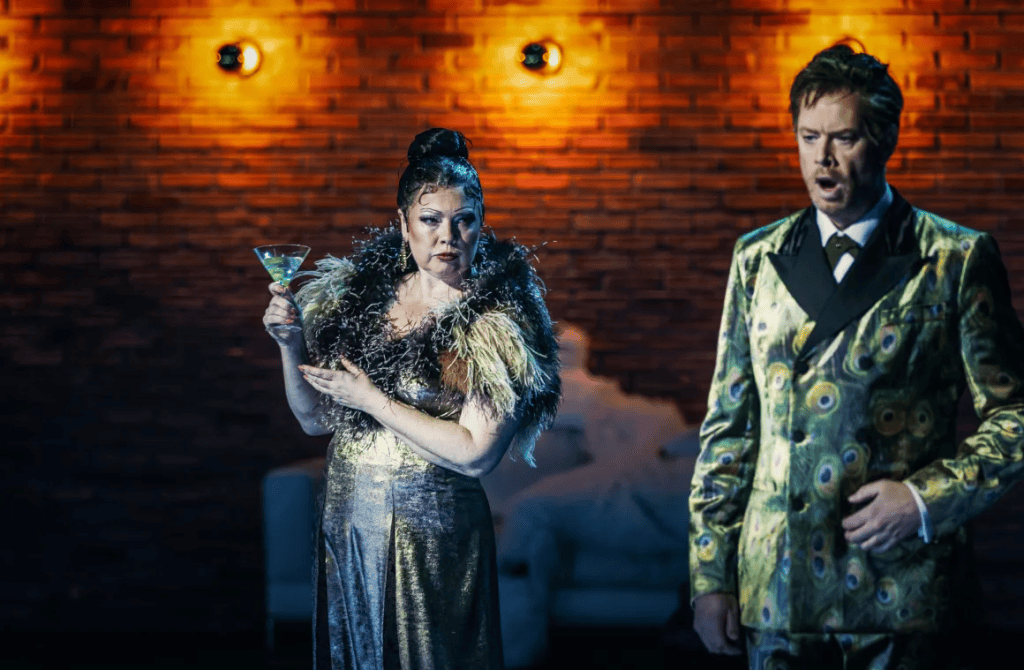
High Notes And Low Tides
Alexander Roslavets brings a dose of warm milk to Vodnik, particularly in the more lyrical passages, where his voice reveals the softer, more tender side of the water spirit. Things get a little murkier at the very bottom of his register, though. Rather than the cavernous, rumbling bass one might expect from someone living underwater, the sound occasionally turns broad and somewhat hollow, losing its colour. He also has a bit of a hard time keeping his head above the orchestra, which sometimes threatens to swallow him whole.
Katarina Karnéus gives us glimpses of the wicked witch we came for. When she lets loose, there’s real personality, bite and a wonderfully witchy edge to her Ježibaba. At other times, however, the magic seems to wear off a little, and her portrayal becomes somewhat more neutral. She also occasionally finds herself wrestling with the orchestra for a little breathing space.
We began with a whisper, with fleeting images of love and a rose held in solitude. And so the fairy tale comes to an end. Only, this is Dvořák, not Disney, and the waters of this particular pond are anything but calm. Rusalka gets her wish, but the price of love turns out to be rather steep. Yet she does get to hold him, kiss him and be close to him, if only for a moment. I wonder what goes through her mind in those final moments. Is she thinking about everything she’s lost, or simply enjoying the fact that, for once, she can hold the person she loves?
Fun Fact:
Rusalka means “water nymph” or “water spirit” in Czech.
Trailer:
Cast:
- Conductоr: Daniel Carter
- Directоr: Orpha Phelan
- Stаge Designer: Madeleine Boyd
- Сostume Designer: Madeleine Boyd
- Light Designer: Matthew Haskins
- The Prince: Joachim Bäckström
- Foreign princess: Oksana Kramareva
- Rusalka: Matilda Sterby
- Vodnik: Alexander Roslavets
- Ježibaba: Katarina Karnéus
- Gamekeeper: Rickard Söderberg
- Kitchen boy: Sidsel Aja Eriksen
- First wood nymph: Sara Swietlicki
- Second wood nymph: Kine Sandtrø
- Third wood nymph: Eugina Babich/Mathilda Bryngelsson
- Hunter: Timothy Augustin
- Extra: Annika Ronner, Ella Strandberg, Ella Dabäck, Malin Karlsson, Vidar Söderström, Vilmer Ericsson, Jakob Stierna, Nikolai Olof Rydberg
Malmö Operakör
Malmö Operaorkester
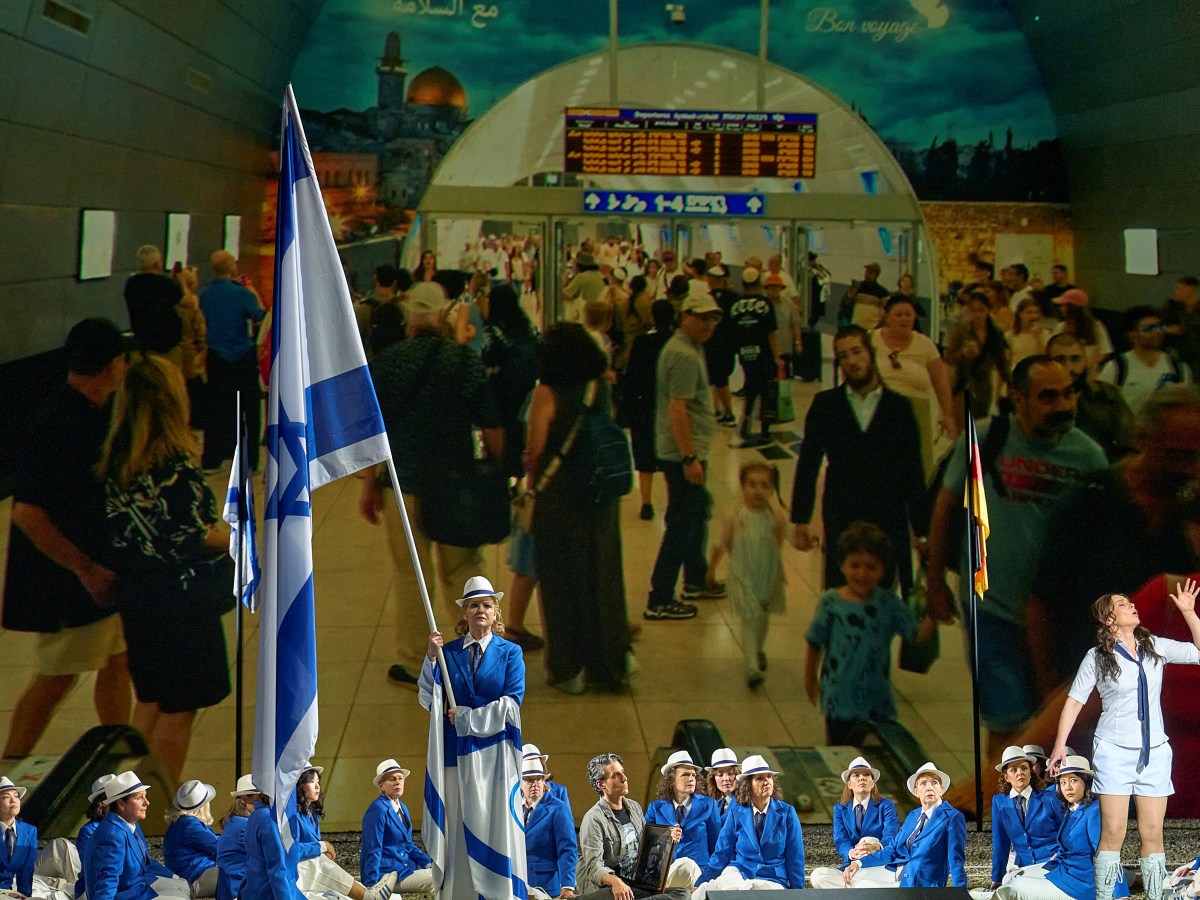
Der fliegende Holländer, Deutsche Oper Berlin 2026
Although the programme tells me I have just seen Wagner’s The Flying Dutchman, I’m not entirely convinced that I have. Well, the orchestra was playing Wagner, yes, and the singers were singing too, but most of the time, the music seemed to serve as little more than background noise. Swiss director Milo Rau has taken…

A World of Voices: Aleksi Barrière on the Making of Innocence, Interview
»But everyone’s smiling in the pictures.« says librettist Aleksi Barrière. Weddings are funny things. You spend a fortune on flowers, food and fancy outfits, only to have your tipsy aunt explain why you’re still single. In Kaija Saariaho’s opera Innocence, though, the problem is a liiittle bigger than drunk uncles and questionable speeches: a school…
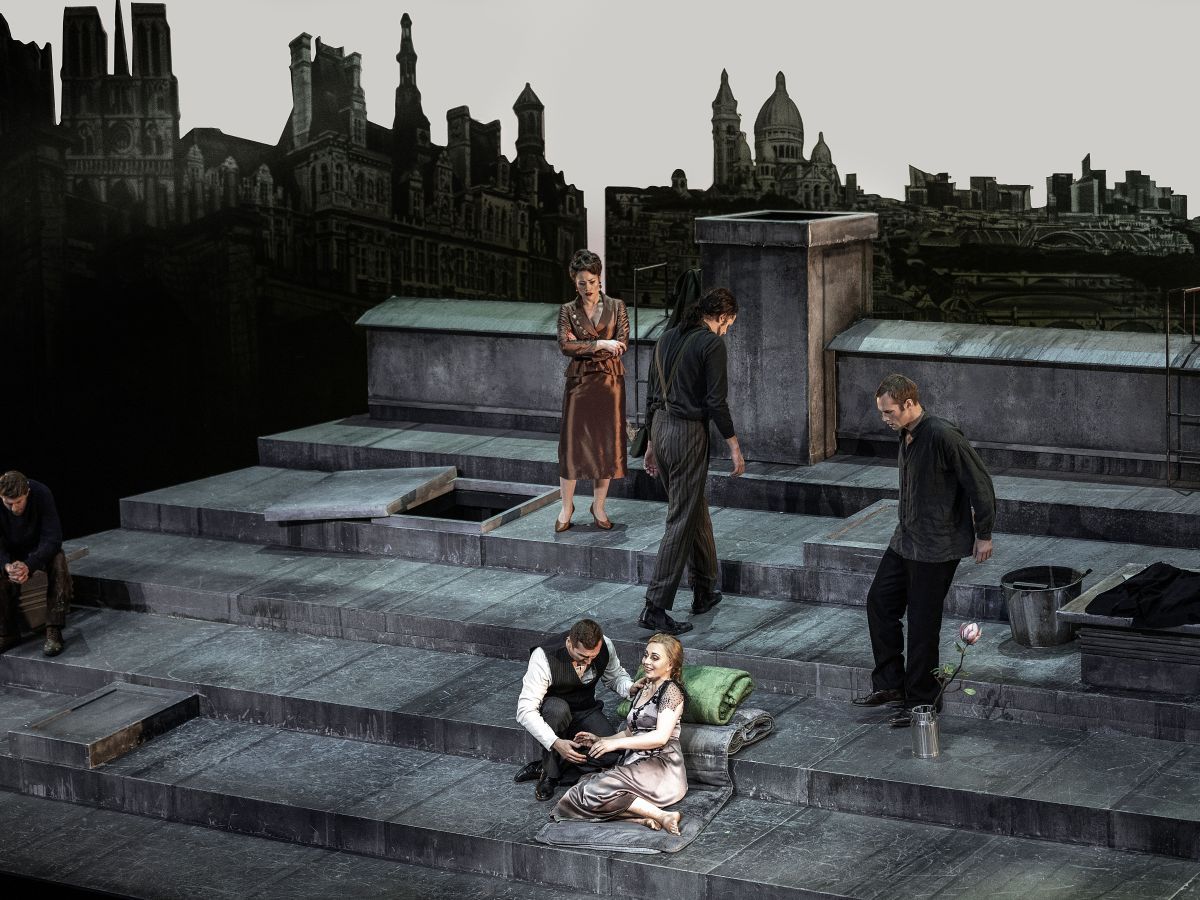
La Bohème, the Royal Danish Opera 2026
It’s freezing in Paris, the rent is due, and Rodolfo has run out of firewood. His solution? Burn his own manuscript. Act by act, his literary masterpiece (perhaps?) goes up in flames. So much for a promising literary career. It’s a tough world for a struggling artist, where even your best work might be worth…

