
Did someone say Poulenc? At the Semperoper? For the first time ever with Dialogues des Carmélites? Yes, you heard that right. The French composer’s second opera has found its way to Dresden, in a production directed by Dutch Jetske Mijnssen.
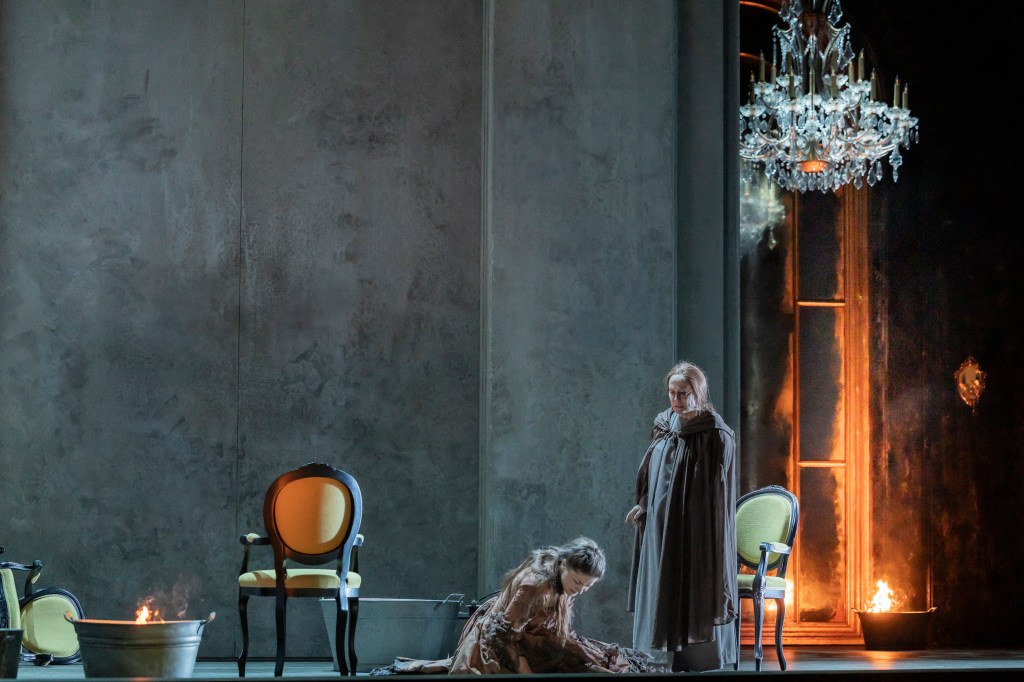
The prelude is silent. Curtain up. Blanche is already there, standing alone in a wide, almost empty space. The floor is bare (except for the chair). The light is flat and cold. Grey walls rise around her. Tall and close. No windows, no doors, no way out.
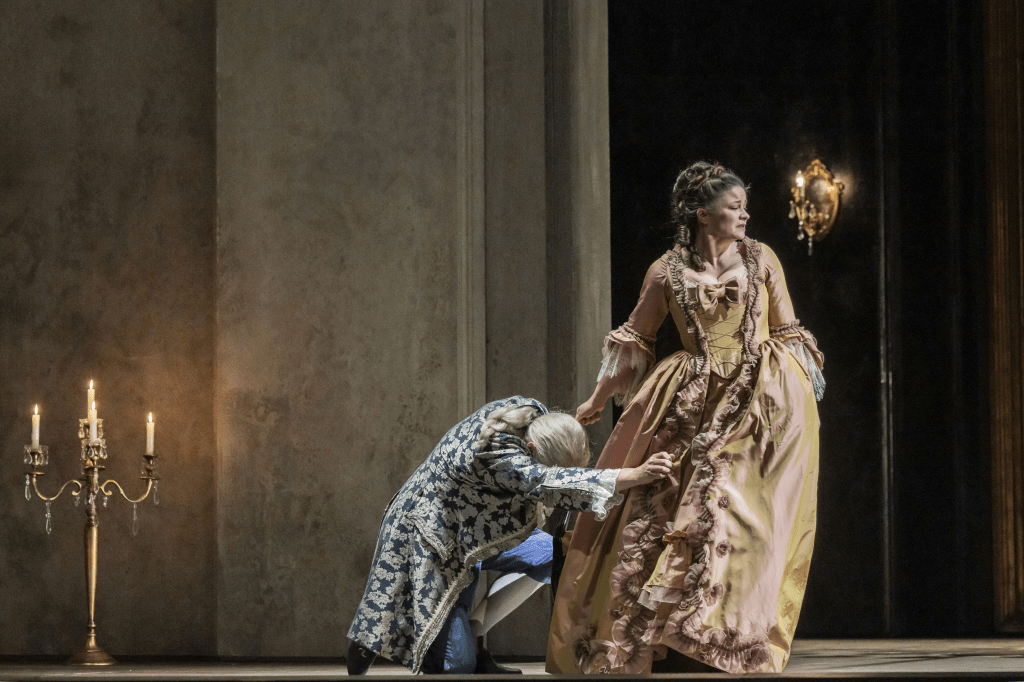
Time-wise, we’re at war. Or at least the French are. We’re dropped straight into the late 1700s, right in the thick of the French Revolution. How do I know? Just take a look around: the long hair that could easily pass for wigs, the knee-high stockings pulled up to three-quarter-length velvet pants, and, of course, those unrealistically broad hips.
None of this is random. The whole opera is rooted in real events. And at this point in history, being a nun wasn’t just unpopular – it was illegal. Bad timing, really. But that doesn’t stop Blanche and her sisters. Instead, they go underground. Quiet prayers, shared routines, convent life carried behind closed doors. Even as their prioress, Madame de Croissy, falls ill and edges closer to death. She is, after all, fifty-nine, which, according to one of the nuns, means it might simply be her time.
And just as she collapses (yes, sorry about the spoiler), the room drops dead quiet. Or at least, it should have. A phone starts ringing exactly at the moment the silence is meant to settle in. Perfect timing. Damn it!
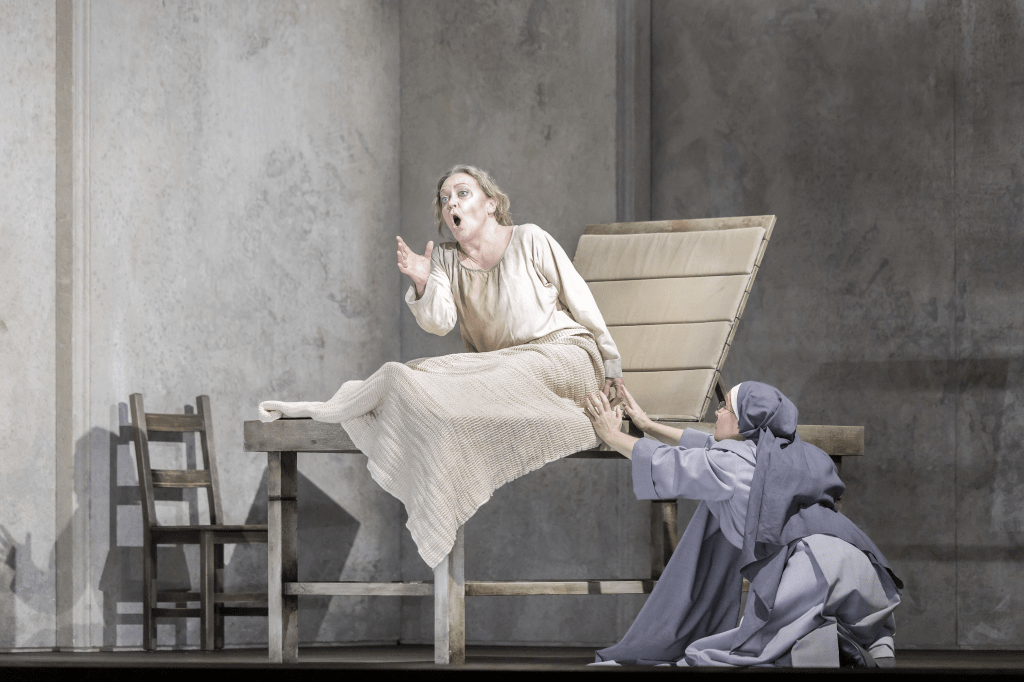
Evelyn Herlitzius. If there’s one thing to say about her, it’s this: her acting is huge, and somehow still strong. Madame de Croissy is sick. Really sick. She’s dying, for heaven’s sake. So, hands go straight to the face, pulling and twisting the skin. She throws herself onto the floor, over the table, all of it. A proper drama queen. Clearly not doing well.
Unfortunately, the same goes for her voice. At least in this role. At times, the part sits right around passaggio, and the wide melodic leaps force her to jump quite audibly between registers. You can hear the timbre changes. It is clear that she can sing quite well. Also in the lower register, where she carries a cool colour.
I Kept Thinking: Would I Have Guessed This On My Own?
That the entire production is really a flashback, filtered through Blanche’s eyes. That would explain why, across all three acts and all twelve tableaux, we never leave the grand grey walls. Every now and then, a door pops up. Sometimes a big window or a small cell window. That’s about it. Blanche never leaves her past. She’s stuck inside it. And as her brother says, she’s not just afraid of the world, she fears the fear.
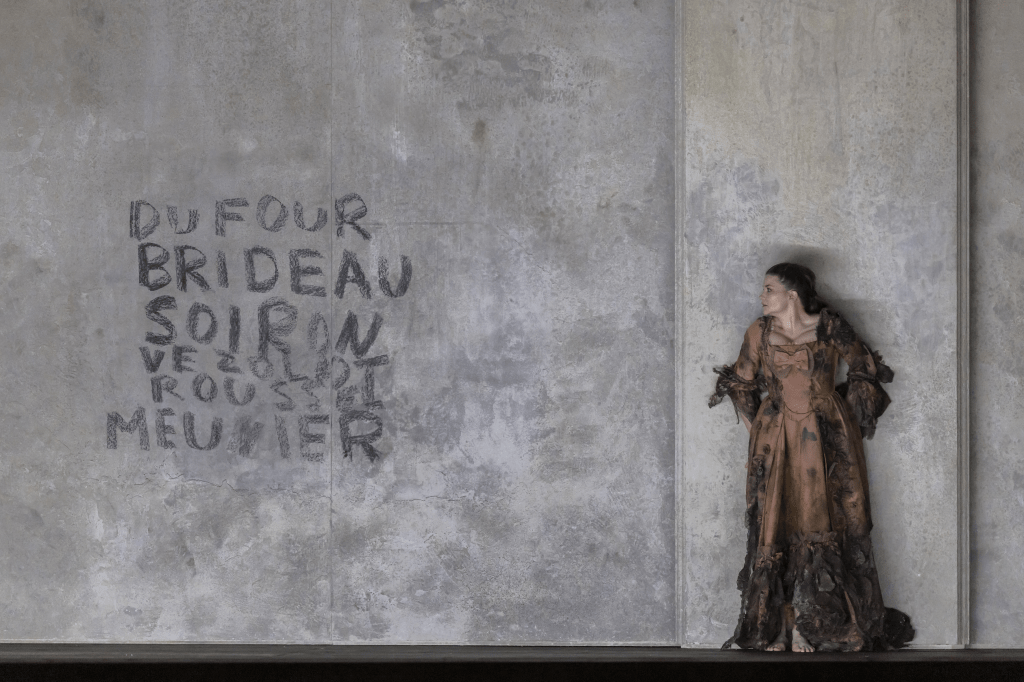
Let Me Tell You How It Was
Dialogues des Carmélites was first staged at La Scala in January 1956 (in Italian) and only a few months later in Paris, in French. So even though the opera is actually quite “new,” its musical language leans in a more tonal direction, drawing on a range of older techniques.
If there’s one thing Francis Poulenc is especially loved for, it’s his chamber music – particularly for winds. You can really hear that here. It’s in the writing, the colours, the way the music breathes.
While Marie Jacquot conducts with a clear and tidy beat, and the orchestra plays together with solid rhythmic focus, the overall sound of Sächsische Staatskapelle doesn’t quite bloom the way it usually does. It must also be demanding for the wind players, given how much they are asked to play.
What does sound striking, though, are the bells. From the top balcony, they ring and swell, drifting through the hall, a distant call, a churchly spell.
At Times, It Felt Like I’d Been Dropped Into A Supermarket
Edeka, maybe? You know that vague background music you hear but never really notice? That’s the feeling I had with the singers now and then. You could just about sense they were there. Especially in parts of the first act, it was hard for them to cut through – even though you’d think those metre-high walls would work in their favour. And to be fair, it’s not easy to hold the orchestra back when, at times, their part is simply more interesting.
That’s, of course, not always the case. Especially when Blanche tells her brother that she’s not going anywhere. The Finnish soprano Marjukka Tepponen sings with clear control, particularly in her subito pianos (full sound, then suddenly soft).
Campbell Wallace and Julie Boulianne, as Madame Lidoine Sinéad and Mère Marie, also come bearing gifts, filling the room with plenty of vocal treats.
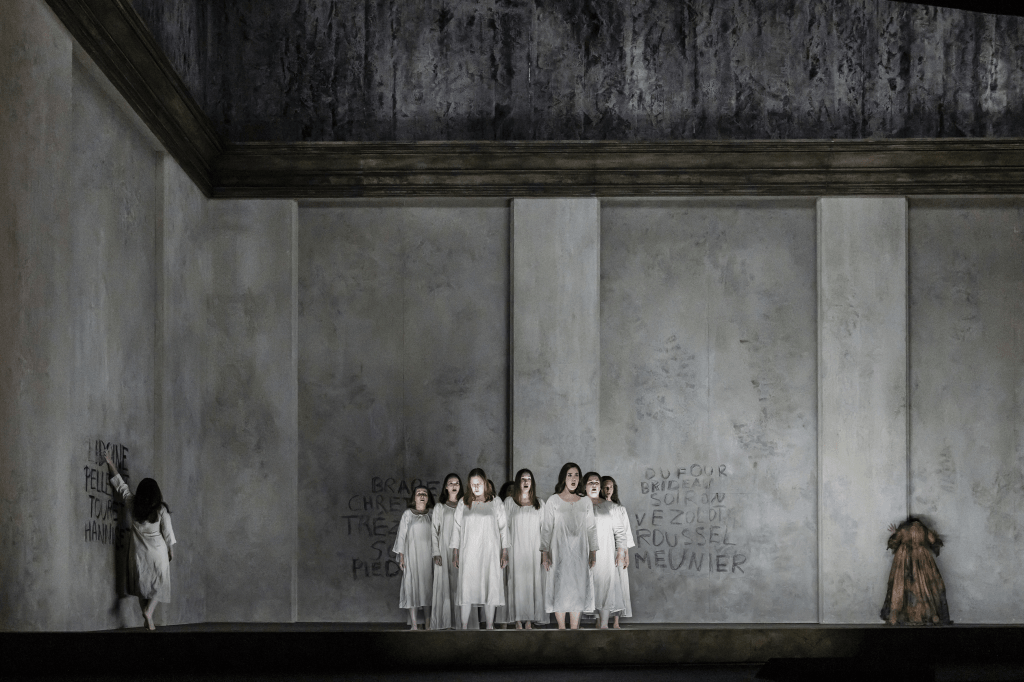
In the final scene, fifteen nuns stand pressed together, fused into a single, silent mass. Blanche watches from the side, unable – or unwilling – to step closer. They begin to sing Salve Regina – music that could have been torn straight out of Poulenc’s Stabat Mater.
Then the blade is heard.
The guillotine cuts through the music. Once. Then again. A hard, chopping sound. With each strike, one nun lowers her head and leaves. Both mentally and physically. The singing starts to fray, fade, and fall, voice by voice, call by call.
And in the end, there is only Blanche. One final cut. Then everything goes dark.
(Fun) Fact!
This opera isn’t just drama on a stage: In 1794, sixteen nuns turned history’s page. They kept their faith, refused to resign. As they were led to their execution, they sang together in one line – among the hymns was Salve Regina, the very text Poulenc later uses in his opera.
Cast:
- Conductor: Marie Jacquot
- Staging: Jetske Mijnssen
- Set Design: Ben Baur
- Costume Design: Gideon Davey
- Choreography: Lillian Stillwell
- Lighting Design: Franck Evin
- Choreinstudierung: Jan Hoffmann
- Dramaturgy: Kathrin Brunner, Dorothee Harpain
- Le Marquis de la Force: Michael Kraus
- Blanche: Marjukka Tepponen
- Le Chevalier: Julien Dran
- Madame de Croissy: Evelyn Herlitzius
- Madame Lidoine Sinéad: Campbell Wallace
- Mère Marie: Julie Boulianne
- Sœur Constance: Rosalia Cid
- Mère Jeanne: Michal Doron
- Sœur Mathilde: Nicole Chirka
- Beichtvater: Simeon Esper
- First commissioner: Jürgen Müller
- Second commissioner: Vladyslav Buialskyi
- Jailer: Martin-Jan Nijhof
- Officer: Anton Beliaev
- Thierry: Yu He
Sächsischer Staatsopernchor Dresden
Sächsische Staatskapelle Dresden
A production of the Zurich Opera House
- Innocence, The Royal Danish Opera 2026
- Die Walküre, Hamburgische Staatsoper 2026
- Werther, The Royal Danish Opera 2026
- Macbeth, Royal Danish Opera 2026
- Tosca, Opera Hedeland 2026
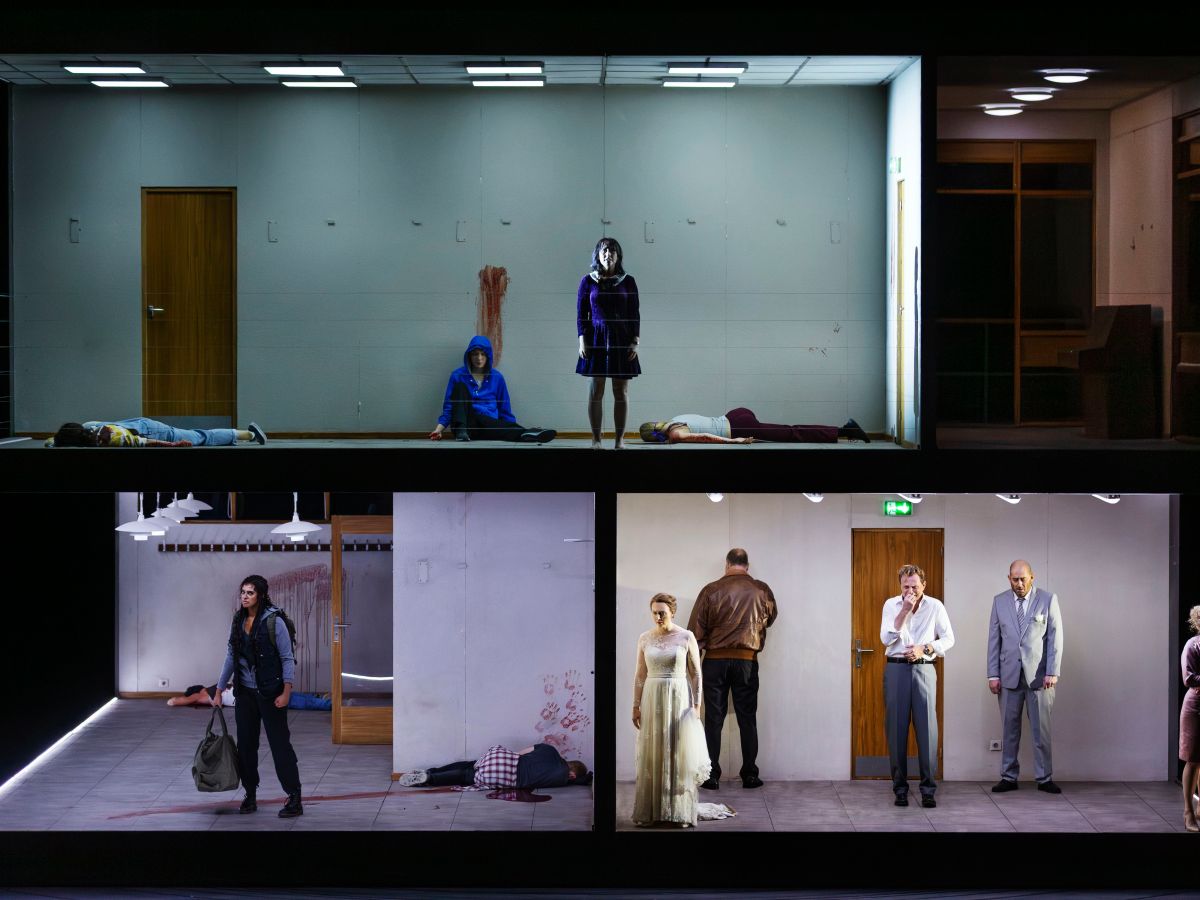
Innocence, The Royal Danish Opera 2026
Guilt is a funny thing. You don’t have to pull the trigger to be caught in the aftermath. Sometimes, simply being there – or being related to the person who did it – is enough. We like to think we’re innocent. But scratch the surface, and who knows what you might find? In Kaija Saariaho’s…

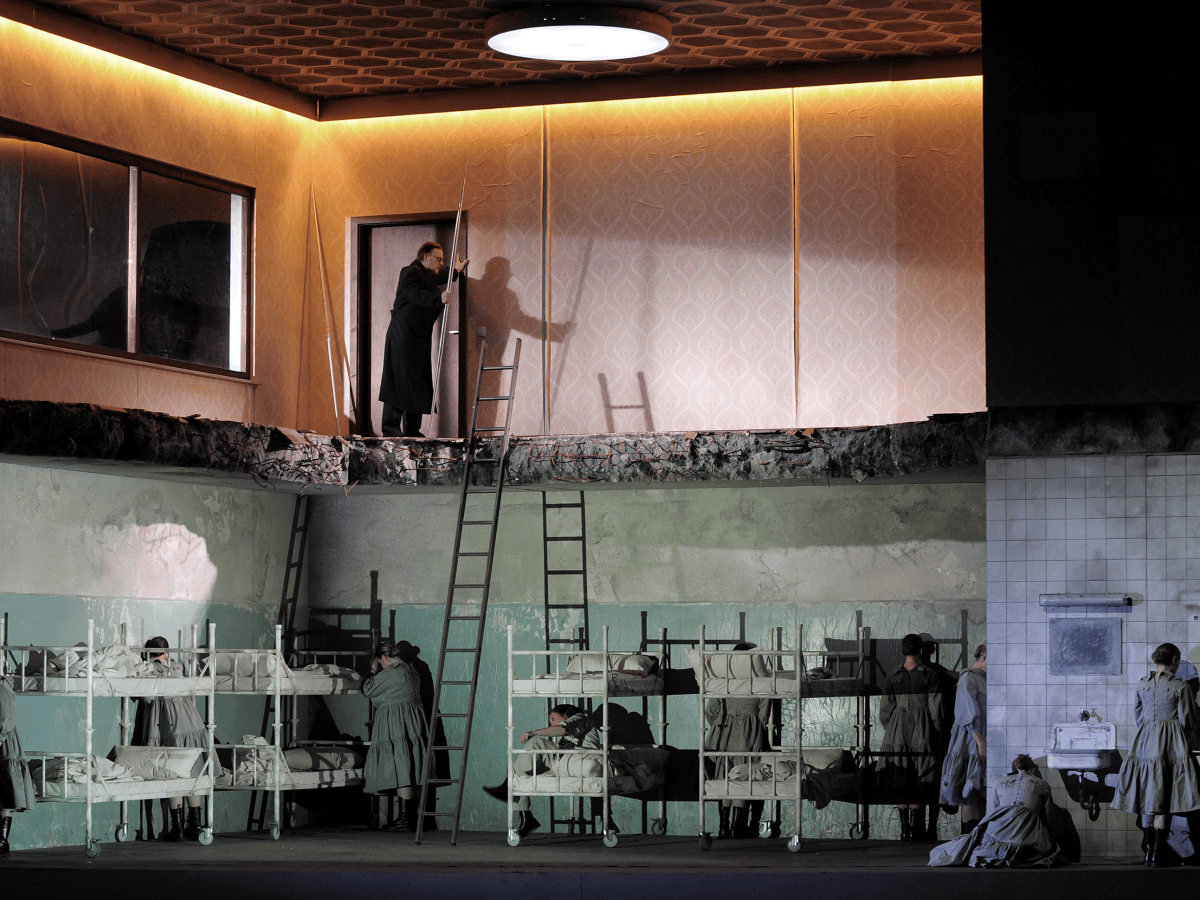
Die Walküre, Hamburgische Staatsoper 2026
How much control do we really have over our own lives? We make decisions, change our minds, take wrong turns and tell ourselves that, ultimately, we are the ones behind the wheel. But what if the steering wheel isn’t really ours to begin with? In Claus Guth’s now 18-year-old production of Die Walküre, control is…
Werther, The Royal Danish Opera 2026
Werther you like it or not, doomed love is back on the menu. Think Tristan and Isolde, but with the drama dialled down a notch. The music is a little Wagner, a little Puccini – just without the same oomph. Chief conductor Marie Jacquot keeps the orchestra on its toes, steering the whole thing with…


