
Guilt is a funny thing. You don’t have to pull the trigger to be caught in the aftermath. Sometimes, simply being there – or being related to the person who did it – is enough. We like to think we’re innocent. But scratch the surface, and who knows what you might find?
In Kaija Saariaho’s Innocence, premiered just five years ago, a school shooting from a decade earlier casts a long shadow over a wedding celebration. Saariaho, who died in 2023, and librettist Sofi Oksanen leaves us with a deceptively simple question: how innocent can anyone really be?
The music starts way down in the depths, with a dark, rumbling note in the double basses and contrabassoon. Above it, the piano cautiously makes its way upwards, note by note. More instruments gradually join in, the sound grows thicker, and the tension slowly builds. It’s as if something is lurking just beneath the surface, waiting to come out. And that is pretty much the atmosphere we find on stage, too. The characters have spent ten years trying to get on with their lives, but the past just won’t leave them alone. Going to work, catching a flight or going to the movie theatre should be perfectly ordinary things. For them, though, even the most mundane parts of everyday life are overshadowed by what happened that day.
The Bullet That Keeps on Killing
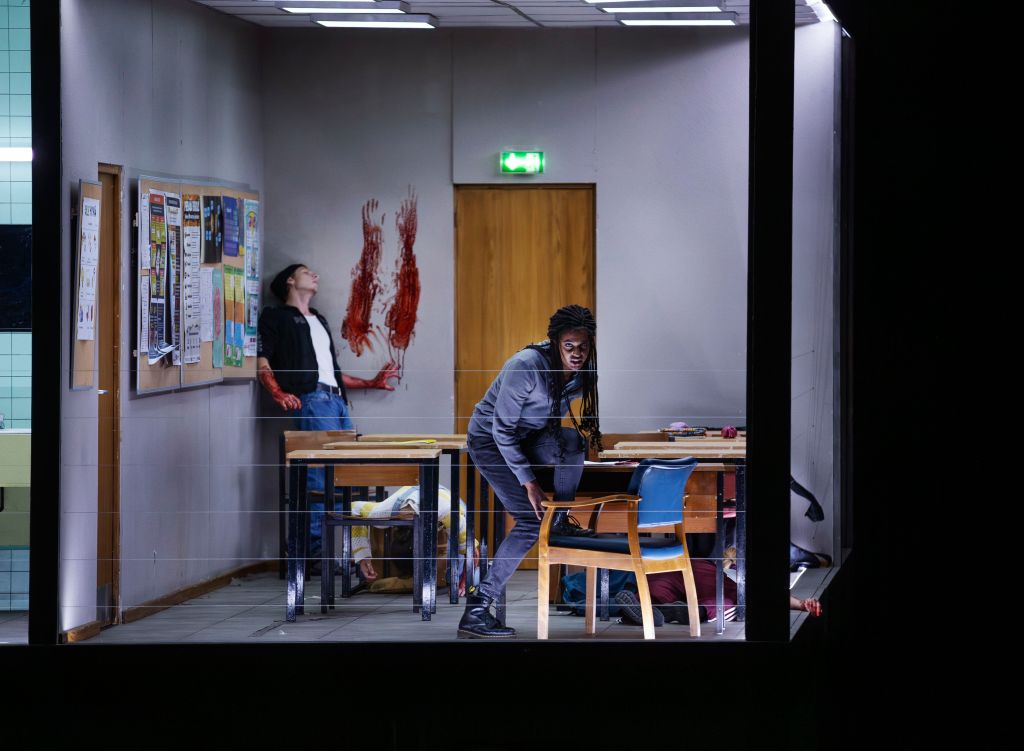
Ten years earlier, an ordinary school day shattered into a scene of slaughter when one of their classmates walked into the classroom with a gun, leaving ten students and one teacher dead.
The bullet may only strike those who die, but its impact reaches far beyond them, haunting survivors and families alike. How do you recover from losing a daughter? How do you live with the knowledge that your son was responsible for such a tragedy? And how can a student ever learn to trust other people again?
Set at an international school, Innocence brings together characters who speak different languages. They think primarily in their native tongues, while English becomes the language they use to communicate with one another (just like in the real world).
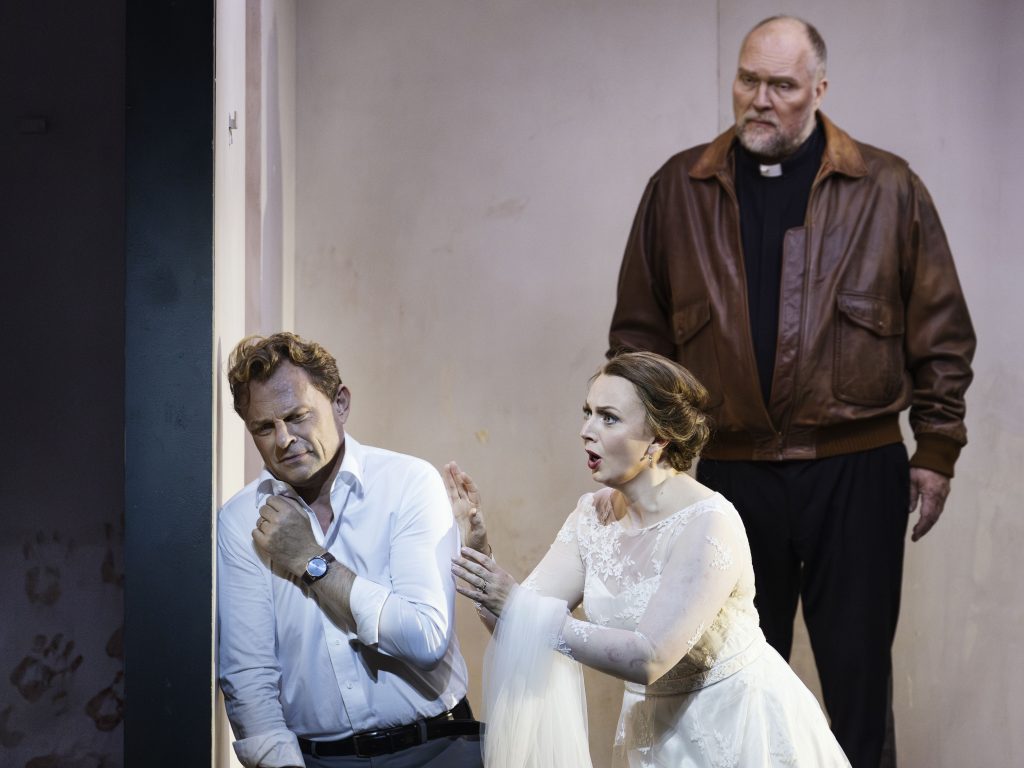
But the differences between them extend beyond language. Saariaho gives each character a distinct musical world, too. The teacher Cecilia, for example, inhabits a soundscape of choirs, bells and doom-laden timpani, reflecting the grief and emotional weight she carries. Tereza, the mother who has lost her daughter, seems to inhabit a world in which time itself has almost come to a standstill. The music barely moves forward, much like her life.
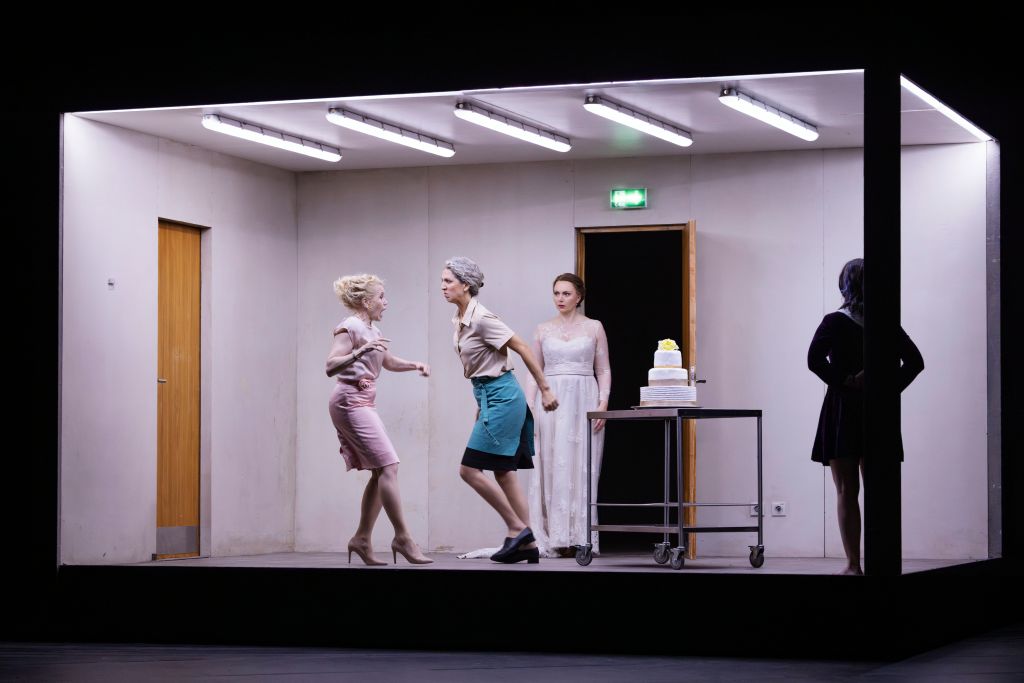
The groom’s mother, Patricia, is accompanied by descending glissandi in the orchestra. Saariaho often used such gestures in her music, describing them as something akin to sighing. And what is a sigh, if not the sound of someone overwhelmed, exhausted or at a loss for words? Patricia certainly has plenty to sigh about.
Her son, Tuomas, has just married Stela, who still believes the world is a rather simpler, sunnier place than it really is. But beneath the champagne and wedding bells, a dark family secret is waiting to crash the party.
Dead Flowers
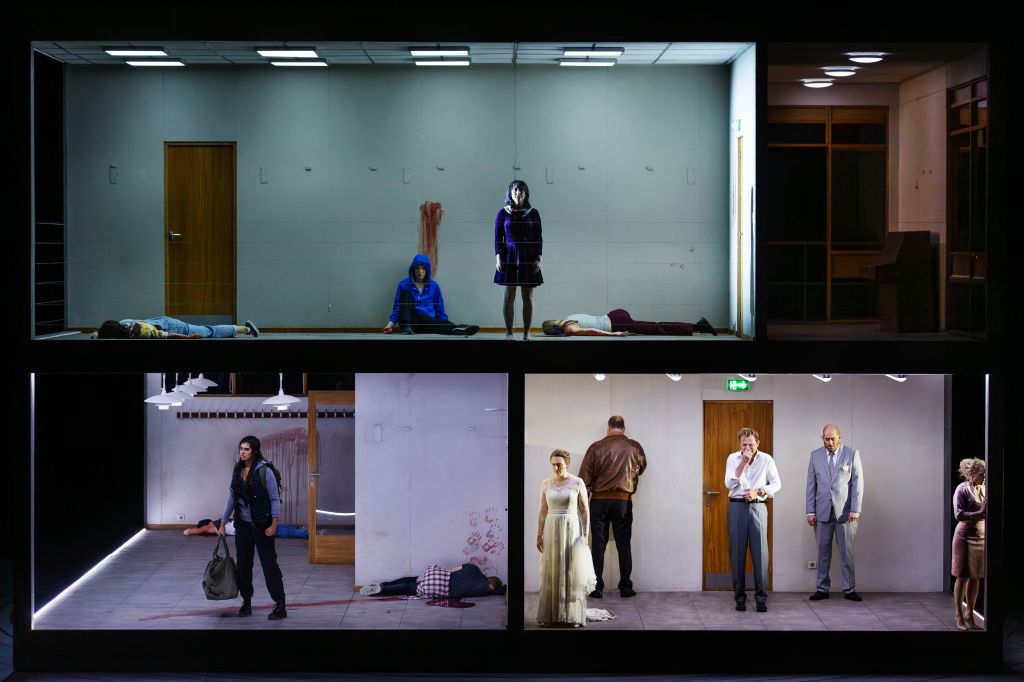
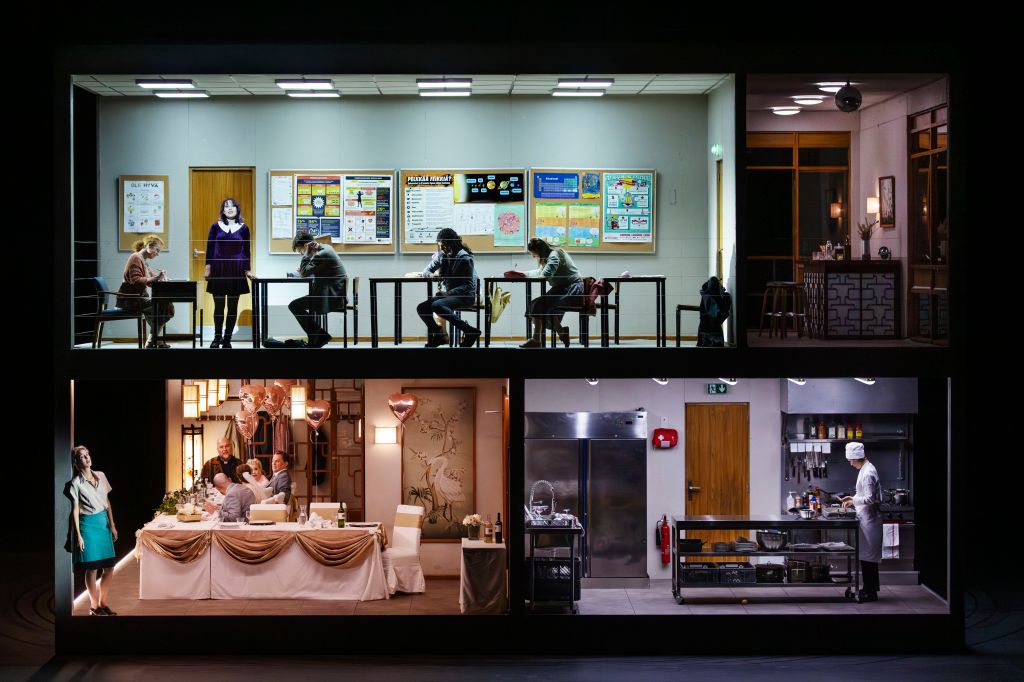
The revolving set features a two-storey house, with the wedding reception unfolding on the ground floor and something far darker looming overhead. The sign “Convallaria” identifies the luxurious Helsinki restaurant where the guests have gathered to celebrate. Yet the upper floor reveals fragments of the lives of the students who survived the school shooting. The past is literally hanging over the present.
Convallaria is Latin for lily of the valley, a delicate flower often associated with purity, innocence and renewal. The name conceals the opera’s title in plain sight, but the symbolism becomes bitterly ironic as the layers of the past are peeled back. Even the wedding, supposedly a celebration of new beginnings, is overshadowed by a tragedy that none of the characters can simply leave behind.
As the opera progresses, the restaurant sign gives way to the sign of the international school where the massacre took place. The two locations begin to merge, visually collapsing past and present into one another. The characters have gathered to celebrate a new life, but they remain trapped in the old one.
The Sound of Sorrow
Each character has a distinct musical signature, and the differences in language, rhythm and vocal technique create a variety of sound worlds. Some characters sing in a more conventional lyrical style, while others use rhythmic speech or Sprechstimme. Markéta, meanwhile, is associated with Finnish folk singing.
Finnish singer Erika Hammerberg brings a delicate vocal presence to Markéta, although I sometimes wished her voice was more amplified, giving her more space above the orchestra. Her upper register occasionally lacks the carrying power needed to cut through the instrumental texture. It is a shame, because the character’s musical world is an intriguing one, and most of the time she does a really good job.
Francine Vis brings out the grief of a mother who has lost her daughter, both vocally and dramatically. Mathilda Paulsson is equally convincing as the emotionally shattered teacher, allowing her singing to become almost painfully raw. At times, her expression borders on the ugly, but that is precisely what makes it effective. When grief consumes you, singing beautifully is hardly the point.
In the pit, Swiss-Australian conductor Elena Schwarz keeps the orchestra firmly in hand. In recent years, she has increasingly taken on larger orchestras, with a particular focus on contemporary music. In Innocence, Schwarz navigates the contrast between dense, dramatic textures and more stripped-back passages with a sure hand. The orchestra works closely with the singers, at times echoing or amplifying their voices, at others giving the music room to breathe.
At around one hour and 45 minutes, Innocence is an intense experience. The music rarely lets up, and while this creates a gripping atmosphere, it can also become somewhat monotonous. Fortunately, the opera knows when to call it a day. At three hours, all that intensity might have been exhausting; at 1 hour and 45 minutes, it stops just short of wearing out its welcome.
Innocence feels strikingly relevant to our time. Opera can sometimes lean towards the exaggerated or the implausible, but Saariaho’s characters feel recognisably human. I may not have experienced anything resembling their tragedy, but I can understand their reactions, their contradictions and their inability to move on. That is what makes the work so powerful: it does not simply ask who pulled the trigger. It asks what happens to everyone else afterwards. Perhaps audiences felt something similar when Mozart’s Le nozze di Figaro stirred up Europe’s simmering class tensions just a few years before the French Revolution. Both operas touch a nerve, exposing the cracks beneath the surface of an apparently orderly world.
For almost the entire opera, the characters remain trapped inside the box, prisoners of the past and their own emotions. Can they ever escape their guilt? And who, in the end, can really claim to be innocent?
Fun Fact!
When composing Innocence, Kaija Saariaho sometimes wrote just 15 seconds of music a day. To keep track of the bigger picture, she kept a detailed plan on her desk, mapping out the opera’s structure and exact duration.
Trailer:
https://video.kglteater.dk/innocence-trailer
Cast:
- Conductоr: Elena Schwarz
- Directоr: Simon Stone
- Stаge Designer: Chloe Lamford
- Сostume Designer: Mel Page
- Sound Designer: Timo Kurkikangas
- Light Designer: James Farncombe
- Dramaturg: Jørgen Hansen
- Waitress (Tereza): Francine Vis
- Bride (Stela): Sofie Elkjær Jensen
- Mother-in-Law (Patricia): Helena Juntunen
- Bridegroom (Tuomas): Magnus Vigilius
- Father-in-Law (Henrik): Johannes Weisser
- Priest: Stephen Milling
- Teacher (Cecilia): Mathilda Paulsson
- Student 1 (Markéta): Erika Hammarberg
- Student 2 (Lilly): My Johansson
- Student 3 (Iris): Julie Hega
- Student 4 (Anton): Rowan Kievits
- Student 5 (Jerónimo): Camilo Delgado Díaz
- Student 6 (Alexia): Marina Dumont Anastassiadou
Die Walküre, Hamburgische Staatsoper 2026
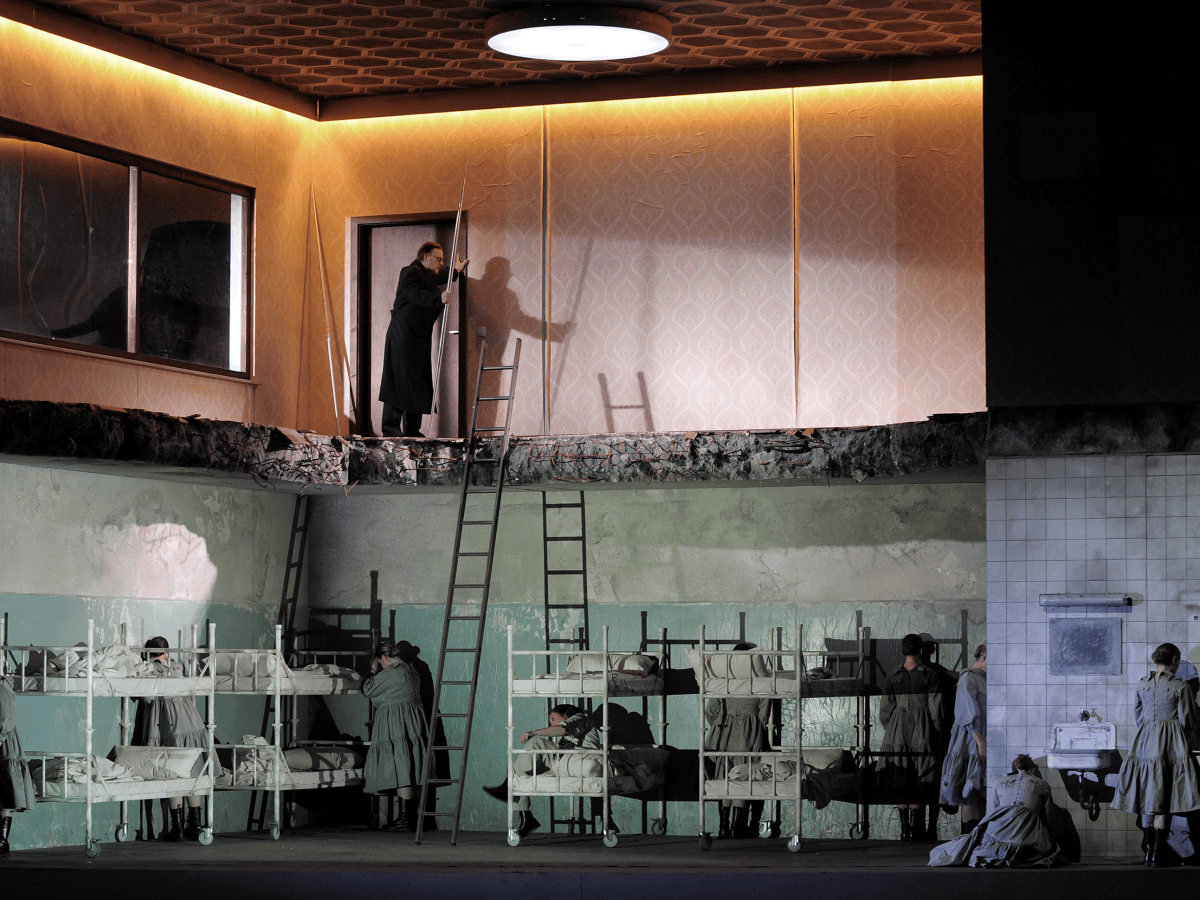
How much control do we really have over our own lives? We make decisions, change our minds, take wrong turns and tell ourselves that, ultimately, we are the ones behind the wheel. But what if the steering wheel isn’t really ours to begin with? In Claus Guth’s now 18-year-old production of Die Walküre, control is…

Werther, The Royal Danish Opera 2026
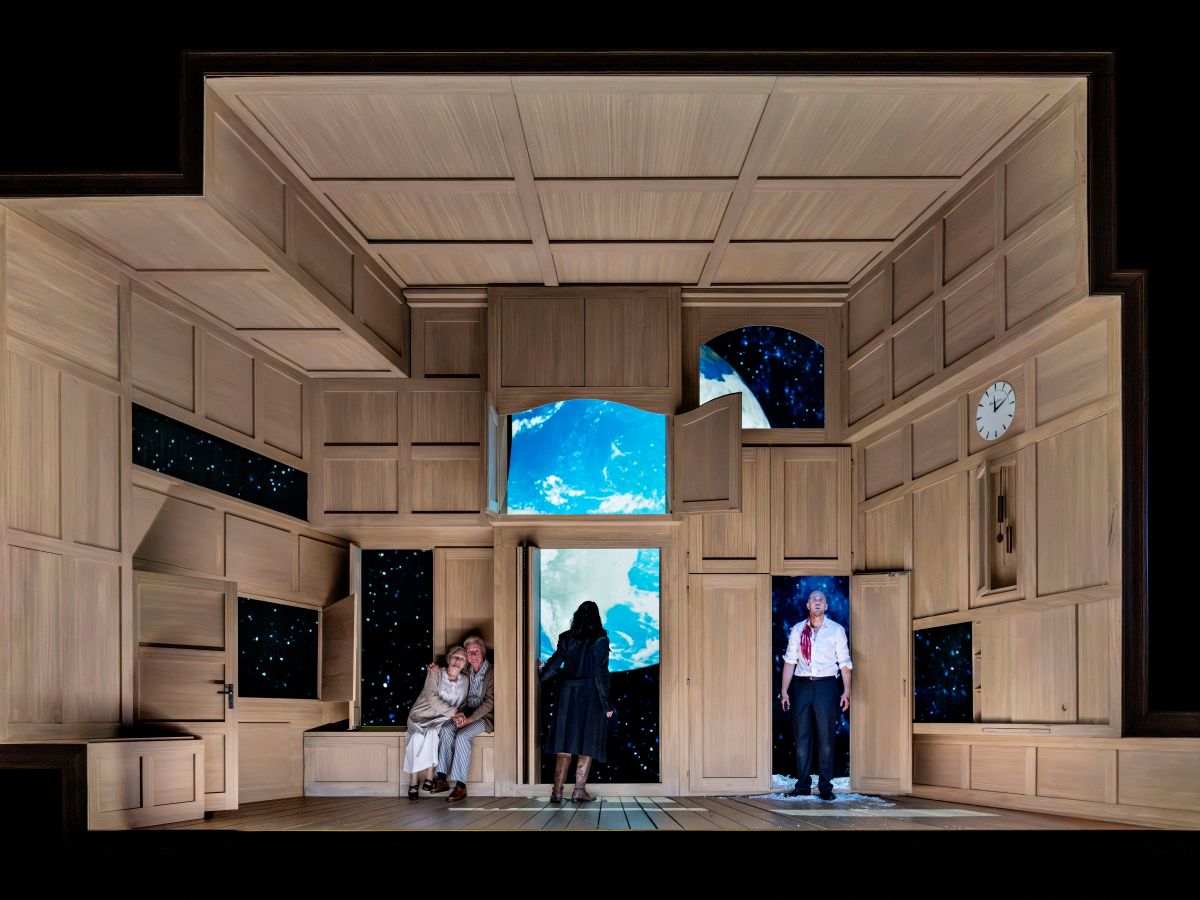
Werther you like it or not, doomed love is back on the menu. Think Tristan and Isolde, but with the drama dialled down a notch. The music is a little Wagner, a little Puccini – just without the same oomph. Chief conductor Marie Jacquot keeps the orchestra on its toes, steering the whole thing with…
Macbeth, Royal Danish Opera 2026
“HAHAHAHAHA!” Lady Macbeth laughs out loud. Then three woodwinds enter in unison and the evening begins. Macbeth, blindfolded, lunges after his wife as she moves just beyond his reach. From the very first moments, there is little doubt about who is calling the shots in this marriage. Another Brick in the Wall Three walls and……

