

“HAHAHAHAHA!” Lady Macbeth laughs out loud. Then three woodwinds enter in unison and the evening begins. Macbeth, blindfolded, lunges after his wife as she moves just beyond his reach. From the very first moments, there is little doubt about who is calling the shots in this marriage.
Another Brick in the Wall
Three walls and… some coloured lighting. That is more or less what Australian director Benedict Andrews gives us to look at in this minimalist production, premiered in 2013. In the first act, very little happens visually, and the stage doesn’t really do much to support the story.
There are a few props that do seem to mean something. Most obviously, the witches throw a red thread around the stage – presumably representing the future they are spinning. The king gets the rather more festive treatment of confetti. So when Lady Macbeth finally persuades her husband to murder him, and the deed is done, Macbeth is showered in confetti. The witches’ prophecy has, in a rather literal way, come true.
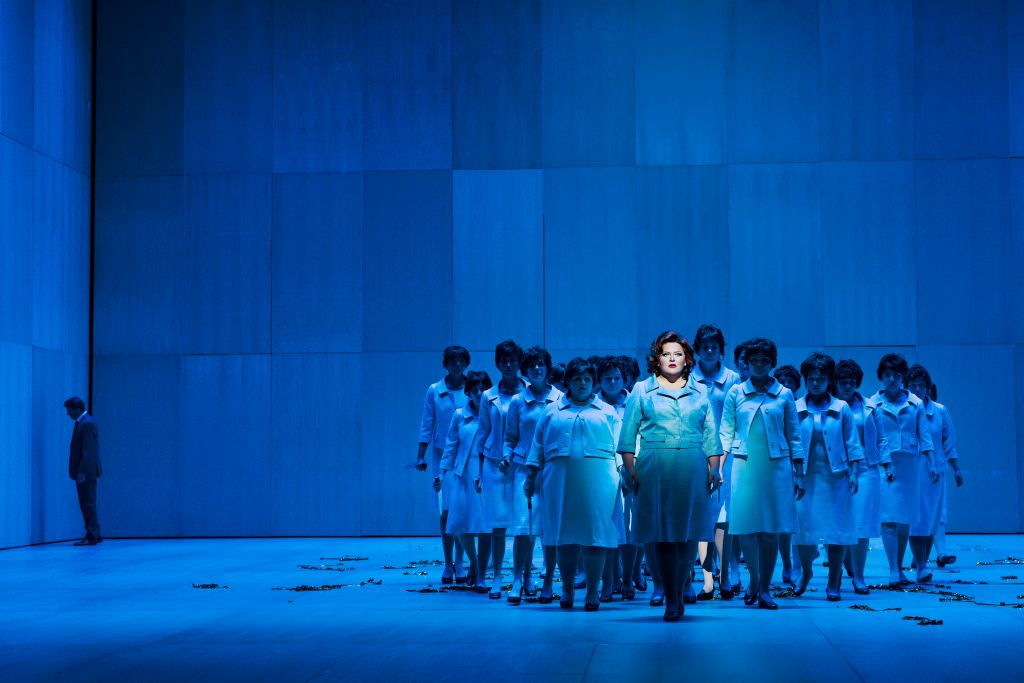
The witches first appear in the forest wearing little more than thin slips, crawling towards the edge of the stage like zombies. Then they change into clothes identical to Lady Macbeth’s. What does that make Lady Macbeth – a witch herself? Or perhaps we are all witches, really?
In the first act, Macbeth is not alone in the forest. He is accompanied by Banquo, who receives a prophecy of his own. He will not become king himself – as Macbeth is told he will – but instead, he will become the father of a long line of kings. Uh-oh.
That prophecy, however, sends Macbeth into something of a paranoid spiral. The idea of the throne eventually passing to Banquo’s descendants is clearly not doing much for his sleep. So he decides that Banquo and his son Fleance need to be dealt with…
Things do not quite go according to plan. Banquo is killed, but Fleance slips away into the darkness.
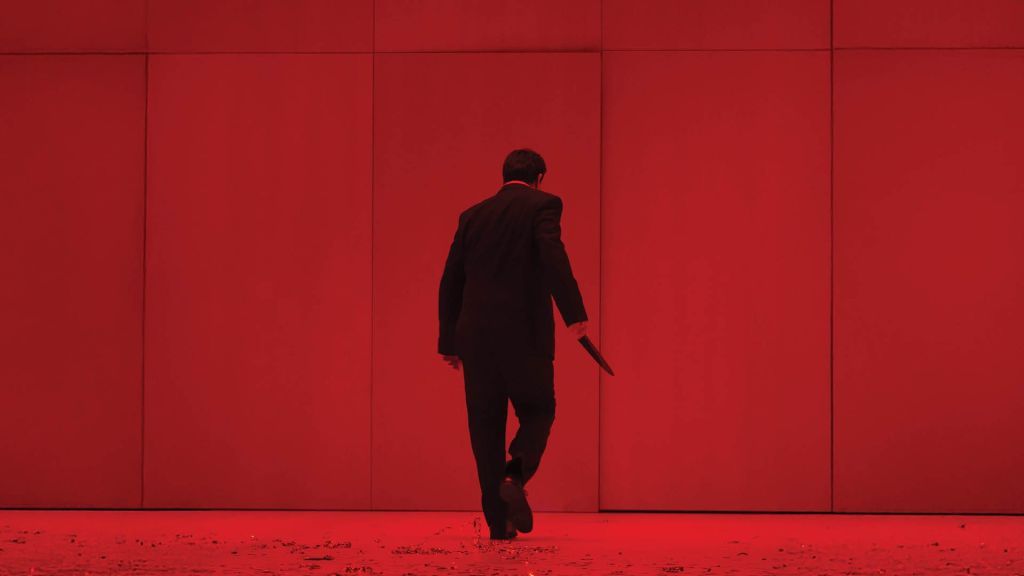
Every now and then, the walls disappear, or a large table comes onto the stage. In Act III, we even get a pole dancer. Is it because they know the set is a little boring and think a pole dancer might at least make people look up?
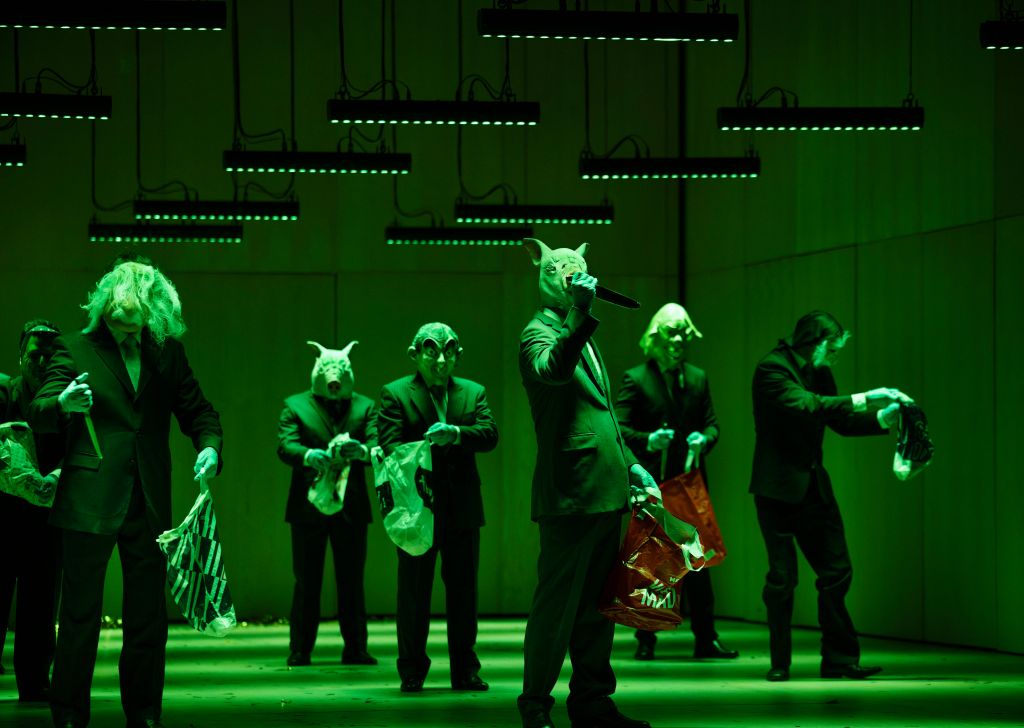
No, I just think it is a shame that a rather dull production has to work against an otherwise strong cast. When Banquo is murdered, the assassins are dressed as Santa Claus, Goofy, the Pink Panther and various other cartoon characters. What are they supposed to represent? And what is the idea behind having all the women dressed alike in Act I, while the men wear suits, only for everyone to run around in all sorts of different costumes in the following acts?
Okay, but how does it sound?
As Lady Macbeth, from Kosovo Marigona Qerkezi brings a wonderfully nuanced performance, with controlled runs, measured vibrato and a beautiful voice. There is something in her sound that reminds me of a soprano version of the German mezzo-soprano Christa Ludwig – which is not exactly a comparison that leaves much room for the rest of the cast to compete.
Still, Jens Søndergaard does a fine job as Macbeth. This was his role debut, and it takes him a little while to settle into it. But by the final act, something clicks. He suddenly shifts into another gear, and the part seems to sit very comfortably in his voice. It makes you wonder what he might do with it once he has lived with the role for a little longer.
Jamez McCorkle gets his big moment towards the end as Macduff, and once again shows off his beautiful tone. Only a couple of months ago, I heard him sing Parsifal in Erl, but Macduff is a very different role – and one he perhaps wears even better.
So: excellent singers, accompanied by an orchestra that is, unfortunately, somewhat less adventurous. They play well enough, and the German conductor Vassilis Christopoulos keeps everything nicely together. But the dynamics often feel a little stuck in one place, and, at times, not quite enough sense of direction.
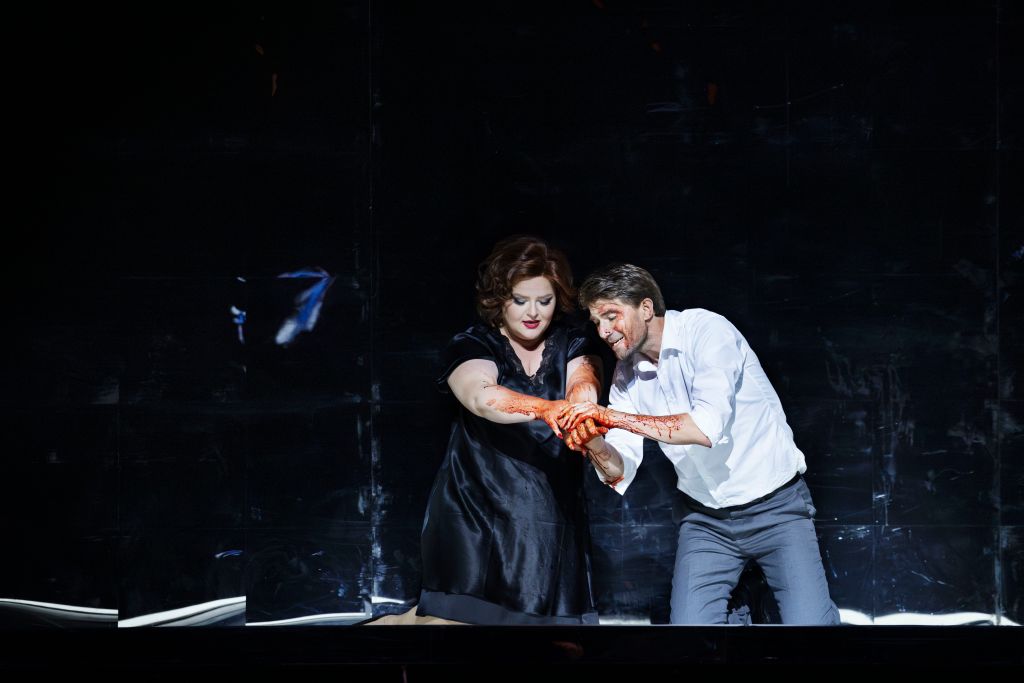
The opera begins with Lady Macbeth and her husband together on stage. It ends with the two of them together as well. Only, by then, everything has changed. Lady Macbeth is definitely not laughing.
Fun Fact:
Macbeth is one of three Verdi operas based on Shakespeare’s plays, alongside Otello and Falstaff.
Cast:
- Conductоr: Vassilis Christopoulos
- Directоr: Benedict Andrews
- Stаge Designer: Ashley Martin-Davis
- Сostume Designer: Victoria Behr
- Light Designer: Jon Clark
- Macbeth: Jens Søndergaard
- Lady Macbeth: Marigona Qerkezi
- Banquo: Henning von Schulman
- Macduff: Jamez McCorkle
- Dama di Lady Macbeth: Linnea Nordenback
- Malcolm: Magnus Løvlie
- Servant to Macbeth: Arash Azarbad
- Doctor: Tae Jeong Hwang
- Herald: Dong Huy Kim
- Assassin: William Tarrach, Arash Azarbad
- Apparition: Rasmus Ruge
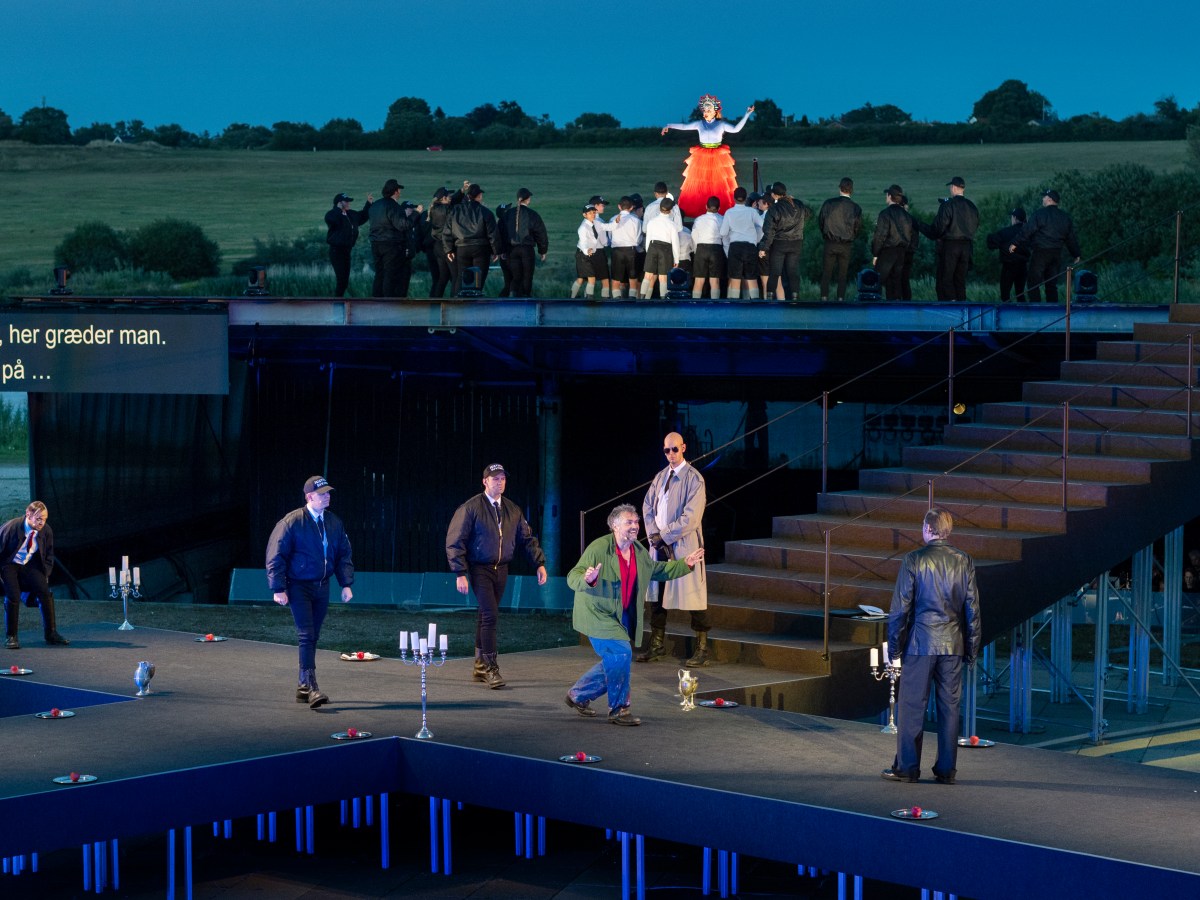
Tosca, Opera Hedeland 2026
Three hours before the opera starts, and the audience is already there. When was the last time that happened? Out on the green in Roskilde, just over 30 kilometres west of Copenhagen, things are a liiiittle different. Here, opera comes with sunshine, soft blankets and seriously well-stocked picnic baskets. The performance is only one part…

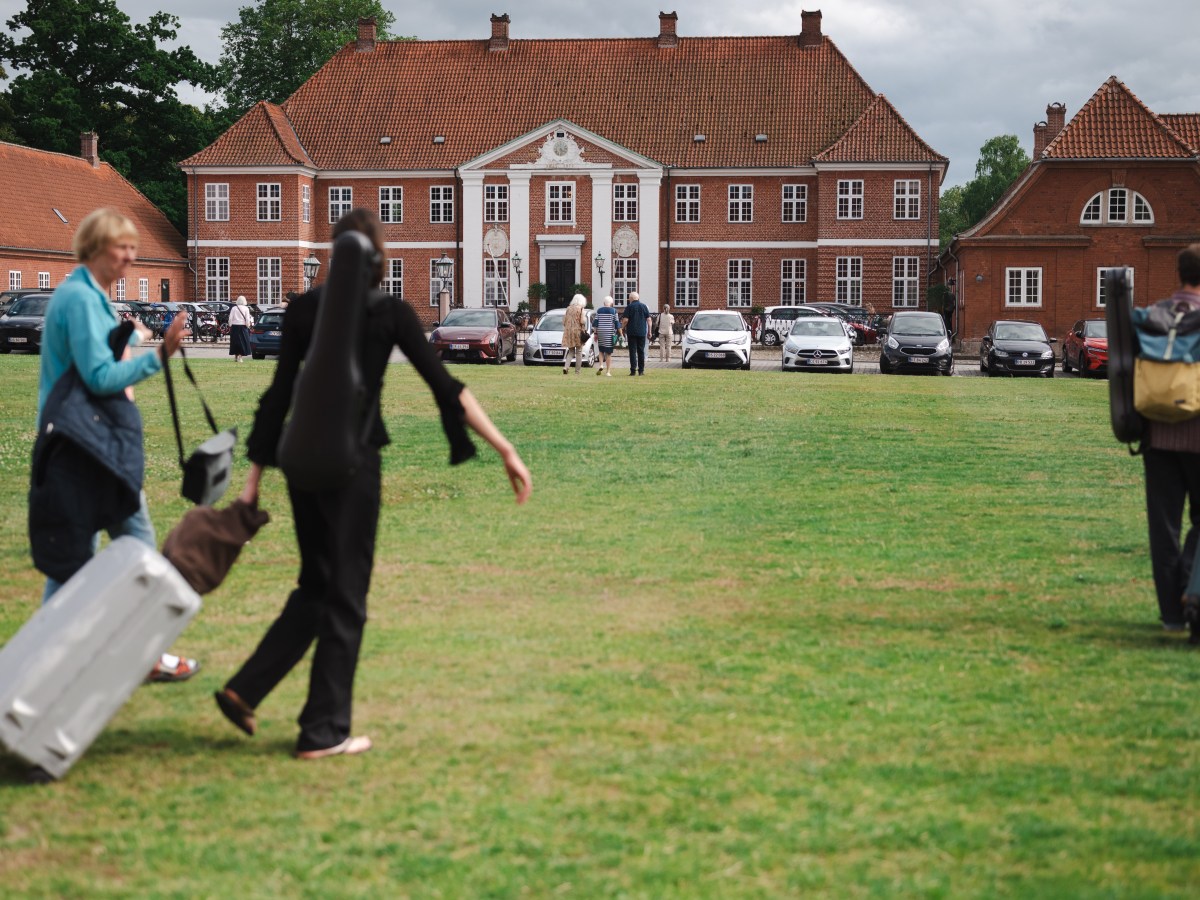
Hindsgavl Festival 2026
Picture this. You wake up wrapped in crisp white sheets while the morning sun sneaks through the curtains, painting golden stripes across the room. Outside, the birds are already warming up for the day’s opening concert. Coffee can’t wait. One press of a button, one steaming mug, and suddenly the world seems like a much…
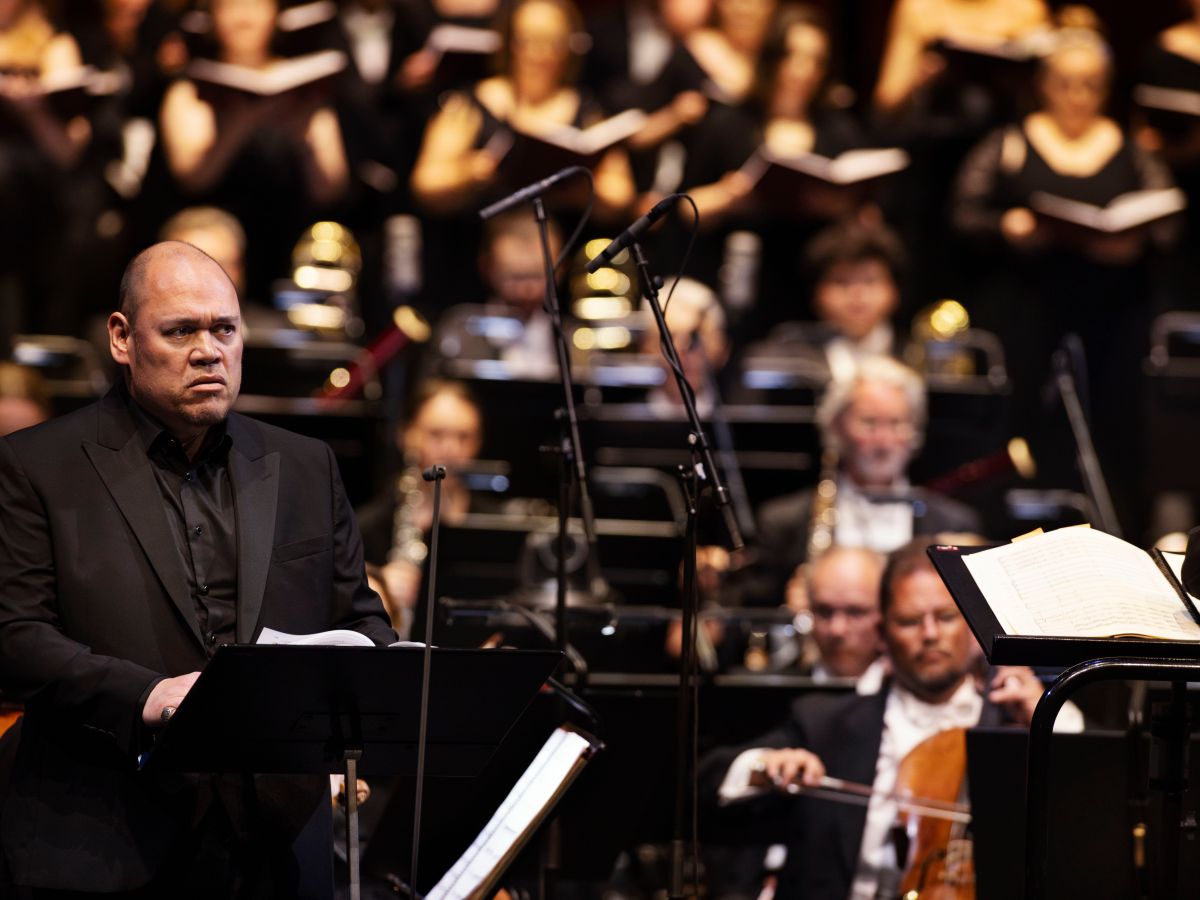
Macbeth, Royal Danish Opera 2026
We begin in the middle of a storm. You can already hear it rumbling away in the double basses of the prelude. We’re out in the forest, mud on the boots and battle still buzzing in the blood, as Macbeth and Banquo stumble upon a gang of witches armed with a rather alarming forecast for…
 Blogfløjten