
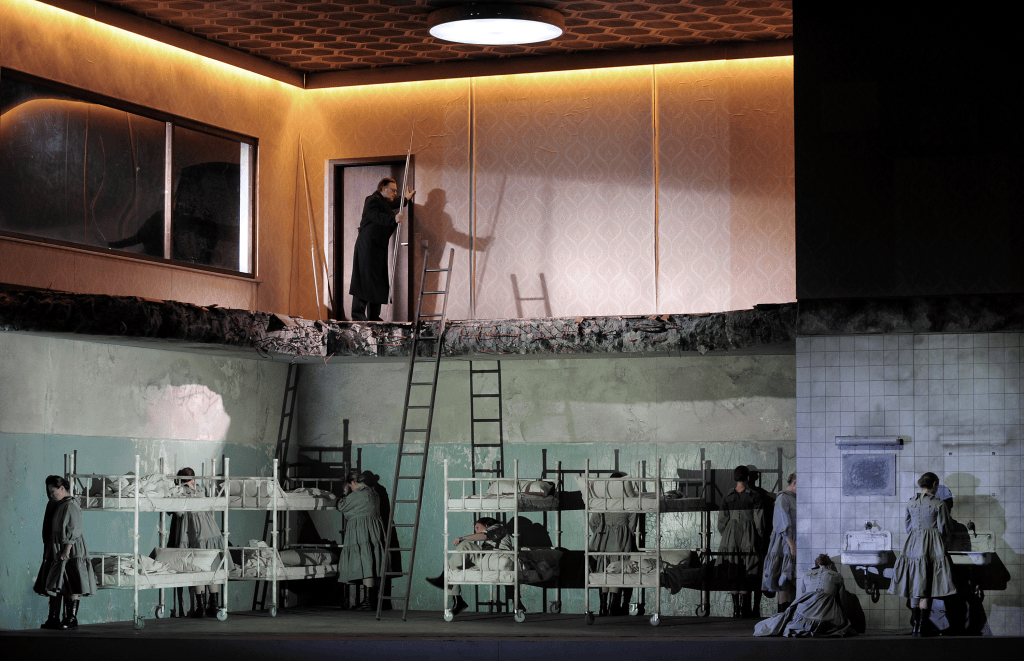
How much control do we really have over our own lives? We make decisions, change our minds, take wrong turns and tell ourselves that, ultimately, we are the ones behind the wheel. But what if the steering wheel isn’t really ours to begin with? In Claus Guth’s now 18-year-old production of Die Walküre, control is a slippery business – and someone is very keen on keeping their hands on it.
As always in Die Walküre, we begin in the middle of a storm. This time, however, the weather seems to have taken a turn for the dramatic. Chief conductor Omer Meir Wellber makes the most of it, pushing and stretching every dynamic in Wagner’s score from a whisper to a roar and back again. The storm may be raging outside, but there is already something much bigger brewing inside on stage.
When the curtain rises, Siegmund and Sieglinde are – like two mannequins – frozen in place. They stand on a glowing platform, with a giant red on/off button sitting at the side. In front of them is Wotan, spear in hand, looking very much like the man with the master key to the universe. One snap of his fingers, and suddenly the two humans start moving.
For a moment, Wotan seems to have the ultimate control panel: one button, one spear and an entire world of people waiting for his next move. What could possibly go wrong?
Quite a lot, as it turns out.
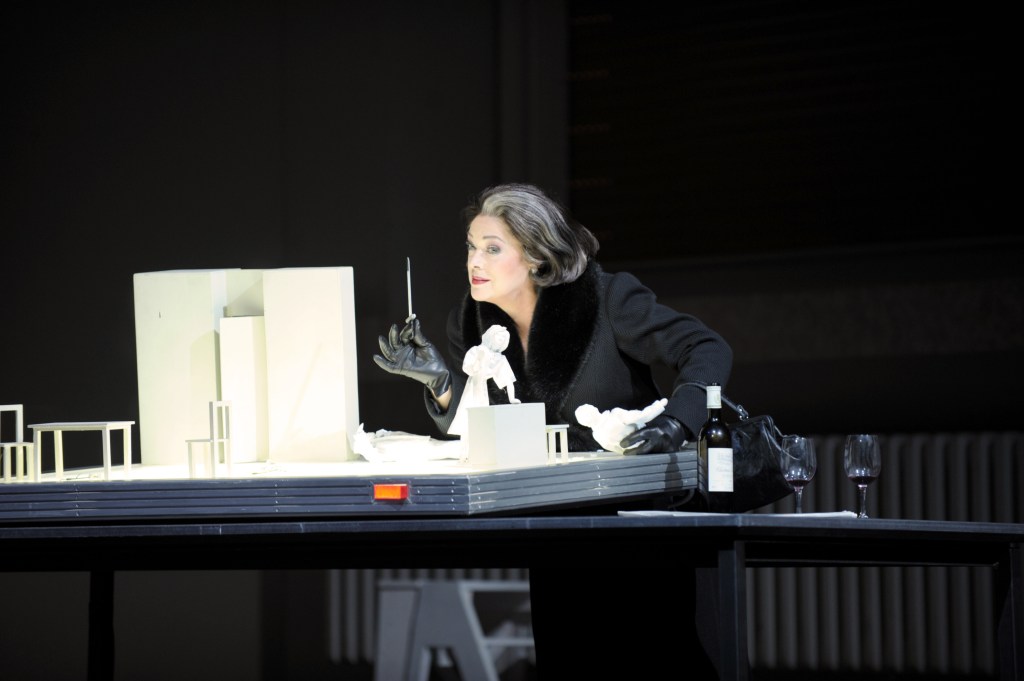
First comes Fricka (Annika Schlicht). Dressed in black leather gloves and armed with a commanding presence that needs no spear or magic button, she discovers that Siegmund and Sieglinde have fallen in love – and she wants Siegmund out of the picture. Schlicht’s Fricka is wonderfully controlling, telling the story as much with her eyes, face and body as with her voice. Little by little, she backs Wotan into a corner until the almighty god has no choice but to give in. The man who can apparently set an entire world in motion with the snap of his fingers suddenly finds himself being told what to do. And, frankly, if Annika Schlicht had looked at me like that, I might have handed over my spear too.
Siegmund Must Die
Brünnhilde (Allison Oakes), however, is having none of it. Wotan has given her an order, but she decides that his command is not quite the same thing as a good idea. Instead of letting Siegmund die, she chooses to protect him – or at least try to. For the first time, one of Wotan’s own creations makes a decision he cannot control.
In her first entrance, Oakes is vocally a little cautious, shortening some of the long notes. But even so, she sings with her whole body. On the final “ho” of “Hojotoho!”, her entire body rises in a kind of upward wave, almost as if she is physically throwing the note into the room.
As it turns out, there was probably no need to save her strength. Oakes has a voice that seems made for the role: powerful without being pushed, and never strained or overblown.
She also carries a spear, which I can’t quite figure out. Wotan and Brünnhilde are the only two characters who do, so perhaps it is meant to mark them as the two people who can interfere with – and influence – what happens down on earth? Brünnhilde certainly does exactly that.
It’s All Set
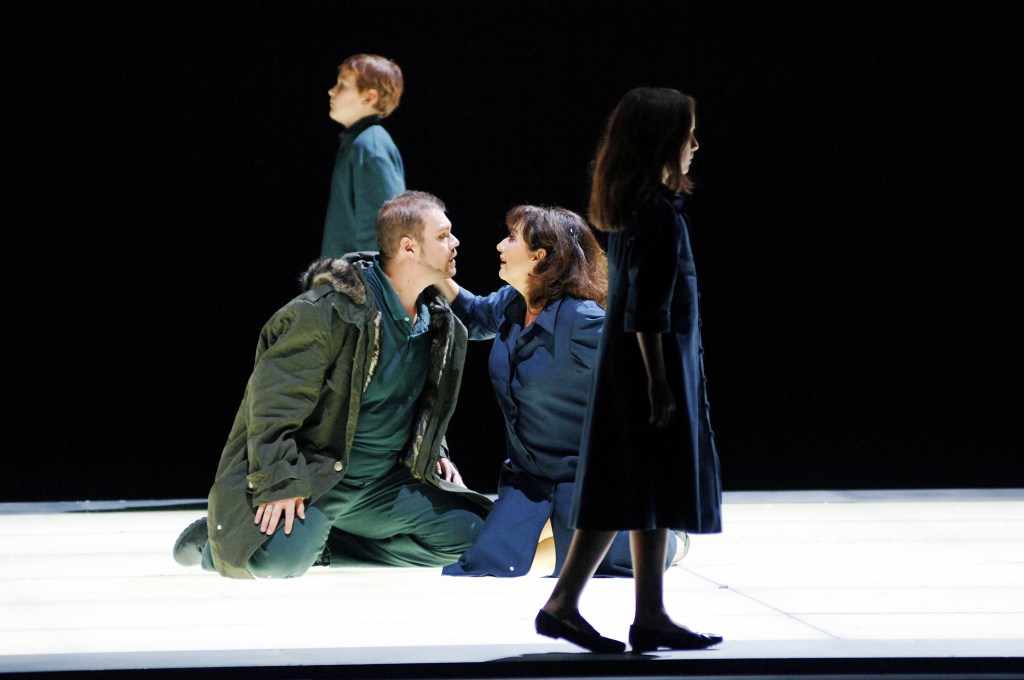
The stage itself is very bare. Guth, as he so often does, leaves us with very little in the way of bells and whistles. In Act I, a remote-controlled wall slides around the glowing platform, creating different rooms and spaces. There is also a dining table with three chairs and a few bits of kitchenware. And really, that’s about it.
But if there isn’t much on stage, there is plenty happening around it. The singers have to fill a very open space, often fighting for room against the orchestra, but for the most part they manage to rise above it.
And then the orchestra decides to join the storytelling.
It does more than simply keep the singers on track. Wagner lets the orchestra reveal what is coming before the characters know it themselves, and Guth turns that musical foresight into something we can actually see. A motif appears, and the stage reacts before the characters have even had time to say a word. It is almost as if there is a second control panel hovering above Wotan’s – one that the characters cannot see, but that seems to know exactly what is coming next.
In terms of time period, Guth’s Walküre could almost be set today. Okay, people don’t exactly walk around town with swords on a regular basis, but apart from that, the costumes would hardly look out of place on the streets. The colour palette is simple but effective: Wotan is dressed head to toe in serious, slightly intimidating black, while Brünnhilde is much lighter and brighter.
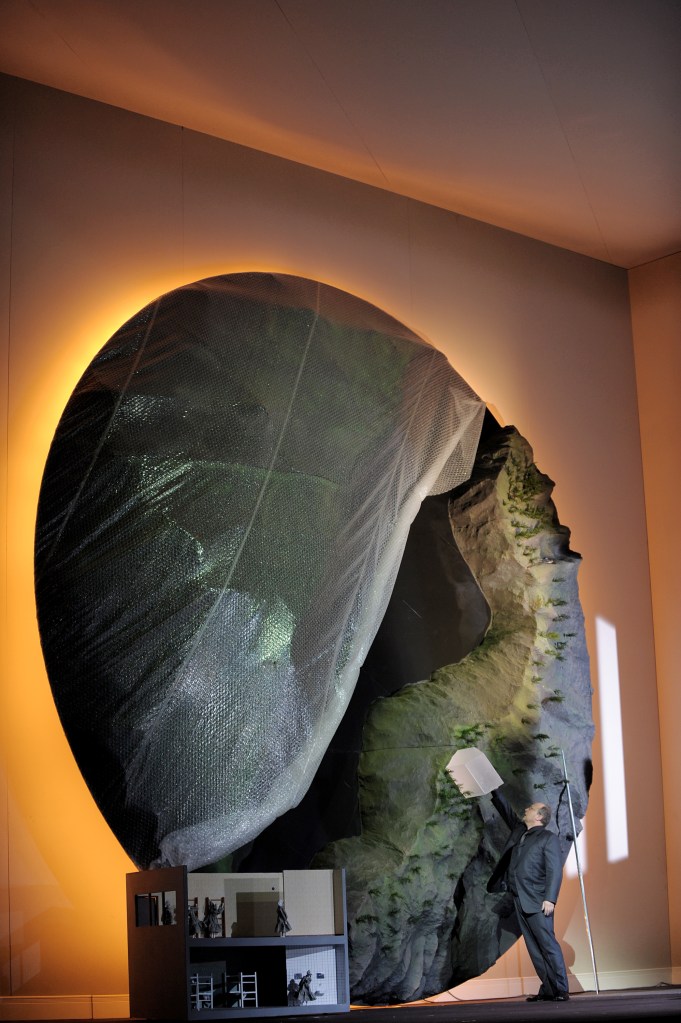
Wotan is sung by Derek Welton, who seems to have been handed a voice specifically designed for the role. It is warm and lyrical, but still has plenty of punch and crystal-clear diction. And when he really lets the sound fly, his overtones seem to float all the way up towards the ceiling and hang around there for a while.
By Act II, the whole stage has become Wotan’s control room.
Earlier, we saw him press a button and bring the humans to life like pieces in a giant mechanical toy. Now the entire story is laid out in front of him in miniature. Act I has already happened, while Act III is waiting on the other side of the stage. Wotan can see the whole thing spread out before him, like a giant dollhouse, where he desperately tries to rearrange the pieces.
But this time, the joke is on him.
He can set Siegmund and Sieglinde in motion, but he cannot control Fricka. He can create Brünnhilde, but he cannot decide what she will do with the freedom he has given her. He has built the rules of his own little universe, only to discover that he is trapped inside them too. Every time he pulls one string, another seems to tighten around him.
So what is Wotan, really? A god with the world at his fingertips – or just a man who has taken the whole “playing with puppets” thing a little too seriously?
Perhaps that is what makes Guth’s Walküre so compelling. The man who thinks he is pulling every string slowly discovers that some strings pull back.
Fun Fact:
Wagner throws the soprano straight into the deep end with Brünnhilde’s famous battle cry, “Hojotoho!” Short phrases, energetic rhythms and big vocal leaps lead to full octave leaps, high B and high C, followed by a two-bar trill and another high B held for two full measures!
It immediately portrays Brünnhilde as young, fearless and full of energy.
Cast:
- Conductor: Omer Meir Wellber
- Director: Claus Guth
- Stage og Costume Designer: Christian Smith
- Light: Michael Bauer
- Dramaturg: Hella Bartnig
- Siegmund: Matthew Newlin
- Sieglinde: Vida Miknevičiūtė
- Hunding: Ante Jerkunica
- Wotan: Derek Welton
- Brünnhilde: Allison Oakes
- Fricka: Annika Schlicht
- Gerhilde: Esther Dierkes
- Helmwige: Katie Lowe
- Waltraute: Katja Pieweck
- Schwertleite: Brigitta Listra
- Ortlinde: Mariana Poltorak
- Siegrune: Ida Aldrian
- Grimgerde: Iris van Wijnen
- Roßweiße: Aebh Kelly
Philharmonisches Staatsorchester Hamburg
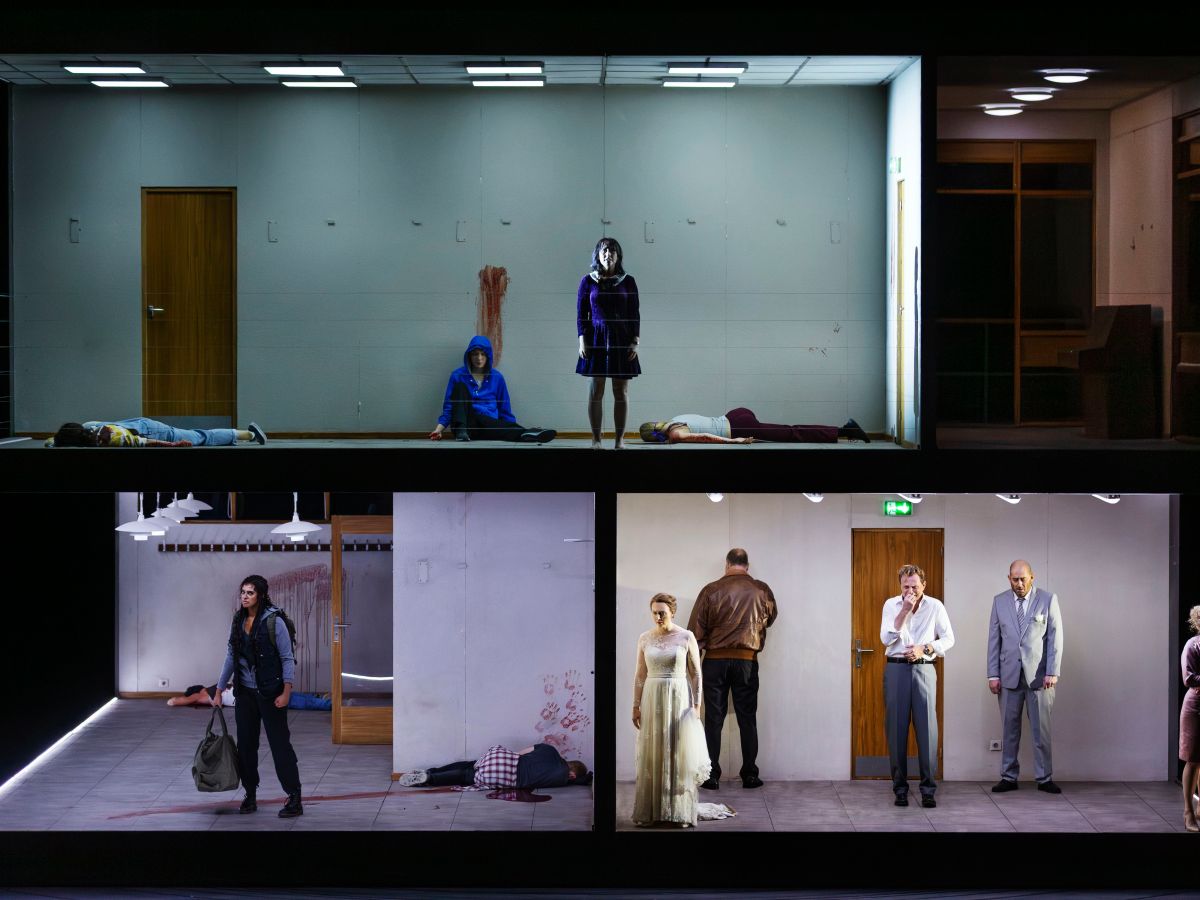
Innocence, The Royal Danish Opera 2026
Guilt is a funny thing. You don’t have to pull the trigger to be caught in the aftermath. Sometimes, simply being there – or being related to the person who did it – is enough. We like to think we’re innocent. But scratch the surface, and who knows what you might find? In Kaija Saariaho’s…

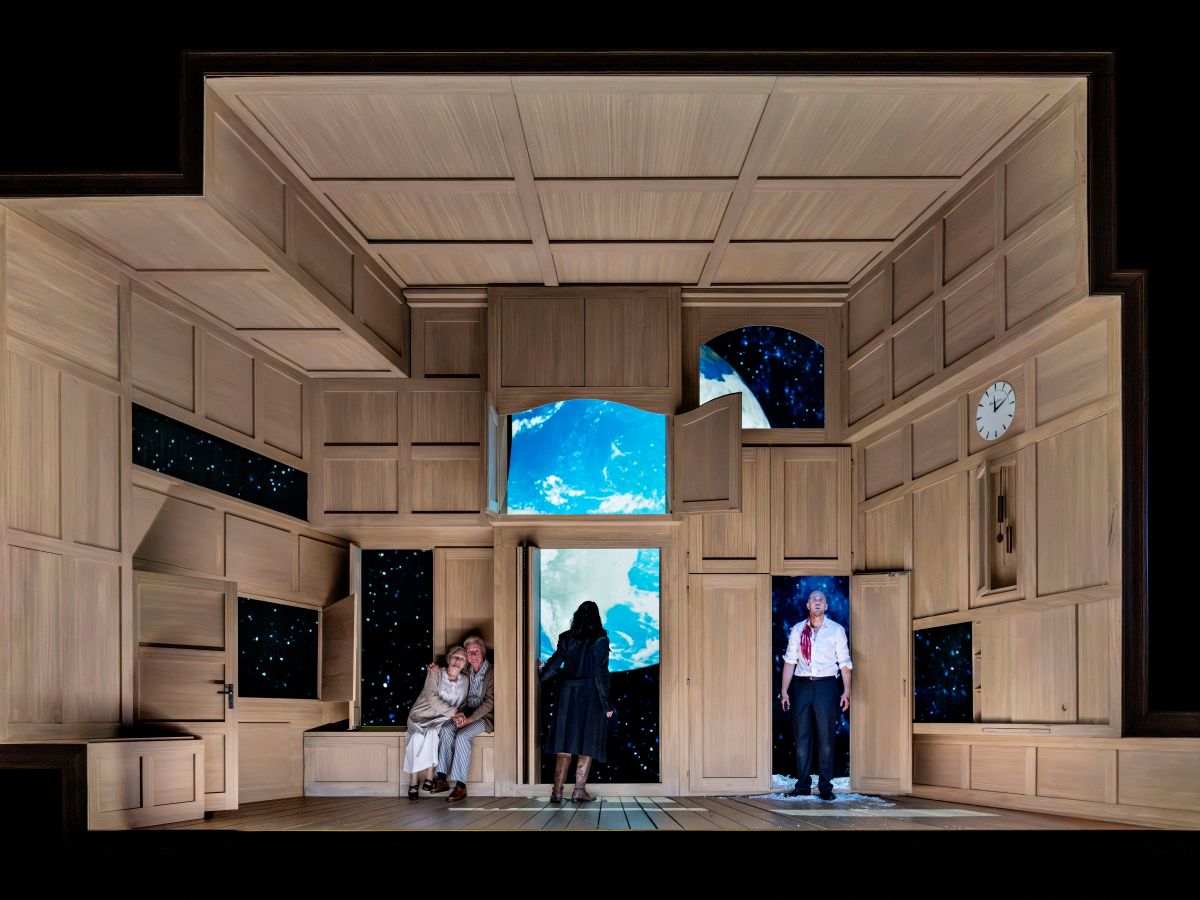
Werther, The Royal Danish Opera 2026
Werther you like it or not, doomed love is back on the menu. Think Tristan and Isolde, but with the drama dialled down a notch. The music is a little Wagner, a little Puccini – just without the same oomph. Chief conductor Marie Jacquot keeps the orchestra on its toes, steering the whole thing with…
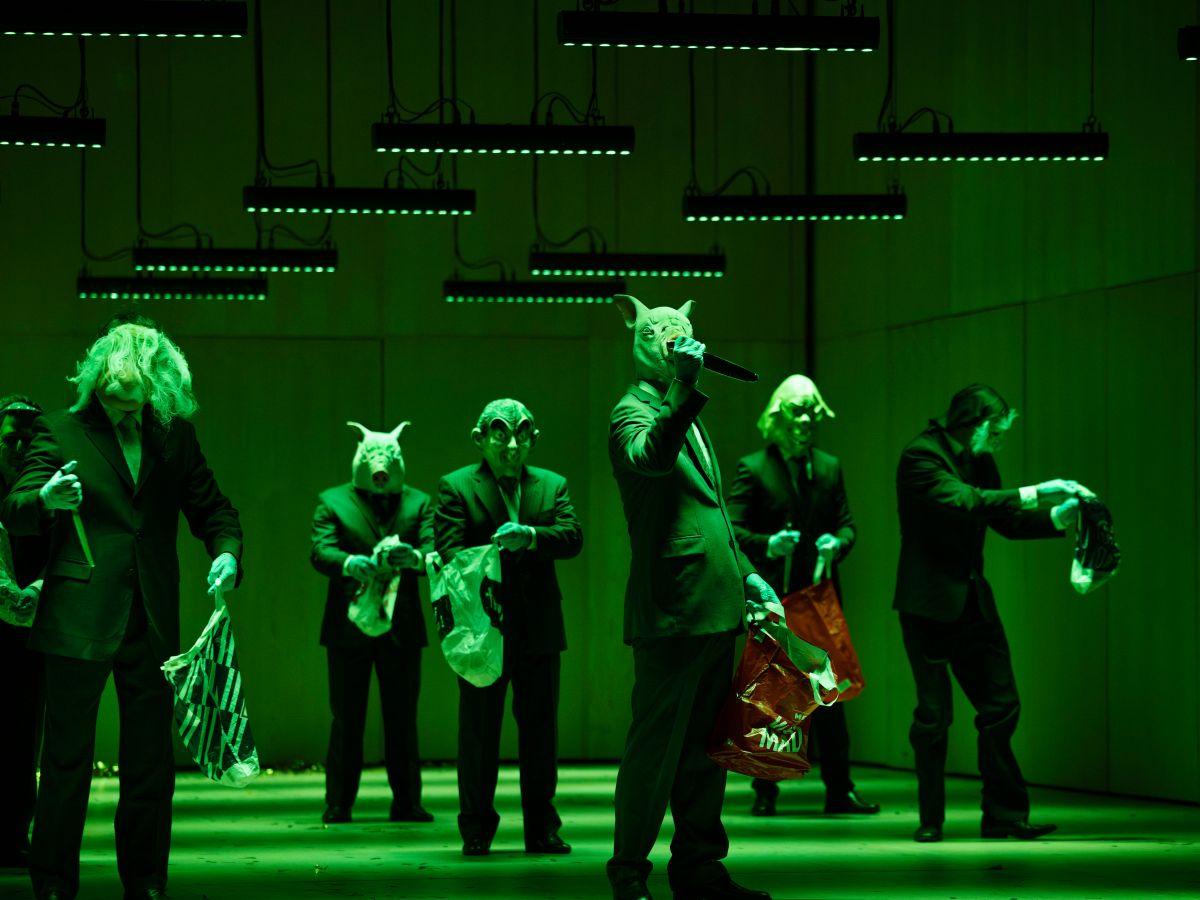
Macbeth, Royal Danish Opera 2026
“HAHAHAHAHA!” Lady Macbeth laughs out loud. Then three woodwinds enter in unison and the evening begins. Macbeth, blindfolded, lunges after his wife as she moves just beyond his reach. From the very first moments, there is little doubt about who is calling the shots in this marriage. Another Brick in the Wall Three walls and……

