

Rigoletto’s greatest treasure is his daughter, Gilda. In a world of lies and laughter, she is the only thing he refuses to turn into a joke. The ONLY thing he cares about. So, he hides her from the city, from people, from the truth. She doesn’t know his name. She doesn’t know his life (Lohengrin vibes?). She only knows his love – and his command to stay unseen.
Outside walks the Duke. Smiling, smooth, shameless. He seduces for pleasure, then leaves to seek a new treasure. When he meets Gilda, she falls. Softly, surely smitten.
When the truth strikes Rigoletto, his world splits open. He cries for revenge. He hires hands to kill. Sparafucile is given the dirty work. The Duke must die.
But Gilda hears the plan. Her heart shouts louder than her head. She doesn’t choose her father – she chooses her feelings instead (guess she never heard What the Old Man Does is Always Right…). She walks into the night to save the man who would never save her.
Rigoletto receives a sack. Heavy with hope and triumph. At last, he thinks, the score is settled. Then he hears the Duke’s voice singing in the dark. He opens the sack, and his world falls apart…
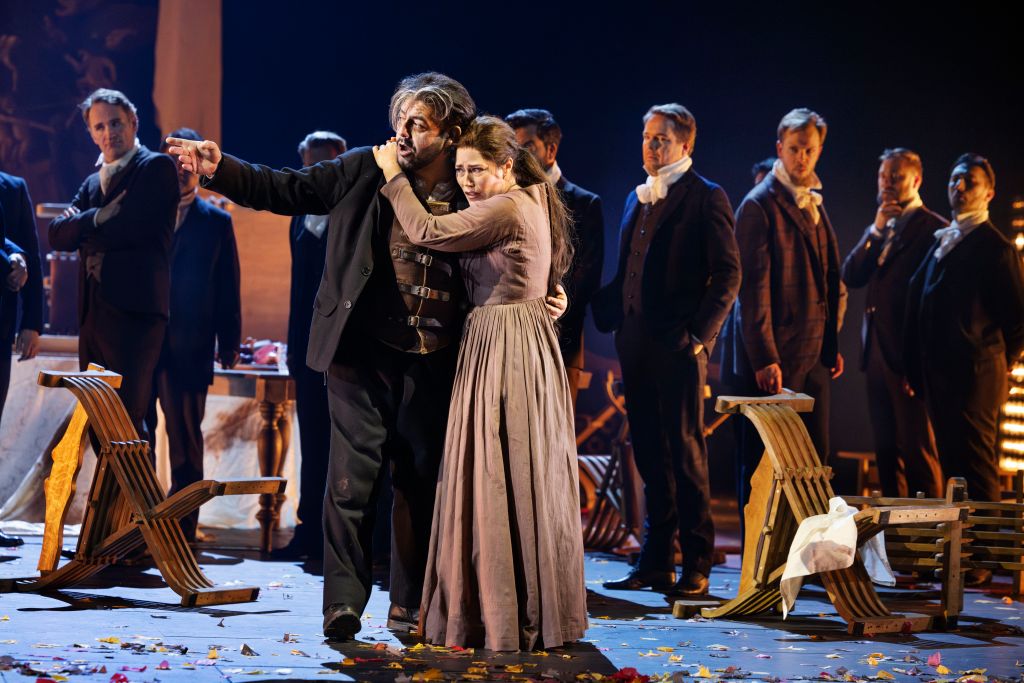
Alfredo Daza (the Jester), Clara Cecilie Thomsen (Gilda), Det Kongelige Operakor. Photo: Miklos Szabo.
What’s Up?
Verdi’s 16th opera, Rigoletto, has landed in Copenhagen in a production by Swedish director Sofia Adrian Jupither. The house is packed, and the evening starts like a door being kicked open. The prelude hits fast, fierce, and is finely formed by Taiwanese conductor Yi-Chen Lin. Every phrase knows where it’s going; you can almost see the music sketching its own sharp, shining lines in the air. She clearly knows the unwritten rules of phrasing: how to shape a line inside a phrasing arc. How the last note is gently released, and often played a little shorter than written.
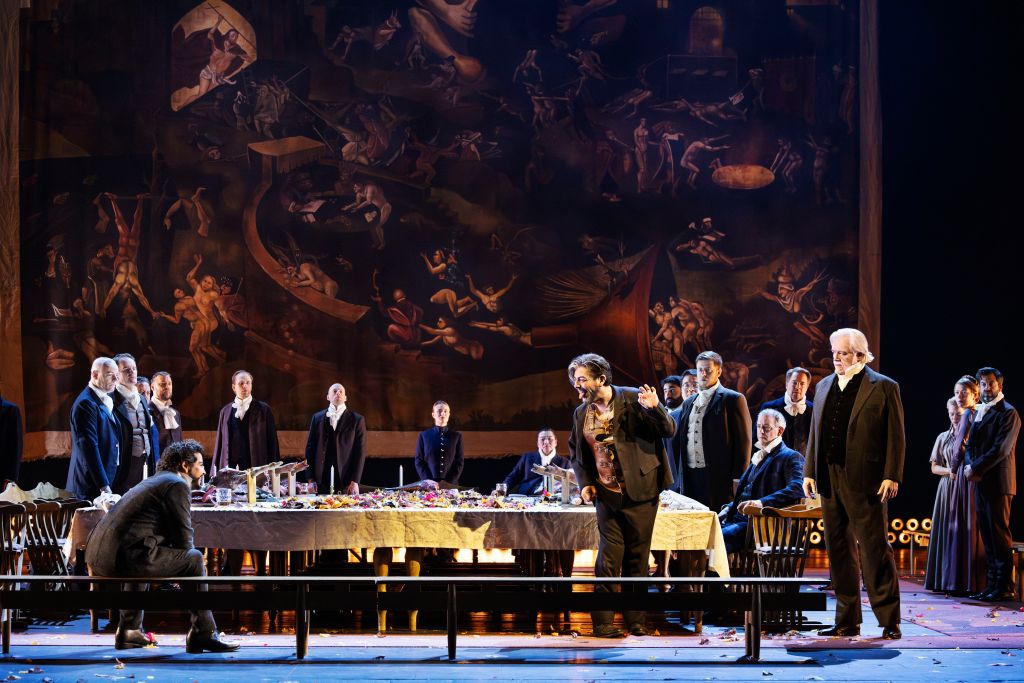
When the curtain rises, we walk straight into a grand party: a long table, a crowd of guests, and a huge dark painting filling the background. On the table lie colourful autumn leaves. A nice decoration, but also a quiet little warning. This detail recurs throughout the opera, right up to the very end. The autumn of life, perhaps? And this year… it ends in a veeery cold winter…
It might be one of the few symbols in an otherwise rather quiet production. The staging gives us scenes that support the story, but rarely go much further than that.
Rigoletto’s house is basically a giant red brick wall – more castle side than cosy home. No doors. No windows. They just appear and disappear. Secret entrances, the kind you get in films where you pull the right book and the bookshelf swings open to reveal a hidden room. Maybe that’s the point. Is this Rigoletto’s idea of parenting? If the world can’t get in, it can’t hurt her.
It doesn’t really help, though. The Duke of Mantua still manages to sneak in. Twisting Gilda neatly around his little finger. Maybe he loves her right now. But who knows? Tomorrow, he might already be chasing something shinier.
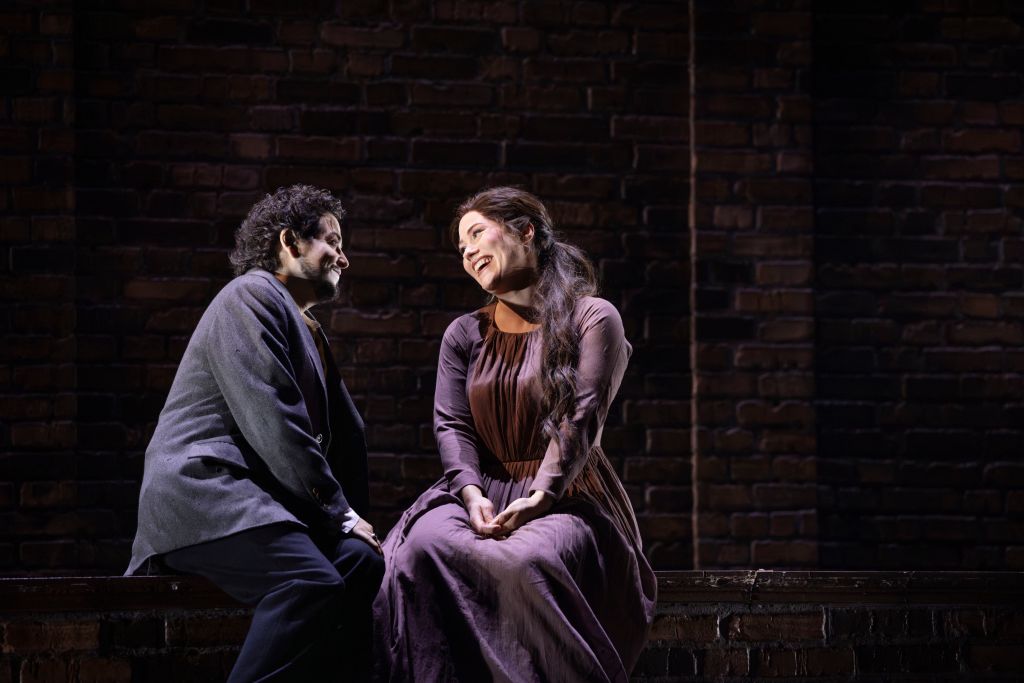
In this scene, Mexican tenor Galeano Salas and Danish soprano Clara Cecilie Thomsen are great together. Their voices slide smoothly around each other. What sounds like sweet love is actually the very first step toward Gilda’s end. The beginning of the end, wrapped in pretty music.
Gilda’s mix of drama and coloratura is no problem for Thomsen. She sounds clear and confident, fearless in the high notes, and lets her powerful voice ride comfortably above the orchestra.
When Il Duca di Mantova (as he’s called in Italian) sneaks Orff, Gilda is instantly drowned in red “love light.” A simple, slightly silly trick that kindly explains the scene to you – just in case you somehow stopped listening five minutes ago. But sure. Message received.
La Donna, Let’s Go!
In the third and final act, the Duke launches into “La donna è mobile.” One of the biggest bangers in opera history? (Thanks to pizza and travel commercials?) And, okay, it is a catchy tune.
The orchestra jumps into it like an overexcited marathon runner who starts at way too ambitious a pace (volume-wise). It’s like the music goes from second gear to fifth in the blink of an eye…. It feels a bit… sudden… surprising.
Maybe the musicians were just like sledge dogs when they get their harnesses on: already bouncing, already ready, already thinking, let’s GOOO!
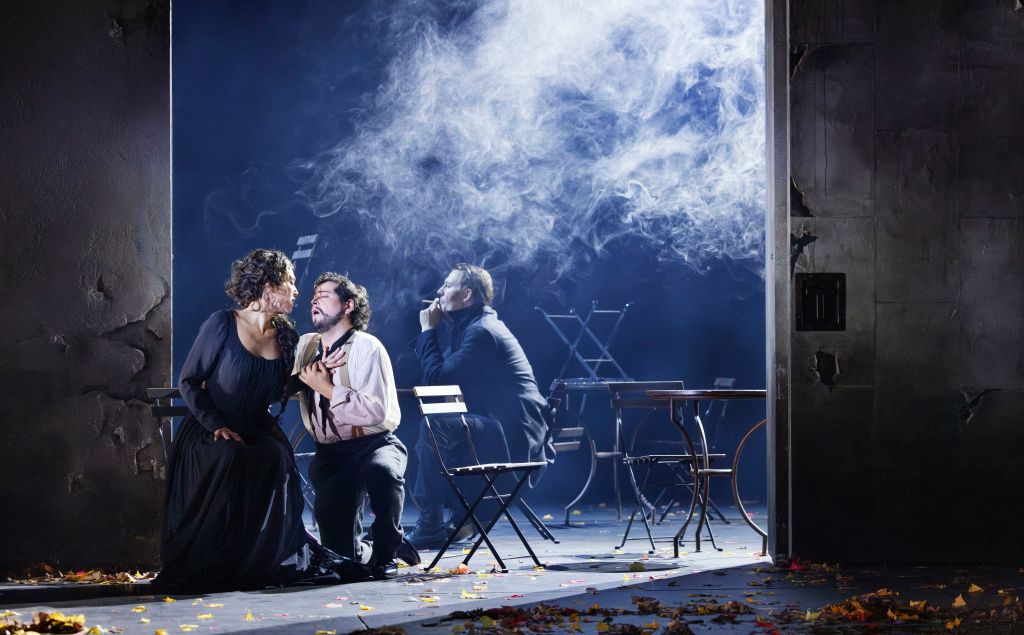
The Duke lives by what you might call “new day, new conquest.” Cool guy, right? …Eh, yeah, maybe not. But what is cool is Galeano Salas. His voice sits in the sweet spot for the role, with a slightly “crying” colour, due to a comfortably low laryngeal position. It gives the tenor warmth, without ever becoming over the top.
Overall, you can safely say that musically, it’s an exciting evening. Not least because of Alfredo Daza’s take on Rigoletto. He gives us the Jester we know, but also adds his own, more personal touches.
Staging-wise, I’m not sure what Jupither’s production really brings to the table. Luckily, the Royal Danish Theatre brings the sound, because someone had to bring the drama.
Fun Fact!
Terrified that his catchiest tune would sprint into the streets and get stolen, Verdi treated “La donna è mobile” like a top-level state secret. Rumour has it that the tenor got it only days before the premiere and had to swear not to sing or whistle it anywhere outside the theatre.
Cast:
- Conductоr: Yi-Chen Lin
- Directоr: Sofia Adrian Jupither
- Stаge Designer: Erlend Birkeland
- Сostume Designer: Maria Geber
- Light Designer: Ellen Ruge
- Dramaturg: Katarina Aronsson
- Rigoletto: Alfredo Daza
- Il Duca di Mantova: Galeano Salas
- Gilda: Clara Cecilie Thomsen
- Sparafucile: Hening von Schulman
- Maddalena: Elisabeth Jansson
- Giovanna: Hanne Fischer
- Il Conte di Monterone : David Kempster
- Marullo: Dong Huy Kim
- Matteo Borsa: Frederik Bjellsäter
- Il Conte di Ceprano: Magnus Berg
- La Contessa di Ceprano: Helena Bjarkadottir
- A Page: Julie Husballe Hansen
- Tosca, Opera Hedeland 2026
- Hindsgavl Festival 2026
- Macbeth, Royal Danish Opera 2026
- Frauenliebe und -sterben, Staatsoper Hamburg 2026
- Parsifal, Bayerische Staatsoper 2026
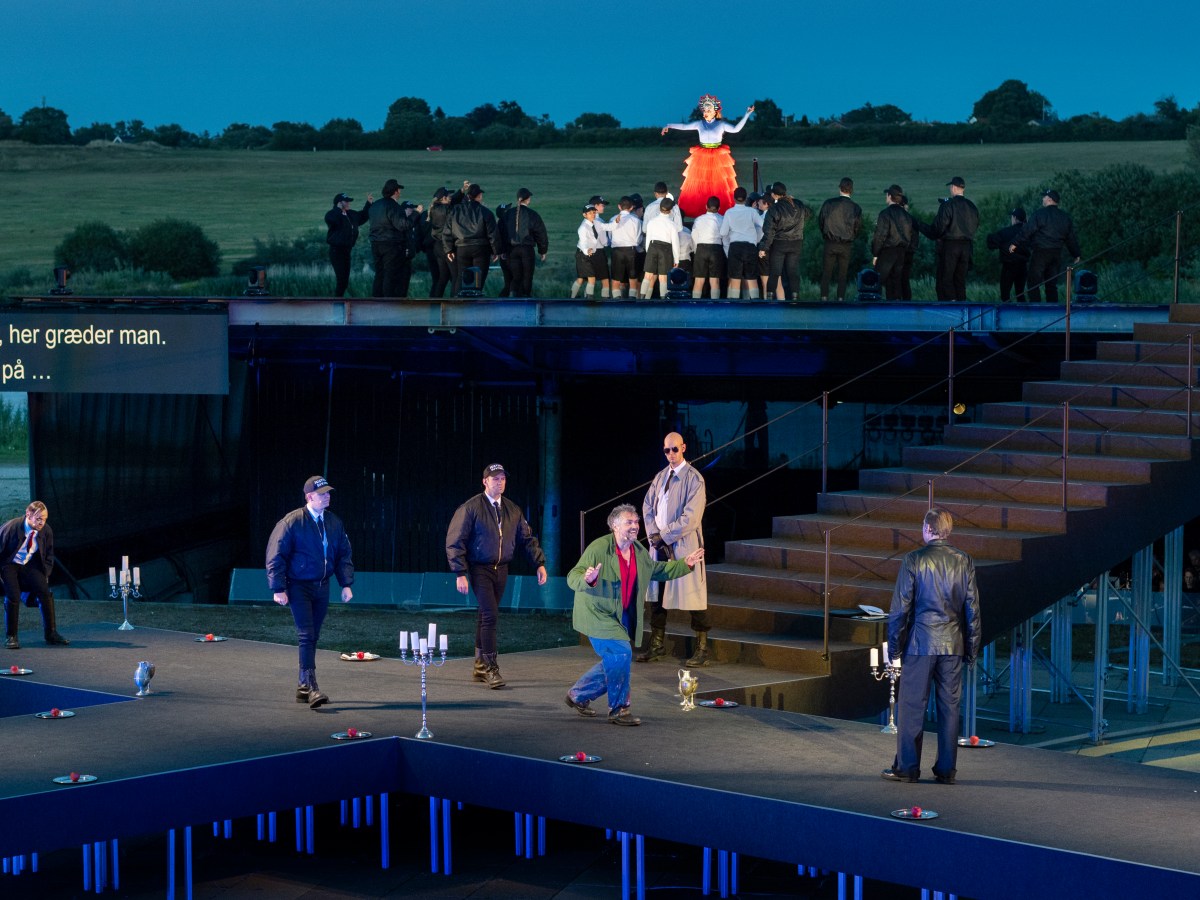
Tosca, Opera Hedeland 2026
Three hours before the opera starts, and the audience is already there. When was the last time that happened? Out on the green in Roskilde, just over 30 kilometres west of Copenhagen, things are a liiiittle different. Here, opera comes with sunshine, soft blankets and seriously well-stocked picnic baskets. The performance is only one part…

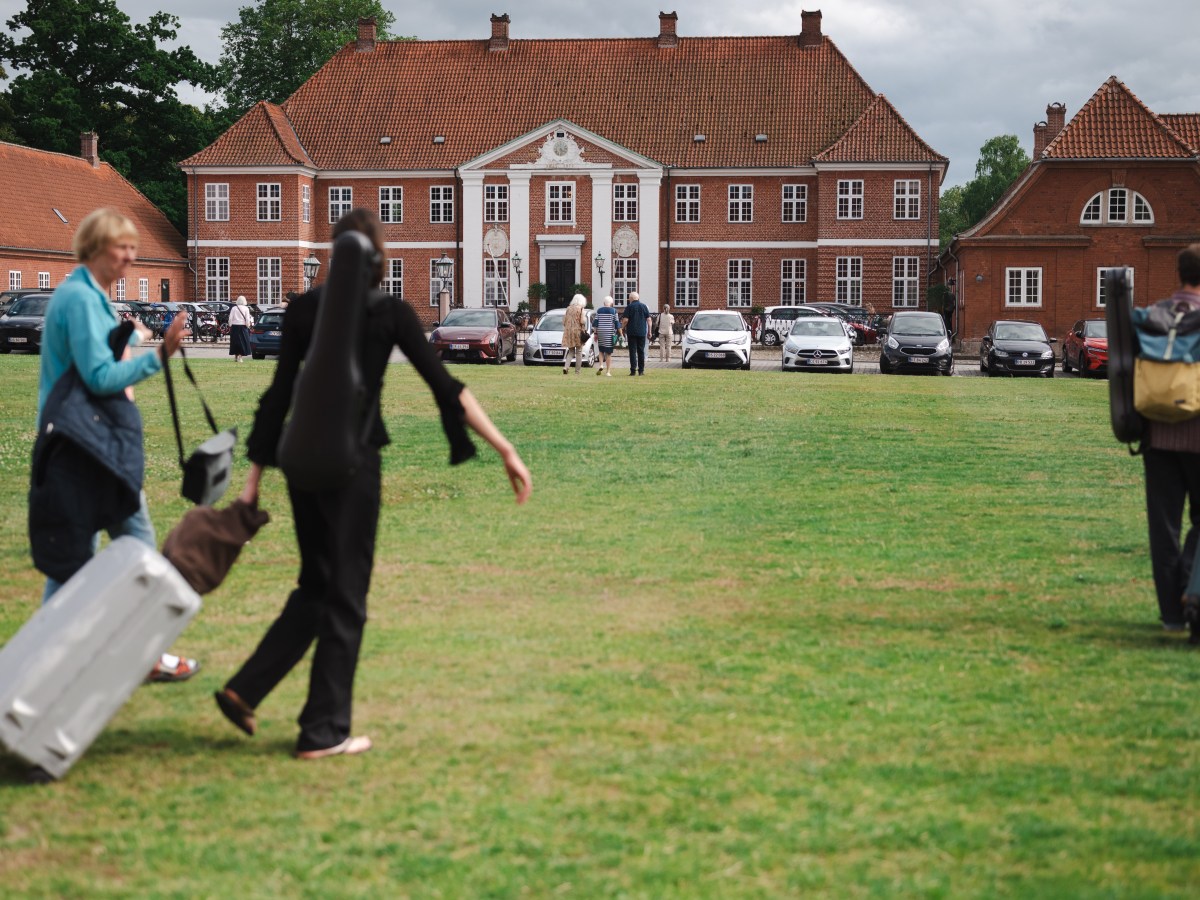
Hindsgavl Festival 2026
Picture this. You wake up wrapped in crisp white sheets while the morning sun sneaks through the curtains, painting golden stripes across the room. Outside, the birds are already warming up for the day’s opening concert. Coffee can’t wait. One press of a button, one steaming mug, and suddenly the world seems like a much…
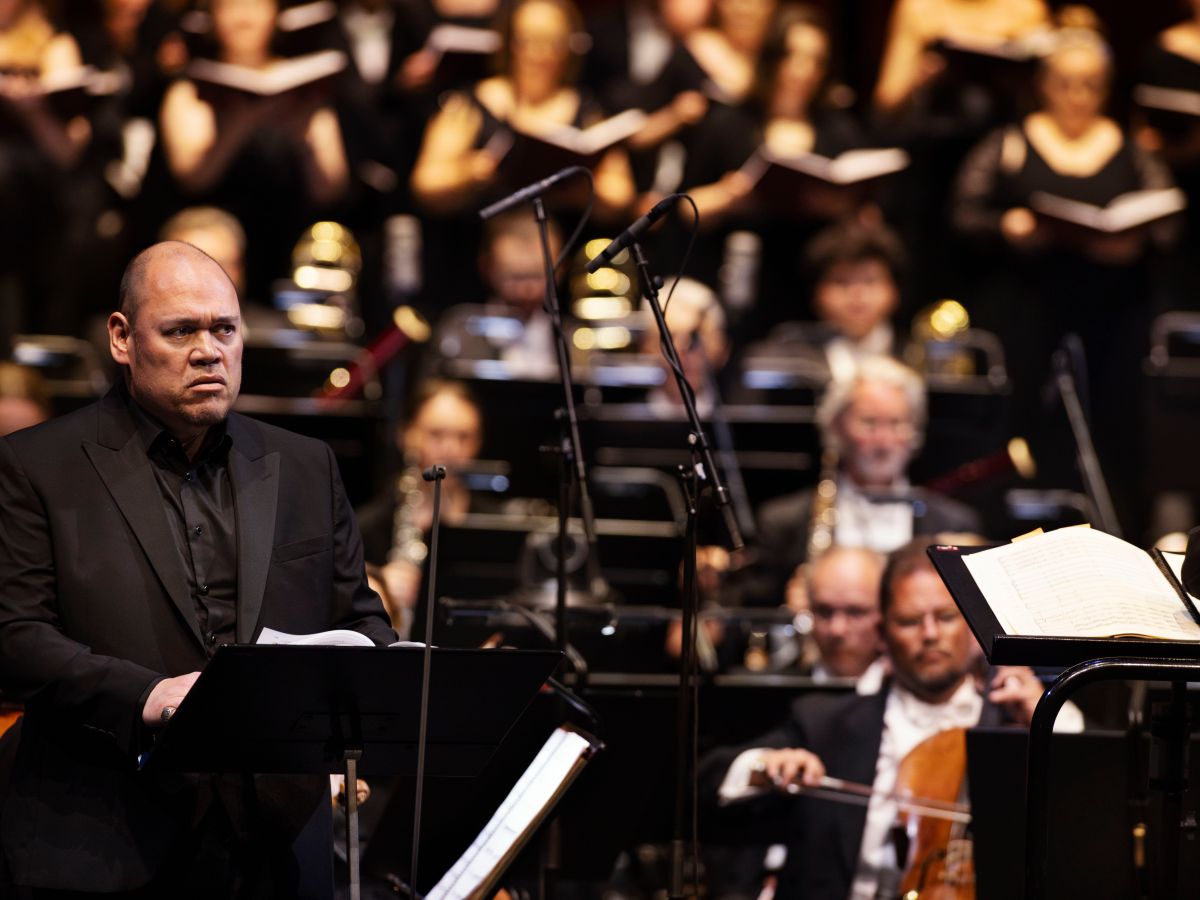
Macbeth, Royal Danish Opera 2026
We begin in the middle of a storm. You can already hear it rumbling away in the double basses of the prelude. We’re out in the forest, mud on the boots and battle still buzzing in the blood, as Macbeth and Banquo stumble upon a gang of witches armed with a rather alarming forecast for…
 Blogfløjten