
Six years ago, Snedronningen first set foot on the ice in Copenhagen. Since then, she’s been skating across Europe wearing an English coat. Popping into Munich and Strasbourg, briefly freezing the Concertgebouw in concert form, and now gliding into Dresden for a brand-new production at the Semperoper.
What does snow sound like? Ask the Danish composer Hans Abrahamsen – he knows.
As H.C. Andersen once said: “Where words fail, music speaks.” Not because the writer’s words in The Snow Queen fall short (quite the opposite), but because the music of the opera whispers, shivers, and slowly finds its way through the story, with plenty to say on its own.
I know, I know – it sounds like a cliché, but that doesn’t make the images in your head any less vivid. Take the first scene, for instance.
Cold Open
It begins with a small figure in a big room. Snow swirls softly past the large window. Then the accordion and violins slowly sneak in. So faint it’s hard to tell exactly when bow meets string. It almost sounds like a door carefully creaking open.
A xylophone gives a small knock, like a snowflake landing on your nose. The strings slide in steady glissandi, as if cold air itself were moving through the room. It’s freezing outside – but soon, the cold comes inside. Not just into the space itself, but under the skin, and straight into Kay’s heart.
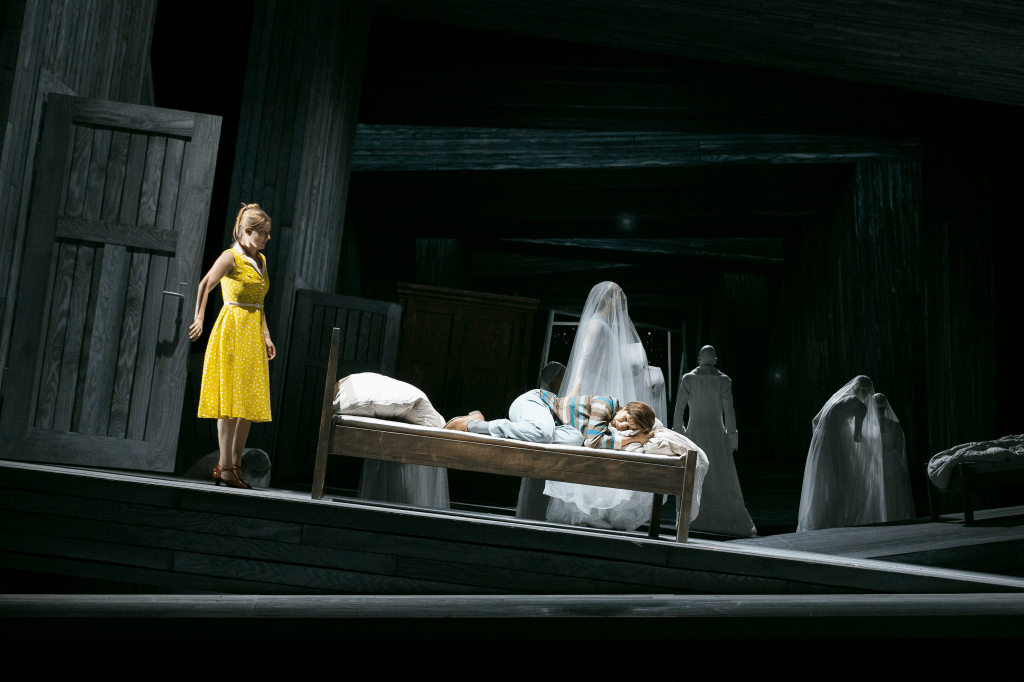
It’s evening. Bedtime, says Grandmother. And what’s always a good idea before sleep? A bedtime story. So Gerda tells Kay one.
She tells him about the troll’s mirror. About how it turns people cruel. Kay gets scared and hides under the blanket.
At the same time, down in the orchestra pit, something unusual is happening. Another pair of feet climbs onto the podium! Suddenly, there are two conductors – each waving at their own corner of the orchestra. Metrical modulations. Shifted rhythms. The music pulls apart, just as the world on stage begins to do the same.
© Semperoper Dresden/ Mark Schulze Steinen.
Kay and Gerda are close friends – BFFs. Then the troll’s mirror gets involved. A tiny splinter slips into Kay’s eye, settles in his heart. Something shifts. He no longer fits in with the other children. Gerda and Kay stop singing in sync. His lines begin to snag and stumble, both in his singing and in the way he treats her.
When the Snow Queen carries him away, everyone gives up. Drowned, they say. Down the river. Done.
Or… not everyone. Gerda knows he’s still out there. And no matter how freezing it gets, or how far she has to go, she’s not stopping. That stubborn, snow-soaked search is the story Hans Abrahamsen sets to music.
Let It Snow! Let It Snow! Let It Snow!
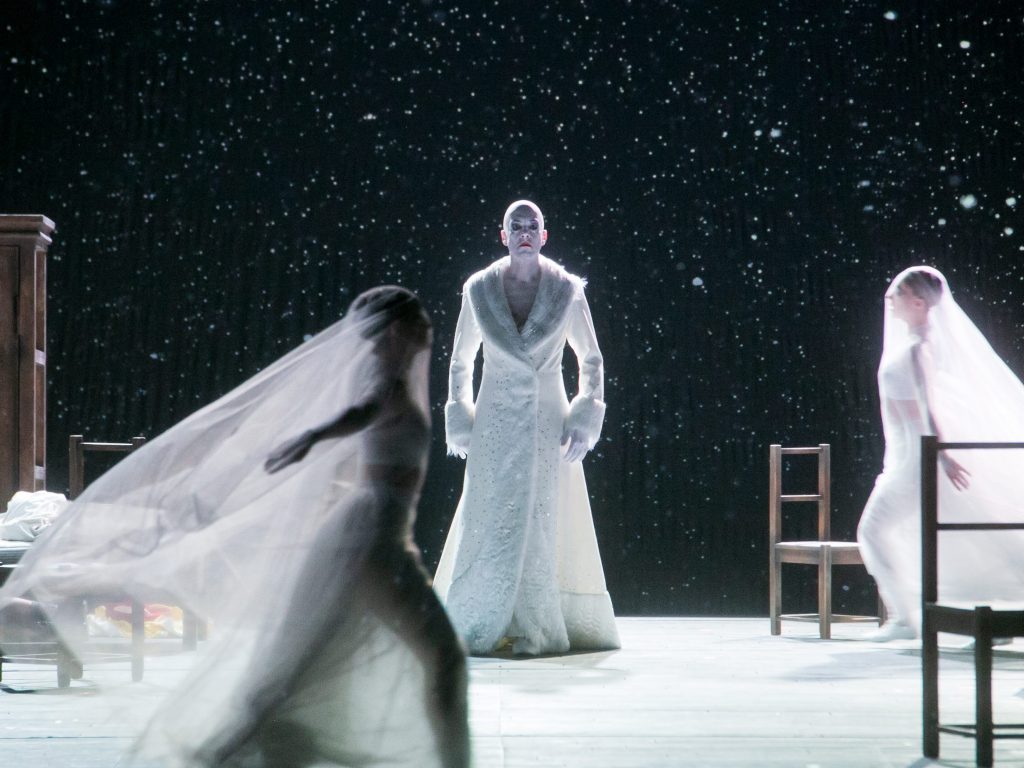
Things turn even more magnificent the moment the Snow Queen steps in. A storm breaks loose. Dancers in white rush across the floor, veils flying, bodies spinning in tight, relentless circles – showing snowflakes caught mid-blizzard. Light slices through the space, video projections flicker and fall. Suddenly, we’re inside it all.
Abrahamsen seems to have gone wild in a music shop. A wind machine, accordion, a synthesizer doing its best harmonium impression, Wagner tubas, marimba, sandpaper, bass drums… and a small army of other percussion instruments. The woodwinds, too, are richly scored.
The orchestra is constantly in on the action. It comments, reacts, and sometimes straight-up copies what’s happening on stage. Claves crackling like echoes in the forest, instruments chiming in mid-phrase, finishing a singer’s thought. At times, the orchestra even starts to sing along. Occasionally, a character gets a musical double: a voice suddenly shadowed by a trumpet, a timpani or a tuba.
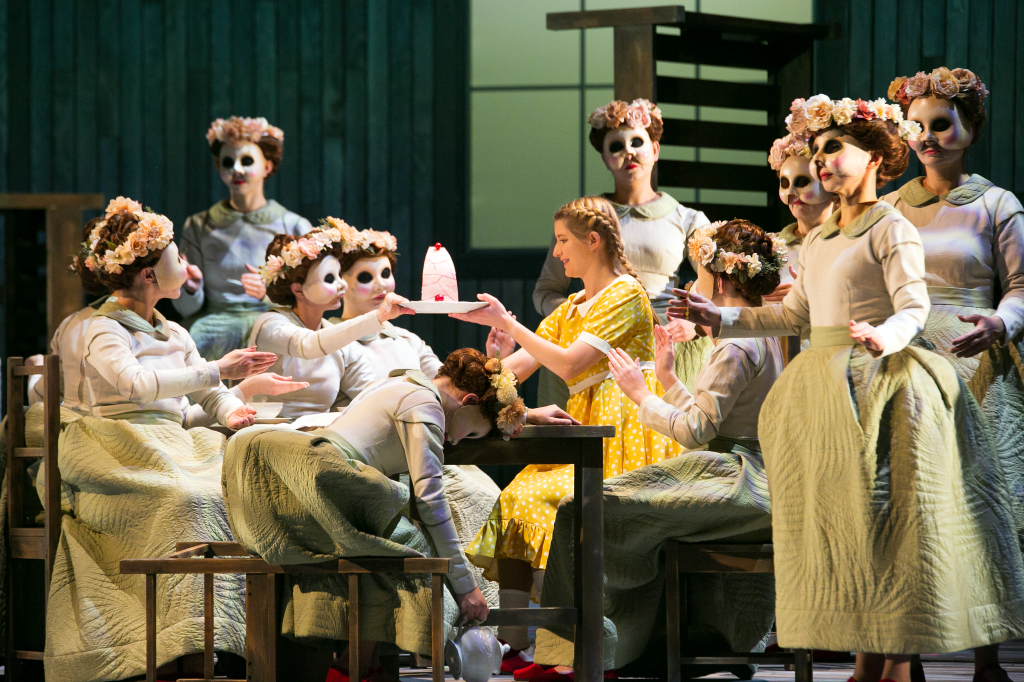
Vocally, it’s beautifully built – delicate as snow, sharp as the cold. Everything feels organic in its own original orbit. The chorus gets stuck in loops, skipping like a scratched CD, while the reindeer only spits out one word at a time. Which, frankly, fits – he’s not human. Speech itself is already a stretch.
There’s no doubt about it. This is crystal-clear, Hans Abrahamsen. It’s as much about the smallest moment as about being inside and breathing within the musical world.
There’s only one scene with two conductors in the pit. The rest of the time, Titus Engel runs the show, bit by bit.
You barely notice that the time signature seems to change from bar to bar, or that Abrahamsen has tossed a whole handful of polyrhythms into the score. Or, well – you might hear it, it just doesn’t feel like numbers or careful calculation. Sächsische Staatskapelle Dresden plays it chillingly convincing.
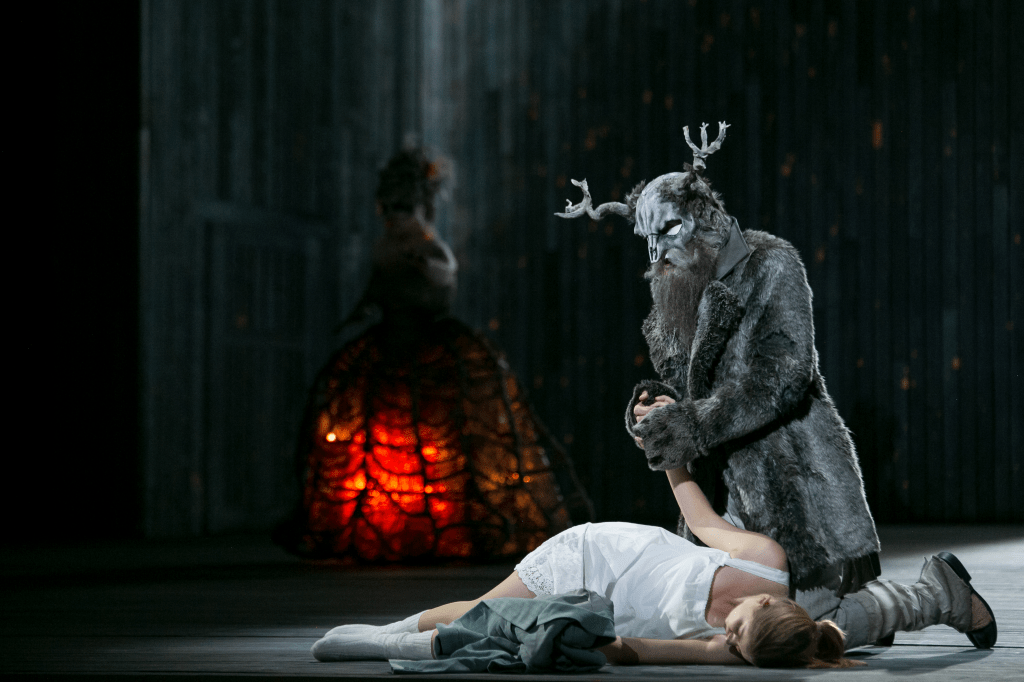
© Semperoper Dresden/ Mark Schulze Steinen.
Where are we?
We start at home. At Grandmother’s. Big chairs. An enormous bed. Very safe. Very familiar.
Then – whoosh – we’re out in the wind. Up at the Snow Queen’s freezing castle in Lapland. And in the end, yes, we somehow end up back home again. Home–away–home. Textbook fairy tale.
But something has changed when we come Bach. Everything feels smaller now – or maybe they’re just bigger…
Or perhaps we never left at all. The same four walls, over and over again. Was it all a dream?
And that’s not even the best part. Grandmother wakes up in her chair, Gerda’s red cardigan folded unfinished in her lap. Then mini-Kay and mini-Gerda come running in, full speed.
Once again, we see Gerda tell the troll story. Once again, Kay hides under the blanket. This time without words (A Lied ohne Worte, if you like). Kay heads off on his own. Gerda dances with the flowers.
So, in the final minutes, everything plays out again. Now with adult Gerda and adult Kay watching from the side. They see the journey the other one has been on, far and wide.
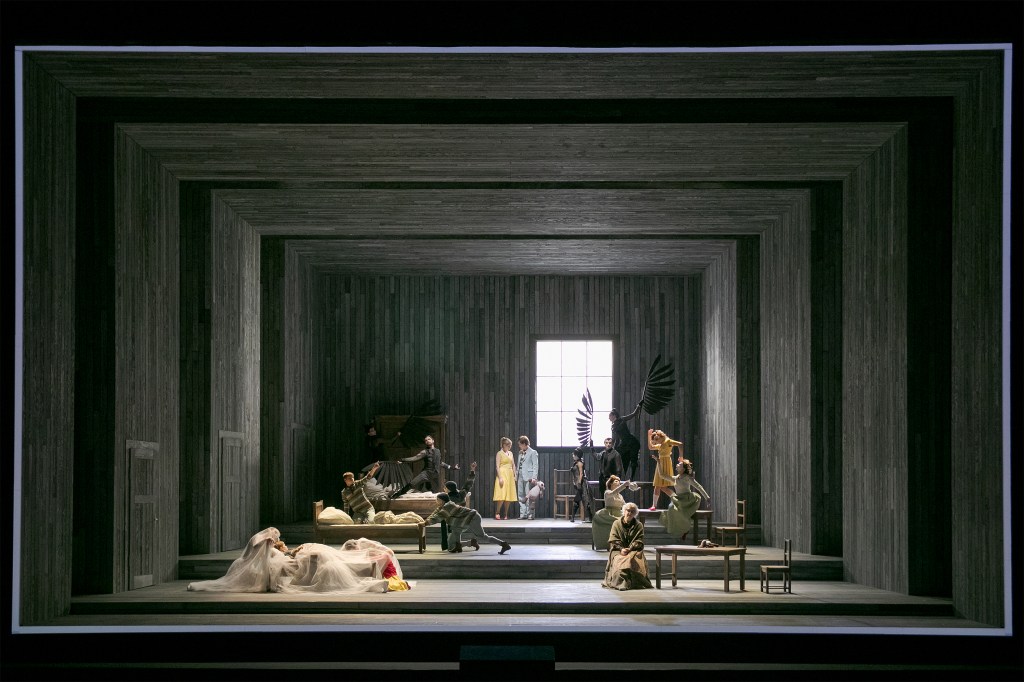
Simple? Think again
Regarding Immo Karaman’s staging, a lot of small things are quietly at work: figures mirrored, shadows cast, colours set against each other, warm vs. cold. An eye peers in through the window, frost creeps along the window frames, the chorus appears high up in the boxes.
The stage opens, splits, and turns, unfolding in layers that seem to stretch on and on. Light and video tie it all together. It’s clever – the kind of clever that makes you stop and think why things are done the way they are. It never tips over into too much.
It’s a really well-crafted production. A lot is going on beneath the surface, and the layers keep revealing themselves – even now, as I’m writing this. I wouldn’t be surprised if it taps me on the shoulder again tomorrow.

Singing the Snowstorm
The cast is finely tuned throughout. Kay, sung as a trouser role by Valerie Eickhoff, is well matched with Louise McClelland Jacobsen as Gerda; the two voices balance each other convincingly in colour, clarity, and articulation. Both sing with focus and control.
The same level of precision applies to Christa Mayer and Georg Zeppenfeld, each of whom takes on three (!) distinct roles. Though their characters don’t exactly demand wild acting skills. Still, the smallest gestures – especially from Zeppenfeld as the reindeer – show a lot. A flick here, a movement there, and you instantly know what he’s up to.
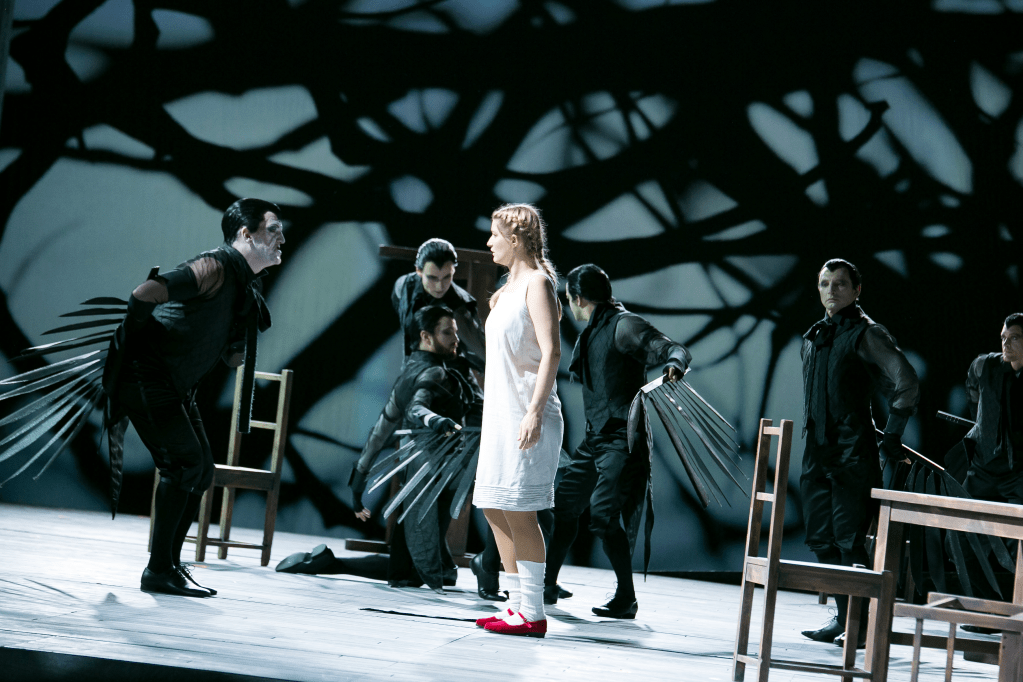
Some might argue that Jacobsen’s voice is already a little too broad – a bit too “grown-up” – for young Gerda. But she still does a great job. Maybe Gerda is just a little more mature for her age.
Still wondering what snow sounds like? You could try to catch one of the last three performances of The Snow Queen. Good luck – they’re all sold out.
If not, you can opt for the slightly warmer option: the composer shares his own forecast on snow and sound in an interview I conducted with him, which you can read here.
It begins with wind – but without the winds. It ends the other way around. Two bare notes, a fifth apart, left hanging. Leaving everything open.
Fun Fact!
The first two acts of The Snow Queen have exactly the same time structure as Abrahamsen’s nine-instrument canons Schnee, only reversed!
Trailer:
Cast:
- Conductor: Titus Engel
- Composer: Hans Abrahamsen
- Staging: Immo Karaman
- Choreography: Fabian Posca
- Set Design: Arne Walther
- Costume Design: Nicola Reichert
- Lighting Design: Fabio Antoci
- Video: Philipp Contag-Lada
- Dramaturgy: Benedikt Stampfli
- Choir: Jonathan Becker
- Gerda: Louise McClelland Jacobsen
- Kay: Valerie Eickhoff
- Großmutter · Alte Frau · Finnenfrau: Christa Mayer
- Schneekönigin · Rentier · Uhr: Georg Zeppenfeld
- Waldkrähe: Simeon Esper
- Schlosskrähe: David DQ Lee
- Prinzessin: Jasmin Delfs
- Prince: Mario Lerchenberger
- Engelsstimmen: Anna Sax-Palimina, Maria König
Sächsischer Staatsopernchor Dresden
Sächsische Staatskapelle Dresden
- Dialogues des Carmélites, The Royal Danish Opera 2026
- Monster’s Paradise, Hamburgerische Staatsoper 2026
- Dialogues des Carmélites, Semperoper Dresden 2026
- Lohengrin, Staatsoper Berlin 2026
- Das kalte Herz, Staatsoper Berlin 2026
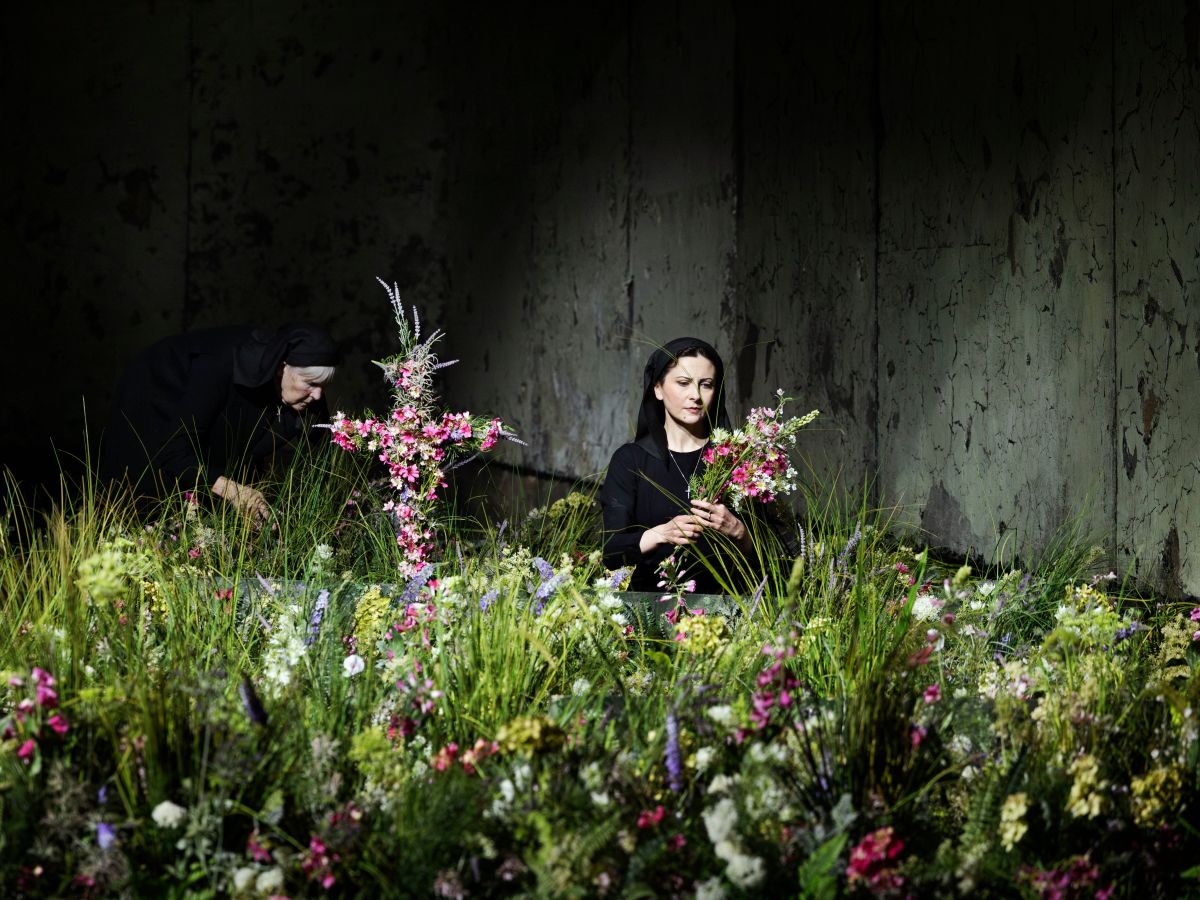
Dialogues des Carmélites, The Royal Danish Opera 2026
If you’re waiting for something to break, Act III is your moment. In Barrie Kosky’s production of Poulenc’s only long opera, it’s not the people – it’s the wall. We’re stuck in the same room. Boxed in by the same walls. First, inside the de la Force family. Then we convert to the Carmelites. Grey…

Monster’s Paradise, Hamburgerische Staatsoper 2026
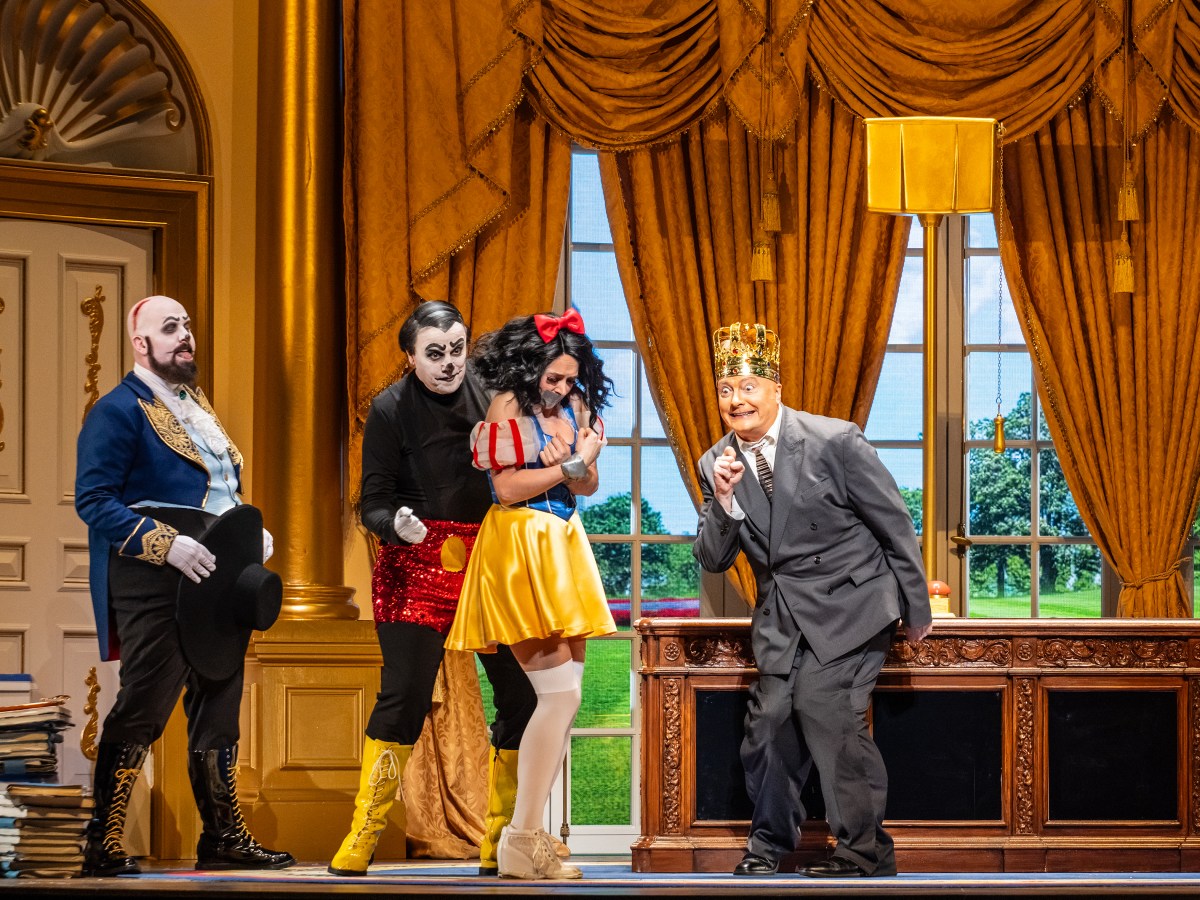
World premiere! A brand-new opera by Austrian composer Olga Neuwirth. Which basically means: no one knows what we’re about to listen to or experience. No map, no manual, no “how it’s usually done.” What is an opera, anyway? At what point do we decide that something is one? If this hadn’t taken place inside the…
Dialogues des Carmélites, Semperoper Dresden 2026
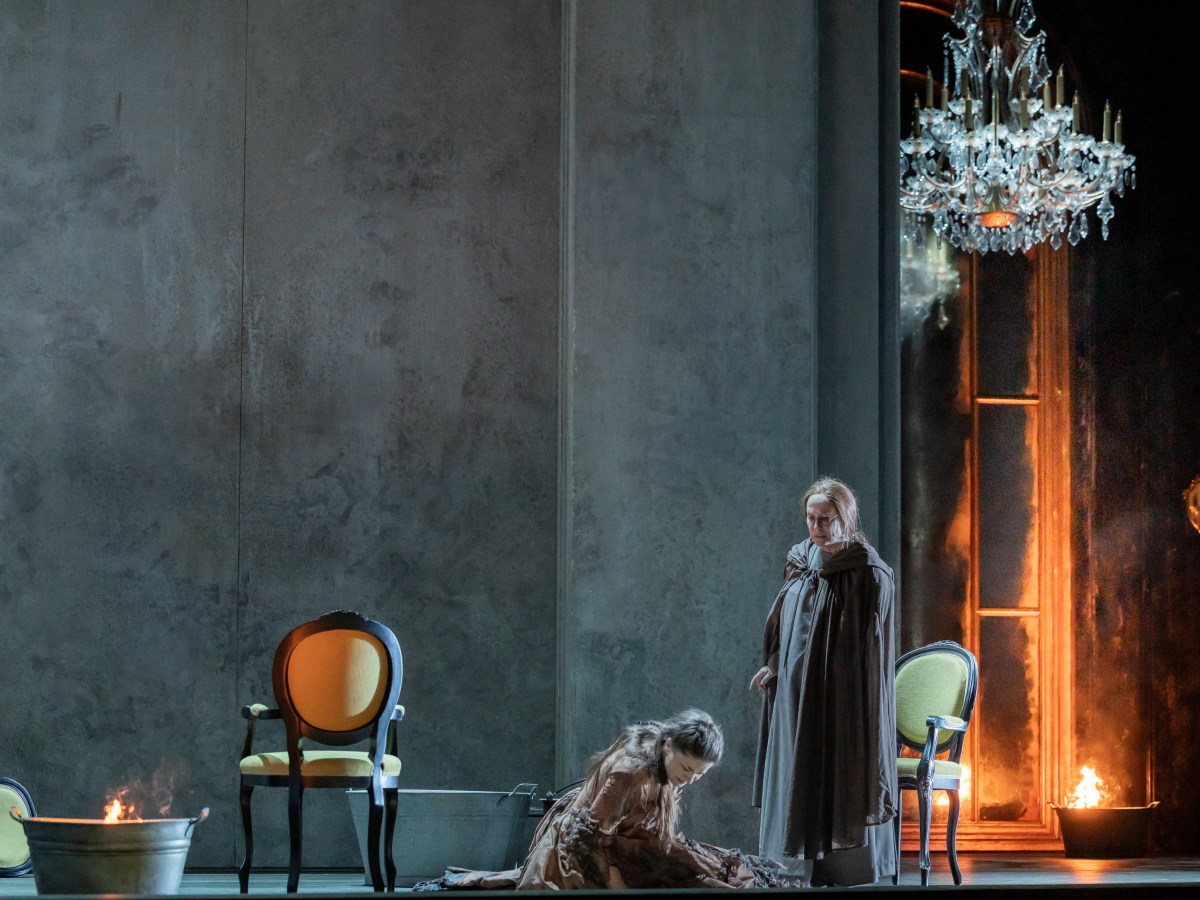
Did someone say Poulenc? At the Semperoper? For the first time ever with Dialogues des Carmélites? Yes, you heard that right. The French composer’s second opera has found its way to Dresden, in a production directed by Dutch Jetske Mijnssen. The prelude is silent. Curtain up. Blanche is already there, standing alone in a wide,…
 Blogfløjten