

Some opera seats feel less like chairs and more like catapults: you plop down, maybe unwrap a cough drop… and whoosh! You’re hurled straight into a whirlwind of guilt, ghosts, and governmental chaos.
And this one? It starts down in the pit. The bassoon kind of creeps out – like it’s sneaking past curfew – and sets the whole thing in motion with a theme we’re going to hear again. And again. And again. (Four and a half hours is a commitment, okay?)
Modest Mussorgksy wrote the first draft back in 1868/73, about forty years before Stravinsky unleashed his ballet Le Sacre du Printemps, which – fun fact – also begins with a bassoon solo. Coincidence? Inspiration? A little “Modest” borrowing?
Right, so, as I said: we’re basically thrown straight into the action (the cool kids might call it in medias res). We’re plopped onto a Russian street in 1598. Technically, it’s the town square but vibe-wise? Think prison courtyard.
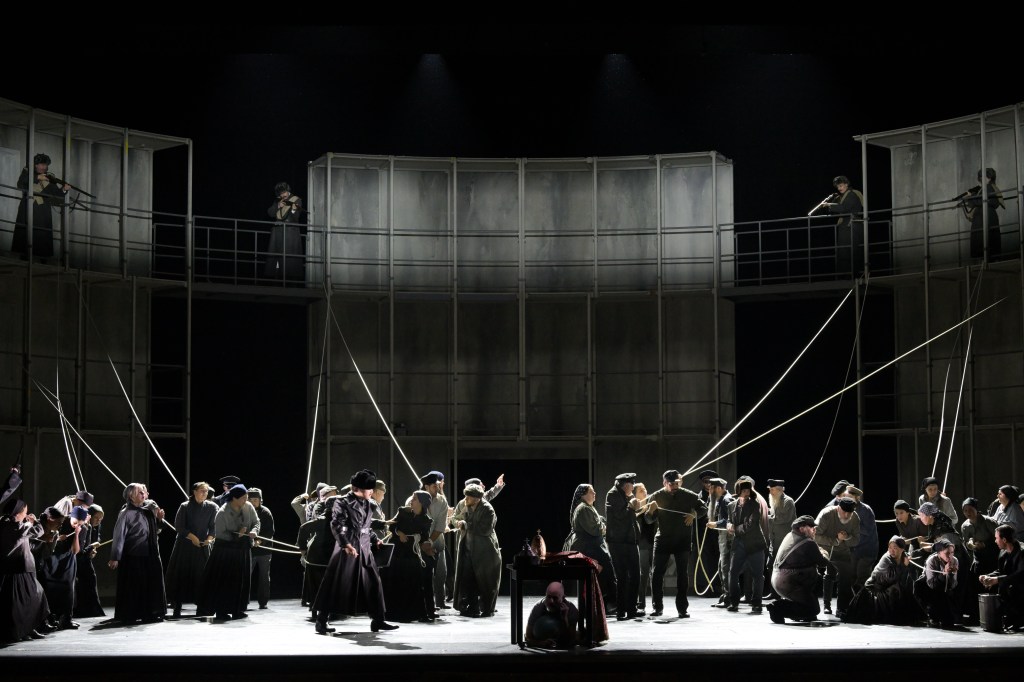
Guards line the walls. They pull random people forward. The crowd screams out of pure, undiluted terror – the kind that shoots straight into your bone marrow. They say it themselves: “We are in tears and beg you: have mercy.” So yeah… not exactly a community running on sunshine and positive affirmations.
A lot of people on stage naturally means one thing: chorus time. And in this production, they did a fantastic job – sharp, powerful, and present (also acting-wise). Just a little over two weeks ago I heard Khovanshchina in Berlin (yes, yes, you can read about that adventure right here), and the music in the prologue could honestly have been lifted straight from it.
Or… maybe it’s more correct to flip that around, because Boris Godunov is actually Mussorgksy’s first (and only) fully completed opera. Still, musically? The family resemblance is very strong. Siblings sharing the same moody and melodic DNA.

Grey(t)
Most of the staging is grey. Grey, arched concrete walls spin slowly around the stage, cold and heavy. They work as walls in different settings: a tavern, a monk’s bookshelf, the tsar’s palace. The only real colour comes from the costumes (and the lightning). Just like in Claus Guth’s Khovanshchina in Berlin, Kaspar Glarner’s outfits throw us straight back in time. This time to a Russia without a tsar.
That’s where Godunov comes in. Boris becomes the boss but he’s haunted (by guilt?). People whisper that he might have had a hand in the death of the young heir, Dimitri. The boy who could have been the rightful ruler… oh, ohhh!
In the prologue, Boris is decked out in a magnificent coronation robe and a fur-edged hat, topped with a cross. Did they, by any chance, borrow the original?
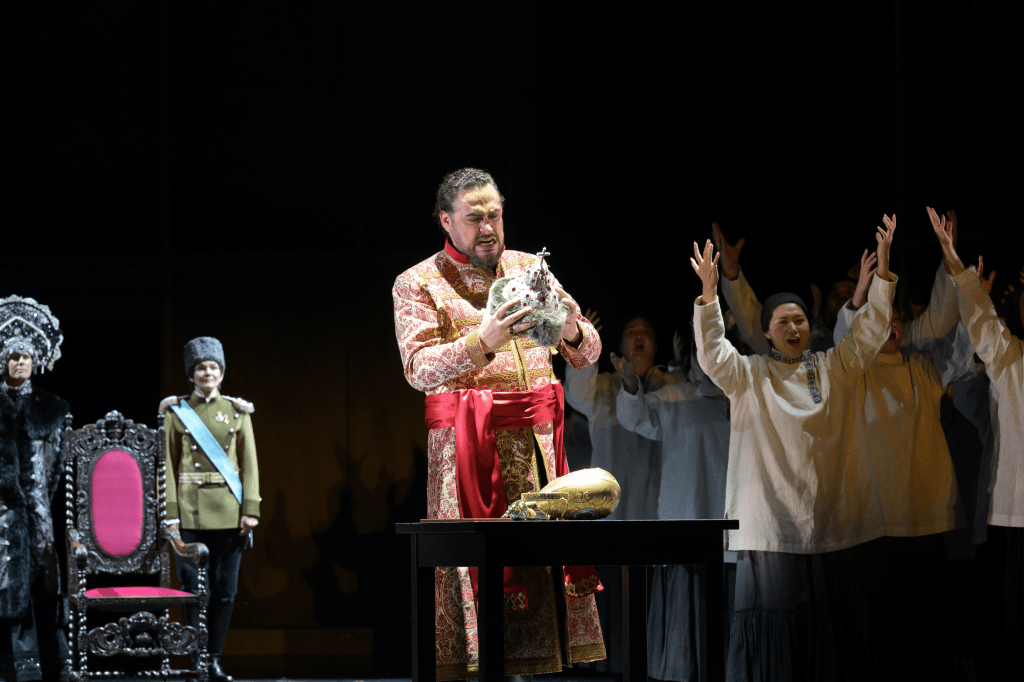
Meanwhile, other characters are stirring up trouble: boyars scheming for power, priests manipulating the people, and a mysterious pretender shows up, claiming to be (the supposedly dead) Dimitri. Boris tries to keep the country together, but the weight of the throne – and all the suspicion – slowly crushes him. Suddenly, he’s no longer interested in power, fame, or even life…
Eggstreme Power and The Big Crack…
Keith Warner’s new production also plays around with some interesting motifs. Take the egg, for example. It starts as a little golden lump he gets handed during his coronation, and over the acts it grows into bigger and bigger eggs – until, by the end, he can actually sit inside one on his fancy chairs. Is it a symbol of the crushing weight of power? The bigger the egg, the more the pressure? Or maybe a metaphor for his fate: something small that grows until it traps him completely. An egg can carry something important… but it can also break easily. Is it Boris cracking under the pressure, or the egg cracking on him?
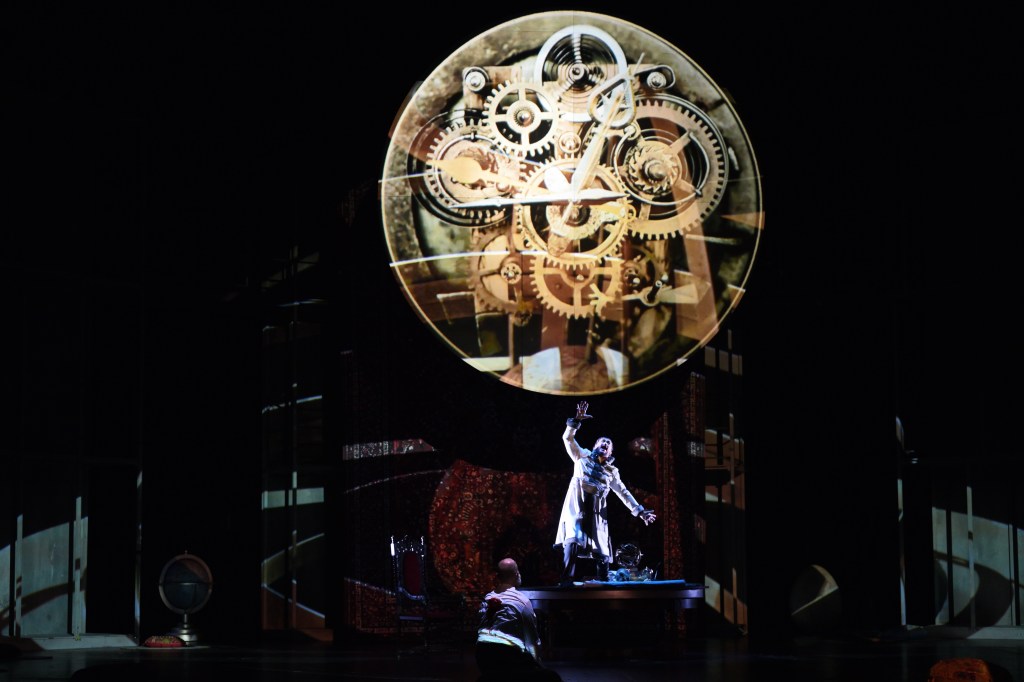
And (again) just like in Khovanshchina, it’s the low voices that dominate the landscape
Let’s start with Boris Godunov. He’s sung by the Ukrainian bass Alexander Tsymbalyuk. Ooh, he’s a bass, so his voice must sound… really deep *dramatic hand gestures*. Eh, scratch that. I mean, yes, it’s deep, but the tone calls for something more. Overtones, for instance. Some notes seem to linger and ring in the air. You could almost say his timbre resonates like a baritone but in a bass register. A bass-baritone, maybe. Musically, it was very clear exactly what he was doing.
At the other end of the spectrum, there’s the guy pretending to be Dmitri. He’s over there vocally because he’s a tenor (opposide bass), but also in personality – sneaky, selfish. And yes… he’s a character tenor, which is perfect, because his whole existence screams “trouble with a capital T.” In Warner’s production, Boris comes across as soft-hearted, maybe not quite as sly as people think. Not as many hidden secrets as the gossip claims.
There aren’t many female characters – so few, in fact, that Musorgsky actually got called out for it in his first draft from 1869 (see fun fact! at the bottom). The biggest one, both in voice and presence, is mezzo-soprano Sofija Petrović. She plays the gold-digger Marina Mnishek and absolutely owns her scene in Act Three. The trouser role of Karolina Makuła is also convincing in her portrayal of Boris’s son.
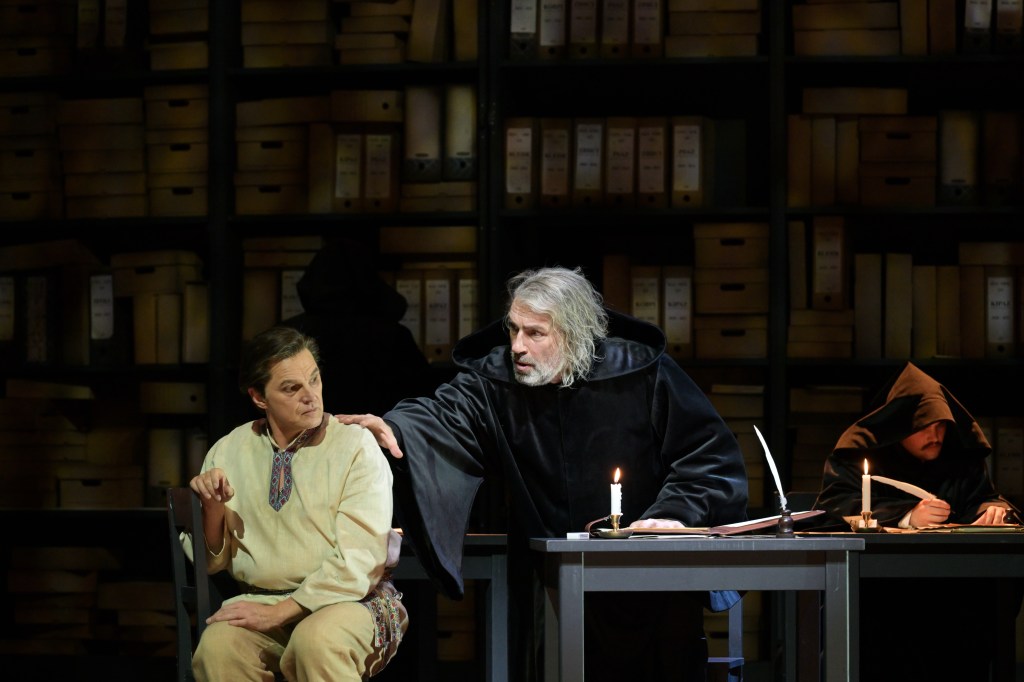
More basses? Oh, good question – and yes, there are plenty! One of them even has it in his last name: Andreas Bauer Kanabas, playing Pimen. A monk and chronicler, in charge of Russian history, and knows all the secrets people would rather keep hidden. He hides a bit himself under the enormous hood he walks around in. But the moment he opens his mouth, nothing’s hiding – every note projects crystal clear, especially in his narration in the final act.
The relatively small role of the “Holy Fool” becomes something bigger in this production – a symbol of the tsar’s guilt? A haunting presence popping up now and then. Nuanced tenor Michael McCown also shows off some super acting chops.
Thomas Guggeis is the GMD here at the Frankfurt Opera – the director, in every sense of the word. He used to be Daniel Barenboim’s assistant in Berlin, and if there’s one thing they share, it’s direction: those little and big waves of crescendos that constantly push the music forward. He keeps the orchestra in check, but in a good way – everyone follows along nicely.
Brezel
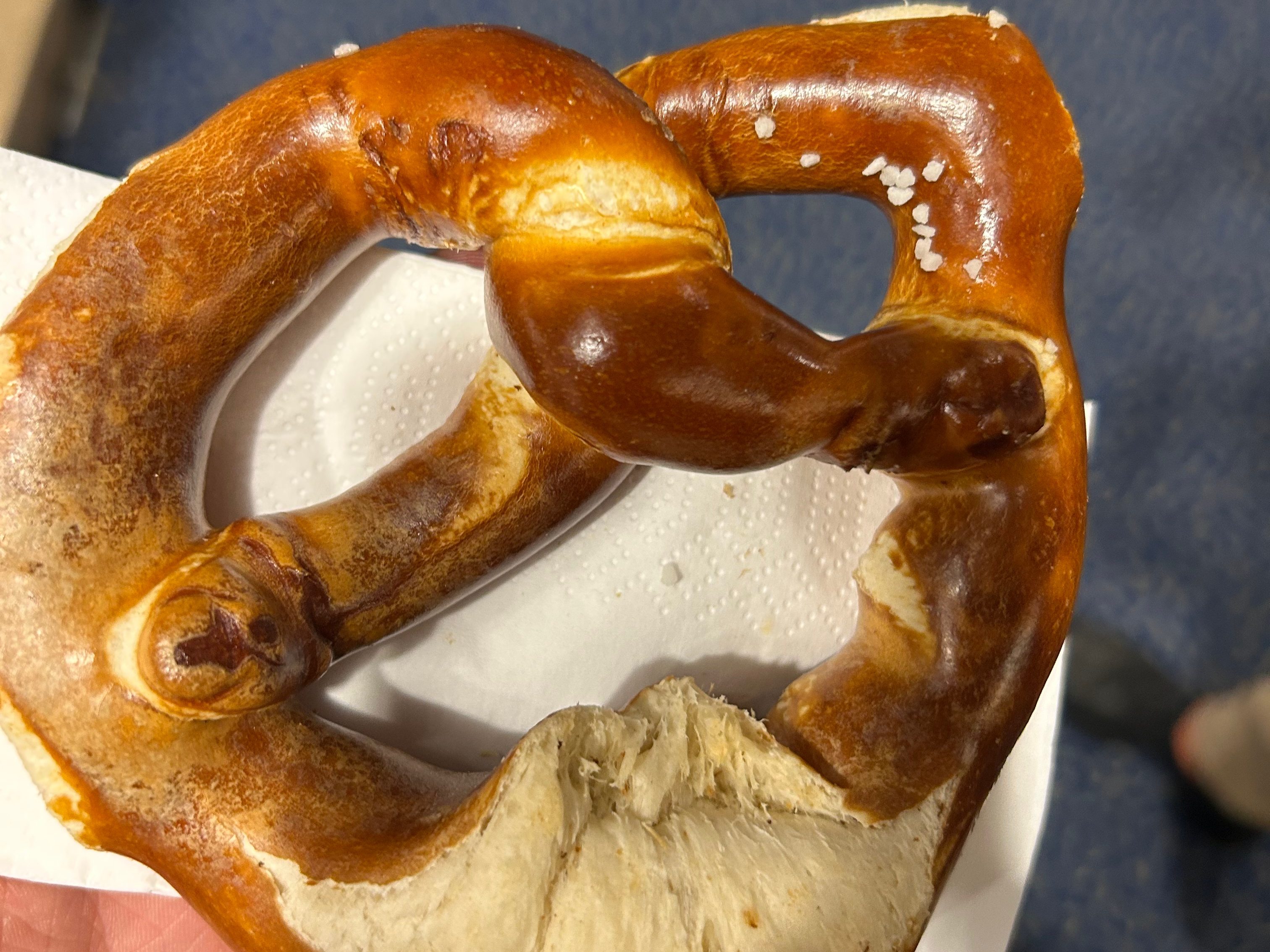
Huh? Why am I writing about a brezel? Well, if you’re new to my blog, here’s the thing: whenever I’m at the opera in Germany, the only sensible thing to do is get a brezel. So, naturally, I had to do a little taste-test, to see if the houses here can manage anything besides what’s happening on stage.
In Frankfurt, it was… well, eatable, as they say in Germany. Not dry, not crumbly. And for the first time ever, I actually got to choose between TWO kinds: salt or cheese. I went with salt, but honestly… it might have been hiding like Boris’ guilt under that massive coronation robe. The dough was airy, which always earns extra points.
Fun Fact!
Like his Khovanshchina and Verdi’s Don Carlo(s), Boris Godunov exists in several versions. Mussorgksy completed the first version in 1869 and a second in 1872, but it was Rimsky-Korsakov’s re-orchestrated version that first made it outside Russia. Later other composers, like Shostakovich, gave it a fresh coat of colours and textures with their re-orchestrations. The Frankfurt production uses Shostakovich’s version.
Trailer:
Cast:
- Conductor: Thomas Guggeis
- Director: Keith Warner
- Co-director: Katharina Kastening
- Set & Costume Designer: Kaspar Glarner
- Video: Jorge Cousineau
- Lighting Designer: John Bishop
- Chorus & Children’s Chorus Master: Álvaro Corral Matute
- Dramaturge: Mareike Wink
- Boris Godunov: Alexander Tsymbalyuk
- Feodor: Karolina Makuła
- Xenia: Anna Nekhames
- Xenia’s Nurse: Judita Nagyová
- Prince Shuisky / Boyar Khrushchov: AJ Glueckert
- Pimen: Andreas Bauer Kanabas
- Grigori Otrepjev: Dmitry Golovnin
- Marina Mnishek: Sofija Petrović
- Rangoni: Thomas Faulkner
- Varlaam: Inho Jeong
- Missail: Peter Marsh
- Innkeeper: Claudia Mahnke
- Holy Fool / Boyar Bodyguard: Michael McCown
- Andrei Tchelkalov: Mikołaj Trąbka
- Mikitich / Chernikovsky: Morgan-Andrew King
- Mitiukha / Lavitsky: Frederic Jost
- Countrywomen: Magdalena Tomczuk, Chloe Robbins, Grace Eunchoung Choi, Tiina Lönnmark
Oper Frankfurt’s Chorus & Children’s Chorus
Frankfurt Opern and Museumsorchester
- Dialogues des Carmélites, The Royal Danish Opera 2026
- Monster’s Paradise, Hamburgerische Staatsoper 2026
- Dialogues des Carmélites, Semperoper Dresden 2026
- Lohengrin, Staatsoper Berlin 2026
- Das kalte Herz, Staatsoper Berlin 2026
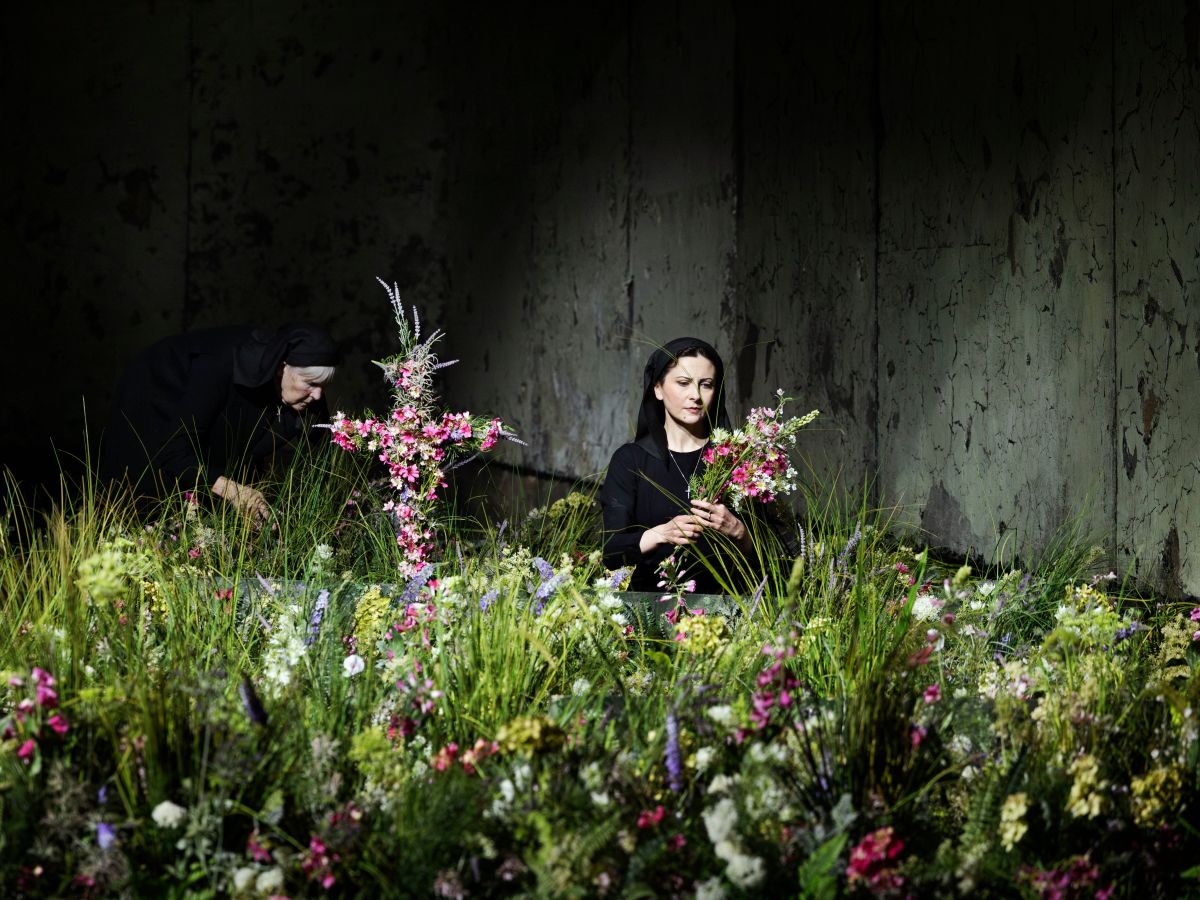
Dialogues des Carmélites, The Royal Danish Opera 2026
If you’re waiting for something to break, Act III is your moment. In Barrie Kosky’s production of Poulenc’s only long opera, it’s not the people – it’s the wall. We’re stuck in the same room. Boxed in by the same walls. First, inside the de la Force family. Then we convert to the Carmelites. Grey…

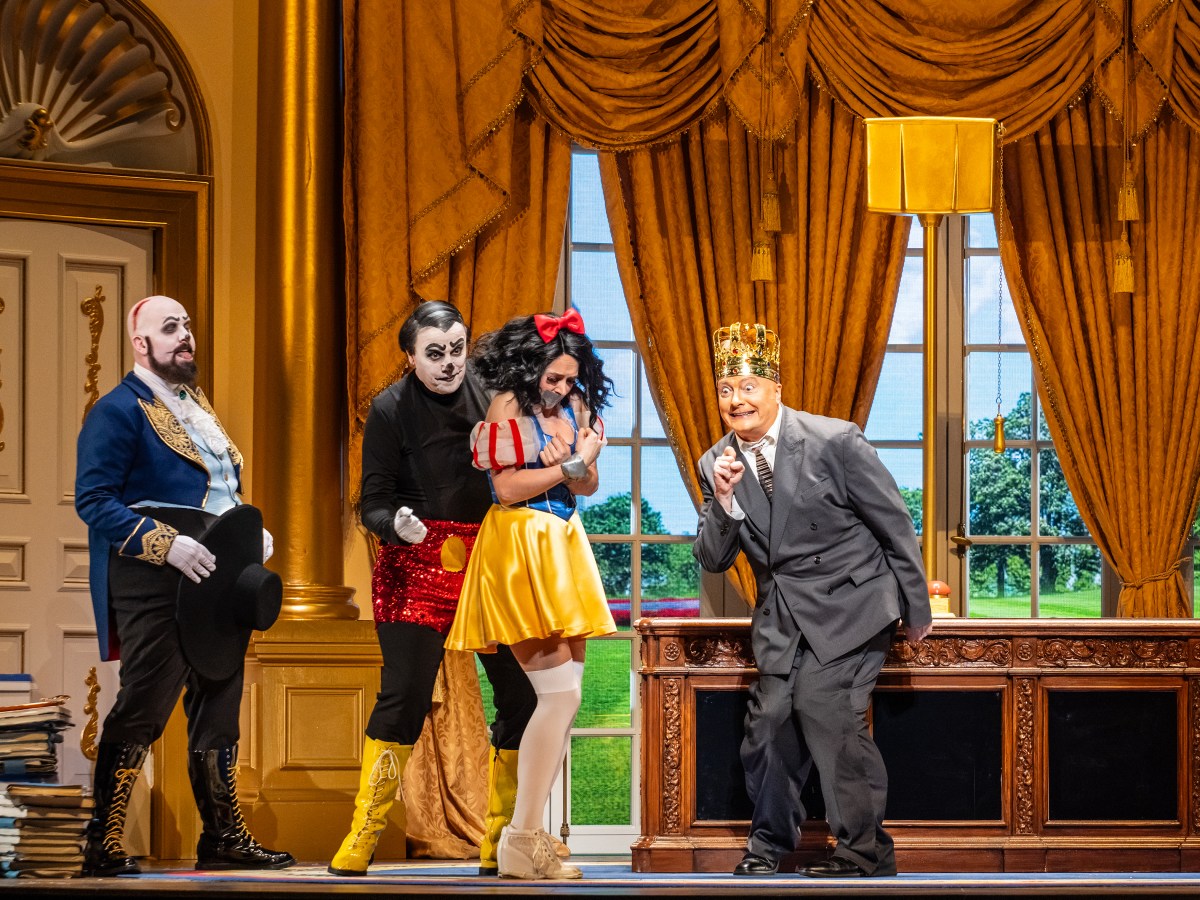
Monster’s Paradise, Hamburgerische Staatsoper 2026
World premiere! A brand-new opera by Austrian composer Olga Neuwirth. Which basically means: no one knows what we’re about to listen to or experience. No map, no manual, no “how it’s usually done.” What is an opera, anyway? At what point do we decide that something is one? If this hadn’t taken place inside the…
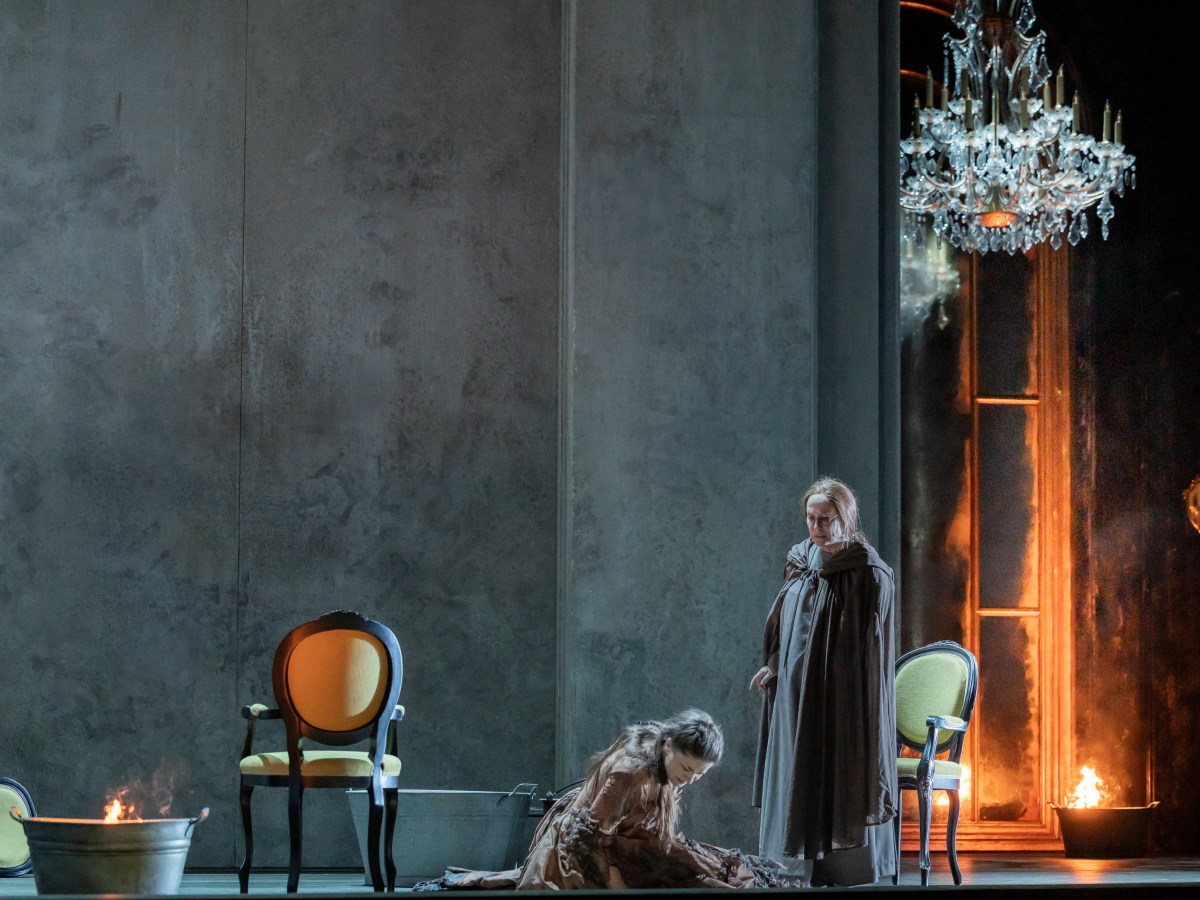
Dialogues des Carmélites, Semperoper Dresden 2026
Did someone say Poulenc? At the Semperoper? For the first time ever with Dialogues des Carmélites? Yes, you heard that right. The French composer’s second opera has found its way to Dresden, in a production directed by Dutch Jetske Mijnssen. The prelude is silent. Curtain up. Blanche is already there, standing alone in a wide,…
 Blogfløjten