
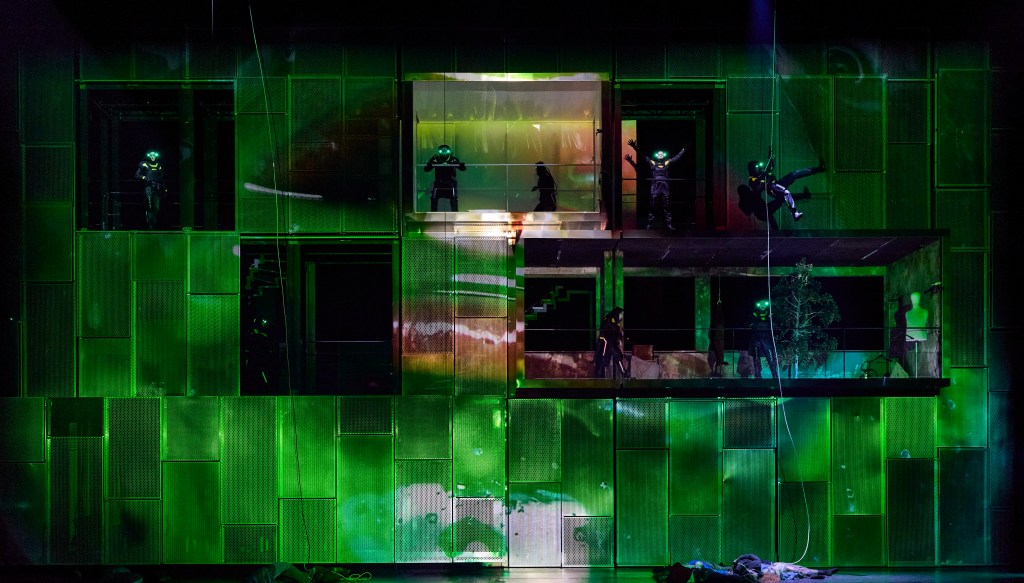
The world is in ruins. To step outside, you need a gas mask or an oxygen tank. Not to mention all the layers of clothing shielding you from… radiation? Pollution? Who knows. Either way, that’s the world Calixto Bieito throws us into in his new Walküre, which premiered yesterday at the Bastille Opera.
Siegmund bursts into Sieglinde’s place, weighed down by all his gear. He takes it off, revealing skin that’s clearly seen better days. The room around them isn’t doing much better. The walls are dirty, the curtains full of holes, and in the middle stands a tiny tree (maybe for better air?).
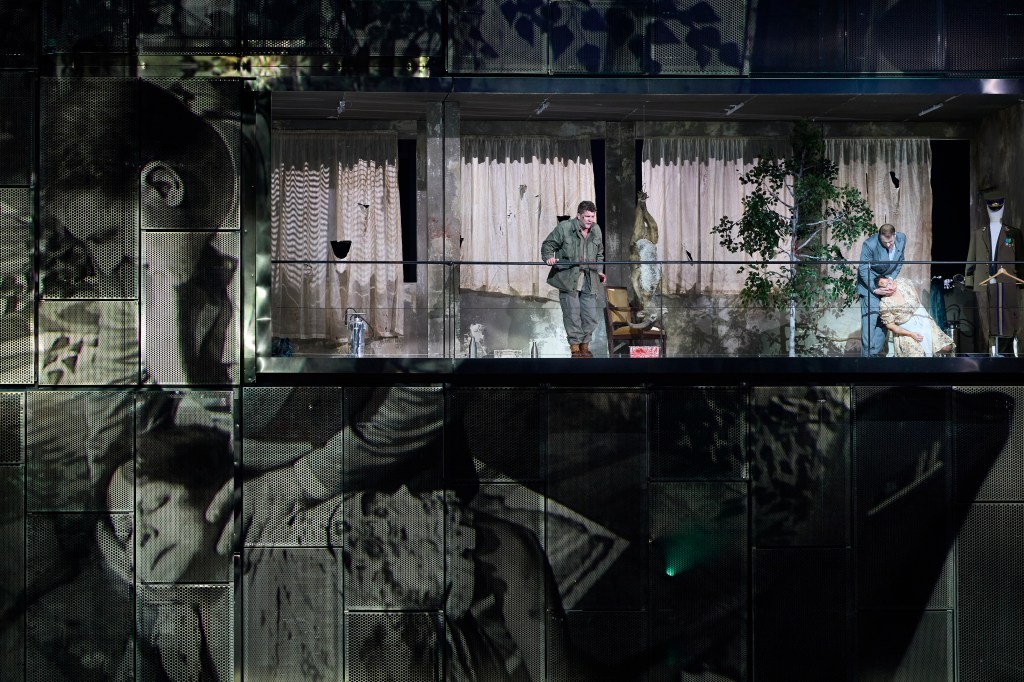
Sieglinde herself is covered in bruises and dirt, though something says those marks didn’t come from outside. Her husband, Hunding, keeps her on a short leash. He barks orders more than he talks. His hair is slicked back with what looks like pure grease, fixed neatly to one side – a man polished on the outside, rotten underneath.
When he comes home, he switches out of his sharp suit – the kind that could’ve wandered straight out of the 1930s – and into a green military uniform, hat and all. And… wait a second, is that an SS insignia on his shoulders? Could it mean Siegmund has escaped from a concentration camp?
Well, they definitely didn’t have robot dogs back then, and I’m not sure video surveillance was a thing either. With cameras in the corners, you’re never alone. Maybe some bigger system is watching you from somewhere…?
In the first act, I thought I’d figured out the concept Bieito had layered over the ring. Turns out… nope, not even close.
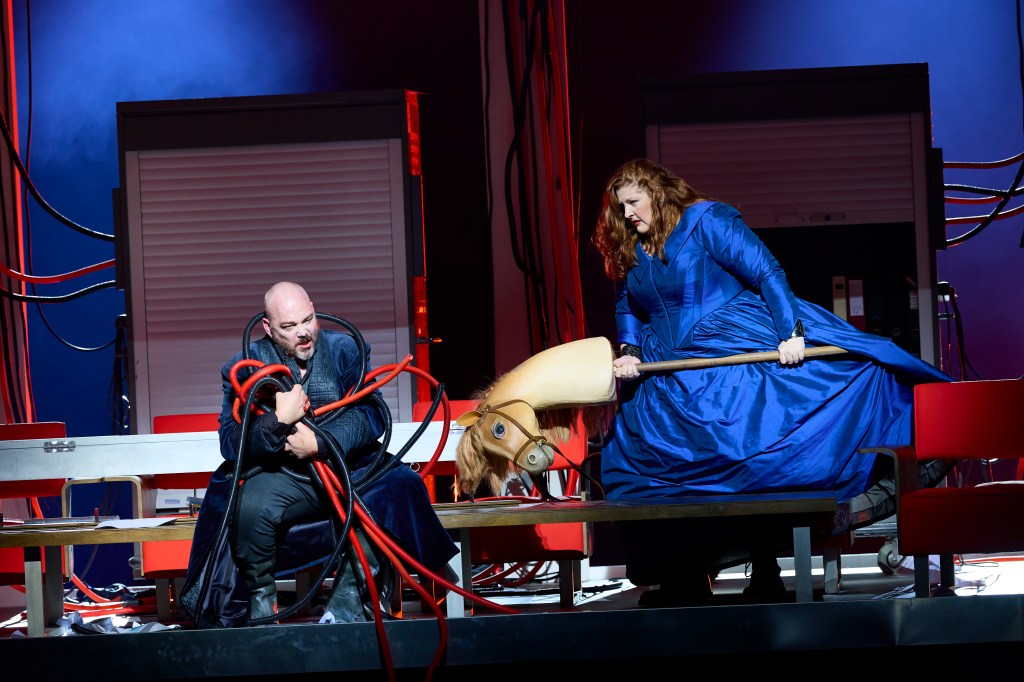
By the second act, we’re in a room full of wires. No more guns, no more men in stiff uniforms. Instead, Brünnhilde rides in on her toy play horse, wearing a huge blue dress that could almost pass for a fairytale princess’s. And if you really lean into that game, Fricka starts looking suspiciously like Elsa from Disney’s Frozen. Though, somehow, I doubt Bieito was thinking “let it go” when he chose her outfit. More like “let him go”?

Maybe the princess theme is about showing that Brünnhilde is still young and playful at the start. She goes along with Wotan’s games, not quite her own person yet – but don’t worry, that’s about to change.
Wotan isn’t exactly a soft, forgiving father. In his monologue in the second act, he lashes out at her. She ducks, clearly afraid. But she grows. By the end, it’s her holding the toy horse, keeping Wotan in place. That slightly silly princess dress? Gone. She’s draped it over him instead. Now, she’s the one calling the shots.
By the third act, we’re in on it too. A video of the audience hall is thrown up on the back wall, revealing a room full of human-robots.
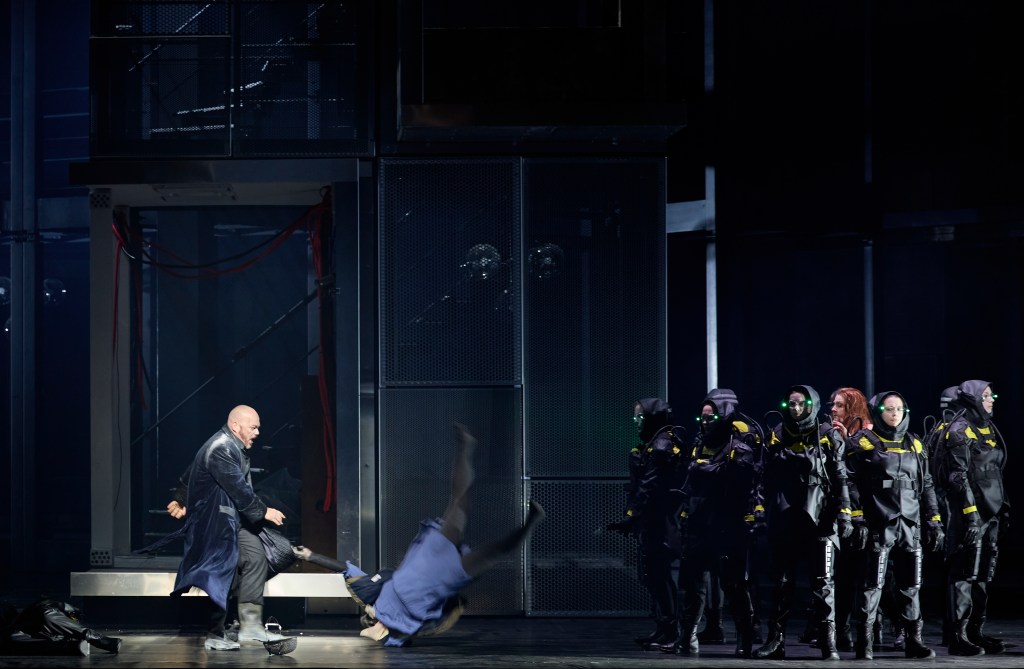
During the prelude, chaos reigns on stage: Several different videos are projected – kind of giving off a Netflix-trailer vibe – but dominating are the war clips. Buildings collapsing, helicopters crashing, people being thrown from way too many meters, everything going up in smoke. Suddenly, their “hojotoho” doesn’t just sound like a battle cry – maybe it’s a call for help? Or maybe it’s exactly a victory shout? It gives off serious Apocalypse Now (a movie) vibes, which also famously uses The Ride of the Valkyries in its soundtrack. Coincidence?
You can say a lot about Pablo Heras-Casado
But boring? Not one of them. From the very first measure, he makes it clear he’s not going to conduct Wagner like everyone else. The way he throws the deep strings into the storm is so precise, so controlled, that their fortes almost feel like accents: sudden and sharp.
Wagner doesn’t always have to be big, broad, and dramatic. Nope, Heras-Casado’s conducting sometimes gives us almost the opposite. Everything is transparent, almost chamber-music-like. You can hear all the tiny melodies, voices, and motifs. Even the character of the different motifs might offer something a bit unexpected. The Walhalla motif, for example, isn’t always played loud and pompous.

Heras-Casado gives us a fresh, new take on Wagner – something you might not have come across before.
Someone we have come across before is Günther Gröissböck. His bass is fascinatingly rich, and by now he’s sung pretty much everywhere: Vienna (mostly), Berlin, Milan, New York, Madrid, Bayreuth… and of course, Paris. One of the things that makes him stand out is how clearly he projects the text. Last night, you could hear every single word, and it’s obvious he knows exactly what he’s singing about (not just because it’s his mother tongue), but because he completely gets both the music and its meaning.
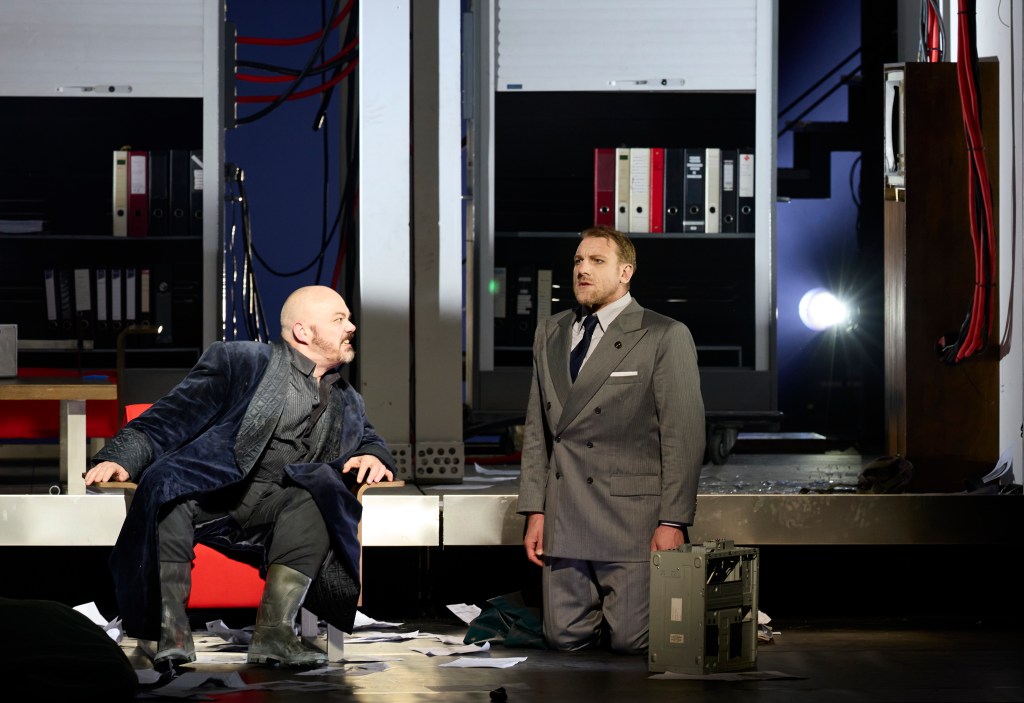
Christopher Maltman was thrown into the role not long ago (replacing Iain Paterson), but he’s taken it in stride. His voice filled the huge hall, which holds just over 2,700 people, making it the largest in Europe.
It also looked like a piece of cake for the American soprano Tamara Wilson to fill that enormous hall with her voice. Sieglinde (Elza van den Heever) kept getting stronger act by act, peaking in the third with “O hehrstes Wunder!” – one of those motifs that also sneaks in at the end of Götterdämmerung (some call it the “Redemption through Love” motif). And apart from a couple of tiny pitch slips from Stanislas de Barbeyrac, he was a convincing Siegmund. His Winterstürme certainly didn’t disappoint.
With a world that is already this messed up, I’m very curious to see how Calixto Bieito is going to tackle Siegfried and Götterdämmerung.
Fun Fact!
At the 1876 Bayreuth premiere of The Ring, reactions were… mixed. Eduard Hanslick grumbled that “The Ring will not be music for the future,” and found Die Walküre “so dull he thought it could’ve been dropped entirely.” “Its second act”, he said, was “an abyss of boredom.” He even complained that Wagner’s darkened theatre made it impossible to read the libretto.
Tchaikovsky agreed, calling the whole thing “endlessly and wearisomely spun out.”
Composer Charles Villiers Stanford, seated behind Liszt, even claimed that “the composer often nodded off to sleep.”
Still, Grieg praised the music as “divinely composed,” calling every passage “a pearl” and the orchestration “unbelievably well done.” Though, even he admitted a few parts might have benefited from a little trimming.
Cast:
- Conductor: Pablo Heras-Casado
- Director: Calixto Bieito
- Stage Designer: Rebecca Ringst
- Costume Designer: Ingo Krügler
- Lighting Designer: Michael Bauer
- Video: Sarah Derendinger
- Dramaturgy: Bettina Auer
- Siegmund: Stanislas de Barbeyrac
- Sieglinde: Elza van den Heever
- Hunding: Günther Groissböck
- Wotan: Christopher Maltman
- Brünnhilde: Tamara Wilson
- Fricka: Éve-Maud Hubeaux
- Gerhilde: Louise Foor
- Helmwige: Jessica Faselt
- Waltraute: Marie-Andrée Bouchard-Lesieur
- Schwertleite: Katharina Magiera
- Ortlinde: Laura Wilde
- Siegrune: Ida Aldrian
- Grimgerde: Marvic Monreal
- Roßweiße: Marie-Luise Dreßen
- Dialogues des Carmélites, The Royal Danish Opera 2026
- Monster’s Paradise, Hamburgerische Staatsoper 2026
- Dialogues des Carmélites, Semperoper Dresden 2026
- Lohengrin, Staatsoper Berlin 2026
- Das kalte Herz, Staatsoper Berlin 2026
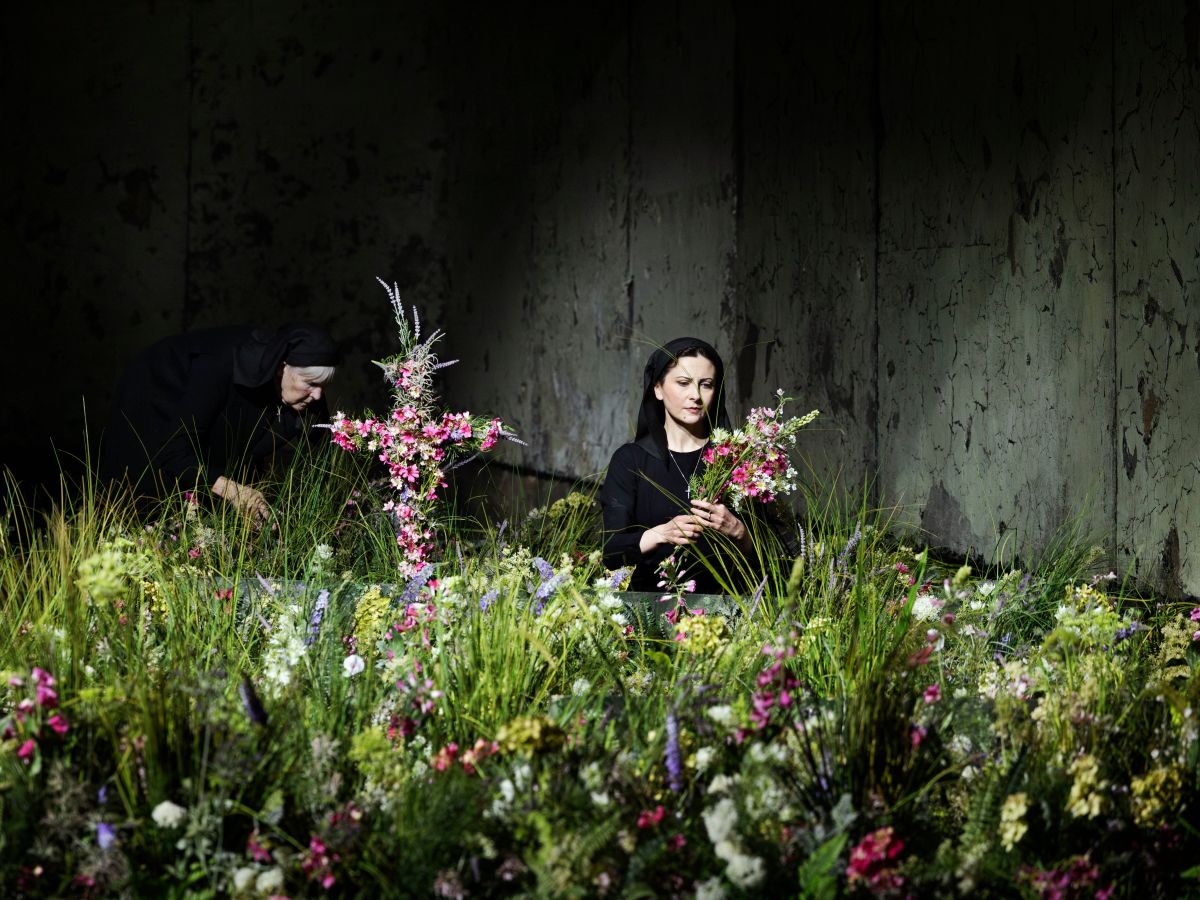
Dialogues des Carmélites, The Royal Danish Opera 2026
If you’re waiting for something to break, Act III is your moment. In Barrie Kosky’s production of Poulenc’s only long opera, it’s not the people – it’s the wall. We’re stuck in the same room. Boxed in by the same walls. First, inside the de la Force family. Then we convert to the Carmelites. Grey…

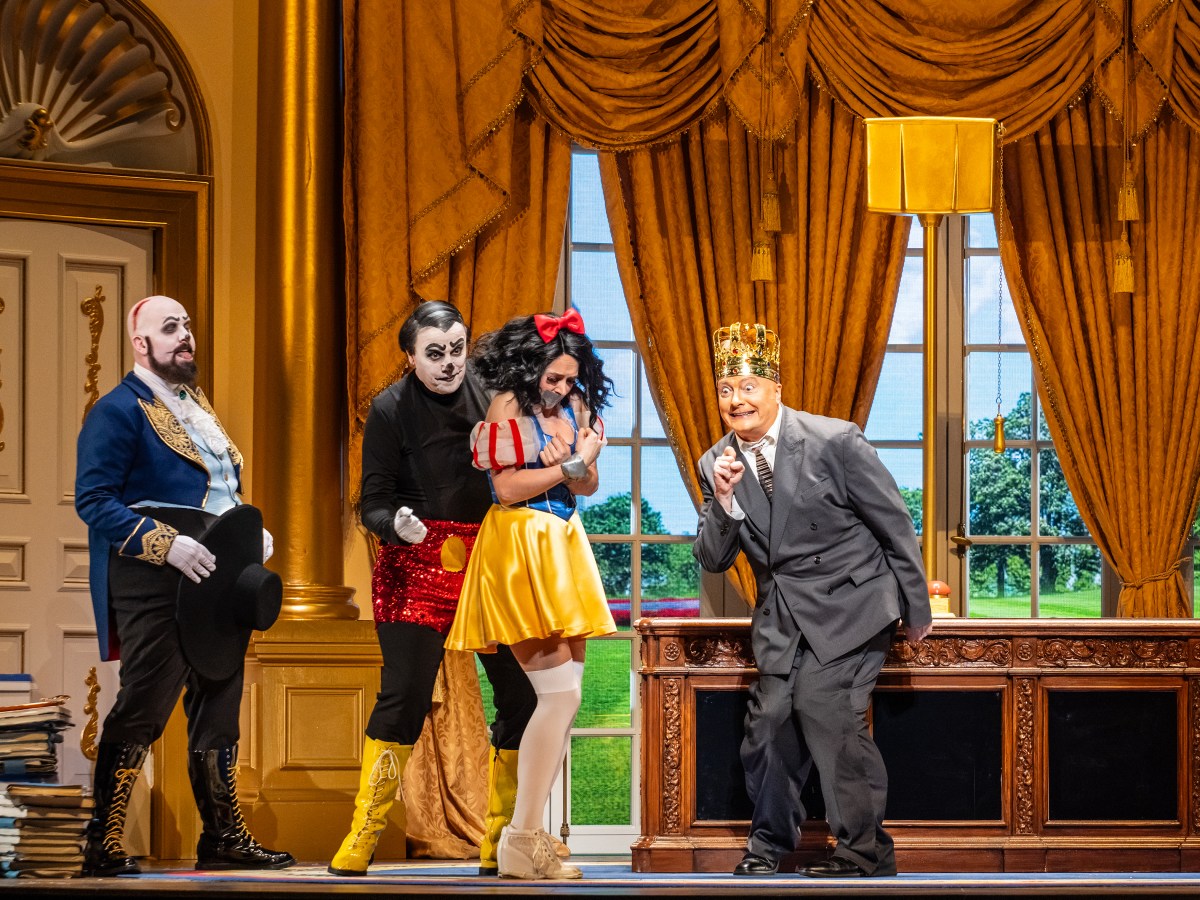
Monster’s Paradise, Hamburgerische Staatsoper 2026
World premiere! A brand-new opera by Austrian composer Olga Neuwirth. Which basically means: no one knows what we’re about to listen to or experience. No map, no manual, no “how it’s usually done.” What is an opera, anyway? At what point do we decide that something is one? If this hadn’t taken place inside the…
Dialogues des Carmélites, Semperoper Dresden 2026
Did someone say Poulenc? At the Semperoper? For the first time ever with Dialogues des Carmélites? Yes, you heard that right. The French composer’s second opera has found its way to Dresden, in a production directed by Dutch Jetske Mijnssen. The prelude is silent. Curtain up. Blanche is already there, standing alone in a wide,…
 Blogfløjten