
Well, I wasn’t planning on writing a third post this weekend… but tonight was just too good to keep to myself!
The production, dreamed up by the creative German Claus Guth, premiered about a year and a half ago. Back then, Berlin and I had a scheduling disagreement (aka I couldn’t make it), so it was definitely about time I pencilled it in. And oh boy, was it worth the wait!
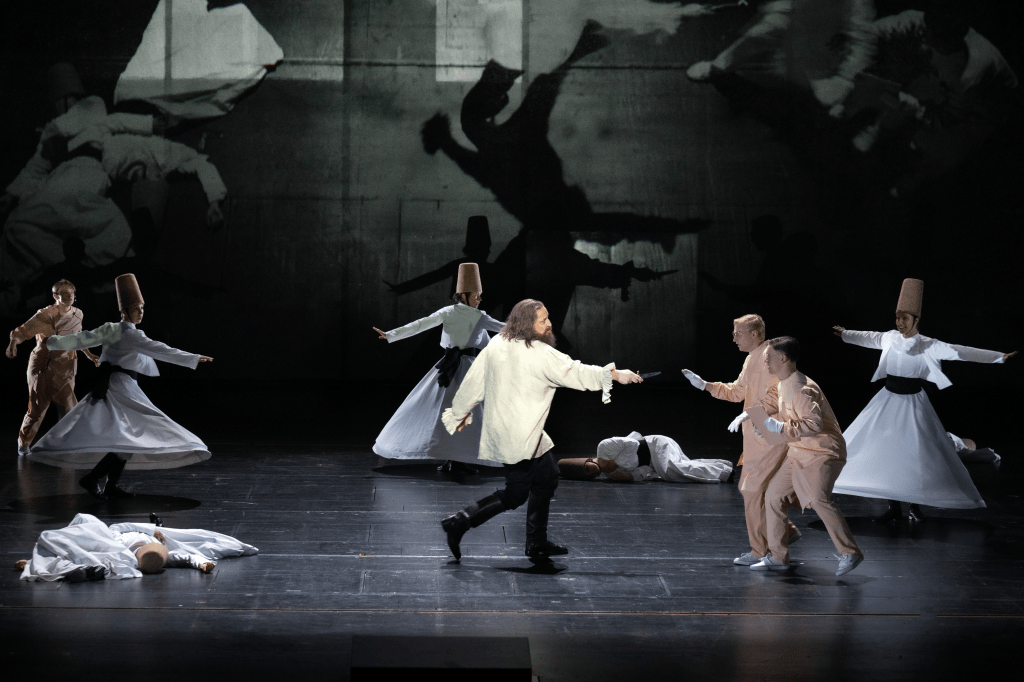
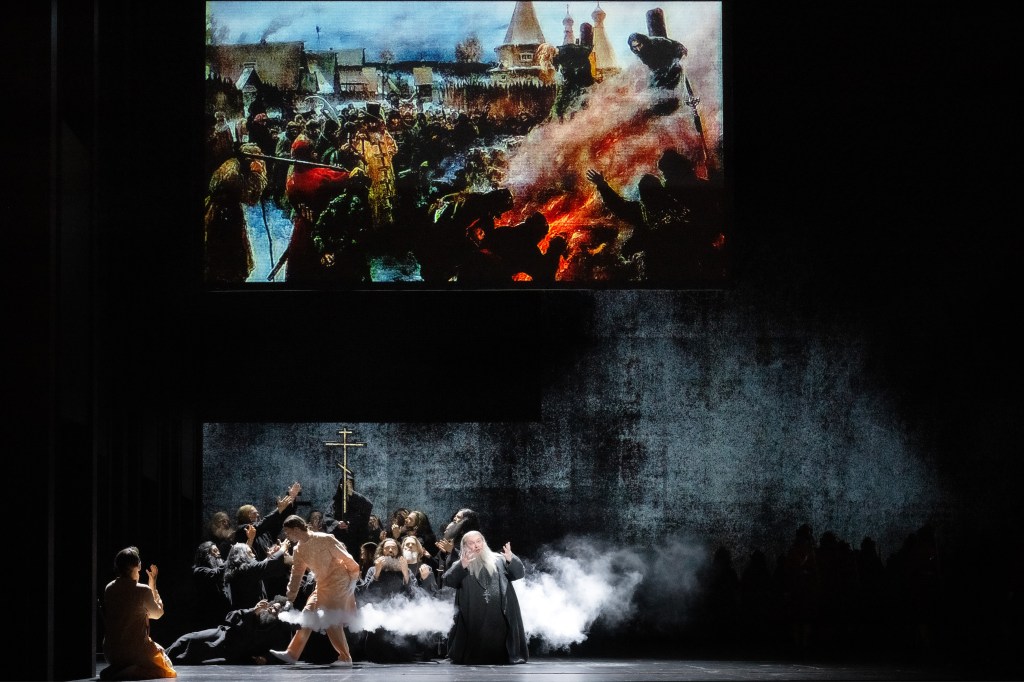
Khovanshchina, an unfinished opera in five acts by Russian composer Modest Mussorgsky, throws you straight into the messy, chaotic world of 17th-century Russia. Political plots, power struggles, and Orthodox church drama. Everyone’s fighting over who’s gonna take the throne. You never quite know who’s scheming, who’s praying, or who’s about to get thrown out a window.
We start with a burst of live typing. Off to the side, someone’s hammering away at a keyboard. Every word she types shoots straight up onto the back wall so we can all follow along.
Where are we in time? November 2nd, 2025 – yes, today! And already, I feel like I’m right in the middle of the action!
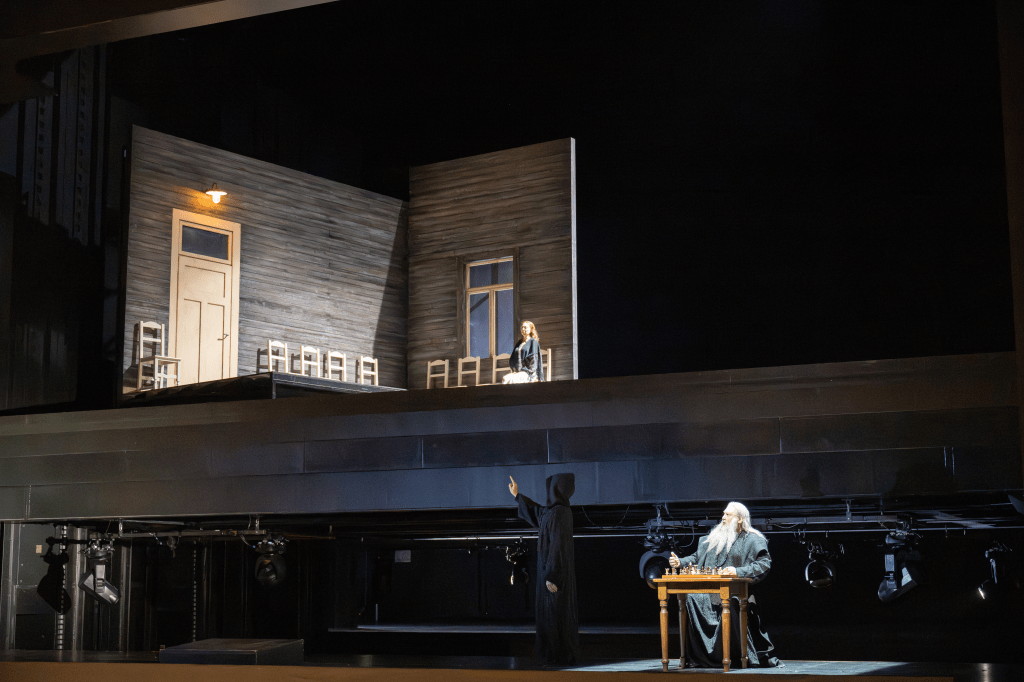
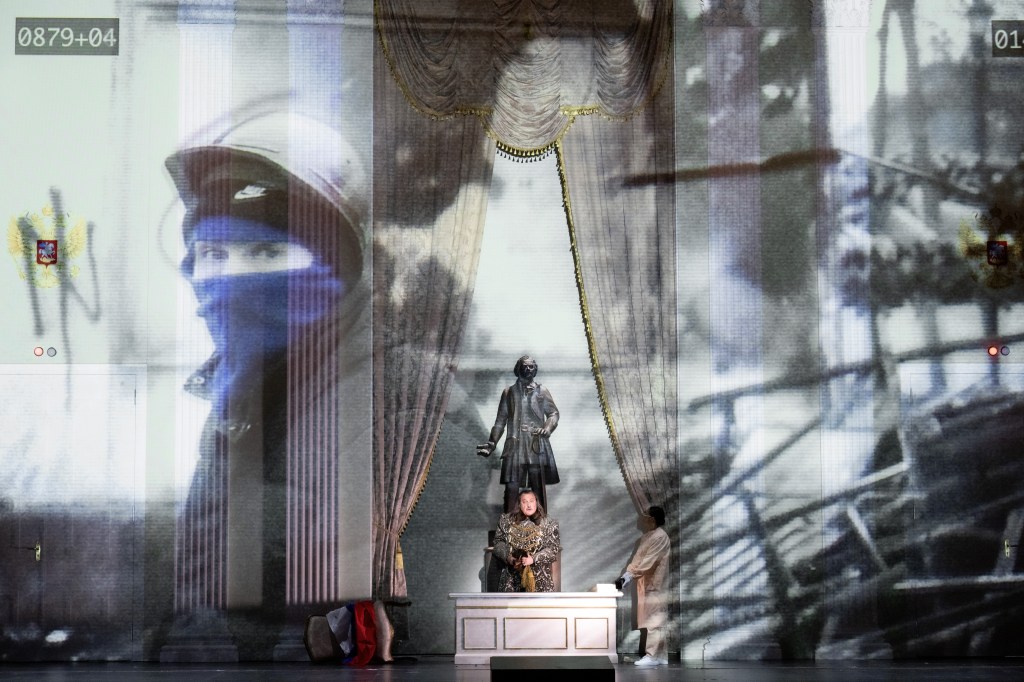
Then suddenly, we’re tossed into a Kremlin office, face-to-face with a giant statue of Tsar Peter the Great.
With a cheeky little wink, the silver dog bowl by the desk gets topped up… Do we know a Russian leader today who has a dog…?
We see it all through the researchers’ eyes – orange lab coats, serious faces, and clipboards galore. They drift through the scene, sometimes slipping between the characters, sometimes just standing there, quietly observing. Meanwhile, everyone else looks like they just teleported in from the 1600s: long red coats, fur hats, sweeping skirts, the whole theatrical spectacle. And that, of course, is exactly when the story officially takes place, by the way – and Mussorgsky, multitasker that he was, wrote the libretto himself, inspired by the real deal.
So here we are in the present, watching the researchers try to figure out how things really went down back then.

Peter the Great isn’t just a passive, perched-on-a-pedestal statue. In 1682, when unrest erupts, he’s a ten-year-old tinkering with tin soldiers. Then he keeps popping up, progressively older with each act, his growth gently gauged by chalk lines above his head.
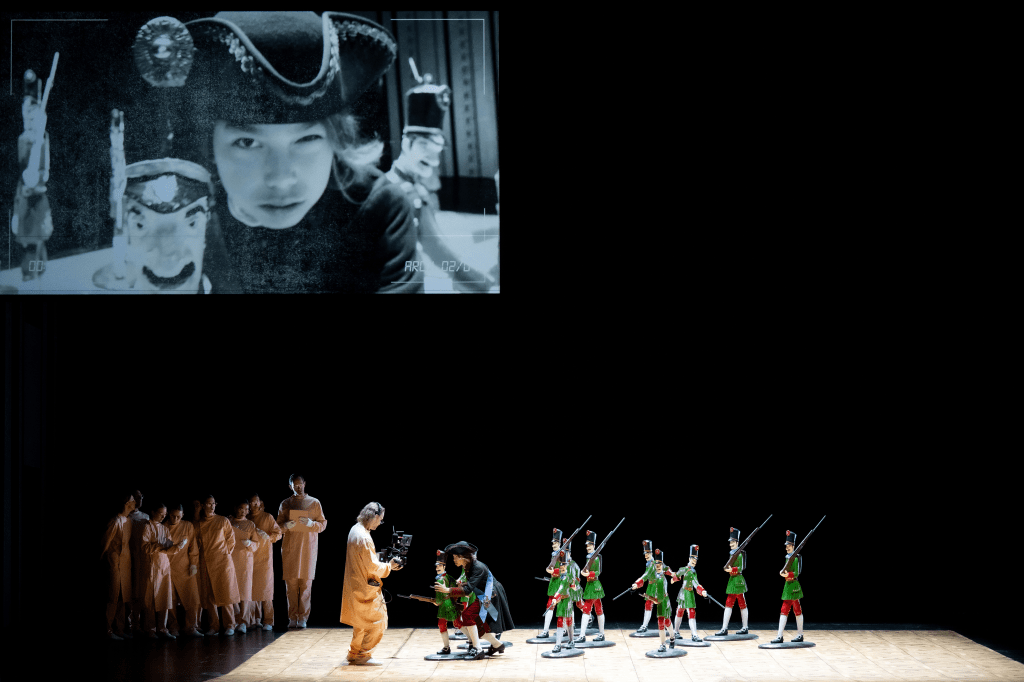
At times, a screen pops up on the left side of the stage. Sometimes it shows live video from a researcher wandering around with a camera – giving us a close-up view of the action. Other times, it displays historical images or videos that help bring the story to life, like scenes from the streets of Moscow. But it’s all carefully measured. We never get too much at once. It never becomes overwhelming or confusing about where to look.
Missing an opera that doesn’t just fling you into a whole other universe than originally intented?
Guth mixes things up like a “classic” production in the sense that we get the full historical weight, but with tiny twists that keep you guessing about what’s coming next.
Sometimes the stage is completely empty… well, almost – just a costumed choir getting to stretch out and do their thing.
In each scene, the different locations rise and fall across the grand moving stage. Big props to the set design (Christian Schmidt), the costumes (Ursula Kudrna), and, of course, the direction (Claus Guth). Everything clicks together seamlessly, making the context easy to follow while still keeping you on your toes.
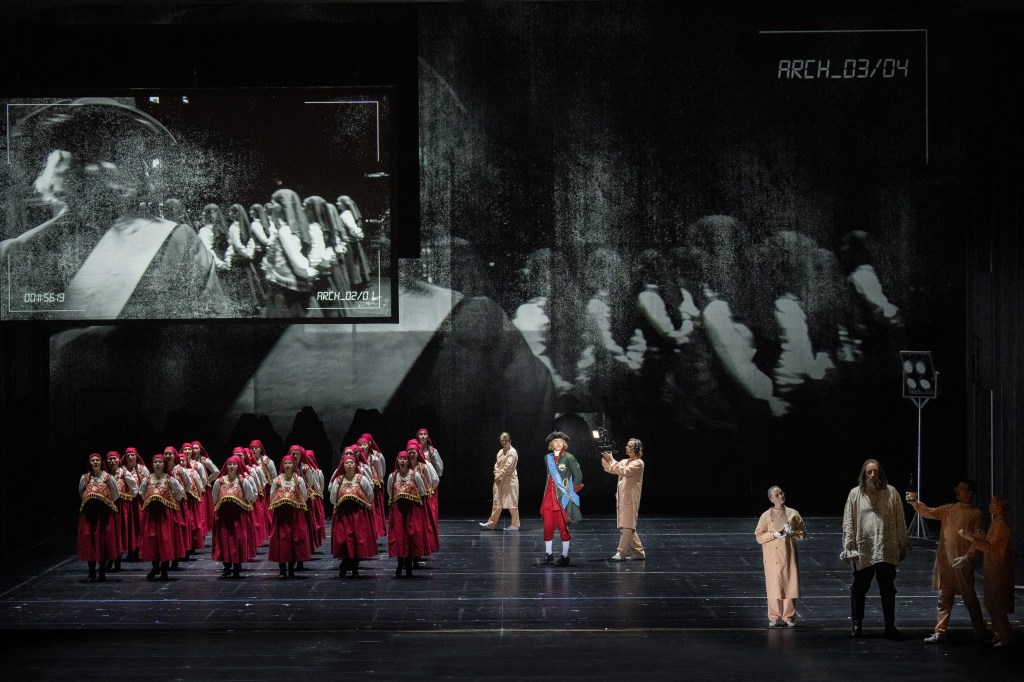
Along the way, someone is dutifully taking notes on everything they find out – though, naturally, a few “minor adjustments” are made, and some details conveniently disappear. Hmm… sounds familiar?
Can’t keep track of the huge cast?
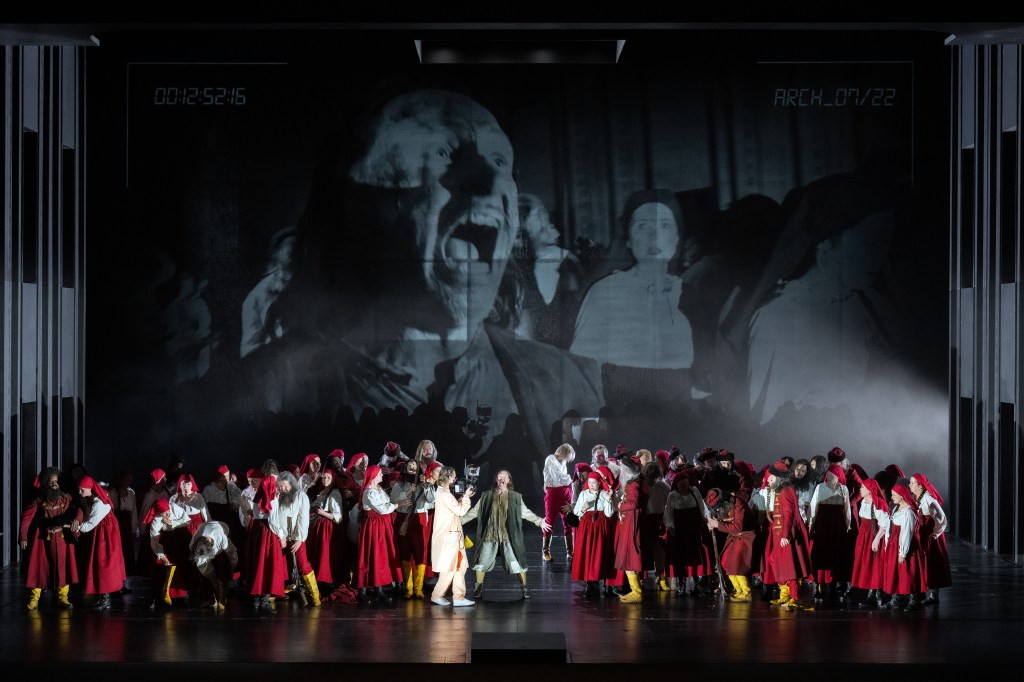
No worries – Guth’s got your back. Right when the characters enter, a quick little description pops up on the wall. After all, the researchers need some way to keep track of them too!
Vocal-wise, the cast is super strong
The low voices really take the spotlight, like the rich Finnish bass Mika Kares (as Ivan Khovansky), who is both vocally and dramatically satisfying, paired with the almost eerily commanding George Gagnidze as Boyar Fyodor Shaklovity.
Despite a few tuning hiccups, Taras Shtonda delivered an impressive Dosifey, both narratively compelling and wonderfully resonant. A spot-on casting choice.
I don’t think I’ve ever heard Marina Prudenskaya (Marfa) sing a part that suited her so well! Evelin Novak’s (Emma) brief appearance was a delight, and the same goes for Thomas Atkins (Prince Andrey Khovansky) in the final act, where he gave a deeply heartfelt and beautifully balanced performance.
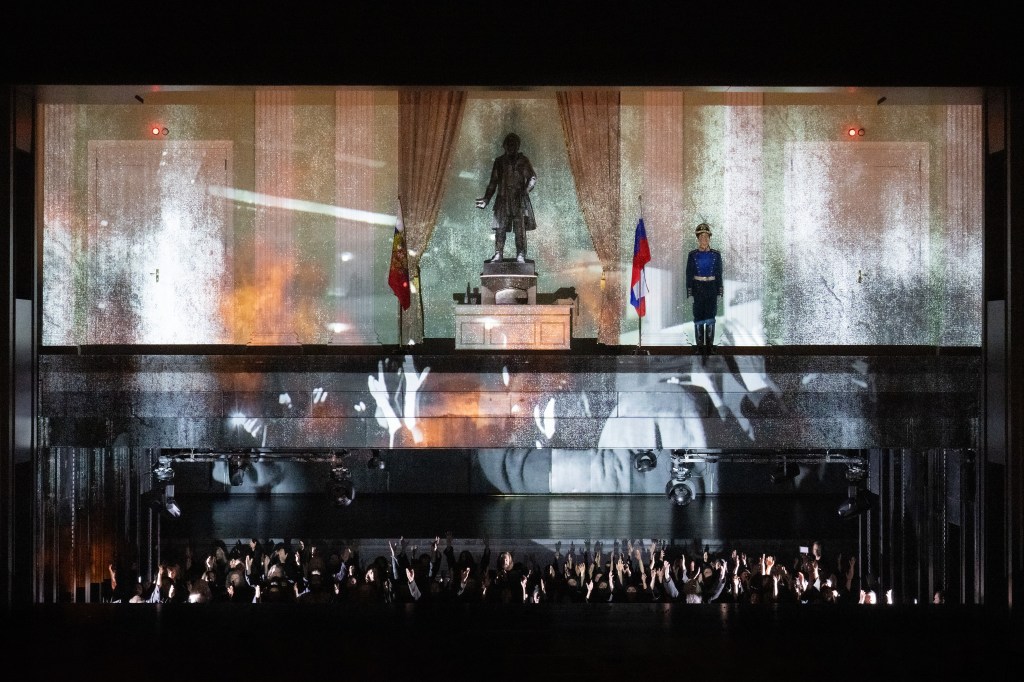
And then we get to the chorus. You know, those folks who are somehow everywhere, all the time, and still manage to sound phenomenal. It’s never easy to get that many voices moving together, but this one really breathed as a single organism.
And just like that, we’re back in the same office we started in – a neat little red thread tying everything together! Almost the same instructions as at the beginning, too. A piece of signed paper is picked up… are we done unraveling the history?
Fun Fact!
Mussorgsky left Khovanshchina unfinished, and over the years Rimsky-Korsakov, Ravel, Stravinsky, and Shostakovich all stepped in to orchestrate it. This production uses Shostakovich’s orchestration with Stravinsky’s finale.
Trailer:
Cast:
- Conductor: Timur Zangiev
- Director: Claus Guth
- Szenische Einstudierung, Spielleitung: Caroline Staunton
- Strage Director: Christian Schmidt
- Costume Designer: Ursula Kudrna
- Lightning Designer: Olaf Freese
- Coorgraphie: Sommer Ulrickson
- Video: Roland Horvath
- Live-Camera: Jan Speckenbach, Marlene Blumert
- Einstudierung Chor: Dani Juris
- Prince Ivan Khovansky: Mika Kares
- Prince Andrey Khovansky: Thomas Atkins
- Prince Vasily Golitsin: Stephan Rügamer
- Boyar Fyodor Shaklovity: George Gagnidze
- Dosifey: Taras Shtonda
- Marfa: Marina Prudenskaya
- Emma: Evelin Novak
- Schreiber: Andrei Popov
- Susanna: Anna Samuil
- Varsonofyev: Roman Trekel
- Kuska: Junho Hwang
- Streshnev: Johan Krogius
- Zwei Strelitzen: Hanseong Yun, Friedrich Hamel
Staatsopernchor, Kinderchor der Staatsoper, Staatskapelle Berlin
- Frauenliebe und -sterben, Staatsoper Hamburg 2026
- Parsifal, Bayerische Staatsoper
- Parsifal, Hungarian State Opera 2026
- Turandot, Landestheater Linz 2026
- Parsifal, Semperoper 2026
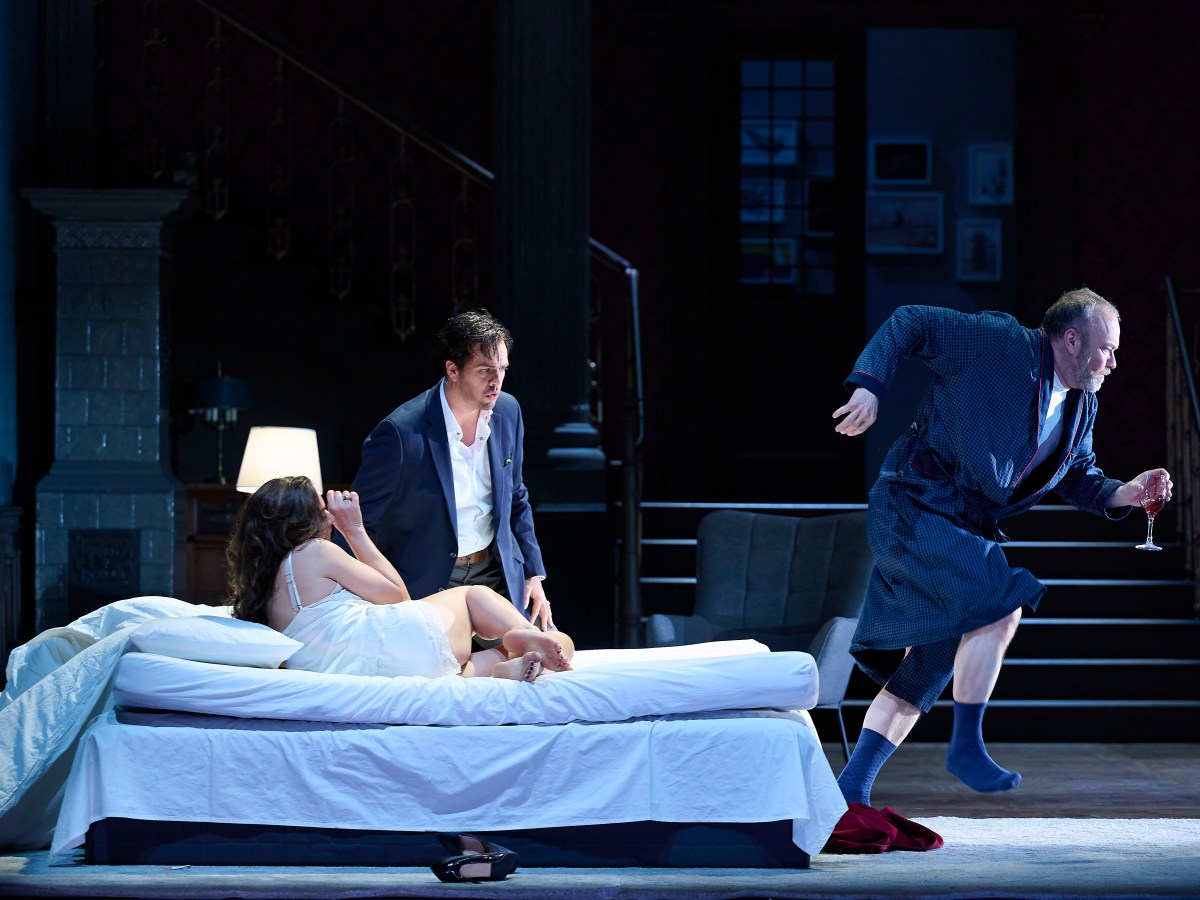
Frauenliebe und -sterben, Staatsoper Hamburg 2026
Frauenliebe und -sterben – Woman’s Love and Death. It sounds solemn, tragic, and suitably Schumannesque – and it is. But somewhere between romance, ruin, and a remarkable amount of Reuter-related wreckage, the evening may leave you wondering less about love and more about Johan Reuter’s truly terrifying kill count… From Bridal Bliss to Burial Business…

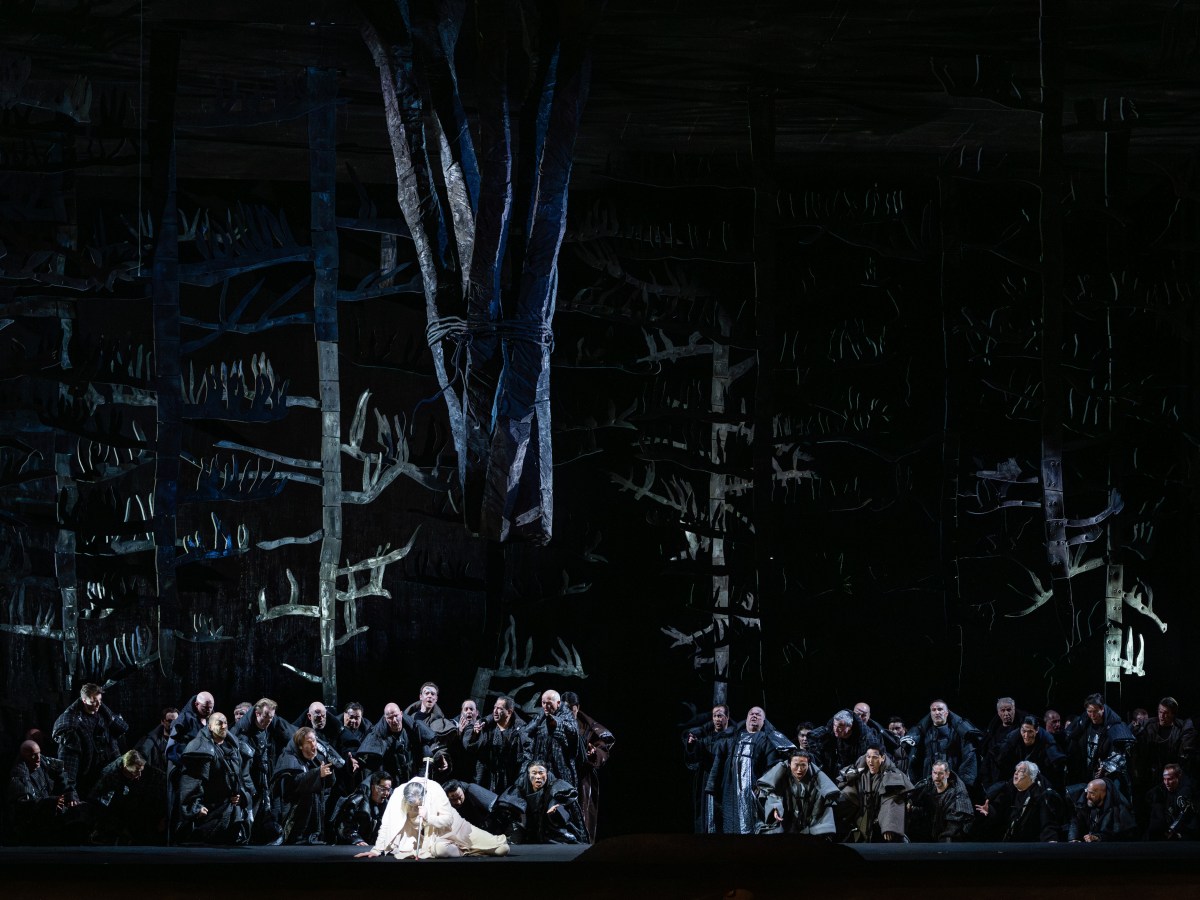
Parsifal, Bayerische Staatsoper
That’s it – Easter is over, and so is my five-Parsifal passion parade: five Grail quests, five solemn sagas, and enough sacred suffering to last me until Pentecost. New sets, new styles, new singers stepping solemnly onstage. Down in the pit, the orchestra at the Bayerische Staatsoper was the real holy hit: while everyone else…
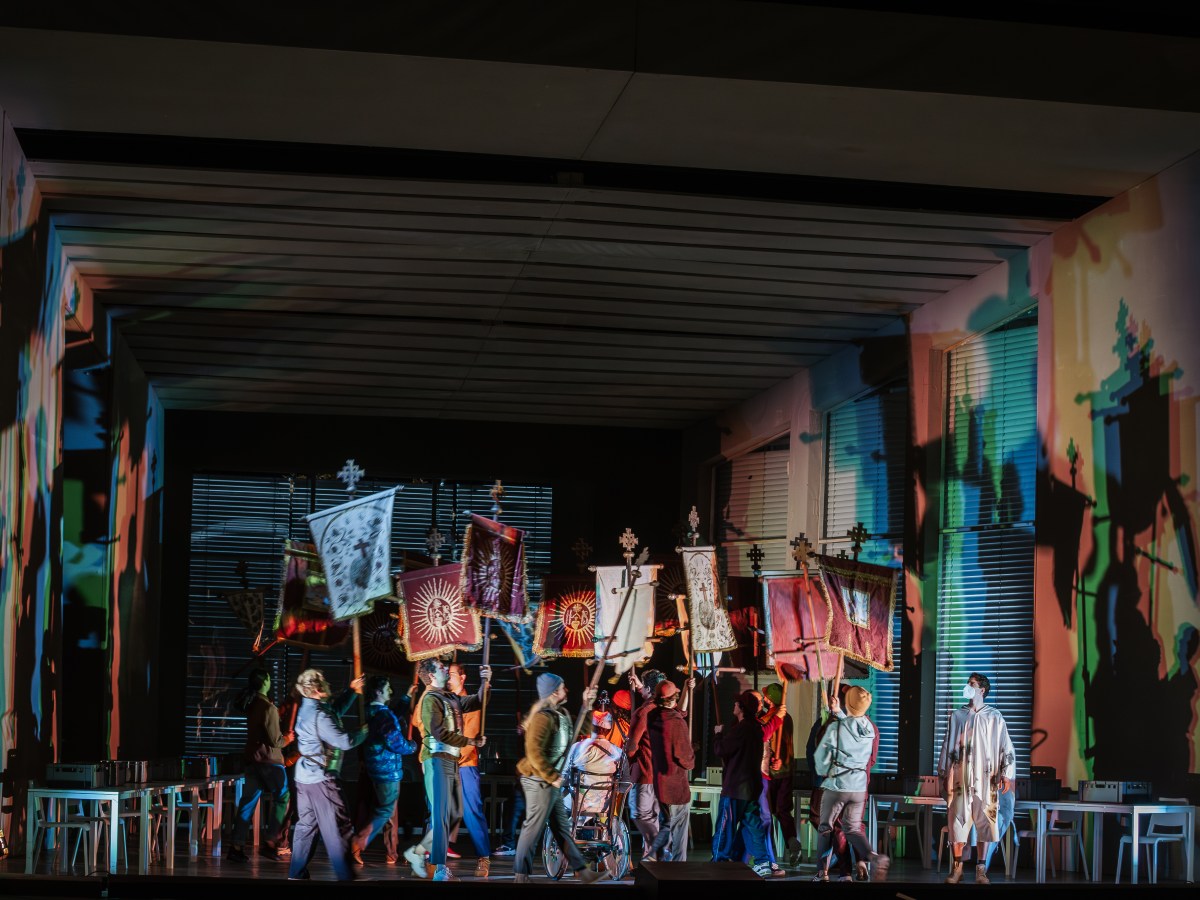
Parsifal, Hungarian State Opera 2026
A red hookah, a guitar, water sloshing in jerry cans, Elvis hair – and Gurnemanz and his gang in puffer jackets, pairing polished shirts and ties with metal breastplates. Not exactly your standard Parsifal picture. But that’s the unholy cocktail the Hungarian director András Almási-Tóth poured into the Grail Knights’ world in his 2022 production.…

 Blogfløjten