
Never have I been to a performance with so much booing. One thing’s for sure: the Berlin audience knows what it wants.
The reason for all the boos? Nothing. Literally nothing. Michael Thalheimer’s production said and did… well, exactly that: nothing.
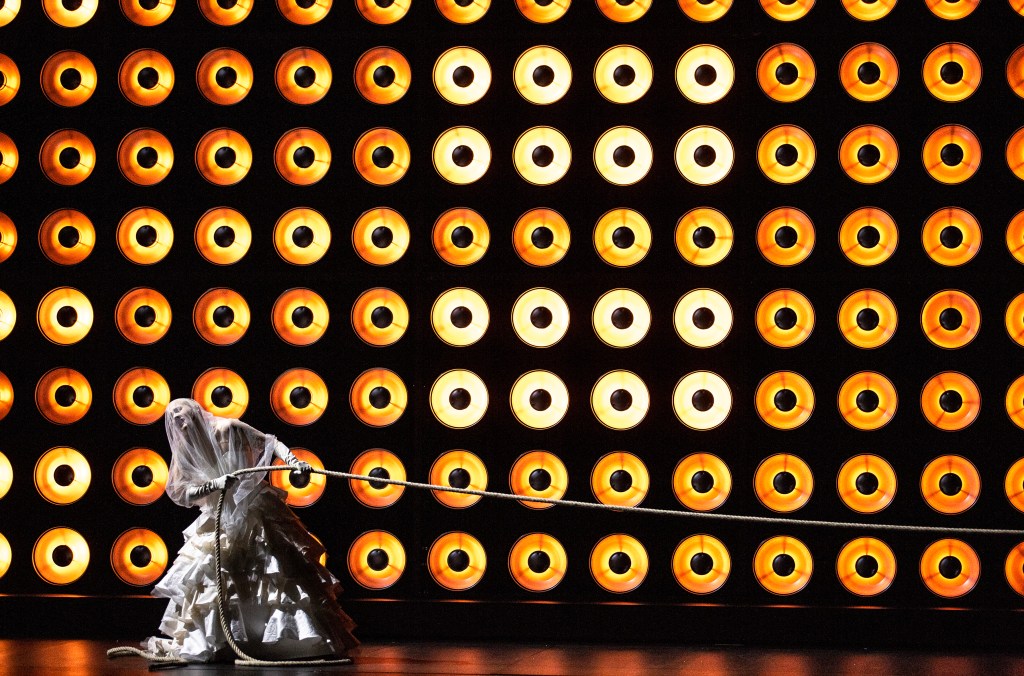
On stage? A massive wall covered in lamps that, from time to time, decided to flicker.
Have you seen Sofia Adrian Jupither’s Tristan, the one that ran in Copenhagen about a year and a half ago? That’s exactly the kind of wall we’re talking about. For a moment, I genuinely wondered if it was the same production and I’d just been too busy daydreaming about leitmotifs to notice.
Turns out (surprise!) it wasn’t. In fact, the Copenhagen production had more happening on stage. Yes, I didn’t think that was possible either!
Just in case you’re wondering
Tristan and Isolde, like about 99,24% of everything in this genre, is all about impossible love.
But then again, is it really love? Or just a magic drink that puts the fizz in their feelings?
In Thalheimer’s version, they sip something mysterious from a glass, and a moment later – boom! – it promptly commits suicide on the floor, decorating the stage in thousand tiny pieces.
In the beninging
The cellos sneak in on that familiar A – a quiet shimmer in the dark – and begin their slow climb, a tender stretch up a minor sixth. The sound swells, soft then a bit louder, like someone slowly cranking up the volume knob. A single note takes a tiny tumble, and then – bam! – the first big moment: the legendary Tristan chord. The oboe tiptoes up that last half-step, and just when you’re ready… poof! Gone.
A good way into the prelude, the curtain goes up. Or… actually, it was already up when we walked in. So we’d already seen the giant wall of lamps.
From the right comes a woman in a white wedding dress, struggling forward with a rope slung over her shoulder. She’s clearly trying to pull something… but what? As she moves further into the stage, a black box emerges from the right. Is it a ship? Nope. On top of it stands Brangäne. What is it supposed to be? Anyone?
Alright, that’s pretty much the wildest thing that happens in this act, scenically speaking. The big black block gets dragged all across the stage, and occasionally, the giant wall of lights decides to do its thing.
The singers mostly just… stand there. Motionless. Maybe with the slight exception of Isolde, who sometimes also lies down. Glances at Tristan. It’s not until way later that he finally, finally looks back at her. Otherwise, he just stands there, singing into the air.
The second act doesn’t offer much variation in scenery – a bit of play with shadows, and by the third act, the light-wall has somehow become the ceiling.

When I saw Lohengrin in Malmö a week ago (read it here!), I wrote about all the questions I had over things I didn’t understand in the production. I have those questions again today, but in a completely different flavor. A very minimalistic approach? Never have I seen a staging that says so little.
Honestly, it might as well have been concert-style – because, let’s be real, that’s basically what it already is. At least then you’d know what you were signing up for.
And the whole “Gesamtkunstwerk” thing? …did they forget it at home?
What exactly is the team trying to say? What are they hoping to add that hasn’t already been said?
Luckily, the music really pulls it up
Last season at Deutsche Oper Berlin, Sir Graham Vick’s Tristan und Isolde was on the program. So, the notes hadn’t exactly been gathering dust in the pit. You could hear that, especially in the first act.
Led by GMD Sir Donald Runnicles, nothing was repeated exactly the same, with longer lines giving a real sense of direction. He didn’t reinvent the wheel, but he kept it rolling smoothly.
Well… maybe except for the fast tempo at the beginning of the second act, which somehow made it feel like the orchestra wasn’t entirely on board. The overall volume around here was also just a touch too loud, as if every dynamic marking had taken an extra step up the staircase. Which, of course, meant the singers had to work that much harder…
Let’s talk about the outfits
I mentioned that Isolde was wearing a wedding dress in the first act.
Why? Was she maybe this close to marrying Morold – her deceased fiancé, the guy Tristan… well, you know, kills in the backstory? Or is she just getting ready to say “I do” to King Marke when she finally lands in Cornwall?
Brangäne wears black trousers, a white shirt, and a black vest. Tristan and Kurwenal are dressed all in black, and Marke is mostly black too – except for his long white coat.
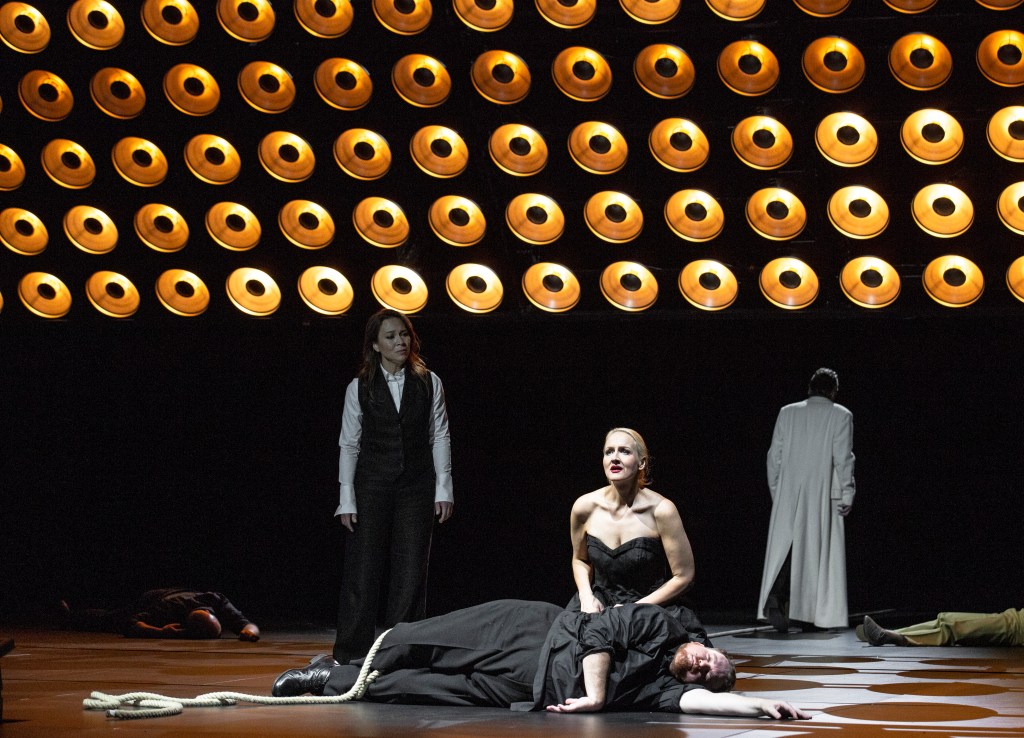
The colors seem to fit the characters: Tristan and Kurwenal are dark and serious, Brangäne is in between light and dark, practical and steady, and Marke’s white coat makes him stand out a little, hinting at authority or hope.
By Act Two, Isolde has switched to a smaller white dress with a thin black overlay. Perhaps it’s a hint that things are getting more complicated? Or that she’s slowly moving from innocence toward the inevitable drama ahead?
And by Act Three? All the white is gone. Maybe it’s a subtle nod to “pure love → messy love → chaos.” Or perhaps she’s already half-prepared for a funeral. Or, who knows, maybe she just hates laundry and decided black is easier.
Vocally, a very satisfying experience
A real treat having Dean Murphy as Morold. And Thomas Lehman, with a smooth, spacious tone – I kept catching myself imagining him in the role of Beckmesser (Meistersinger).
The two lovers complemented each other beautifully. Clay Hilley, with his pleasant tone, has a voice that (I think) fits Tristan thoroughly – both in sound and character.
Elisabeth Teige made her role debut and delivered it with great conviction. Clear text, clear tone. Her chromatic movements, both up and down, were spot-on intonation-wise.
Their duet in the second act? Absolutely superb! And Irene Roberts (Brangäne), with her short but luxurious interjections from the first balcony, only made it better. The acoustics even helped, bouncing every ending off the walls so that every note and consonant was crystal clear. A delightful surprise to hear her so clearly – in several productions Brangäne is tucked away behind the stage.
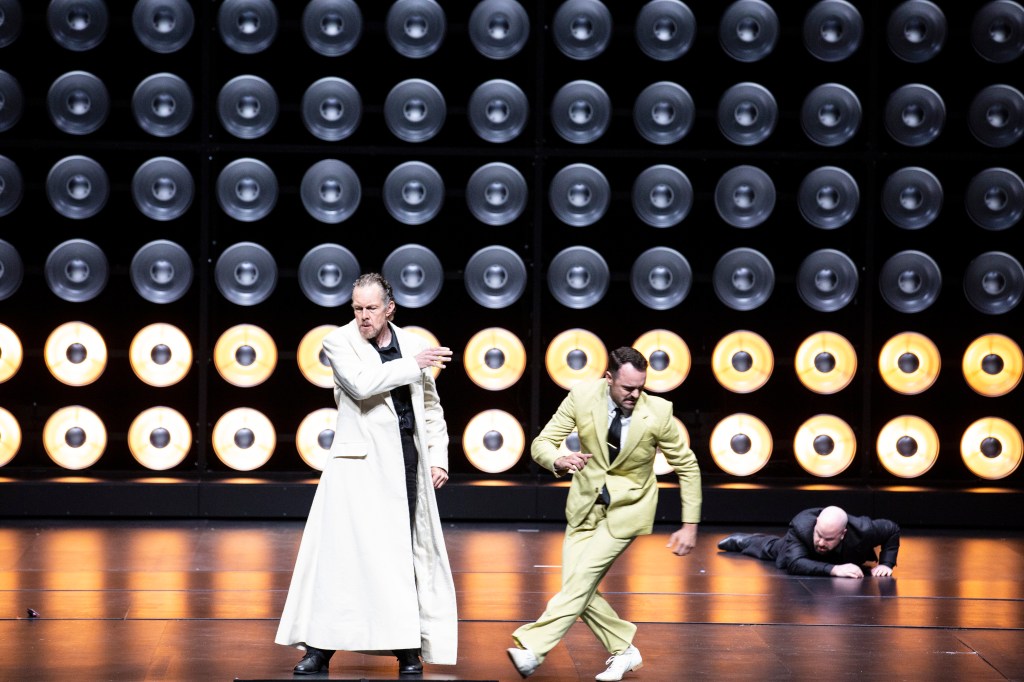
As I said, almost nothing happens on stage. But when a bit of drama does appear, ungrateful me isn’t satisfied.
At the end of both Act One and Two, when Tristan and Isolde can no longer resist each other, Marke enters earlier than you might expect. This makes things feel a bit off, especially with Kurwenal – held firmly to the ground by Melot – trying to warn Tristan with his “Rette Dich, Tristan!”.
But all of that is quickly forgotten once German bass Georg Zeppenfeld opens his mouth. I’ve heard him in this role a few times now, and yet he still manages to surprise. When he sings, it’s like he takes you by the hand to tell you something. Some words are placed as if in conversation. And the way he brings out the overtones when he sings – wow!
Yes, musically it was a great evening. It’s just a shame that it’s dragged down by a completely uninspiring production.
Fun Fact!
The so-called “Tristan chord.” Guess what – Liszt almost got there first! In his song Ich möchte hingehen, written 14 years earlier, one bar sounds strikingly close to Tristan’s opening. Not exactly the same (D vs. D♯), but still close enough to ring a very Tristan-shaped bell.
Cast:
Conductоr: Sir Donald Runnicles
Directоr: Michael Thalheimer
Stаge Designer: Henrik Ahr
Сostume Designer: Michaela Barth
Light Designer: Stefan Bolliger
Dramaturg: Luc Joosten and Jörg Königsdorf
Сhoir: Jeremy Bines
Tristan: Clay Hilley
König Marke: Georg Zeppenfeld
Isolde: Elisabeth Teige
Kurwenal: Thomas Lehman
Melot: Dean Murphy
Brangäne: Irene Roberts
Ein Hirt: Burkhard Ulrich
Seemann: Kangyoon Shine Lee
Steuermann: Paul Minhyung Roh
Chöre: Chor der Deutschen Oper Berlin
Orchester: Orchester der Deutschen Oper Berlin
- Dialogues des Carmélites, The Royal Danish Opera 2026
- Monster’s Paradise, Hamburgerische Staatsoper 2026
- Dialogues des Carmélites, Semperoper Dresden 2026
- Lohengrin, Staatsoper Berlin 2026
- Das kalte Herz, Staatsoper Berlin 2026
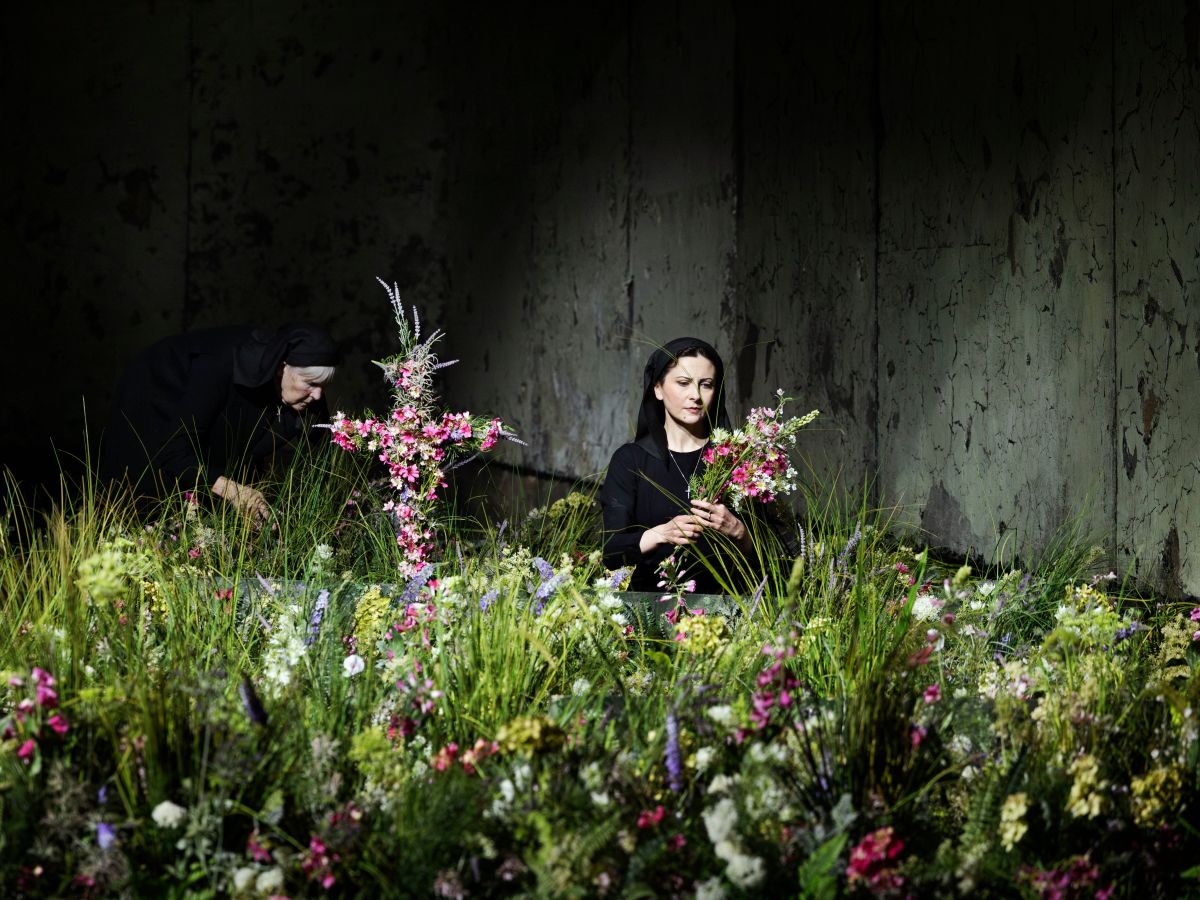
Dialogues des Carmélites, The Royal Danish Opera 2026
If you’re waiting for something to break, Act III is your moment. In Barrie Kosky’s production of Poulenc’s only long opera, it’s not the people – it’s the wall. We’re stuck in the same room. Boxed in by the same walls. First, inside the de la Force family. Then we convert to the Carmelites. Grey…

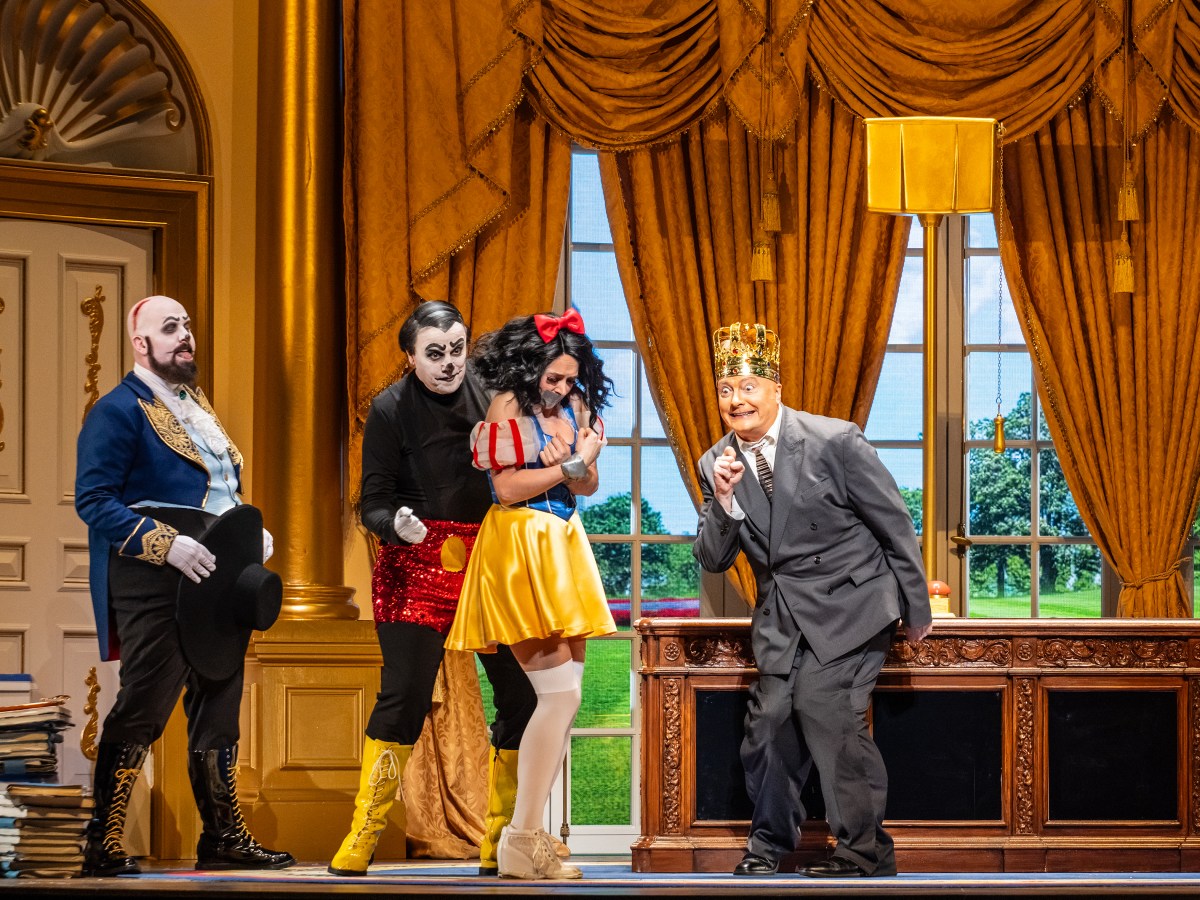
Monster’s Paradise, Hamburgerische Staatsoper 2026
World premiere! A brand-new opera by Austrian composer Olga Neuwirth. Which basically means: no one knows what we’re about to listen to or experience. No map, no manual, no “how it’s usually done.” What is an opera, anyway? At what point do we decide that something is one? If this hadn’t taken place inside the…
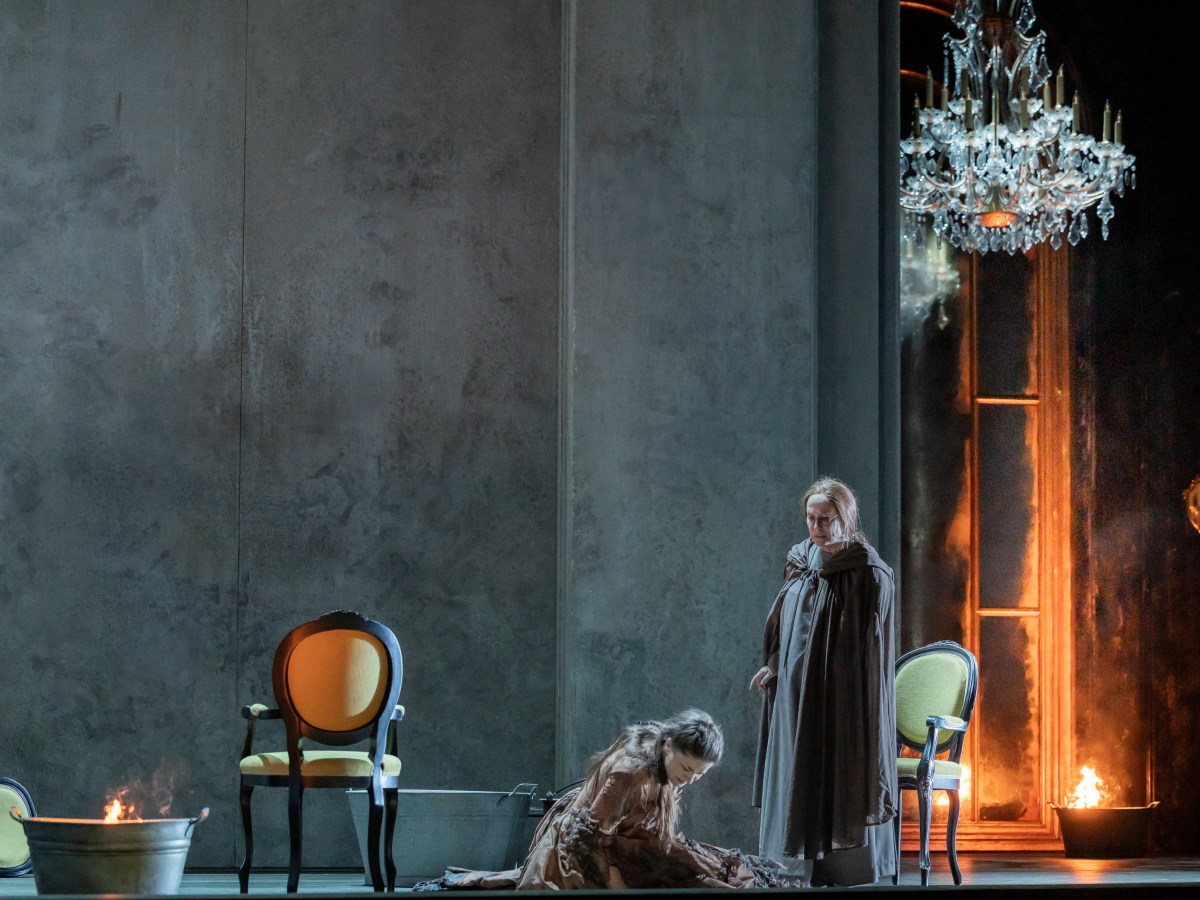
Dialogues des Carmélites, Semperoper Dresden 2026
Did someone say Poulenc? At the Semperoper? For the first time ever with Dialogues des Carmélites? Yes, you heard that right. The French composer’s second opera has found its way to Dresden, in a production directed by Dutch Jetske Mijnssen. The prelude is silent. Curtain up. Blanche is already there, standing alone in a wide,…
 Blogfløjten