

This new Lohengrin in Malmö left me scratching my head, asking more questions than it answered.
What makes a good opera production these days? Should it tell the story? Say something deep? Give us a fresh take? Or just look pretty while people holler in blue? Maybe all of them? Or just one will do?
The opera opens with a “minor” A major chord. Wagner starting soft, but dramatic. Not least because it’s hard to play well. The first violins ring out a bright E, pianissimo – the kind of beginning that could easily sound tight, a little strained. But tonight? The violins were warm and glowing, stretching that chord like it was taking one long, luxurious breath.
Of course, it wasn’t all smooth sailing. As soon as the next entry came, the first tiny cracks began to show in the pit…
Have you seen Lohengrin before? No? It’s basically about this mysterious knight who shows up in a swan-drawn boat to save a woman accused of a crime she didn’t commit. There’s one rule: she must never ask who he is.
Except… well, there’s not really a swan tonight. Okay, technically there is: a tiny little swan figure actually sneaks across the stage right before Lohengrin shows up (and again at the very end). But does anyone notice? So, when the chorus starts singing about the swan, it’s nowhere to be drawn…
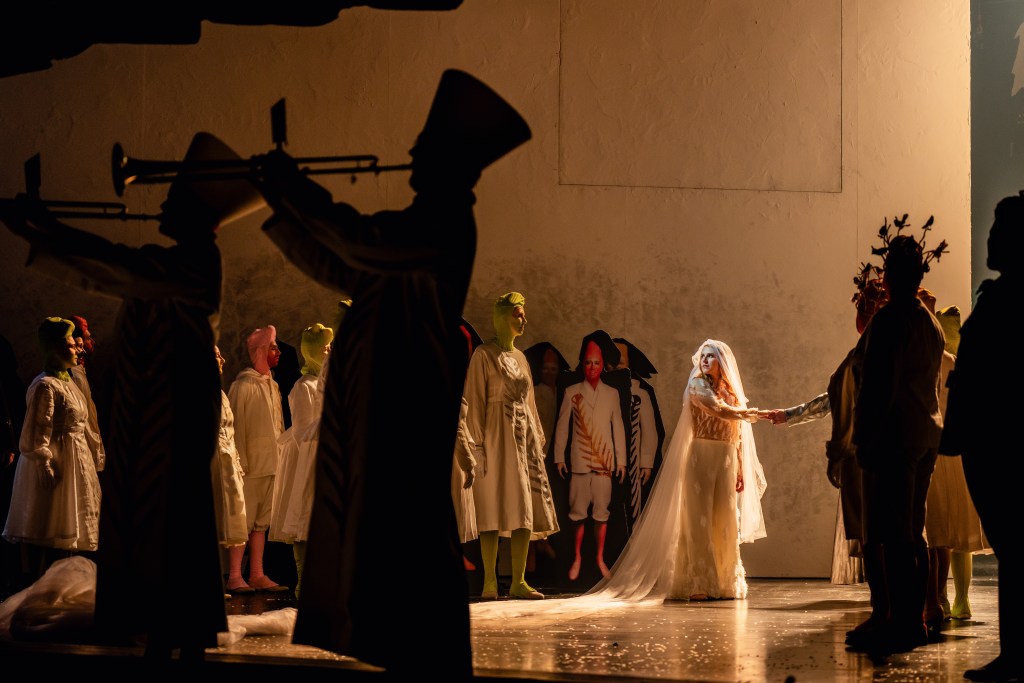
Throughout the evening, more figures like this drift across the stage. Two-dimensional, their shadows projected onto the huge back wall. You never know what might appear next – a tree, a cruise ship, fish, a snowman, planets, faces, clouds… and was that a wolf? What exactly is director Charlotte Engelkes trying to tell us with all this?
Maybe she is using the shadows as a kind of “inner world”? Symbols of Lohengrin’s magical mysterius tale? Or does it make sense to talk about Plato’s cave? We see both the story and its shadows, reality and illusion, all at once. Maybe Engelkes is reminding us that opera, like the cave, is all about perception – we see what’s shown, but there’s always more lurking behind it. Maybe I’m just tripping…
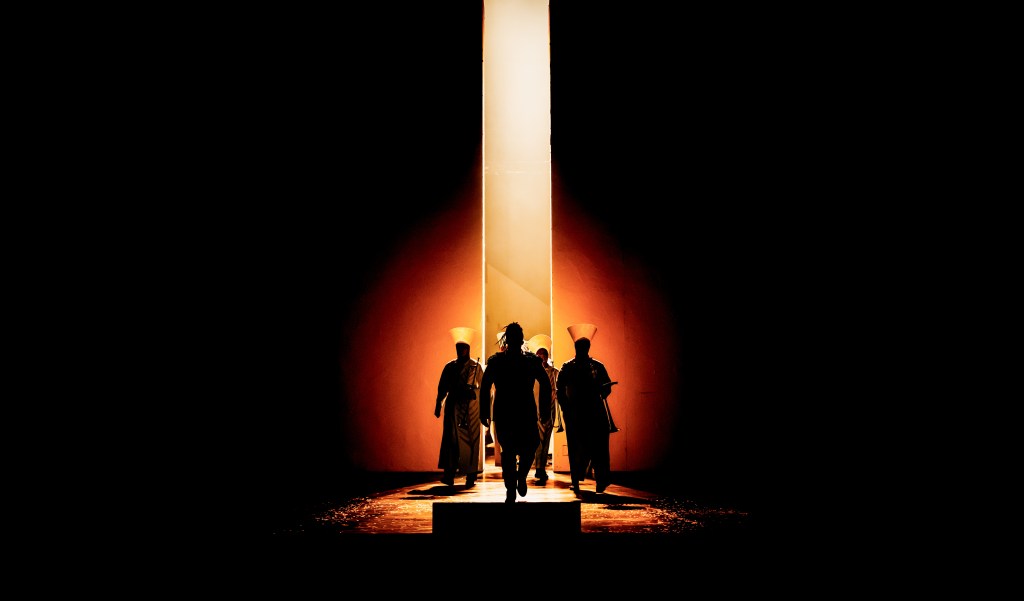
When Lohengrin finally appears, it’s from the right-hand door at the back of the stalls. It opens, and suddenly the whole auditorium is lit up. He sings his first lines, and out steps… a guy who looks like he’s been living under a bridge? A glove missing its fingers, two completely different shoes – one held together with duct tape – and a giant hat hiding what might be very questionable hair hygiene.
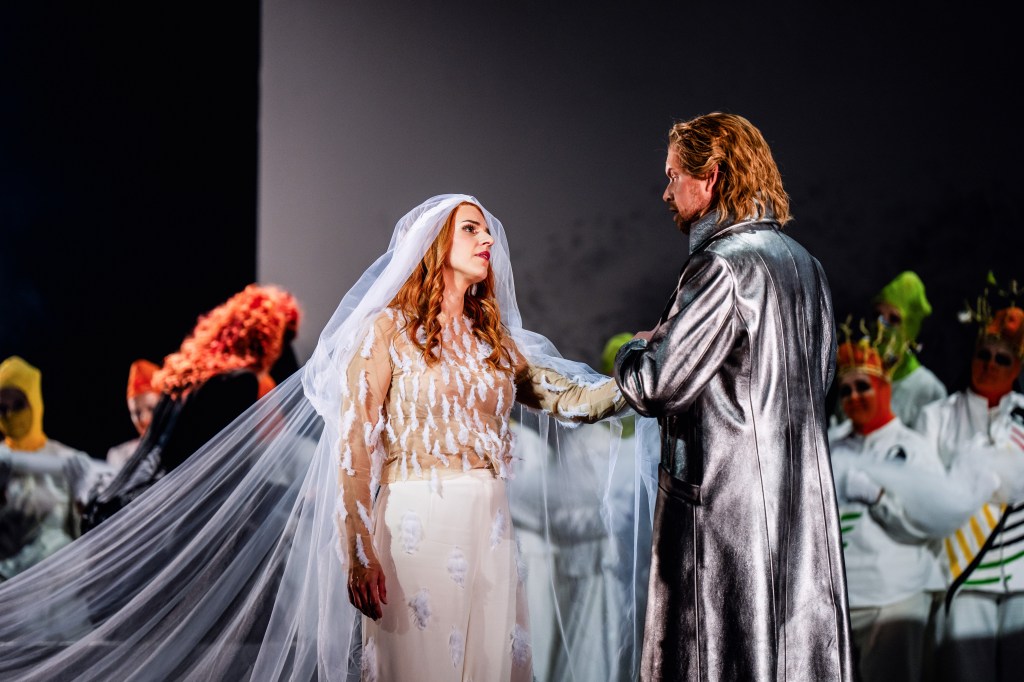
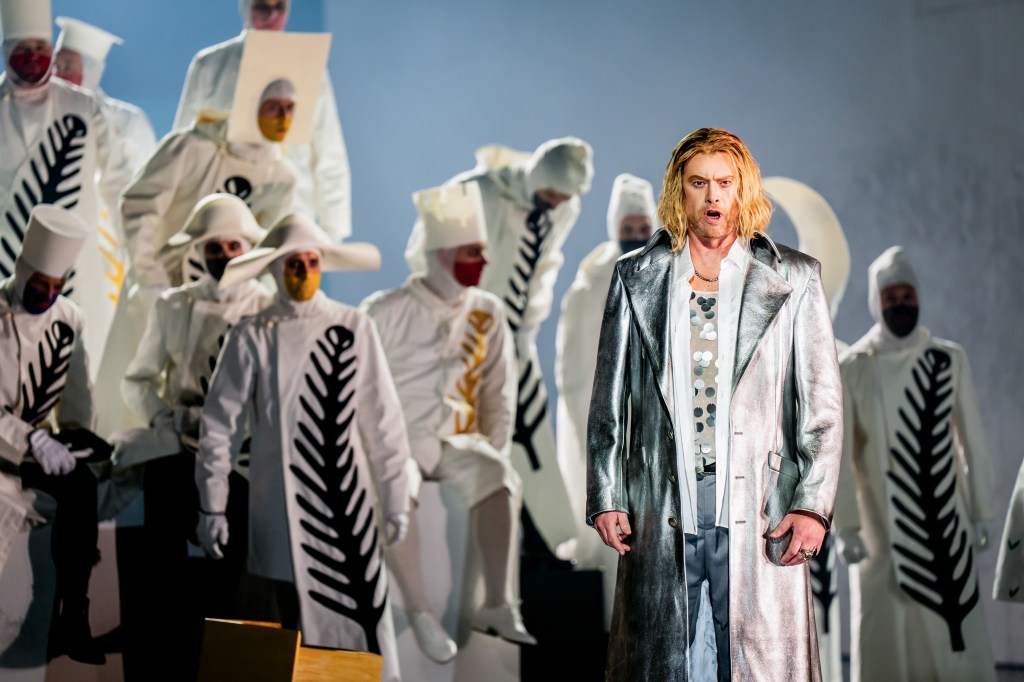
But when he wins the fight against Friedrich von Telramund (which seems to be fought with… invisible magic?), he suddenly gets a silver jacket that gives off ambitious ABBA vibes.
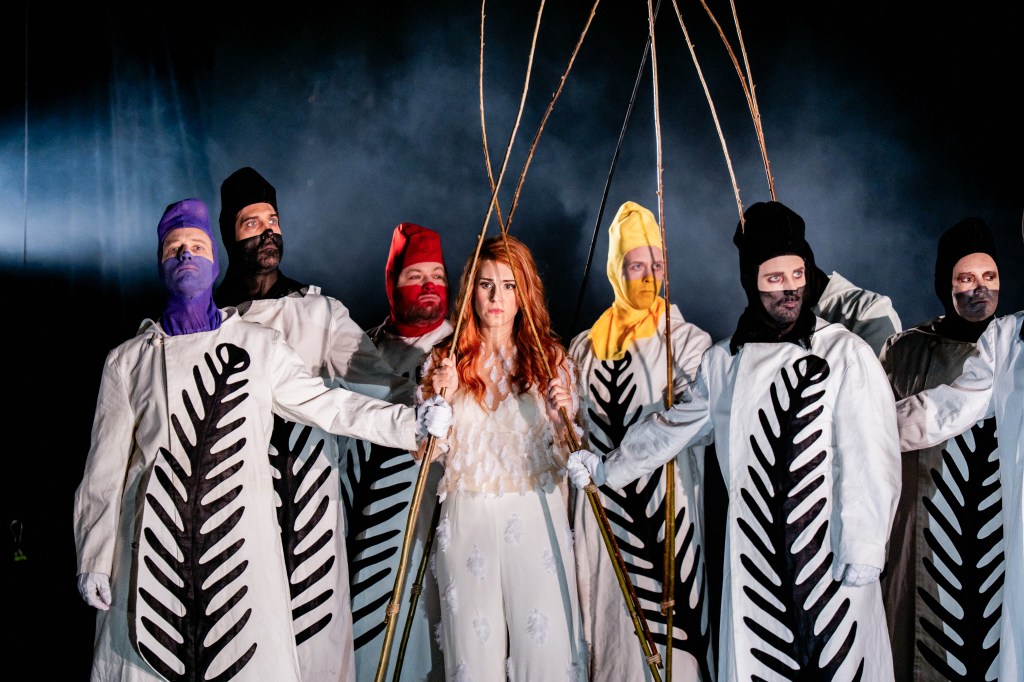
What are the other people on stage supposed to be? Good question – I have no idea. In the first act, I started thinking they were all some kind of grain. Dressed in white, each with what looked like a tiny painted kernel – silver, black, or gold, depending on who you are following. They all carried these long sticks, which I was pretty sure were supposed to be stalks.
And then the bigger roles, like Ortrud and Telramund? Birds. My personal theory: if the grains messed up even a little, the birds could just swoop in and eat them. Boom. Problem solved. Overthinking? Guilty as charged…
But then again, that doesn’t really make sense… My opera companion was more on the idea that they were all birds, which, might be is less far-fetched? So maybe what looked like a little grain on their chest was just a feather? If that’s the case, what exactly is Engelkes trying to tell us?
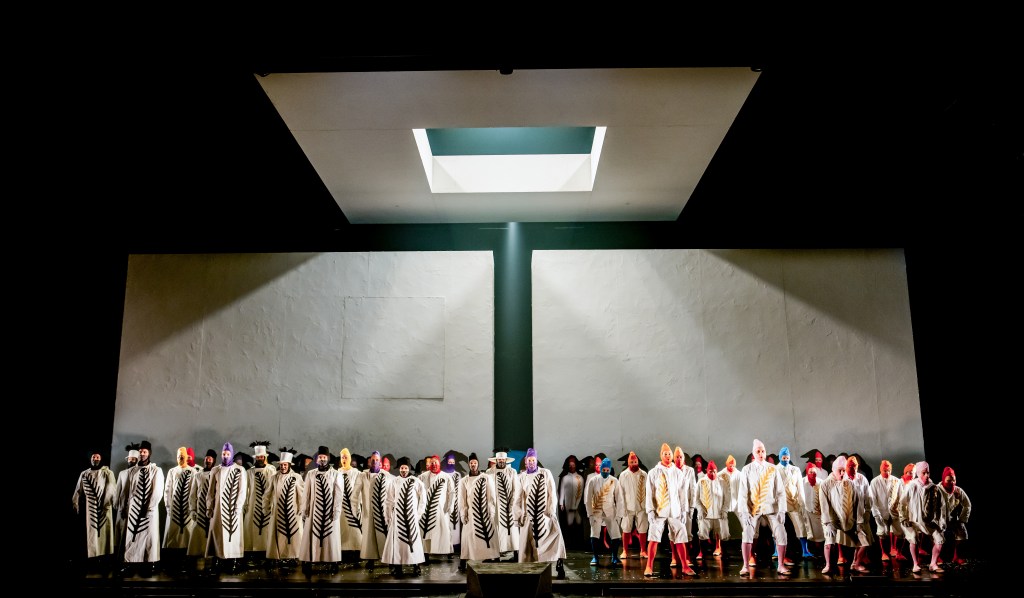
But honestly, I got a little tired of looking at all that white, with random bursts of wild colour – like the choir’s heads and socks.
Or maybe she doesn’t want to tell us anything at all? Perhaps the whole thing is just a crazy dream or story. Then nothing really has to make sense, I guess. At least it seems like the focus is more on that other thing I mentioned at the start: the aesthetics.
And what about König Heinrich? His sky-high blue heels had an extra-thick sole, making every move a little nerve-wracking. Which was fine, since he didn’t really do more than, what, five steps in the entire first act? Yeah, kind of a boring role on that front, but it looked like they had fun with his otherwise insane costume – one-and-a-half meters wide, with a stick topped by a birdhouse in one hand. At times, he even bounces a on a yoga ball. Their attempt at a funny moment, maybe? Combined with a super-short robot dance… or at the end, when someone (not spoiling!) bows and gives the king a high-five.
The Ones Who Stepped Forward
The only singer I really knew tonight was Ólafur Sigurdarson, who I’d already heard four times this summer in Lohengrin in Bayreuth. He can still totally sing Telramund.
Two singers stood out tonight.
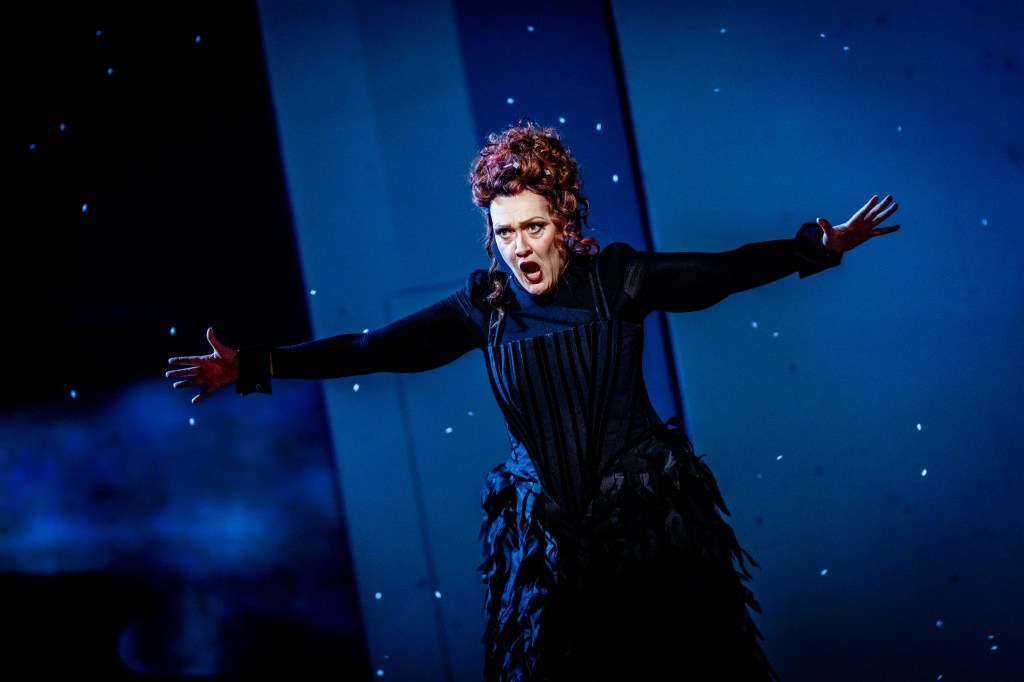
Swedish mezzo, Martina Dike, as Ortrud, has a voice that fills the hall effortlessly. Her tone is rich and appealing, and her diction is incredibly clear. Following the text on the screen? Completely unnecessary – every word landed with precision and intensity.
The other highlight was Swedish tenor Joachim Bäckström, soon to sing Siegmund at Bayerische Staatsoper. His voice is undeniably beautiful, but his delivery sometimes felt a bit… less engaging. In the Gralserzählung (the Quest) near the end of Act 3, he made a few unusual choices – it’s hard to tell whether they were intentional interpretive decisions or signs of tiredness. It was, btw, his role debut. He might also refine the distinction between his “ch” and “sch” sounds…
Another swede, Sabina Bisholt, sang Elsa with a lovely voice, though it sometimes felt a bit on the small side – she didn’t always project as far as one might have hoped. It also gave the impression that Patrik Ringborg was working very deliberately down in the pit – thinking of the balance here. He seemed acutely aware of every choice he made: wild tempo changes, some passages played very softly to make a crescendo hit even bigger, others faster than I’ve heard before – clear musical direction.
From an interpretive standpoint, it was fascinating to both hear and watch. At times, I found myself just staring at the screen behind me showing Ringborg in action – though I suspect it might have been a little distracting for the person behind me? Perhaps they thought I was watching them! Was I?
It was clear, though, where he wanted to take the music. He even followed the text closely, occasionally miming along.
Unfortunately, the orchestra couldn’t always keep up. There were a few slips here and there – both in intonation and entrances. And of course, if you’re standing in the middle of the stage with a brass instrument pointing straight at the audience, you’re extra exposed.
Fun Fact!
The opera premiered in 1850 in Weimar, conducted by none other than Franz Liszt. Wagner? Nowhere to be seen – he was hiding in Switzerland after flirting a little too much with the political drama in Dresden.
Cast:
- Conductоr: Patrik Ringborg
- Directоr: Charlotte Engelkes
- Stаge Designer: Linus Fellbom
- Сostume Designer: Anna Ardelius
- Light Designer: Linus Fellbom
- Chorgraphie: Eytan Sivak
- Videodesign: Johannes Ferm Winkler
- Lohengrin: Joachim Bäckström
- Elsa von Brabant: Sabina Bisholt
- Heinrich der Vogler: Nicolai Elsberg
- Telramund: Ólafur Sigurdarson
- Ortrud: Martina Dike
- Heerrufer: Luthando Qave
- Vier brabantische Edle: Birgir Stefánsson, Staffan Lindberg, Eric Lavoipierre, Eric Roos
- Vier Edelknaben: Marta Cecilia Saelöen, Sara Swietlicki, Emma Björkegren, Lindsay Johnson
- Barnstatist (Gottfried): Enya Lager, Alvar Hjalmarsson, Astrid Larsson Asp
- Vuxenstatist: Thomas Pålsson, Jakob Stierna
Malmö Operaorkester & Operakör
- Parsifal, Bayerische Staatsoper
- Parsifal, Hungarian State Opera 2026
- Turandot, Landestheater Linz 2026
- Parsifal, Semperoper 2026
- Der Rosenkavalier, The Royal Danish Opera 2026
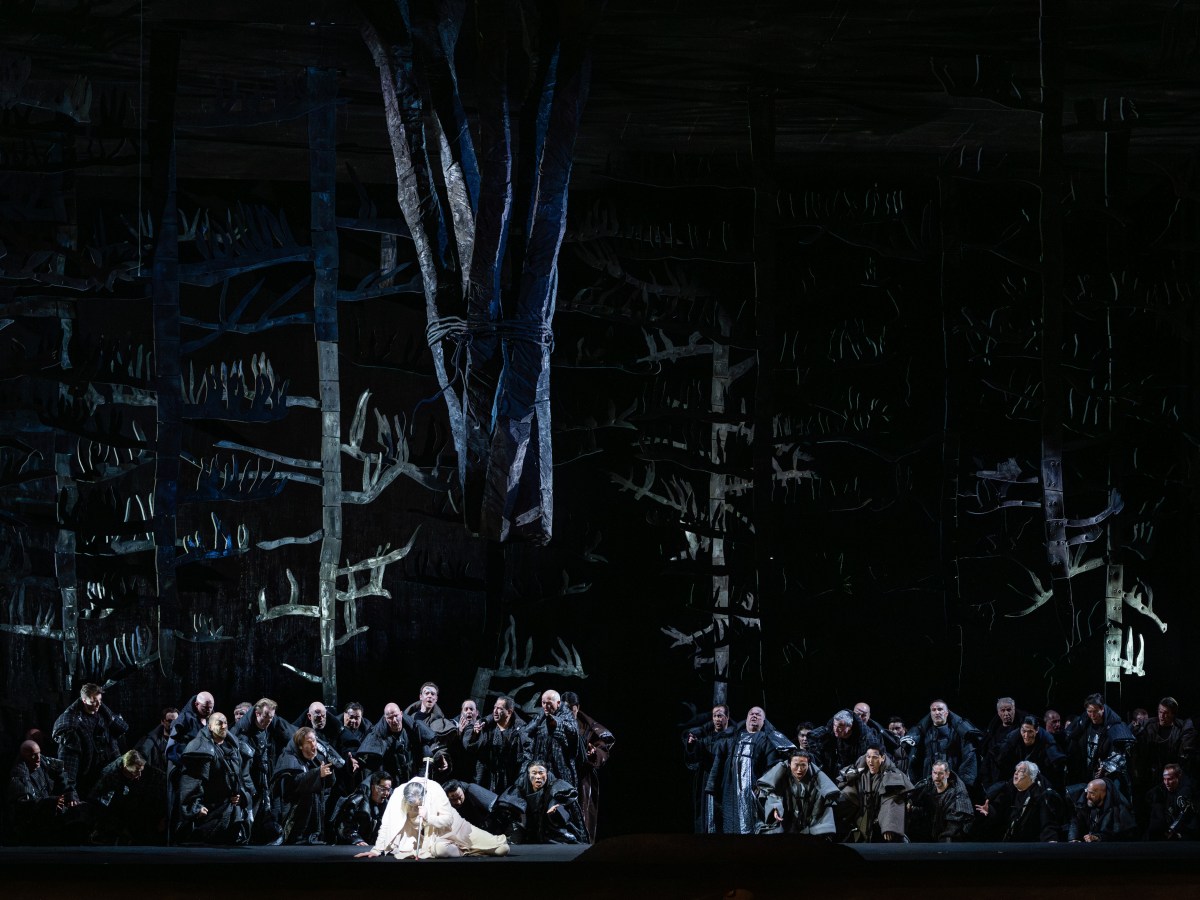
Parsifal, Bayerische Staatsoper
That’s it – Easter is over, and so is my five-Parsifal passion parade: five Grail quests, five solemn sagas, and enough sacred suffering to last me until Pentecost. New sets, new styles, new singers stepping solemnly onstage. Down in the pit, the orchestra at the Bayerische Staatsoper was the real holy hit: while everyone else…

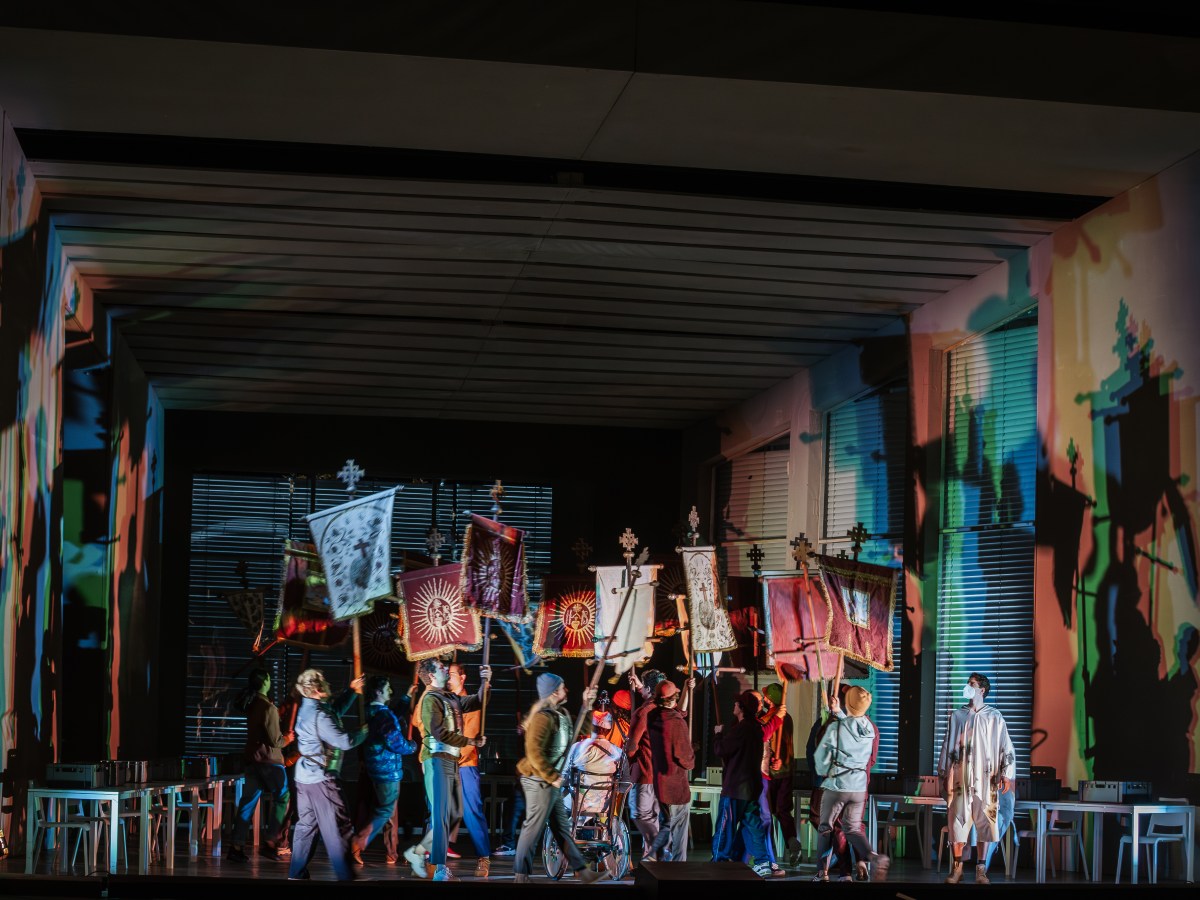
Parsifal, Hungarian State Opera 2026
A red hookah, a guitar, water sloshing in jerry cans, Elvis hair – and Gurnemanz and his gang in puffer jackets, pairing polished shirts and ties with metal breastplates. Not exactly your standard Parsifal picture. But that’s the unholy cocktail the Hungarian director András Almási-Tóth poured into the Grail Knights’ world in his 2022 production.…
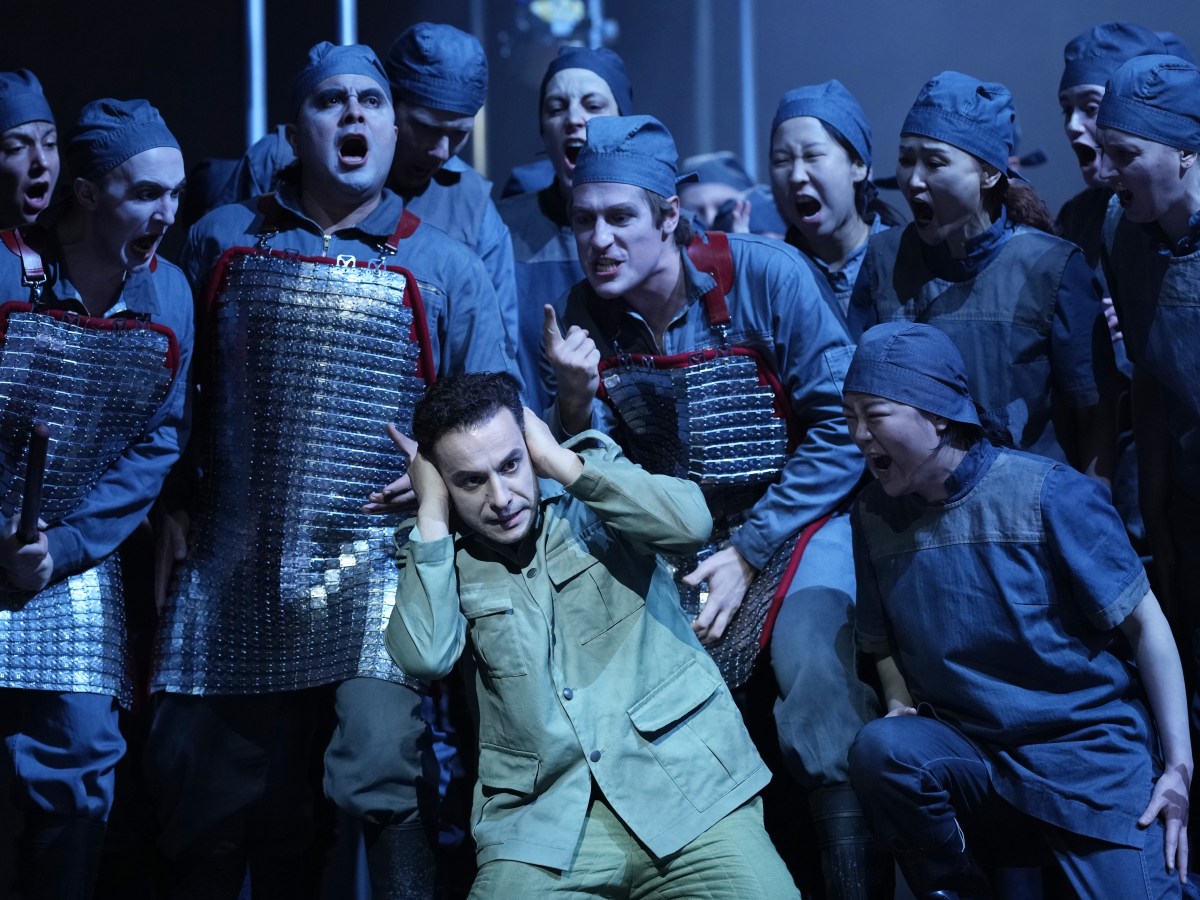
Turandot, Landestheater Linz 2026
Four notes followed by a chord, like a door being flung open. No warning, no warm-up – just bam. At the Landestheater Linz – about an hour from Vienna – they didn’t hold back. Especially the percussion, which seemed determined to make those opening bars really land. At first, it felt like opening-night energy – everyone…

 Blogfløjten