

Welcome to day two of my Wagner diary. The saga continues! After a little appetizer with Das Rheingold (which you can read about here), we’re saddling up for Die Walküre – drama, danger, and decidedly dysfunctional deities! Secret siblings awkwardly falling in love, moody gods throwing tantrums, and a squad of Valkyries who, under Tcherniakov’s microscope, look… let’s just say, slightly off the usual sky-riding poster-model vibe…
The Concept
Today we step into a new (?) experiment. The curtain rises, and there’s Wotan in his office, spying on Sieglinde through a one-way mirror. Then the stage spins, and we’re inside her apartment: a kitchen, a bathroom, a bedroom – though only the skeleton of the walls remains. Hunding and Sieglinde’s “home sweet home” is anything but sweet – nothing is private, and not everyone inside is exactly a sweetheart either…
But actually, it doesn’t start like that. First, we get a breaking-news moment: a prisoner is on the run. Ooooh! If you know the story, yeah… it’s Siegmund. And literally half a minute later, Sieglinde is already falling for him. Picture it: a bloody, sweaty stranger stumbles into your house, collapses on the floor, and mutters, “I’m just gonna crash here.” Personally I’d be totally freaked out. Sieglinde? She’s grinning slyly and hands him a glass of water like it’s perfectly normal. Only in a theatre, really.
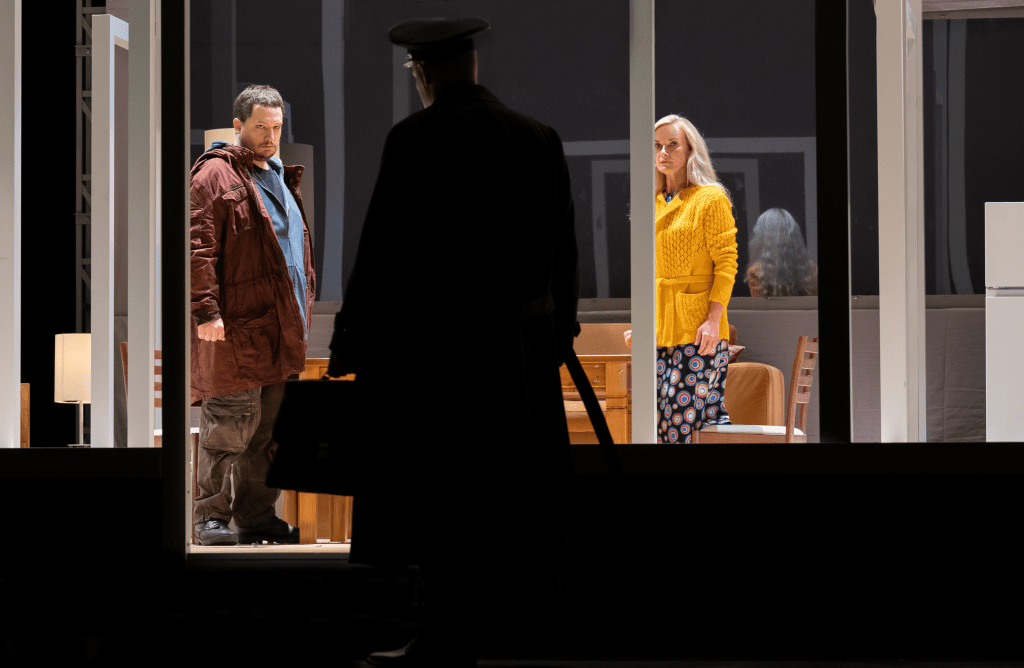
But… Siegmund just broke out of prison, right? So, why on earth does he run straight into a research lab and, without even noticing, becomes part of an experiment? Totally random. But okay, what does make sense is when Wotan calls him “his child.” I guess he’s really just saying that the experiment is like a child to him… Does that also mean that Siegmund and Sieglinde aren’t actually real siblings?
But then again… Siegmund has a white streak in his hair, just like Wotan. It’s a little less pronounced than in Rheingold, probably because Wotan’s hair has officially entered “I’m getting old” mode.
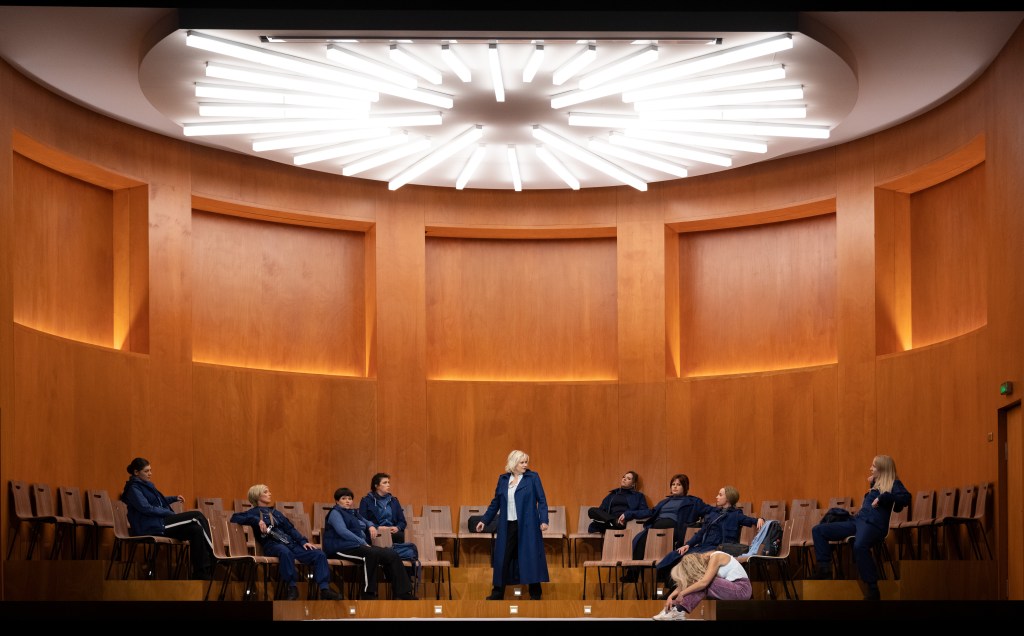
The Valkyries? Forget those warrior women riding through the sky scooping fallen heroes. Nope. Here, they are employees at the institute. So the famous “Valkyrie Ride” in Act 3 happens in a lecture hall, where they (I think) go over the cases that didn’t work out. Those “fallen heroes”? Yeah, that’s probably the experiments that didn’t exactly follow the plan. And if you squint, you can even catch the birth years of some of them: mid-1940s. Meaning we’re looking at a production taking place anywhere from 30 to 60 years later.
The Music
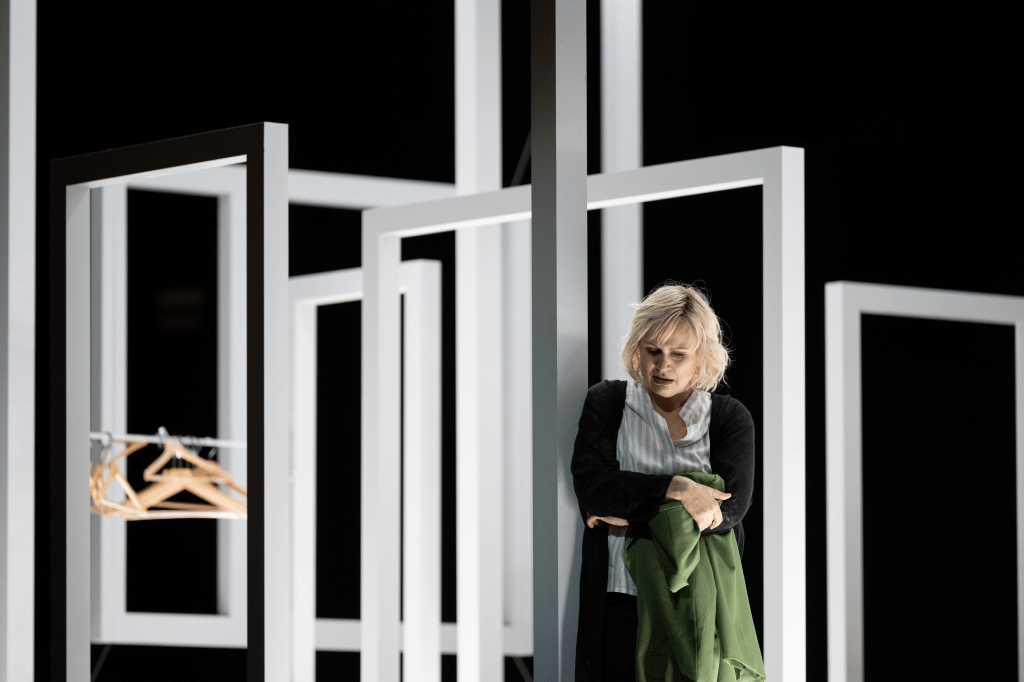
Vida Miknevičiūtė, the Lithuanian soprano, made a strong impression. I heard her as Sieglinde in the Ring about a year and a half ago, and she was memorable then — but this time she brought even more depth. Her acting popped (and the same goes for many of her colleagues), and her voice? It had real weight, soaring up high but also digging down low into the chest voice.
Her brother, Siegmund, sung by Eric Cutler, did a solid job too. There are only a handful of singers (maybe one hand, or if we stretch it, two) who can really wrestle with these enormous Wagner roles. Cutler gives it a fine shot. But honestly, it might be his acting that leaves the strongest impression. His “Winterstürme” is full of subtle nuance, perfectly echoing whatever Thielemann is conjuring in the orchestra. And speaking of the orchestra, Christian Thielemann mostly keeps things gentle during this scene, letting the different instruments have their little peek-a-boo moments.
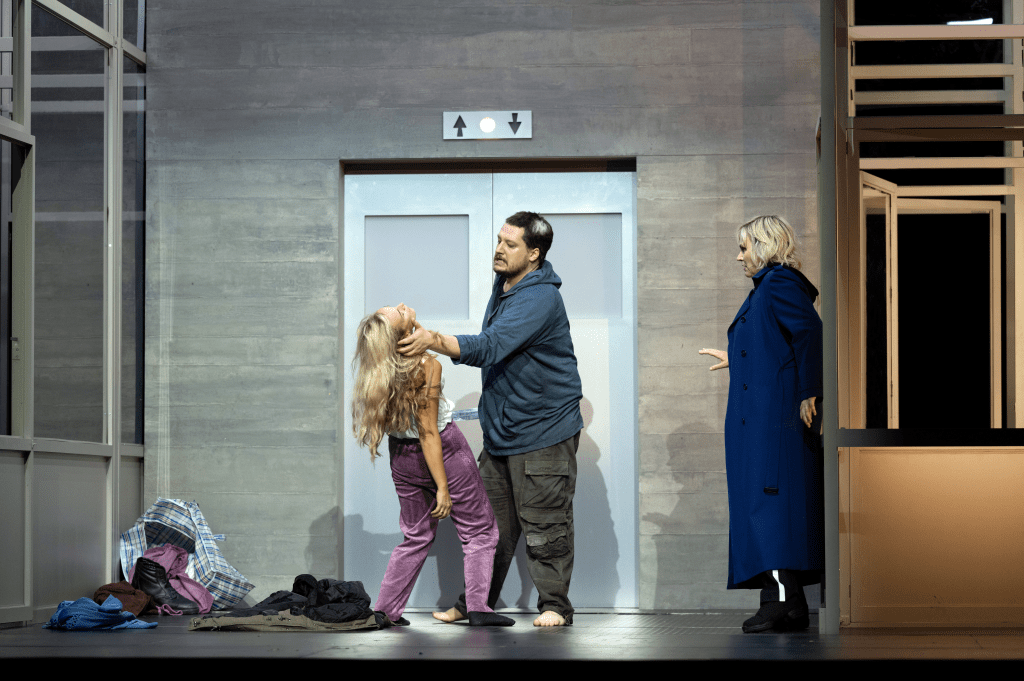
Mika Kares, as Hunding, is something else. His voice could probably scare a bear off its lunch, and he nails every bit of grumpy, grumbly, not-so-friendly energy. Did he pick this role, or did it pick him?
There’s a lot of contact between the stage and the podium. Even with six screens and a prompter, all eyes stay super-glued to Thielemann (maybe they could save a few bucks by ditching the extra gadgets?), because everyone tracks his tiniest twitch. He really runs the show. If you think of the evening as a curve, Act I tiptoes in, Act II cranks up the tension, and by Act III, it’s full throttle. Not a single note feels random. The Siegmund–Sieglinde scene in Act II is brilliantly built, culminating in a full brass storm.
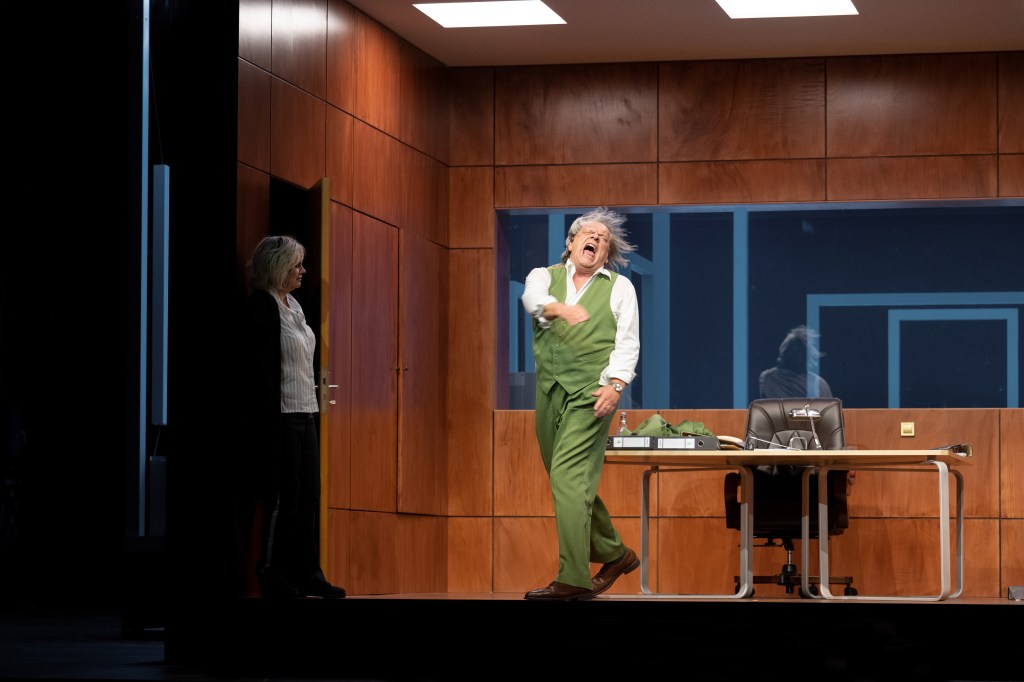
The start of Act II really deserves a spotlight. Michael Volle (once again) blew me away. His monologue is so natural, so full of storytelling, that I actually almost forgot it was rehearsed – he could probably read someone’s grocery list and make it edge-of-your-seat thrilling. His phrasing turns even the most dramatic lines into what feels like a normal conversation… if, if course, your normal conversation involves, you know, killing your own son…
And in the final scene with Anja Kampe as Brünnhilde… wow. I’ve probably listened to that part more than anything else and had high expectations, but Volle didn’t just meet them – he exceeded them. I’m not exaggerating. He and Brünnhilde sit side by side on two brown chairs in the auditorium; she’s crying, he’s speaking with absolute sincerity about how he used to see her, but knows he has to let her go. Thielemann’s careful and (almost frustratingly) slow-building ritardandi make everything hit even harder. He takes his sweet time, and I’m just sitting there thinking, “More! More! Give me more!”
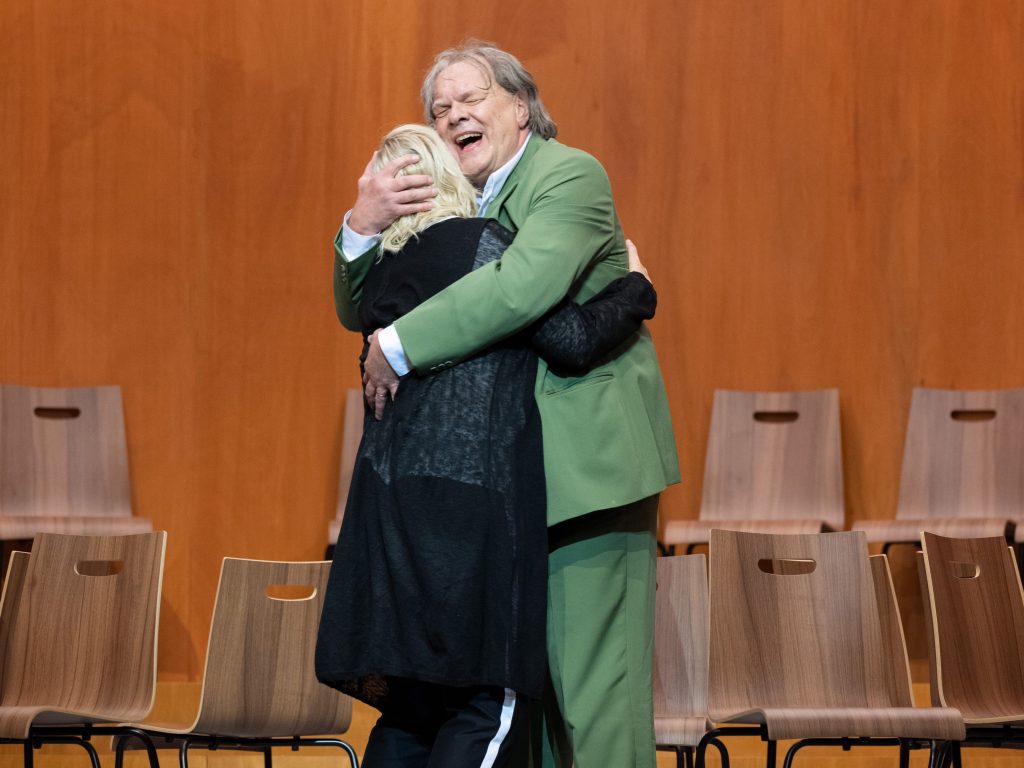
The applause at the end was huge. When Volle came in, almost the entire audience had suddenly discovered how to stand. Incredible. He and Anja Kampe are such a strong duo.
Two days off to catch our breath… then we strap on our helmets, grip our swords (hope they’ll be ready in time!) and hop straight into the Staatsoper cave. Hasta la vista!
Fun Fact!
Wagner actually wrote the Ring backwards! He started with Götterdämmerung, realized he needed some backstory, so he scribbled Siegfried. Still not enough, so in came Die Walküre. Finally, Rheingold filled in the very beginning — and only then did he actually start composing the music.
Trailer:
Cast:
- Conductor: Christian Thielemann
- Director and Stage Designer: Dmitri Tcherniakov
- Costume Designer: Elena Zaytseva
- Light: Gleb Filshtinsky
- Video: Alexey Poluboyarinov
- Siegmund: Eric Cutler
- Sieglinde: Vida Miknevičiūtė
- Hunding: Mika Kares
- Wotan: Michael Volle
- Brünnhilde: Anja Kampe
- Fricka: Claudia Mahnke
- Gerhilde: Clara Nadeshdin
- Helmwige: Sonja Herranen
- Waltraute: Michal Doron
- Schwertleite: Anna Kissjudit
- Ortlinde: Anna Samuil
- Siegrune: Ekaterina Chayka-Rubinstein
- Grimgerde: Marina Prudenskaya
- Roßweiße: Kristina Stanek
Staatskapelle Berlin


 Blogfløjten