
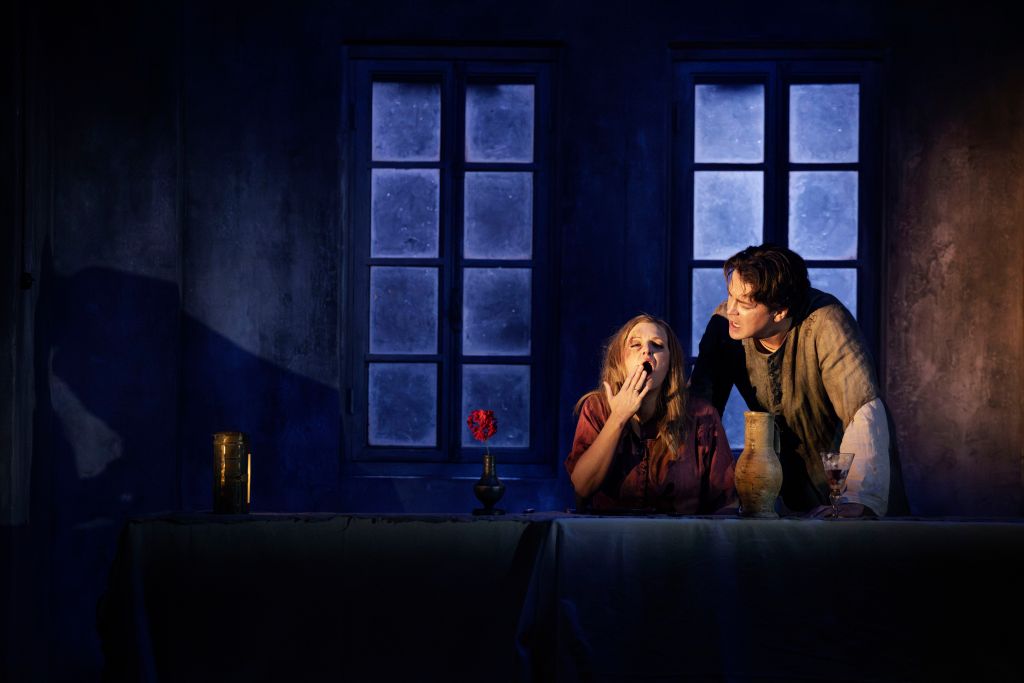
Written on Skin. The second opera by the still-very-much-alive (since 1960) English composer George Benjamin. It premiered at the fancy french festival in Aix-en-Provence back in 2012.
No acts here – just “Parts” (fancy word for the same thing). Three of them. Five scenes in each. Fifteen in total – math mastered, you’re welcome!
Breaks? Sure, but not long enough to get kicked out. Just time to cough, wonder if you left the oven on, or whisper something completely useless to your neighbor. Curtain drops. Two minutes of nada. Curtain up. Boom. Back in business.
And the whole shebang? A sleek, snappy, ninety-minute sprint. No Wagnerian marathon, no interval where your wallet cries from champagne abuse. Quick in, quick out, done and dusted, boom, bada-bing.
Alright, enough of the numbers, let’s see what this opera actually encumbers.
On the stage
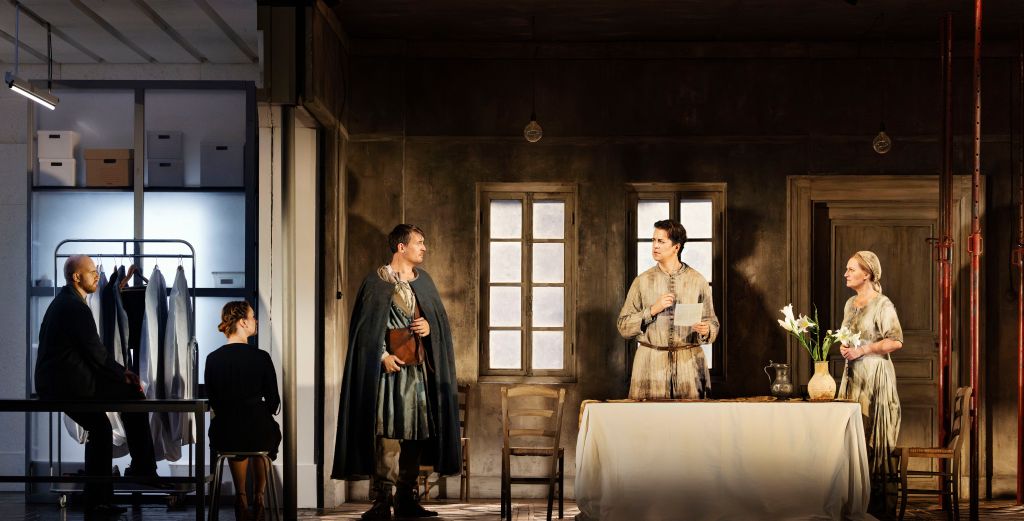
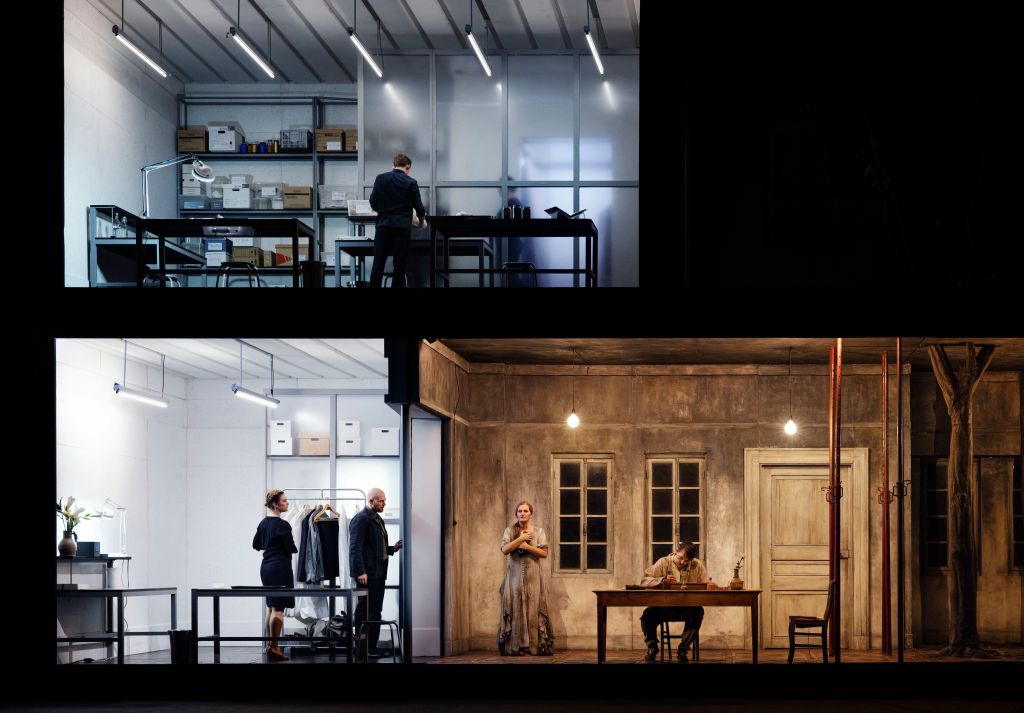
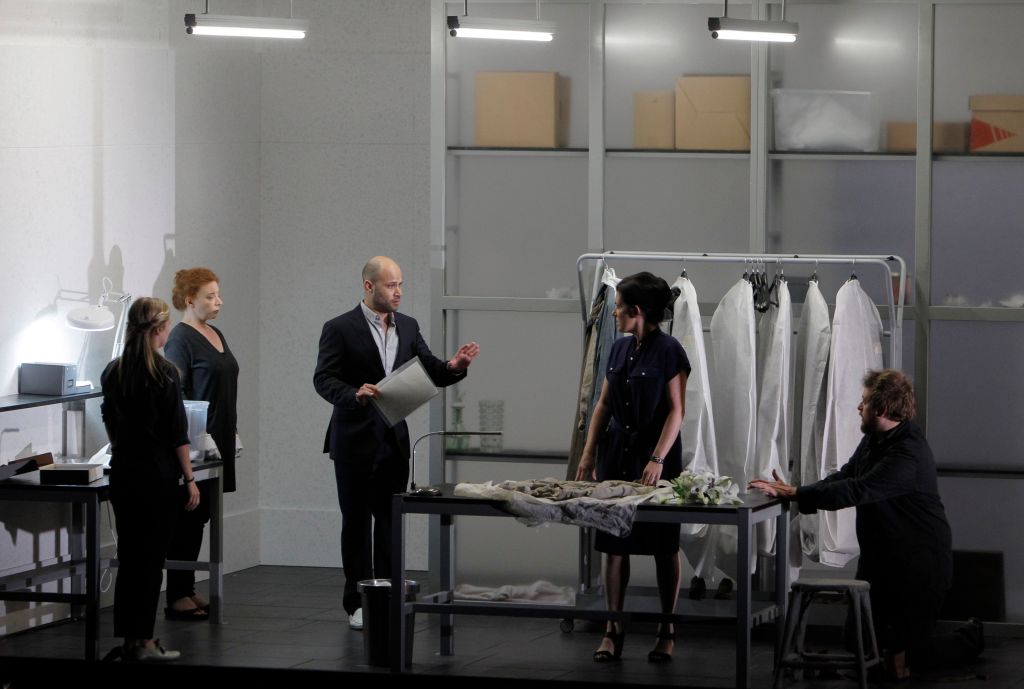
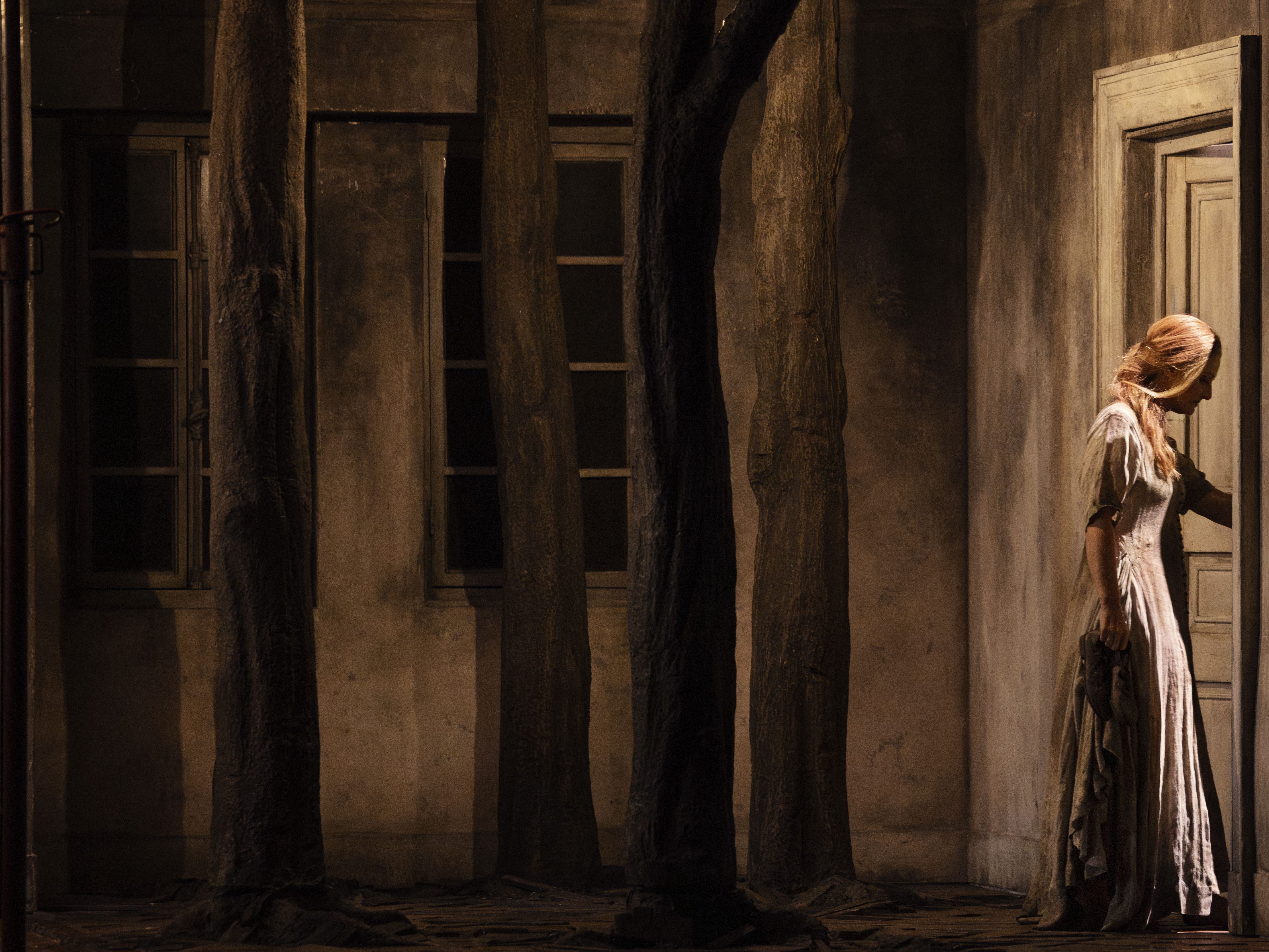
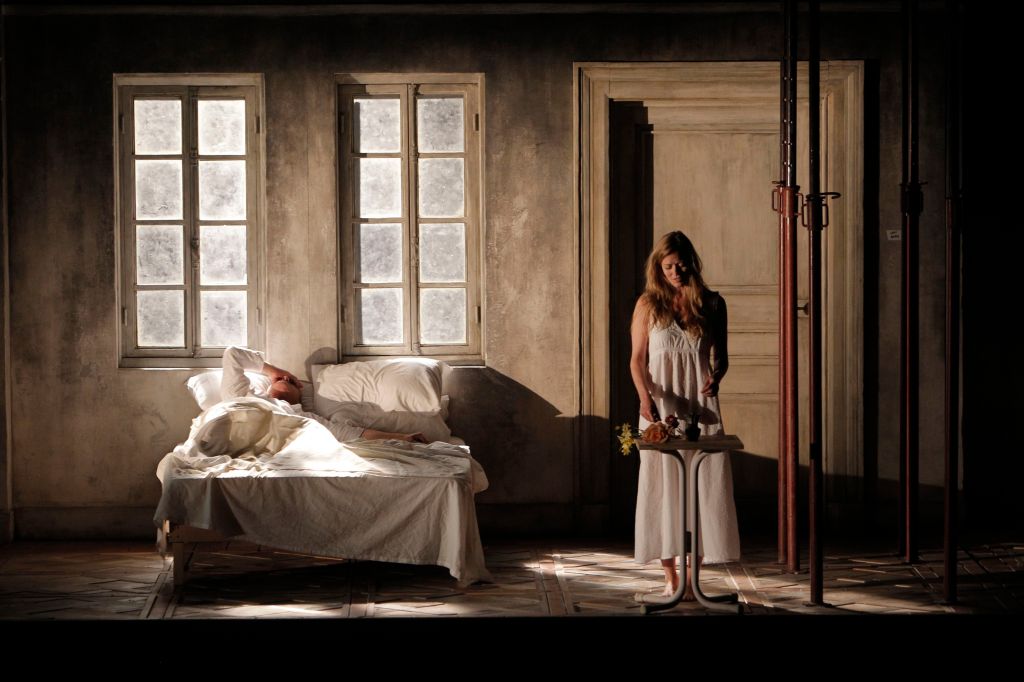
We get the exact same setup as the premiere crowd in 2012. Director Katie Mitchell throws us straight into the two worlds of the opera. Five rooms across two floors. On the left? Bright, clinical, full-on lab vibes. On the right? Three grey, half-tired rooms (two downstairs, one upstairs) that look like someone forgot to pay rent… about a few hundred years ago.
Oh, and the libretto? That’s Martin Crimp, spinning a 13th-century Occitan legend about the troubadour Guillem de Cabestaing and his… let’s call it messy fate. The characters talk about themselves in third person, with little narrative nudges like “said the boy.” It’s basically like having someone read you a story. (For me) It only clicks into place right at the very end. Like, “ohhhh, that’s what was going on!”
We’re hopping eight centuries back in time, where this fellah called “the Protector” lives with his wife, Agnès. He calls her “my property.” Charming… (Nothing screams romance like claiming ownership like she’s IKEA furniture.)
Meanwhile, over on the left, we’ve got the real bosses of the show. And no, not the tech crew – talking angels here. Sometimes they saunter on stage, stirring, sneaking, and subtly sabotaging Agnès and her husband. Other times, they slip in in sleek black, silently steering the story from the shadows.
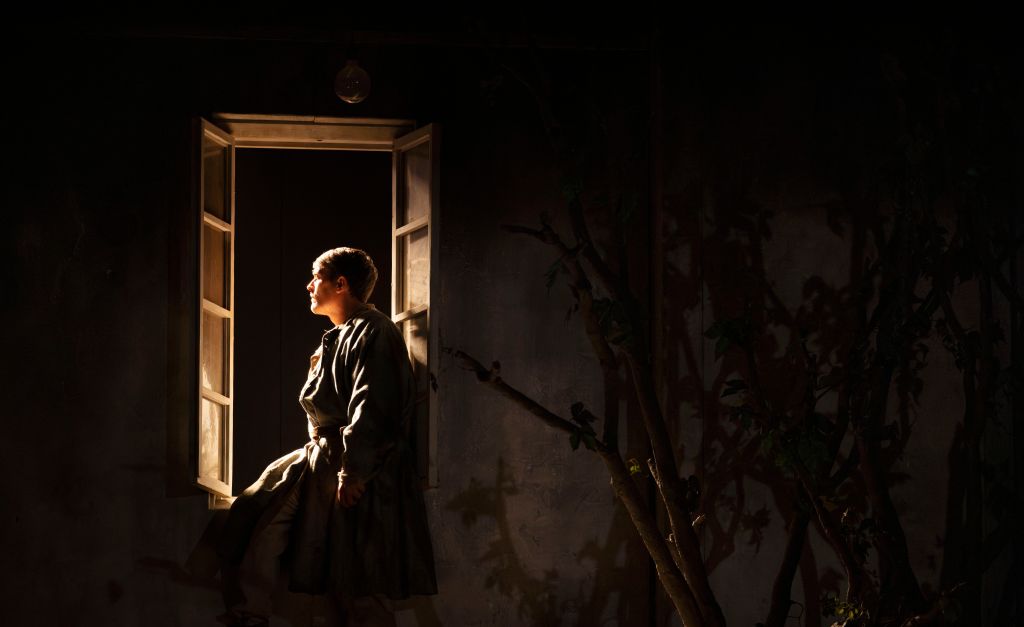
One of the angels we keep bumping into is “the First Angel”, disguised as “the Boy.” It’s a quirky role, sung by a countertenor – a voice type you don’t stumble across every day in opera (or anywhere else, really). Countertenors often play young lads whose voices haven’t decided what they want to be when they grow up.
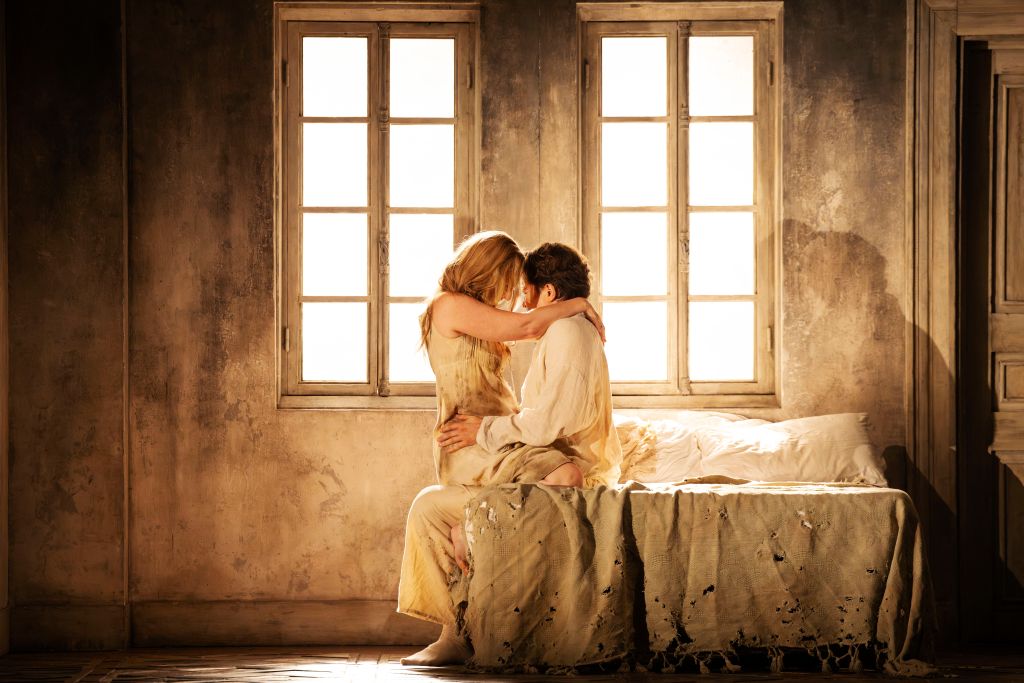
In short, it’s about the Protector hiring a young artist—the Boy—to whip up a fancy manuscript about his noble life and his inevitable VIP spot in heaven. But as ink flows and colors bloom, another drama fills the room: the growing tension between the Boy and the Protector’s wife, Agnès… Oh boy. At first, she hangs back, low-key and “don’t mind me,” but little by little, she struts, prowls, and totally hijacks the stage. Suddenly, shy is officially cancelled.
So, how does it all sound?
Benjamin spices up the orchestra with a few unexpected instruments. Alongside the usual strings, winds, and brass, you might catch the delicate shimmer of a glass…harmonica, the gentle pluck of a mandolin, or the crack of a whip. There’s even a bass viola da gamba, pebbles rattling, temple-block-style planks, and the click–clack of a typewriter. Each splashing its own peculiar color to the sound world being painted.
The focus here is all about texture. In Part I, the orchestra is like a cheeky game of peek-a-boo: one instrument pops out with a tiny motif, winks at you, then dives back under the sonic blanket.
Benjamin also trims down the string section—violins, violas, cellos, and basses are all way smaller than usual—giving the music a lean, see-through, detailed vibe. But let’s be honest: he hasn’t exactly discovered fire here. It’s not the most complex orchestration in the world – but of course, it doesn’t need to be for it to work.
Is it tonal? Well… no. But it’s definitely not twelves-tone serialism throwing a tantrum. Does it respond to what’s happening on stage? Kind of, but not like a cartoon soundtrack where every footstep gets a “boing.” It doesn’t comment on the action so much as it cushions and colors it.
That said, a few chords near the end could’ve been ripped straight from a blockbuster score: big, loud, and dramatic – just like the stage action. The orchestra also likes to play psychic detective, sometimes jumping in early or echoing a singer’s note.
Let’s talk about how it actually sounded
The orchestra could pack a punch – so much so that from my sixth-row seat in the stalls, I occasionally considered covering my ears. Not because it was bad, mind you, but because it practically vibrated my eardrums. These bursts of sound were quick to chime, only a few seconds each time.
With all that power, it’s honestly hard to imagine any singer cutting through. And even though the set seemed pretty singer-friendly—rooms that bounce sound out to the audience— at times some singers still struggled to scale the sonic wall. But not Danish countertenor Morten Grove Frandsen (the Boy). Nope. His voice stayed clear, perfectly controlled, and sharp as a butter knife with a very delicate, precise use of vibrato – something you could highlight in all the singers, actually.
Swedish soprano Gisele Stille delivers a character that’s a little bit unhinged ( I mean that as a compliment) in both singing and acting. Think Elektra, Salome, or Lucia from Lucia di Lammermoor.
Daniel Okulitch (the Protector) had plenty of strong moments too, though sometimes the orchestra basically built a sonic brick wall between him and the audience. He gave it his best bulldozer attempt, but with the lines sitting in a register that blended a bit too neatly into the orchestral fabric, breaking through wasn’t exactly easy. Luckily, when his voice did peek over the wall, it was just right – neat, controlled, and full of color.
I was also pleasantly surprised by Mathilda Sidén Silver, part of the Young Artist Programme – or YAP, as the cool kids call it. She didn’t get a ton of lines, but she still flexed her voice and showed some serious chops.
Yes. She Dies. Again.
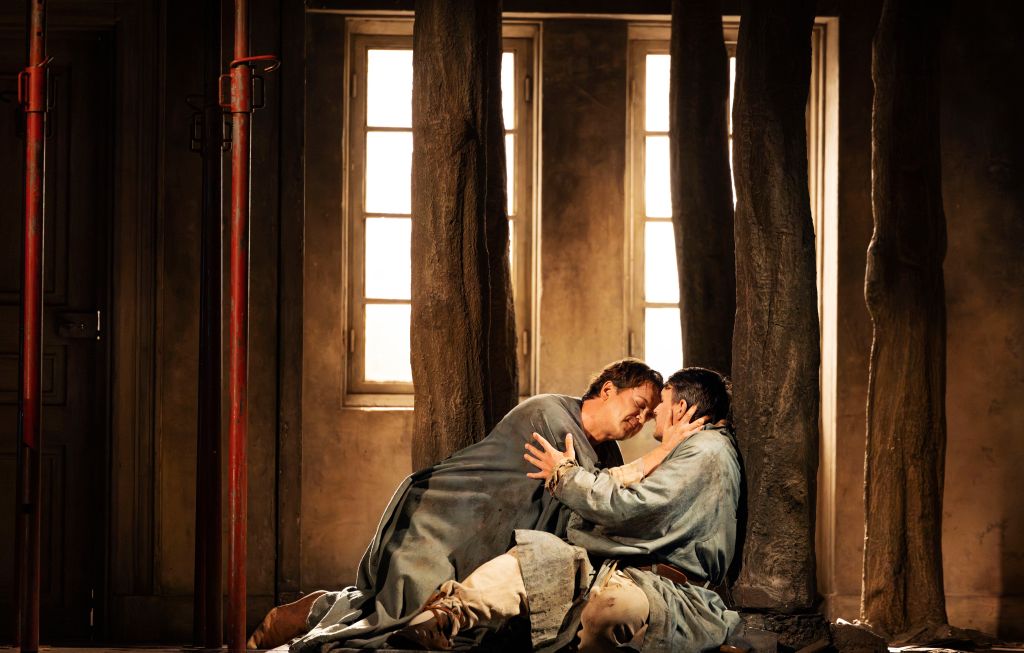
So here we are: another opera where a woman is mistreated by a man, cannot be with her lover, and—surprise, surprise—meets a predictable tragic fate. Ring any bells? It should – it’s basically half the canon. Written on Skin might be rocking a shiny modern coat, but under the hood it’s basically Tosca’s distant cousin. Or Butterfly’s. Or Violetta’s. Or Desdemona’s. Or Gilda’s. Or… well, you get the point. Pick any tragic diva, and chances are she’s already sung this sad song.
Which begs the question: did we really need another installment in this saga? In 2012, was the best we could do still yet another opera wrapped in the ribbon of “timeless tragedy” but stuffed with the same old plot points? Surely at some point, someone has to say: enough with the suffering sopranos.
One Sitting Wonder
And then there’s the format. Written on Skin belongs to the club of short, searing operas. Think Elektra (Strauss), Salome (also Strauss) Orest (Trojan), Wozzeck (Berg), or more recently Innocence (Saariaho). Ninety minutes, no intermission, pure intensity. Is this the new trend? Compact operas that don’t sprawl but slice straight into the drama? Perhaps it’s a response to our shorter attention spans? Or simply the fact that no one wants to sit through a five-hour marathon anymore?
So, are we witnessing a bold new era… or just hitting fast-forward on the old hits?
But still, I was entertained from start to finish. A brand-new piece, with music and a story I didn’t know, and compelling musicians both in the pit and on the stage. The sound world is modern, sure, but you don’t need a PhD in ear-training to follow along. And hey – it’s kind of important to actually celebrate the composers who are still around to take a bow!
Fun Fact:
In just over a decade since its 2012 debut at the Aix-en-Provence Festival, Written on Skin has been staged 150+ times – already earning a reputation as one of the 21st century’s essential operas. That’s impressive… considering the century has barely started!
Trailer:
Cast:
- Composer: George Benjamin
- Original text: Martin Crimp
- Conductor: Evan Rogister
- Director: Katie Mitchell
- Set- and Costume Design: Vicki Mortimer
- Lighting Design: Jon Clark
- The Protector: Daniel Okulitch
- Agnès: Gisela Stille
- First Engel/The boy: Morten Grove Frandsen
- Second Engel/Marie: Mathilda Sidén Silfver
- Third Engel/John: Jacob Skov Andersen
The Royal Danish Orchestra

 Blogfløjten