
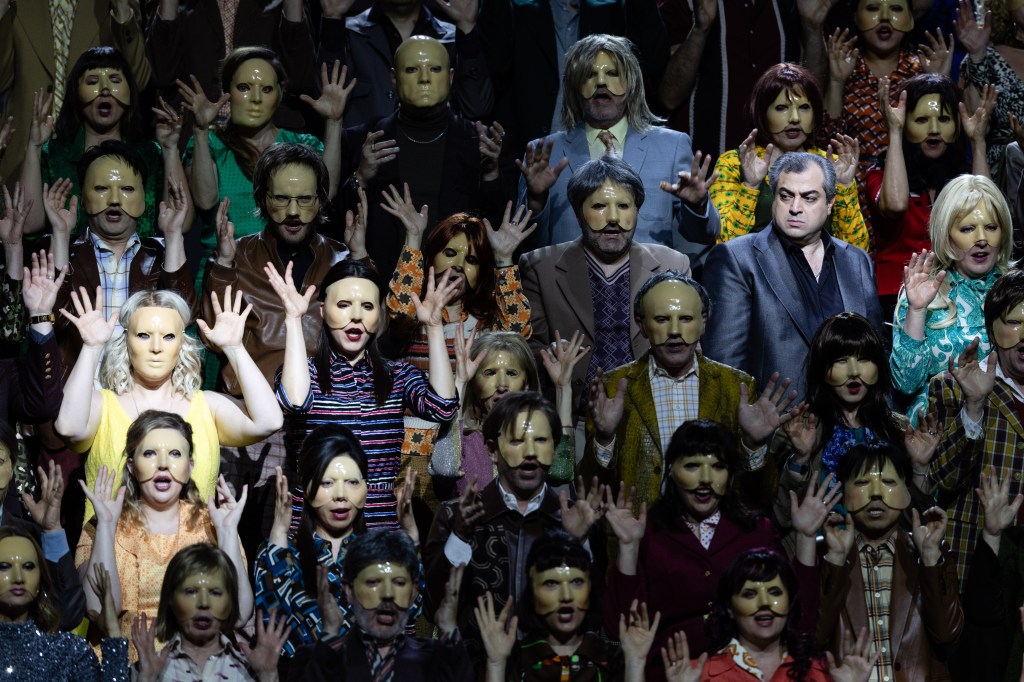
Lucky in love, unlucky at cards? Pfft, scratch that — for Hermann in Tchaikovsky’s Queen of Spades, it’s more like the opposite… or is it? Who knows! Is this opera even about love, or is it just one man’s desperate and slightly obsessive quest for the ultimate card combo?
Pique Dame (The Queen of Spades) has arrived at the Bayerische Staatsoper with pomp, pageantry, and a first half so long it needed two acts to contain it. Thought Wagner was a marathon? Just wait till you’ve clocked two hours of Tchaikovsky with no pit stops in sight!
Grandma Knows the Code
The plot is as dramatic as it is deliciously absurd: young Hermann falls head over heels for a woman he’s barely even seen — one cigarette lit in the dark, and boom! She’s THE one (it is opera after all…). The tiny hiccup? She’s already engaged. Dang!
The slightly bigger issue? Hermann quickly becomes way more interested in her grandmother. Eww… Haha, don’t worry — not in that way. (Though that would’ve been a story!) No, she’s a retired card shark, rumored to hold the secret three-card combo that guarantees a win every time. Jackpot! Or… maybe not.
Hermann then goes all in — not on love, but on the cards. He gambles with hearts, bluffs his way through reality, and ends up exactly as you might expect when you swap love for a spade: broken, busted, and blackened in soul and spirit.
Tchaikovsky Goes Vegas (Sort of)
The set design is, on the one hand, super simple — and on the other, totally not. First scene: pitch-black stage. The only thing illuminating is a ghostly cloud of white smoke, through which Hermann (Arsen Soghomonyan) drifts like a shadow. His voice? Clean and controlled, with a deep, larynx-driven tone that thuds and throbs — much like his character. Let’s just say, he’s not exactly the I-say-disco,-you-say-party kinda type.
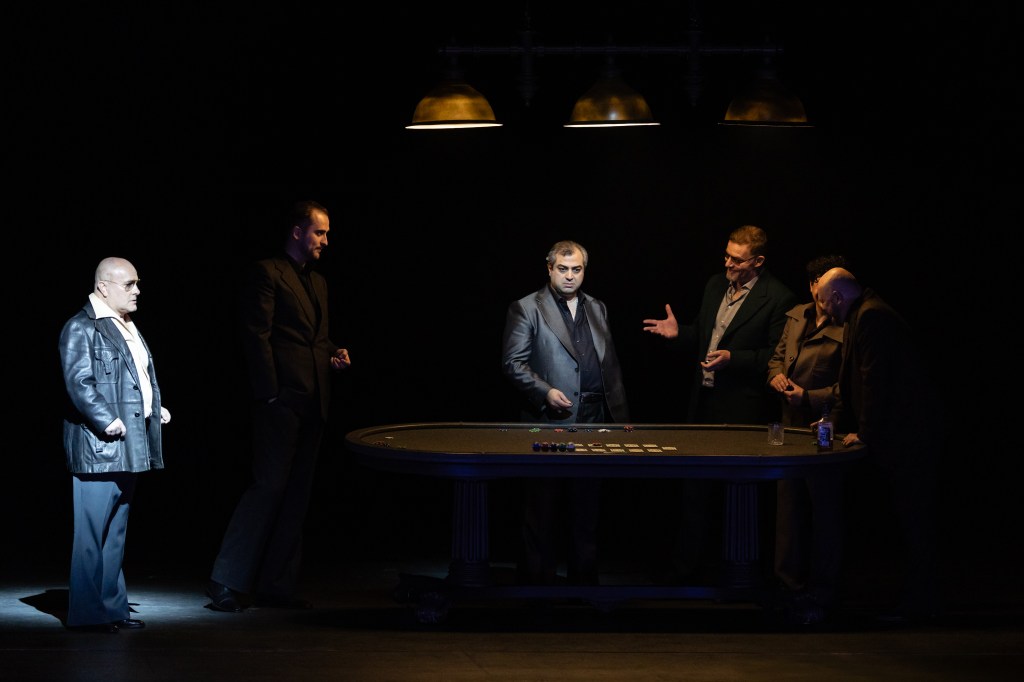
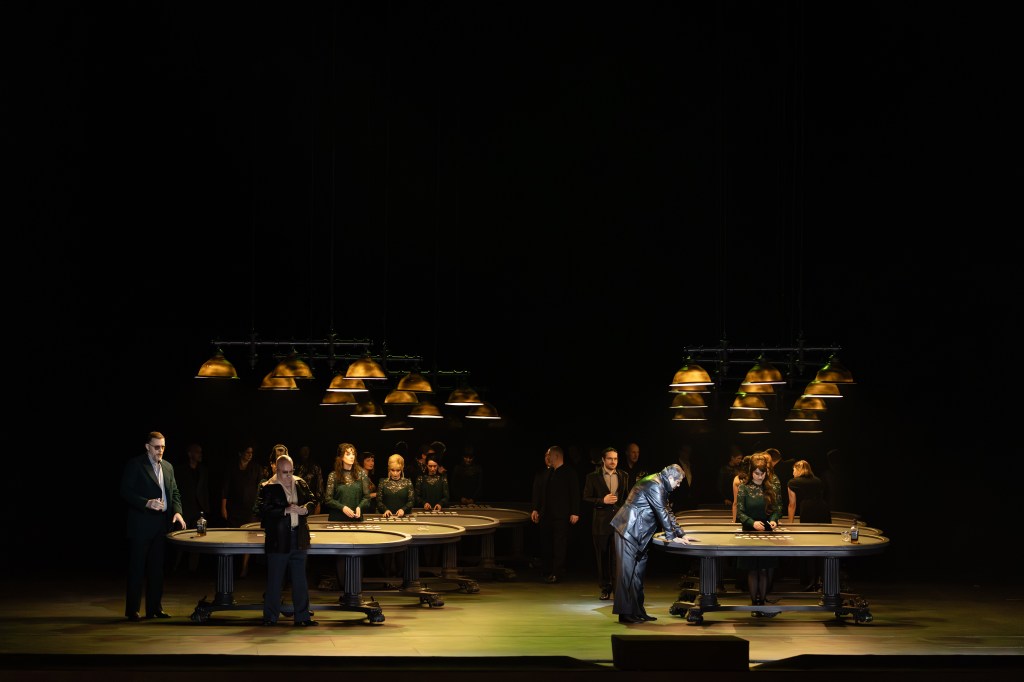
The next scene? At first glance, you might think we’ve wandered into a Russian factory. Rows of tables, dentist-style lamps glaring down, and a woman stationed at each one. Could they be assembling matryoshka dolls? Bottling vodka? Nope. A closer look reveals playing cards in action. Aha — we’re in a casino! Alright, I can work with that.
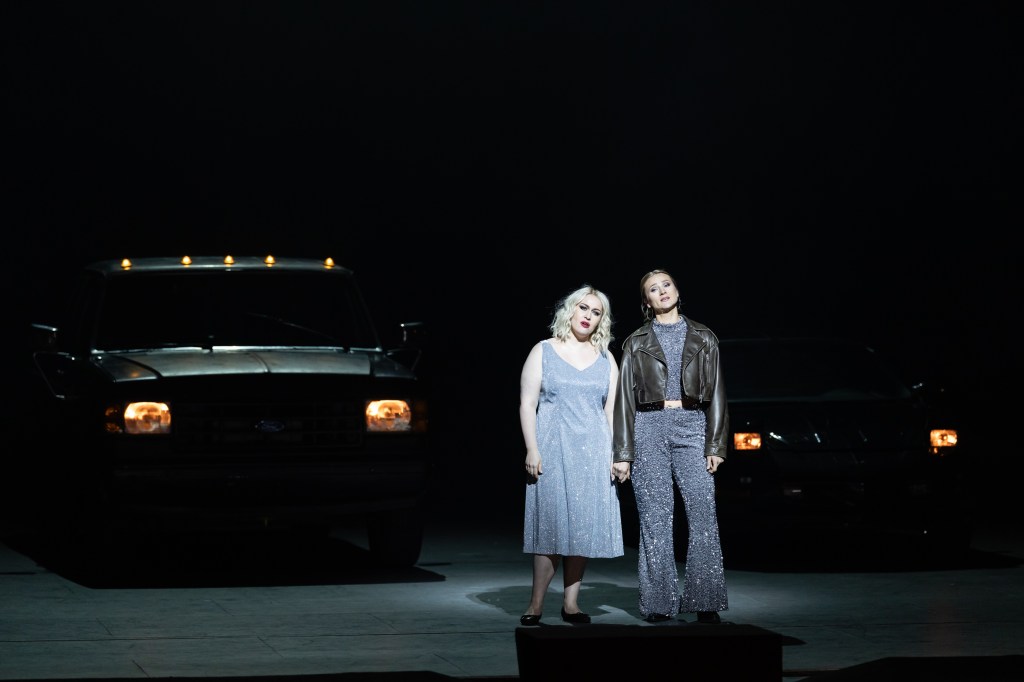
And then, we’re back in the dark. Lisa (Elena Stikhina) and Polina (Victoria Karkacheva) deliver a duet so beautifully silver-shiny it could make a spoon jealous! The accompaniment? Harpsichord… Or wait, no — we’re in the late 19th century! The harpsichord days are long gone, right? Well, Tchaikovsky clearly thought it was time for an upgrade, so he swapped it out for a newer model: the piano! The concept’s pretty much the same: broken chords that don’t really tell you much. But who needs more when you’ve got voices (and outfits) sparkling like diamonds?
And then, eight lamps sneak in. Romantic? Sure. But hold up — suddenly, four half-dead cars roll in. Are they parked for a football game? A rave? Black Friday at the local mega-store?
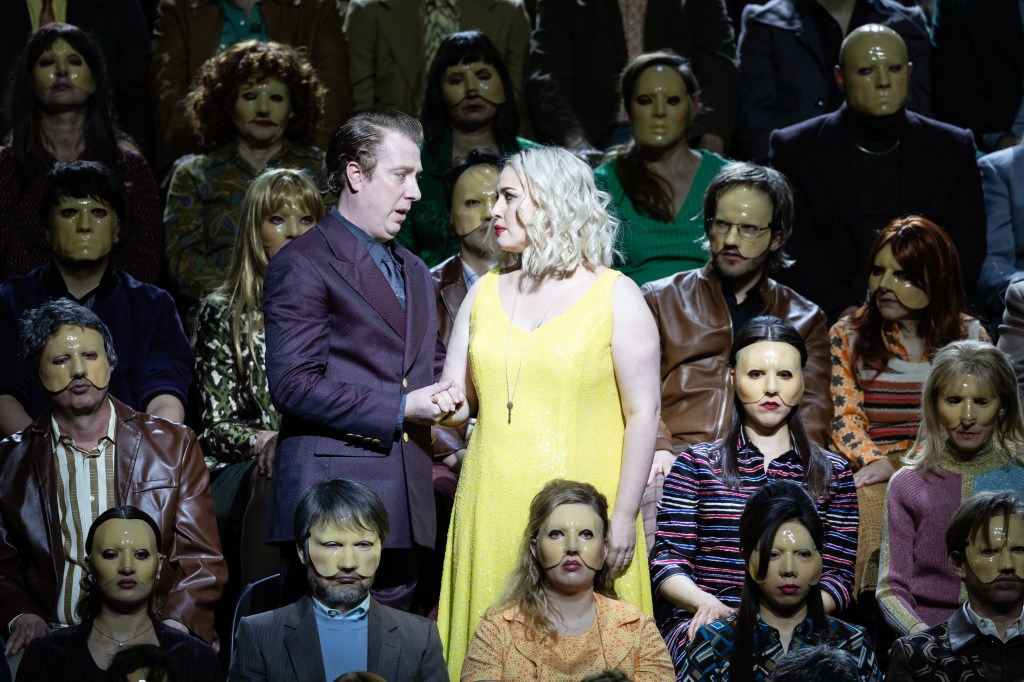
The next scene clears things up (a bit): We’re on a grandstand, where the characters are sitting in rows so perfectly aligned, they could make a geometry teacher run for their money.
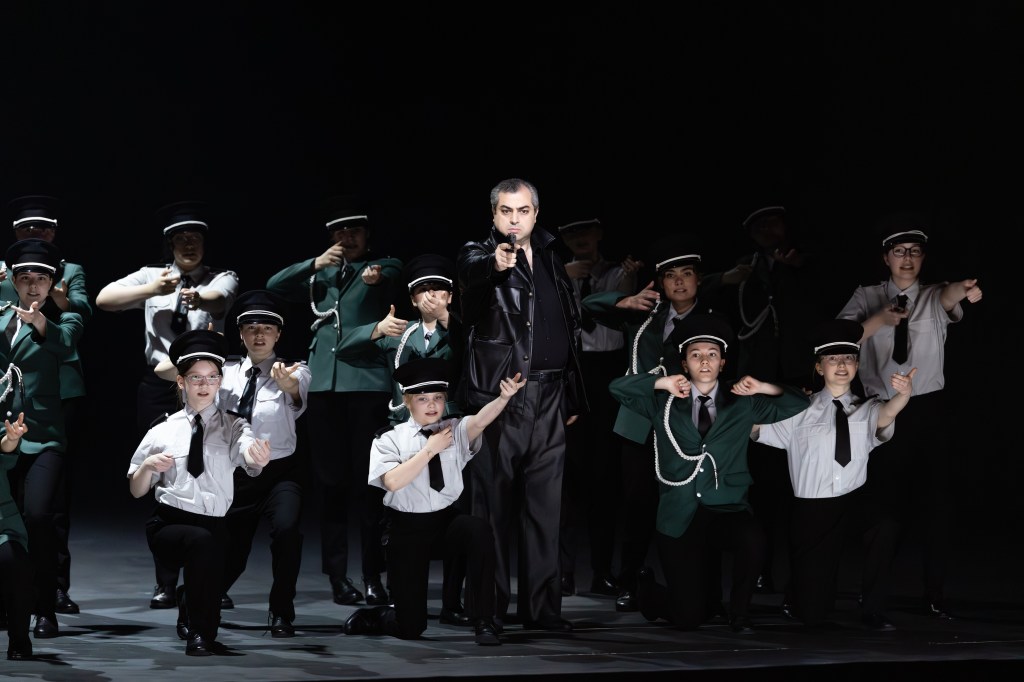
Four people get the spotlight: Hermann and his love, Lisa (naturally), then her fiancé, and her grandmother. The rest? They break into a synchronised choreography. Maybe it’s not football they’re watching, but synchronised swimming? Perhaps the audience is so hyped that they can’t help but join in? After all, it’s not that different from a crowd singing along at a concert, I suppose.
Cards, Cravings, and Crumbling Love
Lisa’s fiancé, Yeletsky, can feel he’s losing her, and he belts out the most heartfelt lines about it. He’s not a jerk – he just wants the best for her. “All my soul shares in your suffering.” Boris Pinkhasovich voice is full of sorrow and overtones, a melody dripping with emotion.
The thing is, there’s no true “villain” in this opera – just Hermann, who can’t control his temptations.
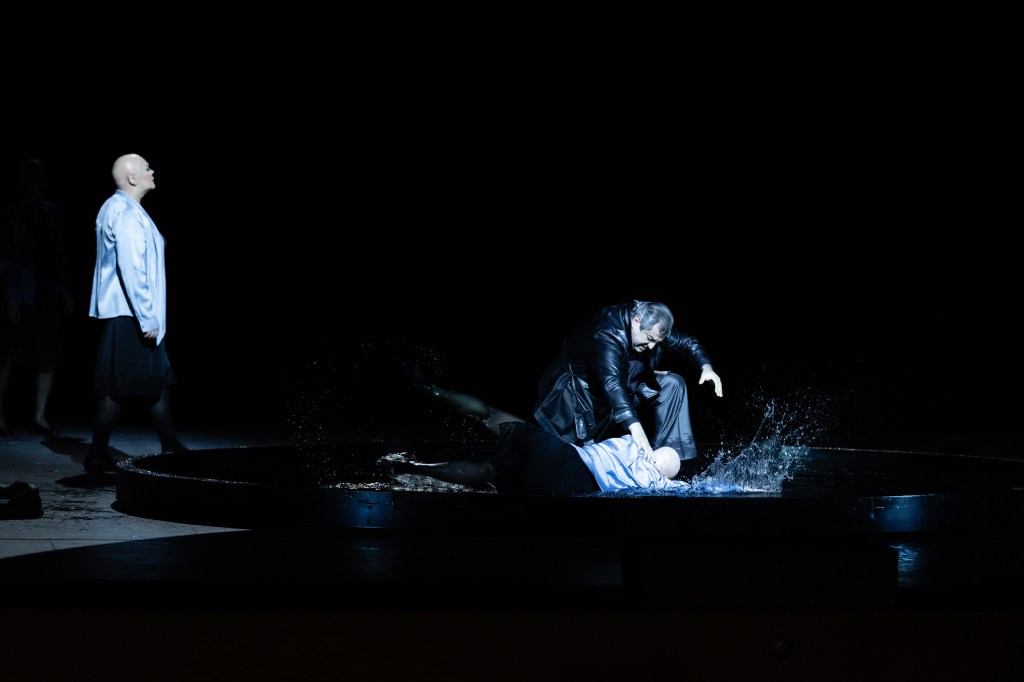
And speaking of temptations: Hermann sneaks into the grandmother’s bedroom. Not to dig through her collection of anti-aging creams, but to crack the ultimate card code. Or at least, that becomes his goal when she unexpectedly shows up. The scene features a giant water bowl and a colossal mirror reflecting the characters from above. Symbolism? Maybe. Cool? Oh, for sure. But what does it mean? Well, who knows.
The set also tosses in some video interludes starring Lisa — brief glimpses of what might have been true love. But as Hermann’s mind deteriorates, so does her image. And in the end, it’s not Lisa he sees. Only the cards.
Fun Fact!
Tchaikovsky’s brother, Modest, wrote the libretto, and it is said that Piotre Tchaikovsky composed the entire score in a whirlwind 44 days during a stay in Florence.
Trailer:
Cast:
- Conductоr: Sebastian Weigle
- Directоr: Benedict Andrews
- Stаge Designer: Rufus Didwiszus
- Сostume Designer: Victoria Behr
- Light Designer: Jon Clark
- Dramaturg: Olaf Roth
- Сhoir: Christoph Heil
- Hermann: Arsen Soghomonyan
- Tomski: Vladislav Sulimsky
- Fürst Jelezki: Boris Pinkhasovich
- Tschekalinski: Kevin Conners
- Surin: Bálint Szabó
- Tschaplizki: Tansel Akzeybek
- Narumow: Roman Chabaranok
- Festordner: Aleksey Kursanov
- Die Gräfin: Violeta Urmana
- Lisa: Elena Stikhina
- Polina: Victoria Karkacheva
- Die Gouvernante: Freya Apffelstaedt
- Mascha: Ekaterine Buachidze
- Ein Kinderkommandant: Maja Padberg
Bayerisches Staatsorchester, Bayerischer Staatsopernchor, Kinderchor der Bayerischen Staatsoper


 Blogfløjten