


All it takes is a sword, a half size plastic swan, some knee-high socks and lederhosen — oh, and a good splash of drama, naturally. Here you go. Now you have the recipe for Zurich’s Lohengrin.
Swan-tastic Chaos
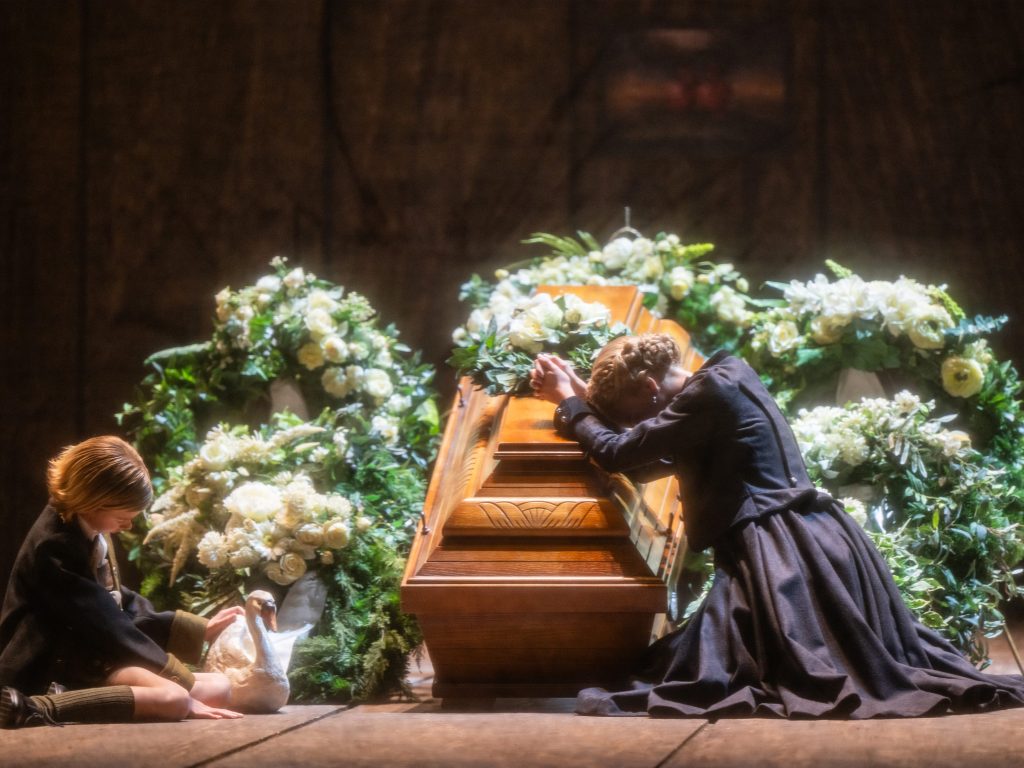
The prelude tiptoes in like a sneaky cat, gently dragging us into Lohengrin-land. As the curtain rises, we stumble upon a gloomy funeral. Two heartbroken (now) orphaned children stand alone. But before you can even find a tissue—whoosh!—we’re catapulted straight into wedding chaos. The bride looks less ready to toss a bouquet and more ready to bolt for the nearest fire escape.
And now to the present.
Elsa, in her white slip, and clutching a plastic swan like it’s her last hope, runs for her life. Hot on her heels? A crew of young men in fashion straight out of a South German festival — lederhosen, green jackets, and knee-high socks so tall they could stop traffic.
She’s accused of murdering her brother, Gottfried, by none other than Friedrich von Telramund. (Which feels a bit ironic, really. I mean, Friedrich (fried = peace) — Peaceful he is not!)
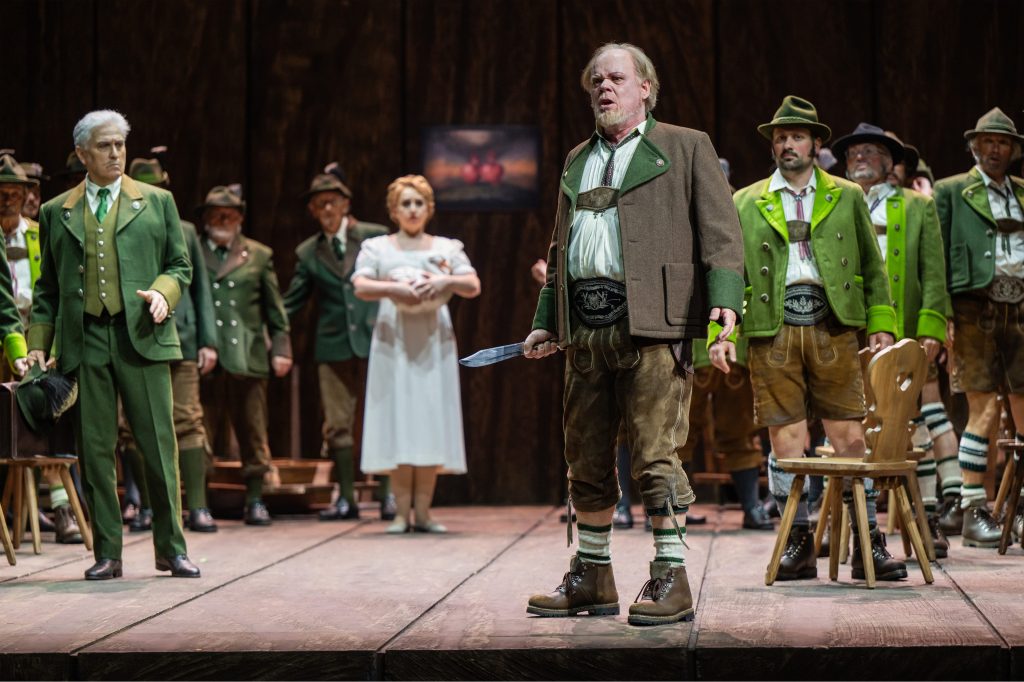
Caught in the middle of all this drama, Elsa does what any sensible heroine would do: she calls for backup.
Who answers? A prince on a white horse… or wait, scratch that — a knight on a white swan. You get the idea.
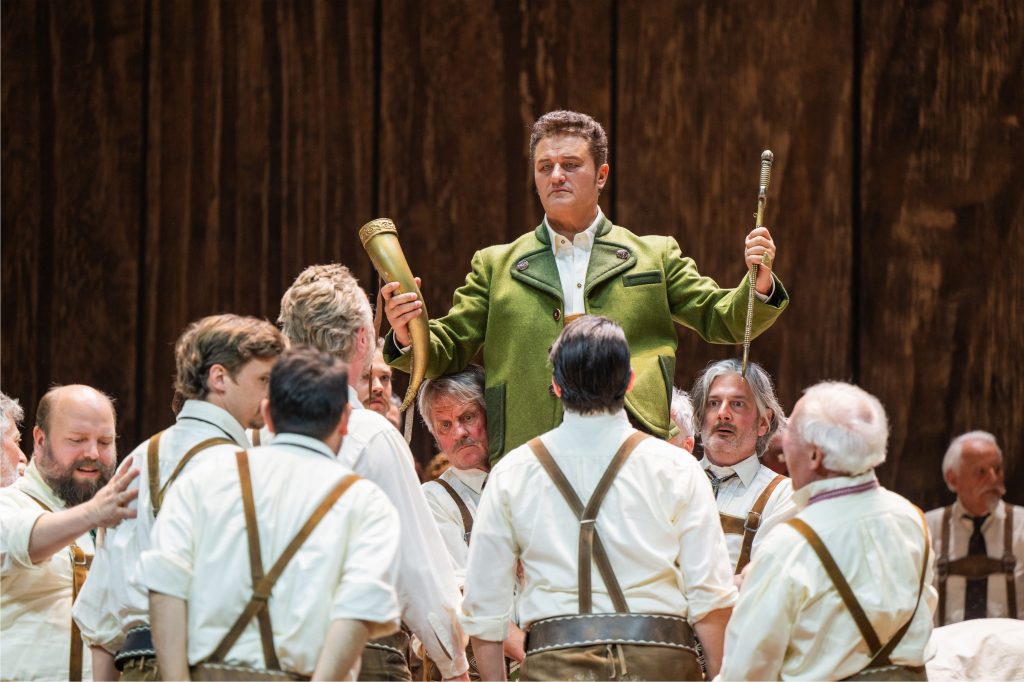
Cue the flashing purple lights, a whirlwind of confusion, and boom — there’s Lohengrin, lying on the floor like a fallen angel, his white costume crumpled as if he just popped out of a washing machine. His back to the audience, so his voice? Can you hear Piotr Beczała? Oh, absolutely. Clear as crystal water. His powerful voice fills the space. Perhaps the boxy stage design has a hand in this as well.
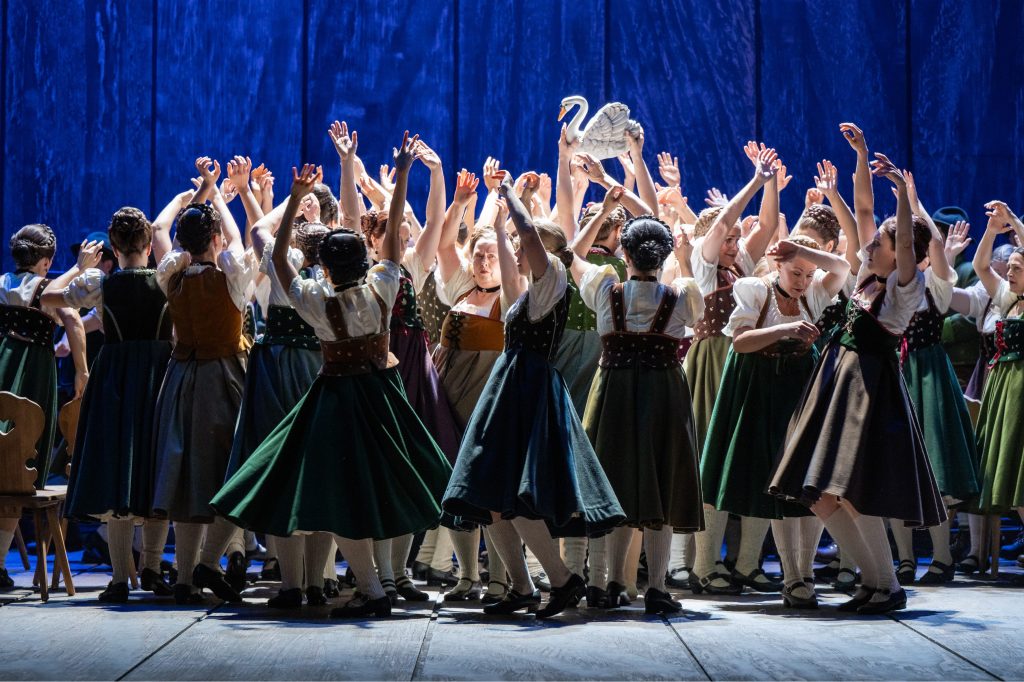
Lohengrin steps in to fight for Elsa against Friedrich — and of course, they do it the only logical place: on top of a couple of tables. Friedrich then manages to pull off what might just be the clumsiest fall in the history of falling — it’s so bad, it almost feels like a joke.
Lohengrin wins, obviously (because main character perks), and he gets to marry Elsa — that’s just opera logic: two seconds, one sword fight, eternal love.
But here’s the catch: Elsa isn’t allowed to ask him who he is or where he’s from. That’s it. Just a tiny little red flag waving in the wind.
Slips and Secrets
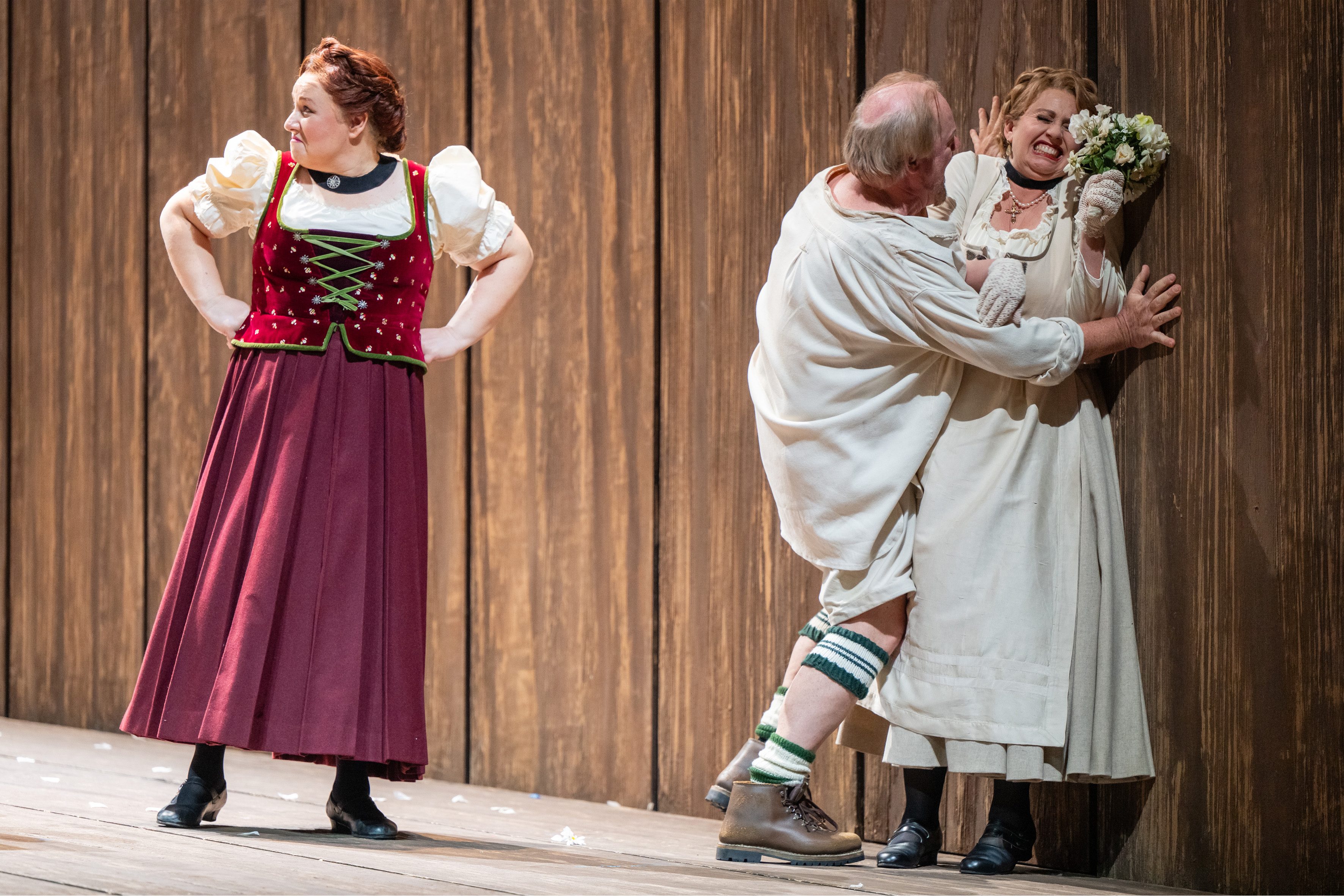
The next two acts have Friedrich stomping around in a white slip. Whether it’s supposed to scream shame, confusion, or just the production’s undying love affair with slips — your guess is as good as mine. Lohengrin sports one when he first pops up. Elsa’s got hers. Even her brother joins the slip club at some point. Maybe it’s all deep and symbolic — peeling away the layers, showing how fragile everyone is.
Or maybe it’s just the production’s way of shrugging and saying that they are a bit lost in life (and linen)?
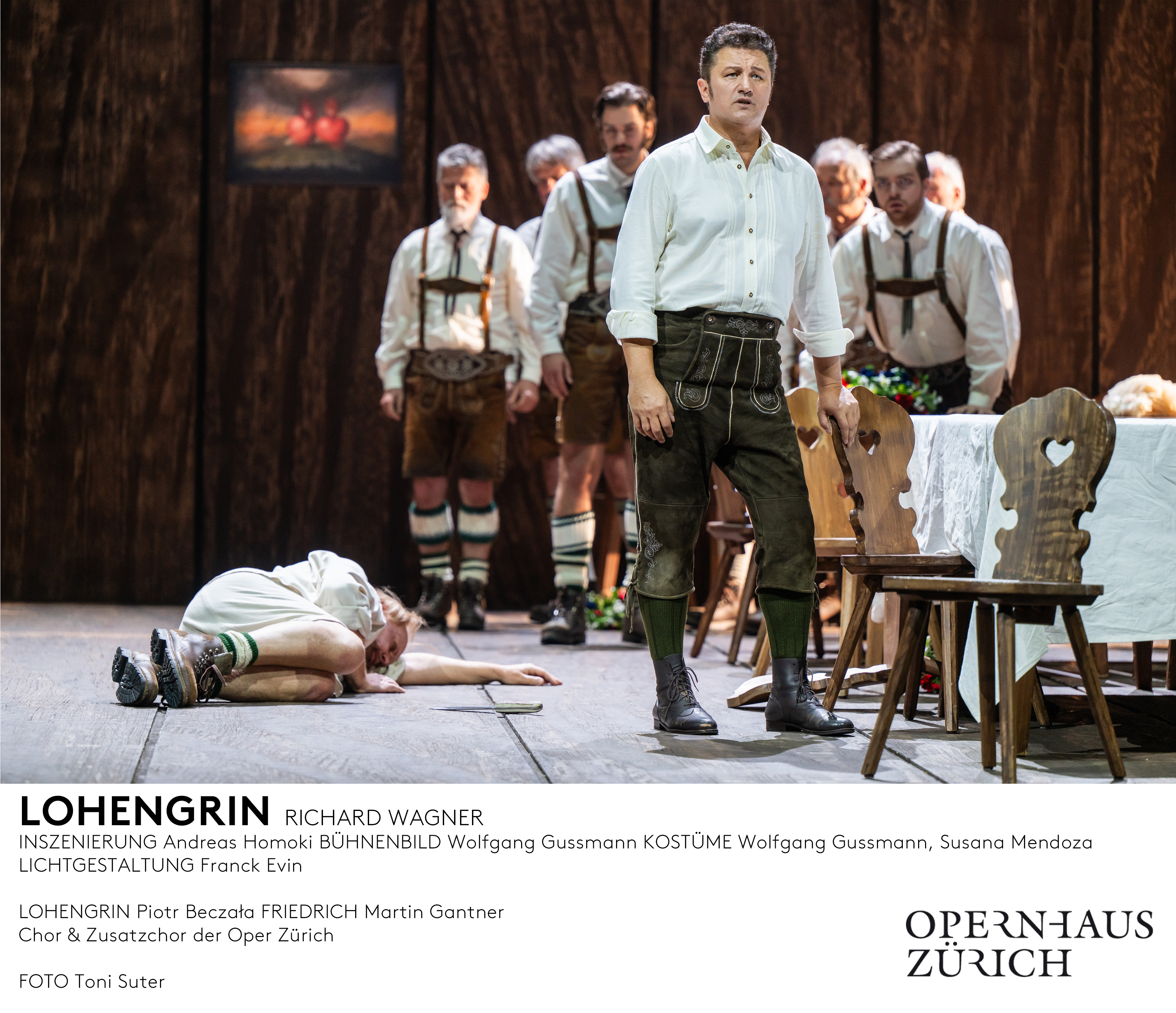
After the wedding in the final act, Lohengrin is definitely not getting the romantic night he had in mind. Instead of a moonlit honeymoon, he and Elsa are headed straight for disaster. Lohengrin’s big secret? Yeah, it’s about to come crashing down.
Trumpet Tricks
During the following interlude, Morgenröte, the trumpeters turn the hall into their playground. First, they pop up from the corridors, then spread out into four different groups across the space. You can practically feel their excitement as they get into position, with a few of them even flashing a grin. It’s contagious — you can’t help but smile along with them, watching them have an absolute blast.
The stage
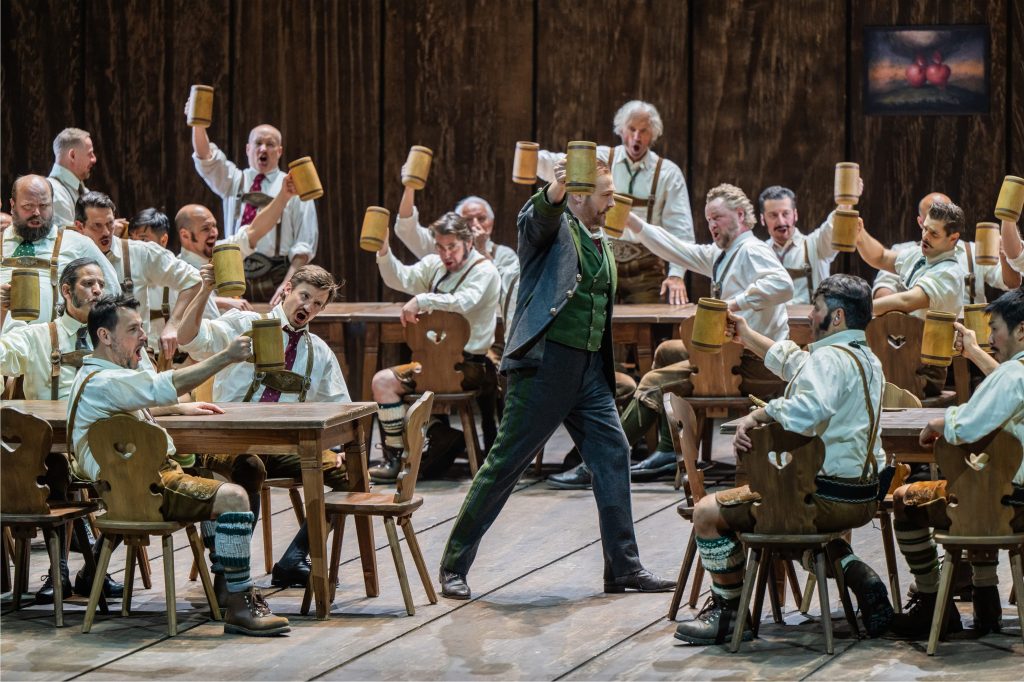
Is brown. The floor, walls, tables, chairs — everything is made of wood, like a giant lumberjack’s cabin. By Act 3, it seems like we’ve been transported to a Bräuhaus, with enormous beer mugs being carried around with the kind of enthusiasm usually reserved for Olympic athletes.
Look At the Big Picture
A green landscape, two hearts side by side, and a curtain that joins the party — this scene isn’t just for decoration. It also appears in a framed picture on the brown walls. Across the curtain, the words “Es gibt ein Glück.” The big question is: what kind of happiness are we talking about here?
Oh, Ortrud
Ortrud, Friedrich’s fierce wife, is a walking storm cloud. With her hands firmly planted on her hips and a mouth turned down so far it could double as an upside-down rain gutter, she radiates negativity like it’s her full-time job. The only time she smiles is when someone else’s misery brings her a little twisted joy. Honestly, she’s the kind of person you’d really want to spend an afternoon with — said no one ever.
The Music
Elsa is portrayed by Simone Schneider, with a delicate, dramatic and semi-lyrical voice that beautifully conveys Elsa’s innocence.
Piotr Beczała, the Lohengrin himself, is a seasoned swan rider. He’s sung the role of Lohengrin countless times – and will again this summer in both Munich and Bayreuth. It’s a part that seems tailor-made for his voice. At no point does he seem strained, and his voice is full of colors and nuances that glide effortlessly, like a swan on a serene lake.
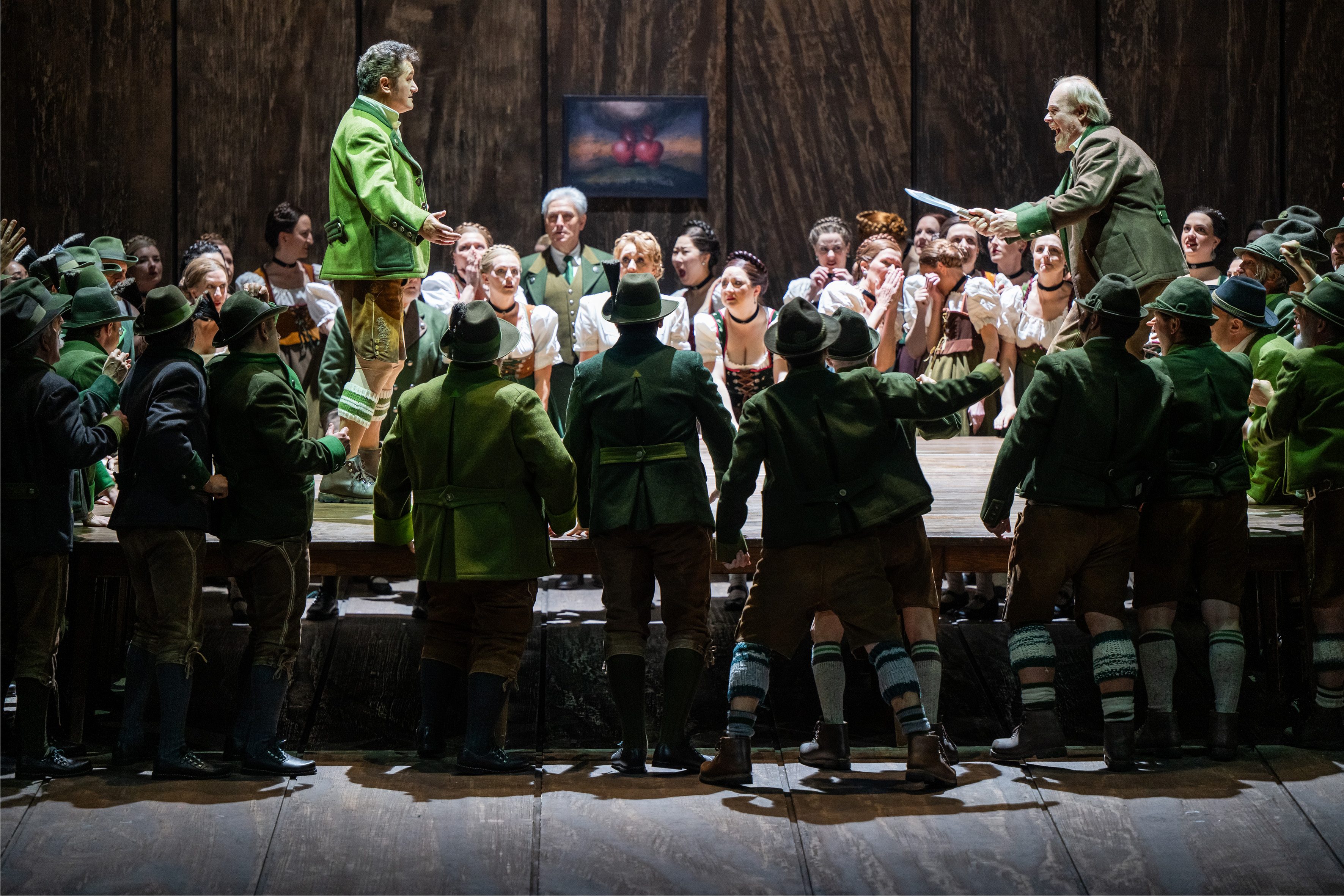
Heinrich der Vogler, the German king, is sung by Christof Fischesser, who could probably compete in the world championships of consonant-singing. You can’t pull that off without a little spit flying around on stage. Maybe he had a competition with the brass section to see who could drop the most spit on the floor? Okay, maybe not that intense, but hey, we’re never in doubt about what he’s singing, so it works!
Conductor Axel Kober? I fact, I had the chance to hear him conduct three Wagner works in just over a month (Die Meistersinger, Parsifal, and now Lohengrin). One thing that stands out about him is his playful approach to tempi – from lightning-fast passages to moments that seem frozen in time.
Fun Fact!
Lohengrin was actually Wagner’s last opera — from there, he built an entirely new world based on the idea of a Gesamtkunstwerk, with music dramas and a Bühnenweihfestsspiel.
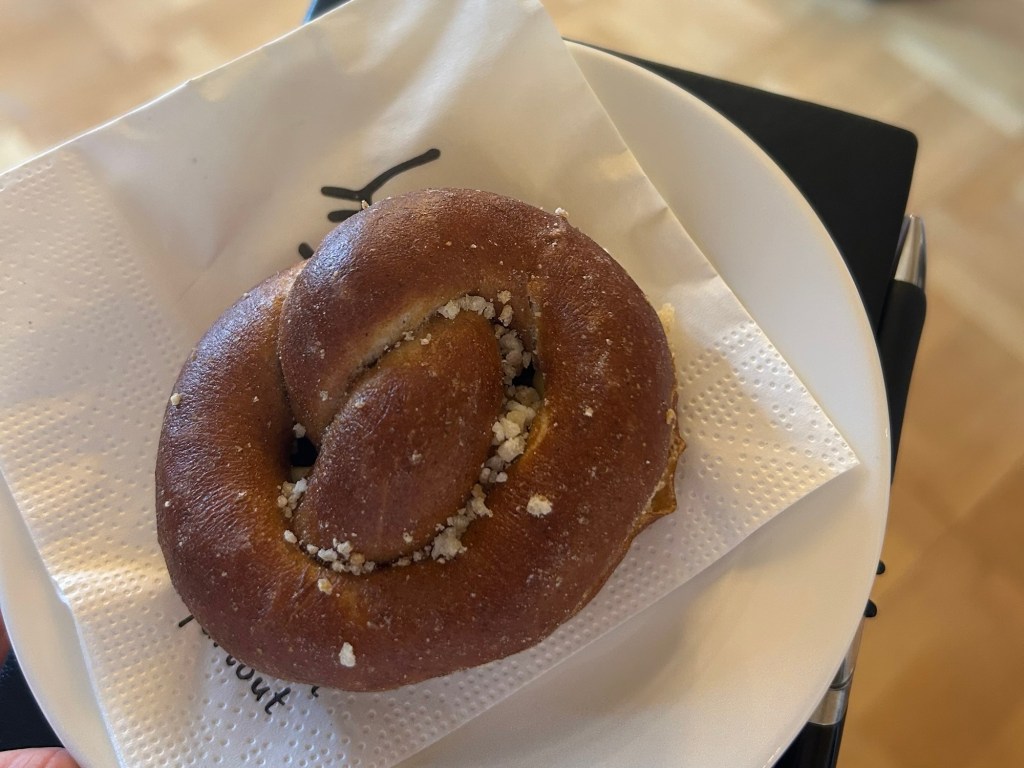
Brezels or Döner? The Ultimate Opera Snack Showdown!
I’m on a mission to find the best pretzel in opera houses. From buttery to bland, let’s see if the snacks live up to the drama!
Zürich offered the most expensive pretzel I’ve ever bought and set me back a whopping 7 CHF – that’s almost 7.5 €! For that price, you could easily grab a döner! (Just to put it in relatable terms for us all), and honestly, I’d probably have gotten more for my money. This pretzel is probably the tiniest one on the market – so small, it could’ve been straight out of a dollhouse. About the size of my fist.
And then there was the butter… My love for butter was truly tested here. The layer was so thick, it probably made up a good third of the pretzel’s height. I felt like I could’ve just smeared that stuff all over my face while trying to figure out where the actual pretzel ended and the butter began. The taste? It was fine – but honestly, it gave off more of a “laughable pretzel” vibe, like someone watered it down a little. So, if you’re not a broke student and fancy living large on the terrace, go ahead. Now you know what you’re getting into!
Trailer:
Cast:
- Conductоr: Axel Kober
- Directоr: Andreas Homoki
- Stаge Designer: Wolfgang Gussmann
- Сostume Designer: Wolfgang Gussmann, Susana Mendoza
- Light Designer: Franck Evin
- Dramaturg: Werner Hintze
- Сhoir: Janko Kastelic
- Heinrich der Vogler: Christof Fischesser
- Lohengrin: Piotr Beczała
- Elsa von Brabant: Simone Schneider
- Friedrich von Telramund: Martin Gantner
- Ortrud: Anna Smirnova
- Heerrufer: Michael Kraus
- Vier brabantische Edle: Christopher Willoughby, Felix Gygli, Tomislav Jukic, Max Bell
- Vier Edelknaben: Laura Missuray, Rosa Maria Hernandez, Katarzyna Rzymska, Eleanor Paunovic, Bernadeta Sonnleitner
Philharmonia Zürich, Chor der Oper Zürich, Zusatzchor der Oper Zürich, SoprAlti der Oper Zürich, Statistenverein am Opernhaus Zürich

 Blogfløjten