
I told myself I wouldn’t write about this Parsifal. “You’ve already done two within the past two weeks,” I said. “You’ve got another one coming up on Sunday,” I said. But did I listen? Of course not! I mean, who goes to Parsifal and walks away without some existential commentary? Especially when the evening includes aging doppelgängers, a prison as a stage, and a director who seems determined to make your brain tie itself into a philosophical pretzel. Resistance was futile — so here we are.
Kirill Serebrennikov’s take on Wagner’s Bühnenweihfestspiel. Much like his Don Carlo (yes, the one that opens with a bold “buh!”), this was no ordinary Parsifal pilgrimage. Sure, every Parsifal is different, but here the story wasn’t just reimagined — it was turned inside out, flipped upside down, and brimming with bewildering twists to keep your brain buzzing, bouncing, and barely keeping up through all three acts.
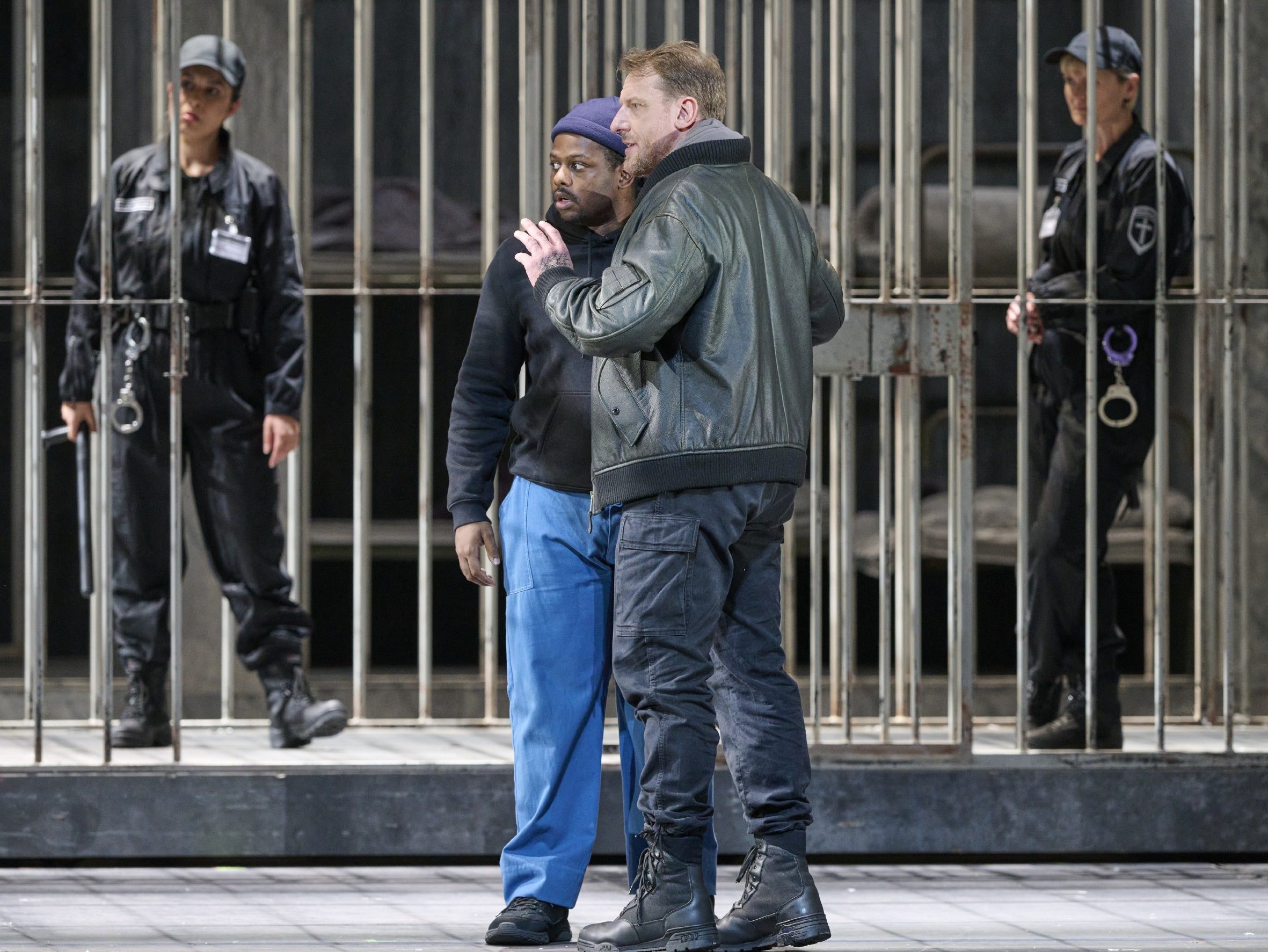
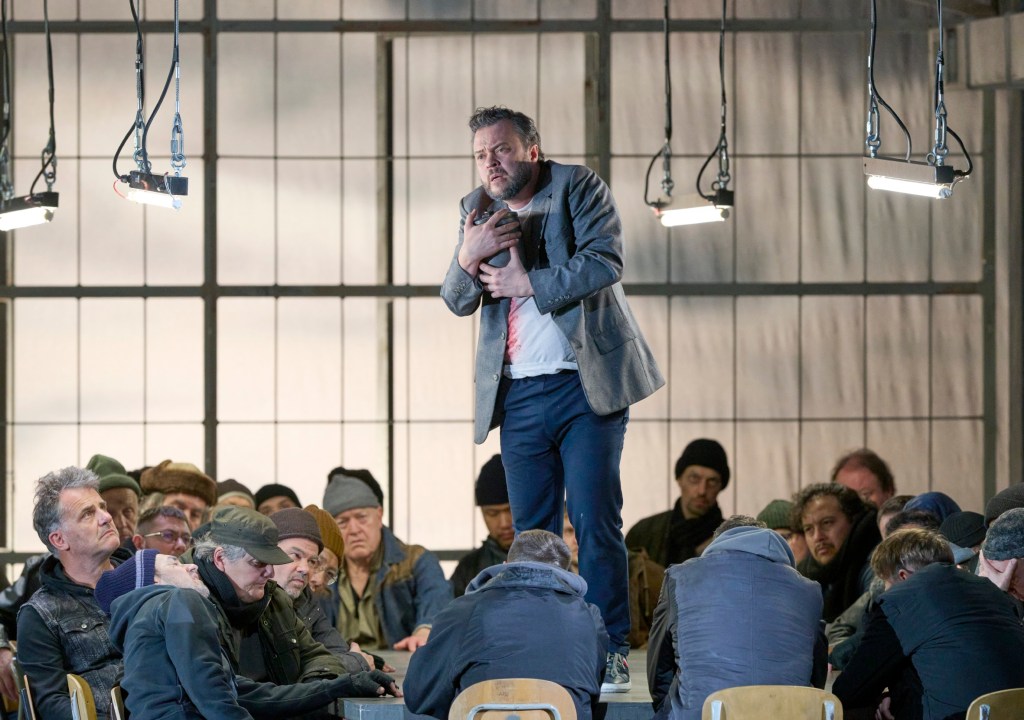
We open in a prison – and not the metaphorical, “oh, I feel so trapped” kind. No, this is a full-on fortress of concrete and bars: rows of stacked cells on either side like grim apartment blocks, towering over a bare courtyard where the action unfolds. It’s cold, clinical, claustrophobic – more Shawshank than Schopenhauer.
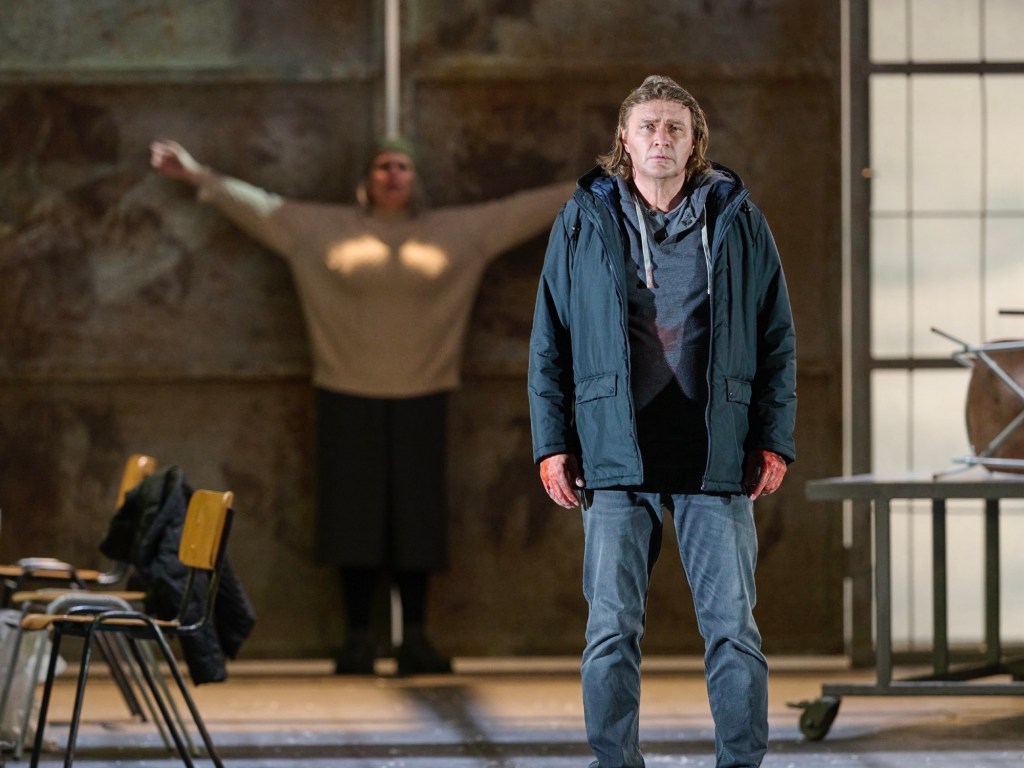
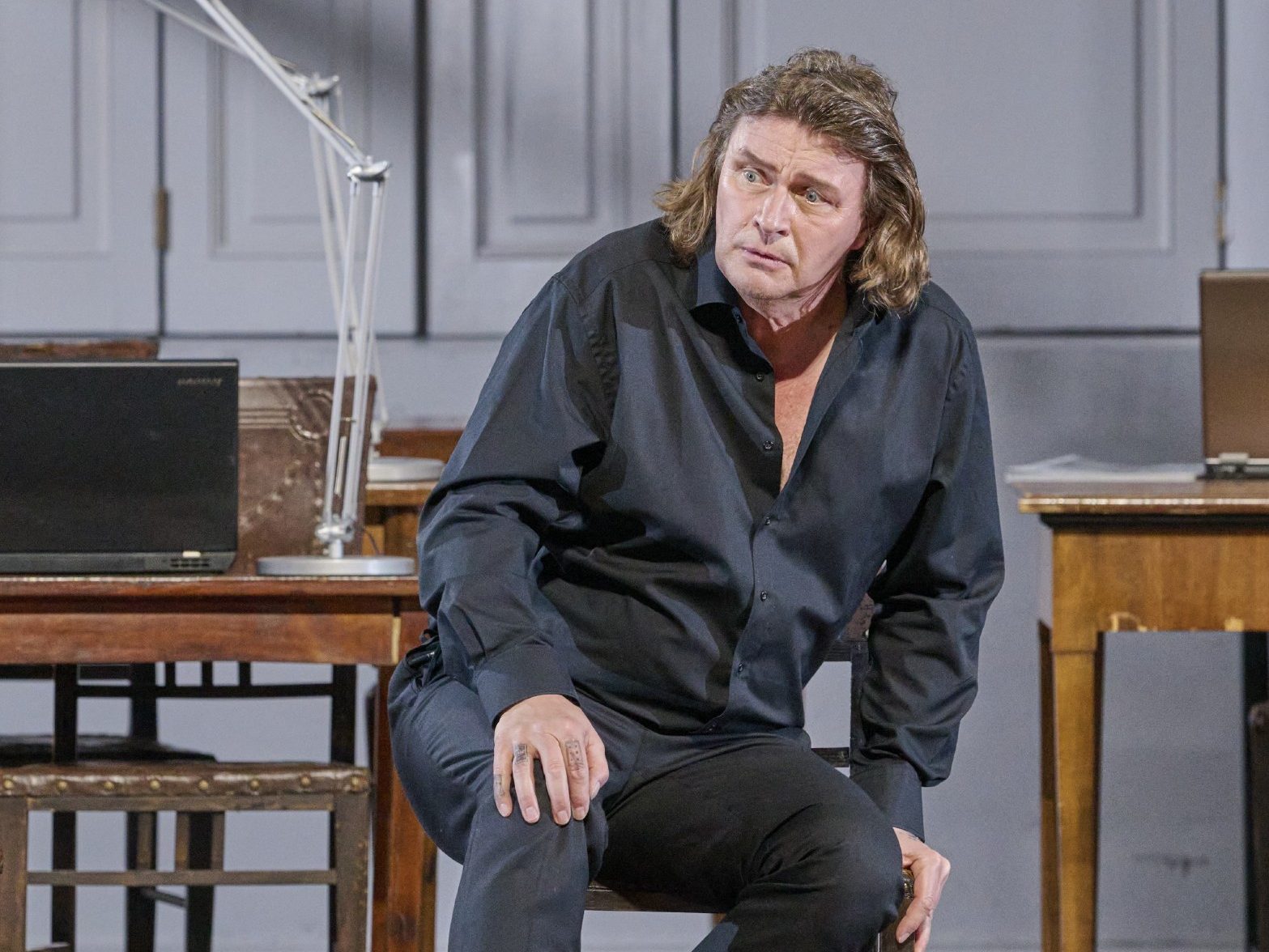
And Parsifal? He’s split in two: a younger version acting out the role of an inmate, and an older one observing, almost like a ghost of future guilt. It’s as if we’re watching the whole thing through the lens of memory – or maybe trauma?
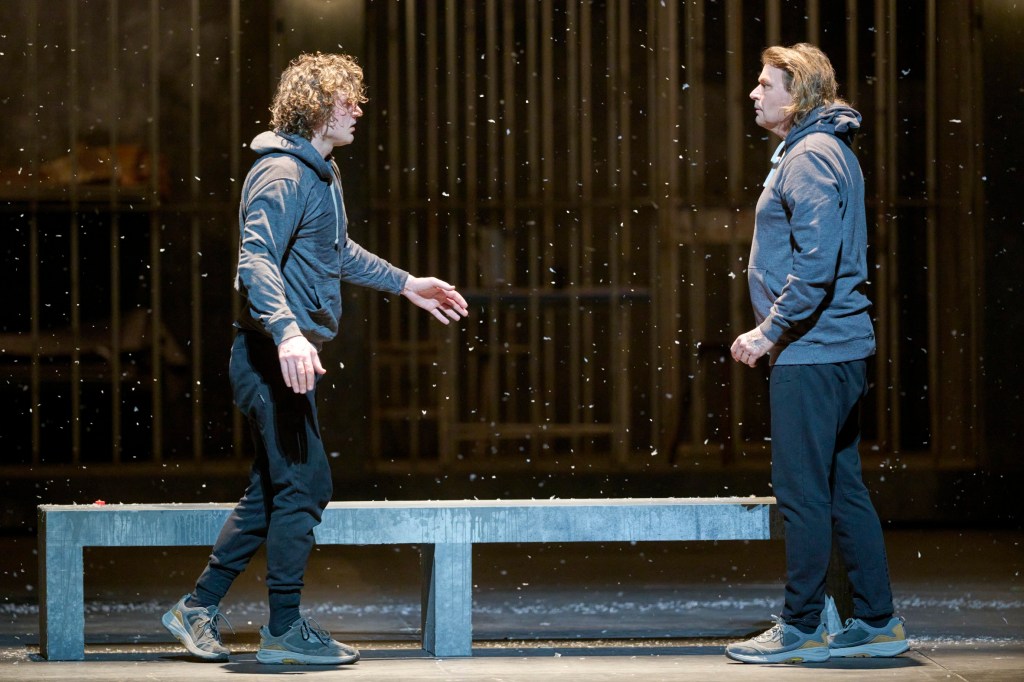
Either way you’re not just there to bask in the harmonies – this is Parsifal-as-puzzlebox. You’ve got to lean in, read between the bars (and the lines), and try not to get lost in the metaphysical maze while you’re at it.
Take the famous swan scene: there’s no swan. Or is there? At first, I thought, “Really? Not even a bird prop?” But then, up on the screen hovering above the stage – one of the ever-watchful trio of video panels – a film starts rolling. Suddenly the absence makes sense. Or at least… it starts to.
Throughout the evening, the screens flicker between two main visual worlds: a young Parsifal wandering through a wintry, wild woodland, and a group of heavily inked men who could pass for a biker gang. And these aren’t just your average tattoos – no flaming skulls or tribal swirls here. Think crosses, chalices, arrows: straight from the Holy Grail starter pack.
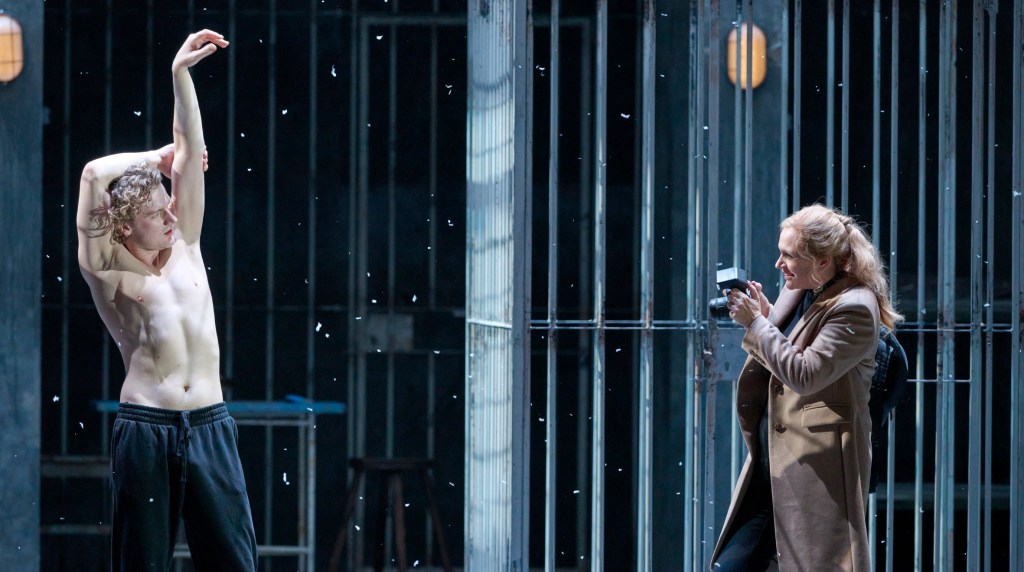
It’s a visual buffet and your brain’s the plate. Blink, and you might miss a sacred symbol or a sudden shift. There’s always something flickering, twitching, or transforming – always something to squint at, gasp at, or mutter “wait, what?” under your breath.
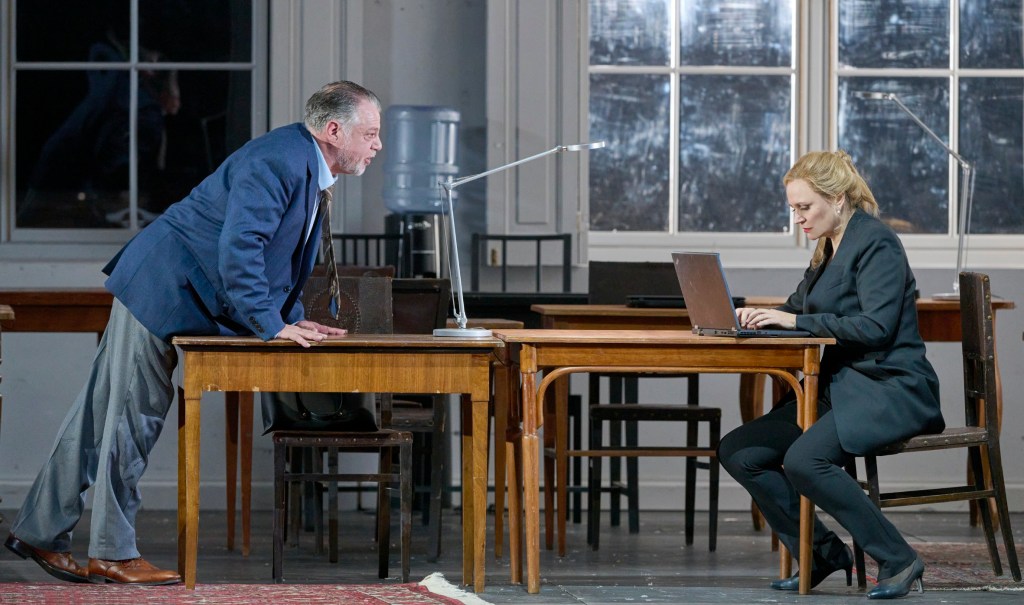
Kundry is no longer the wild woman of the woods but a camera-wielding journalist, clicking away in Act I and inviting us into her office in Act II, working under Klingsor’s watchful eye.
At the end of the first act, a few claps nervously ripple through the audience – only to be met by an immediate tidal wave of “shhhh.” A Bayreuth wannabe moment, perhaps? (read why under Fun Fact). None of the singers came out to take a bow either, keeping with the tradition of leaving the stage in silence.
The Soundscape
Now for the music. Günther Groissböck as Gurnemanz was on fire in the third act. His voice has a deep, resonant warmth, filled with rich overtones, that fills the space without ever feeling too heavy. In the lower registers, his tone was rich and commanding, with a solid, grounded quality. As he climbed higher, his voice remained smooth and controlled, never straining, and his phrasing was crisp yet lyrical. He leaned into the words and phrases with remarkable nuance, subtly shaping the tone to match the emotional weight of the narrative.
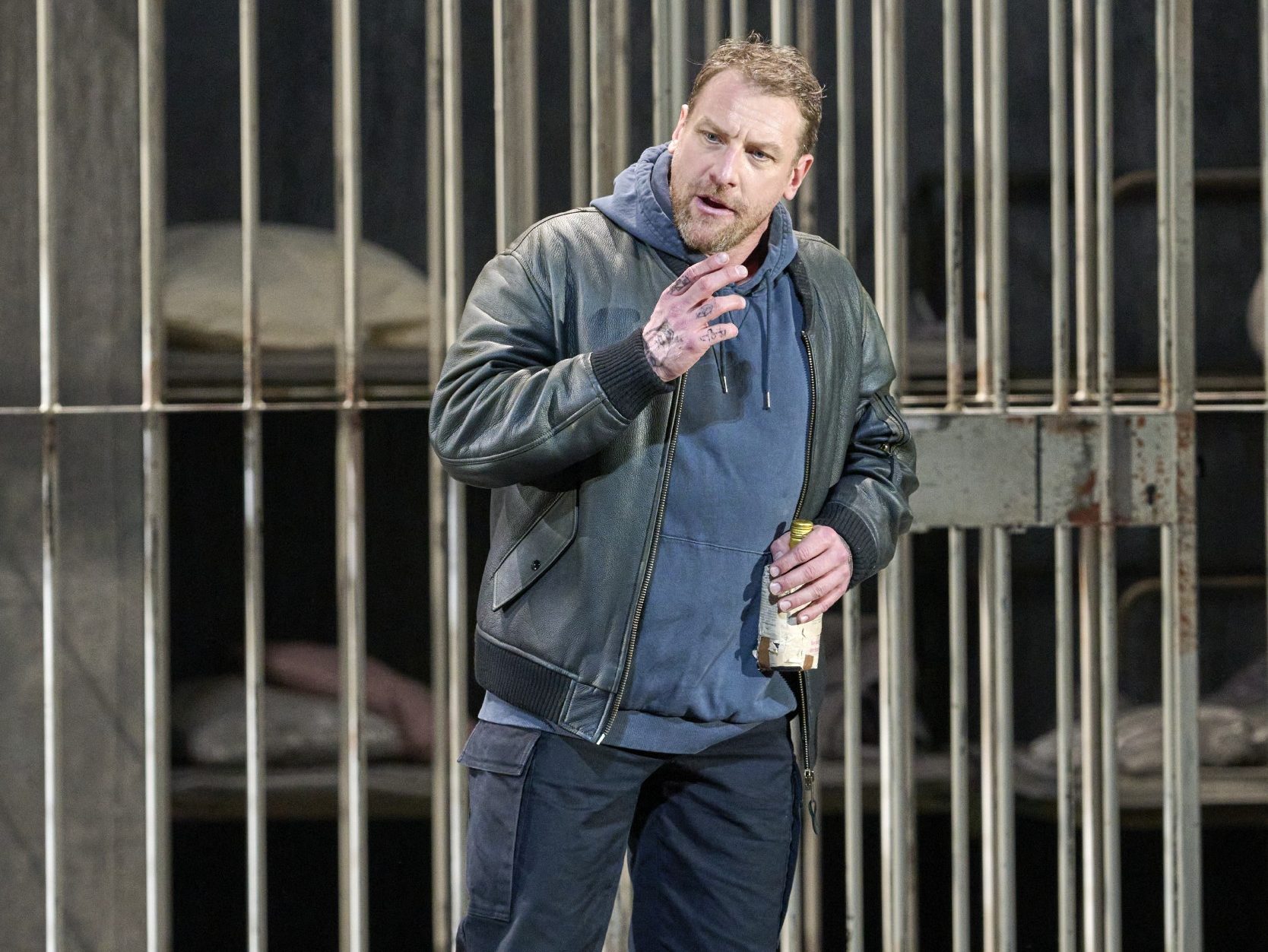
Anja Kampe gave us a fierce and fascinating Kundry. It’s mesmerizing to watch her sing — seriously, just watching her tongue at work felt like a mini masterclass in vocal athleticism. Her control, from delicate nuances to powerful outbursts, was a display of skill and artistry. She’s at her most commanding in Act II (well duh, that’s where she does most of the heavy lifting), delivering every phrase with a raw intensity that pulls you into her character’s turmoil.
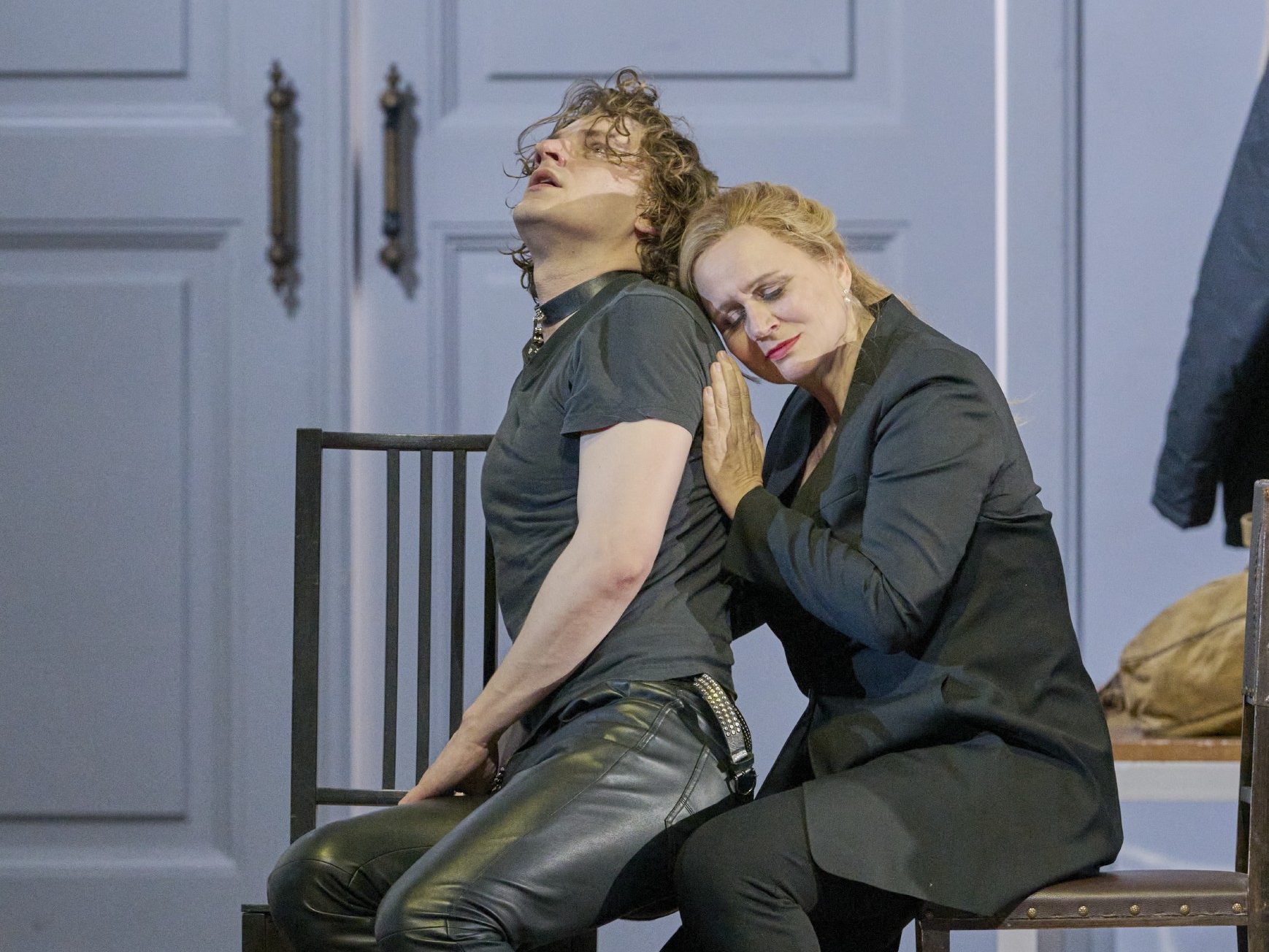
Although her opportunities in Act III were (waaay) more limited — primarily consisting of a few complaining screams and two softly spoken “Dienen. Dienen” — one couldn’t help but wish for more.
As for Klaus Florian Vogt, his interpretation of Parsifal brings out a different dimension compared to his recent Tannhäuser in Berlin. His voice fits the role well – more reflective, with an ethereal quality that’s perfectly suited to Parsifal’s journey. The staging seems to draw out an even deeper emotional resonance in his performance, enhancing the natural sensitivity of his voice.
At the podium
Axel Kober kept the orchestra moving at a lively pace, similar to his work in Die Meistersinger in Copenhagen (which you can read about here, if you’re curious). A defining feature of the evening was his playful experimenting with tempo shifts throughout the performance. These moments of speed-up and slow-down often created a sense of tension, keeping both the orchestra and singers on their toes.
While there were instances where the singers and orchestra didn’t quite sync up immediately, Kober’s firm and clear gestures provided a steady anchor. His control over the tempo changes was decisive, and the orchestra responded sharply, following each shift with precise precision.
The chorus, meanwhile, was tightly knit, their consonants sharp as their ensemble work. Kober had them in the palm of his hand, guiding them through each section with clarity and control.
The acoustic in Wiener Staatsoper can sometimes feel a little muffled, but that didn’t stop Kober in the final act. Just when I thought he had hit the dynamic ceiling, he proved me wrong – especially during the Karfreitagszauber, where the sound kept growing, blooming, expanding. And just as you think it can’t possibly swell any further, he (and Wagner) adds another layer – a lone brass line floating above the orchestra like a beam of golden light.
Another moment that really struck me: the end of Act II. The basses resonated with such depth that I could actually feel the floor vibrating beneath me. It was as though the sound was coming up through the ground, shaking everything in its path.
Three acts, six hours, one long spiritual spiral – and somehow, I still left the opera house more curious than I arrived. Is that Parsifal’s magic, or did I just get trapped in an IKEA catalog?
Fun Fact!
The tradition of not applauding after the first act goes all the way back to the Bayreuth premiere. Wagner asked the audience to hold their applause – he meant until the intermission, but the audience misunderstood and stayed silent until the very end. The awkward silence after Act I stuck… and in Bayreuth, it’s been part of the ritual ever since.
Trailer:
The Cast:
- Conductоr: Axel Kober
- Directоr, Stаge and Costume Designer: Kirill Serebrennikov
- Video Designer: Aleksei Fokin and Yurii Karih
- Light Designer: Franck Evin
- Dramaturg: Sergio Morabito
- Gurnemanz: Günther Groissböck
- Parsifal: Klaus Florian Vogt
- Klingsor: Jochen Schmeckenbecher
- Kundry: Anja Kampe
- Amfortas: Jordan Shanahan
- Der damalige Parsifal: Nikolay Sidorenko
- Erster Gralsritter: Devin Eatmon
- Zweiter Gralsritter: Alex Ilvakhin
- Erster Knappe: Anita Monserrat
- Zweiter Knappe: Juliette Mars
- Dritter Knappe: Andrew Turner
- Vierter Knappe: Nathan Bryon
- Erstes Blumenmädchen 1.Gruppe: Ileana Tonca
- Zweites Blumenmädchen 1.Gruppe: Maria Zherebiateva
- Drittes Blumenmädchen 1.Gruppe: Anna Bondarenko
- Erstes Blumenmädchen 2.Gruppe: Celine Mun
- Zweites Blumenmädchen 2.Gruppe: Jenni Hietala
- Drittes Blumenmädchen 2.Gruppe: Isabel Signoret
Orchester der Wiener Staatsoper
Chor der Wiener Staatsoper
Bühnenorchester der Wiener Staatsoper
Extrachor der Wiener Staatsoper
Komparserie der Wiener Staatsoper
Stunt Actors der Stunt-Factory
https://www.wiener-staatsoper.at/kalender/detail/parsifal/2025-04-17/


 Blogfløjten