
Holy moly. This was not the kind of evening I saw coming. I had also done the unthinkable and showed up at opera without hearing a note or reading a word about the plot. Whaat! I know, I know… opera crime of the century. But I was following strict instructions from a friend who swore it was the best way to experience it. So I went in blind.
That said, I did have a rough idea of what I was getting into. Like many Danes, I’ve watched the TV show Operarejsen, where three guys travel to Helsinki, visit the “real” Santa Claus (as you should), and eventually end up at the opera to catch Kaija Saariaho’s Innocence.
Hold on Tight
The opera has already begun long before the first sound fills the room. The tension is woven into the music—a landscape of unsettling sounds, including the rare presence of a piano.
We’re at Stela and Tuomas’ wedding, surrounded by the shimmer of white dresses and the clink of champagne glasses. But don’t be fooled—this isn’t a fairytale. It may look like one, for now. But behind the polished vows and perfect smiles, something darker lurks. A secret, locked away, waiting to erupt. Something is about to break—and when it does, nothing will be the same.
Ten years ago, a teacher and ten students were killed in a school shooting. A tragedy like that doesn’t fade—it lingers in the minds of those who survived and those left behind.
Innocence gives voice to them all. One hour and forty-five minutes. No intermission. No escape.
The story shifts between a wedding and the memories of the survivors—voices cracking as they relive what happened, and how the shockwaves still shape their lives.
Beneath the Snow
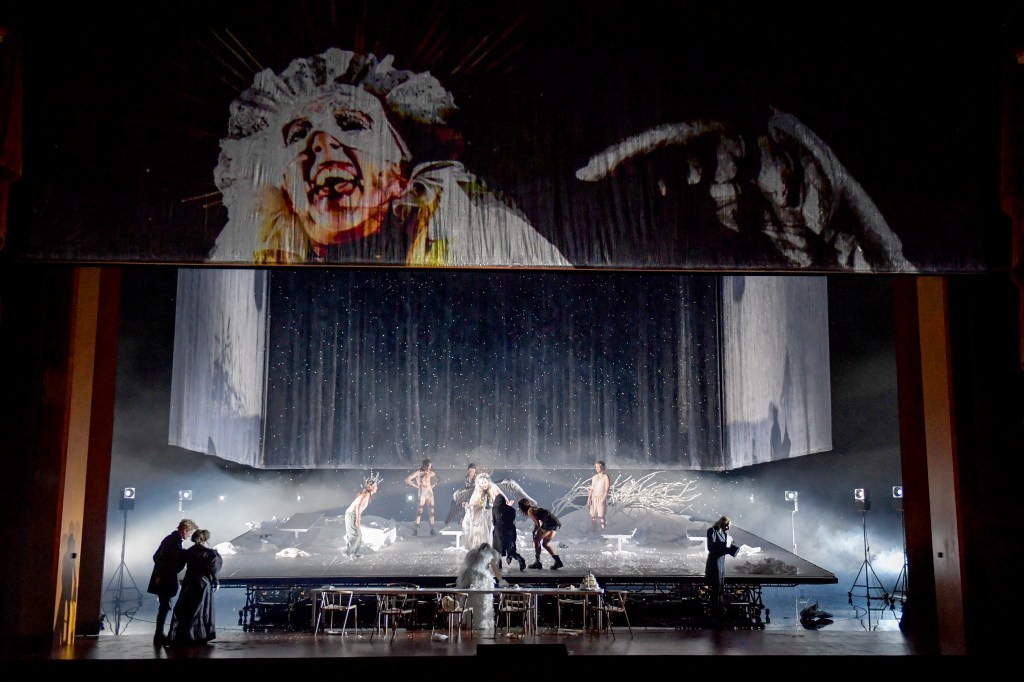
The curtain rises on a group of young people, trembling. We’re in Finland, the stage blanketed in snow, icy flakes falling like frozen time. But are they shivering from the cold… or something much colder?
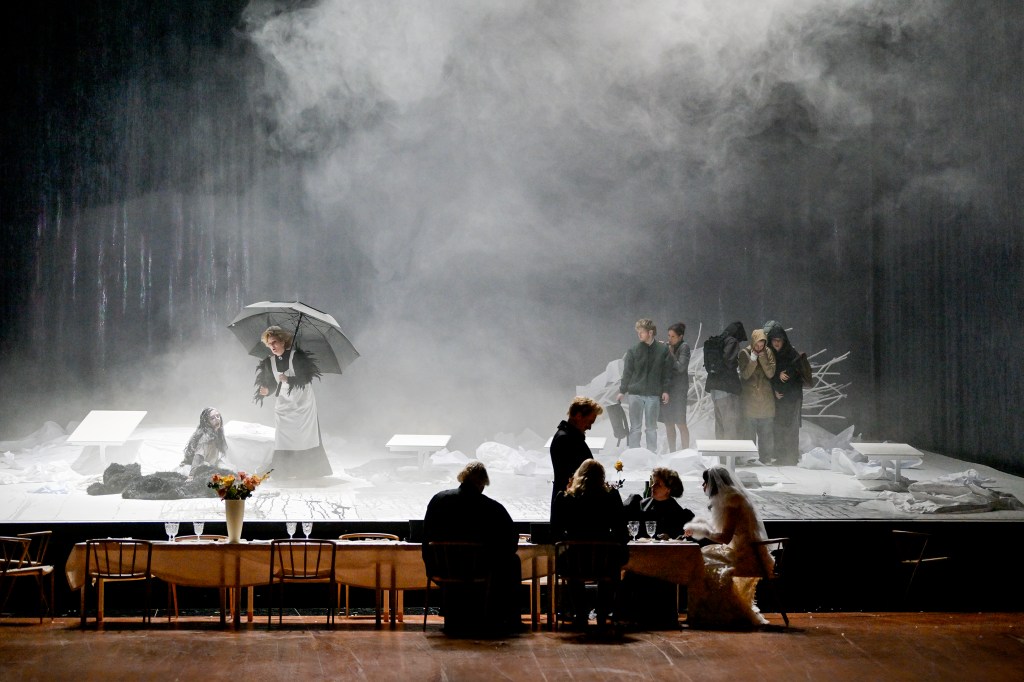
The truth comes crashing in, slowly but inescapably: the groom’s brother was the one who pulled the trigger. The family tries to push it away, distance themselves from the horror: “This boy doesn’t belong to our family anymore.” But there’s no outrunning it. The past clings to them, constantly resurfacing, refusing to be silenced.
One of the surviving students says it best: “I was a good runner, but couldn’t run from this.” The trauma haunts them all – like a ghost, like a shadow, like the chorus hiding behind the stage, whispering like a voice inside the mind.
Throughout the opera, the chorus doesn’t just comment from the sidelines – they are woven into the orchestra, on equal footing with the violins or woodwinds, singing wordlessly. They shape the atmosphere, adding breath, texture, and tension to the sonic landscape. Subtle, almost imperceptible at times, their presence is felt like a current beneath the surface – under the cold ice.
Only at the end do they fully emerge, stepping into the light dressed as hunters, as if the inner voice has taken form, ready to confront what can no longer be buried.
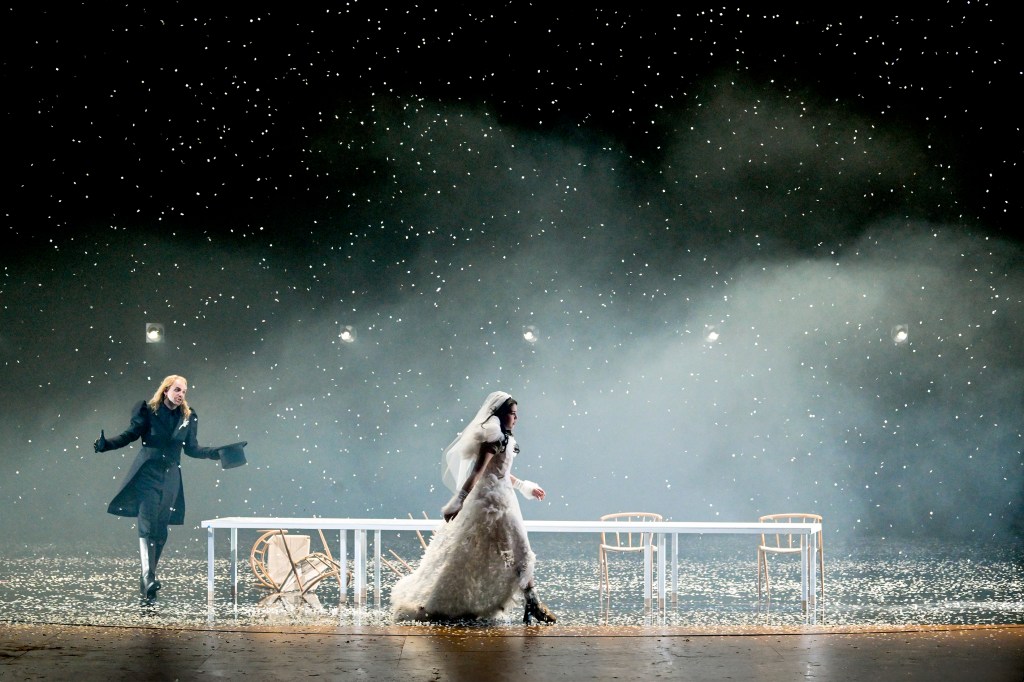
© Semperoper Dresden/Sebastian Hoppe.
The musical language is narrative and often unsettling, shifting unpredictably without any solid footing.
The strings slide in glissandi, never settling, never staying.
The woodwinds produce almost unnatural, high-pitched notes that, at one point, almost made me want to cover my ears – like the sun shining directly into your hearing.
The percussion builds both tension and unease, with everything from small metallic sounds to sudden crashes that puncture the silence.
All of this feeds into the chaos unfolding on stage.
Unlike most operas, where the plot is predictable, Innocence throws you off course at every turn. Just when you think you know what’s coming, it hits you with a twist that leaves you stunned, jaw-dropped, and questioning everything you thought you understood.
Fresh out of the oven
The opera had its world premiere just four years ago at the Aix-en-Provence Festival. I’ve often wondered what it must have been like to experience an opera created in your own time.
Surely, audiences must have perceived, say, Don Giovanni in a completely different way when it first premiered, compared to how we hear it today. The plot, the humour – it was all written for its own moment, not for posterity.
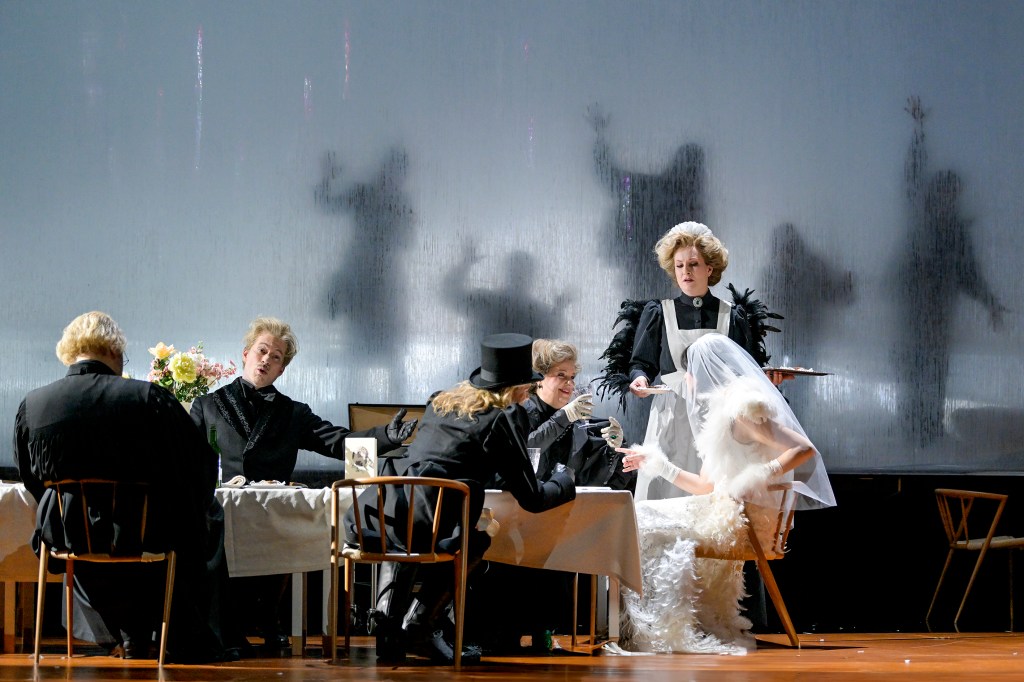
© Semperoper Dresden/Sebastian Hoppe
But there are no jokes in this piece. A school shooting is a deeply harrowing thing – especially if you’re a mother who’s lost a child. How do you move on from that? Can you, really?
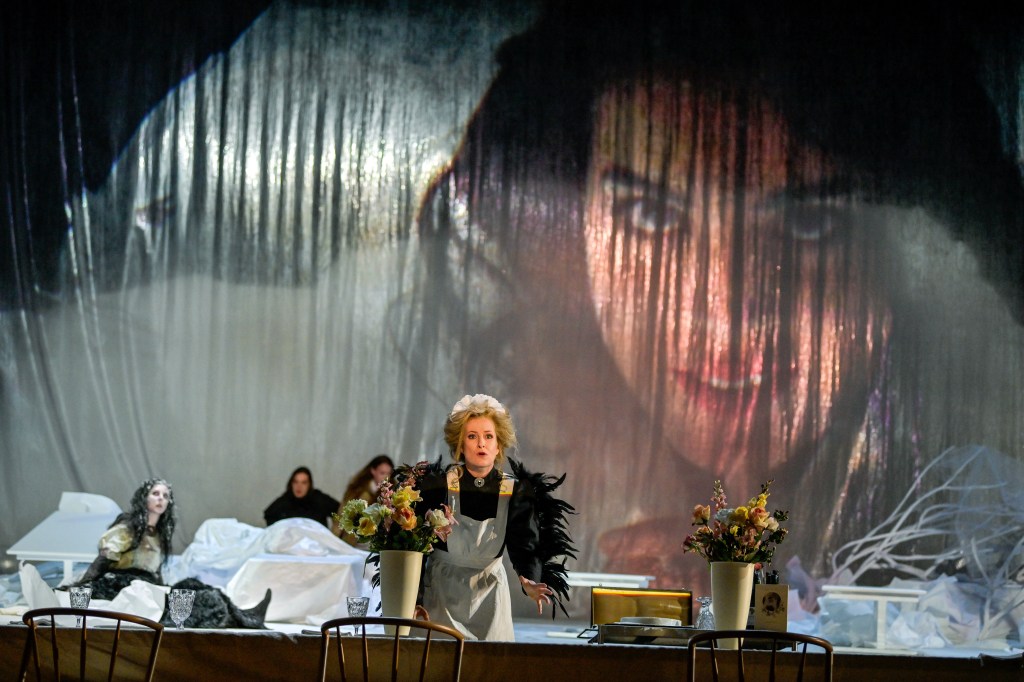
Tormented Tereza is a shell of herself, quietly pouring wine while tragedy clings to her every move. Her daughter, Markéta, was shot three times on the staircase and died that day, ten years ago. Now she returns – not alive, but not quite gone either. A flicker. A phantom. A figure from the past drifting through the present.
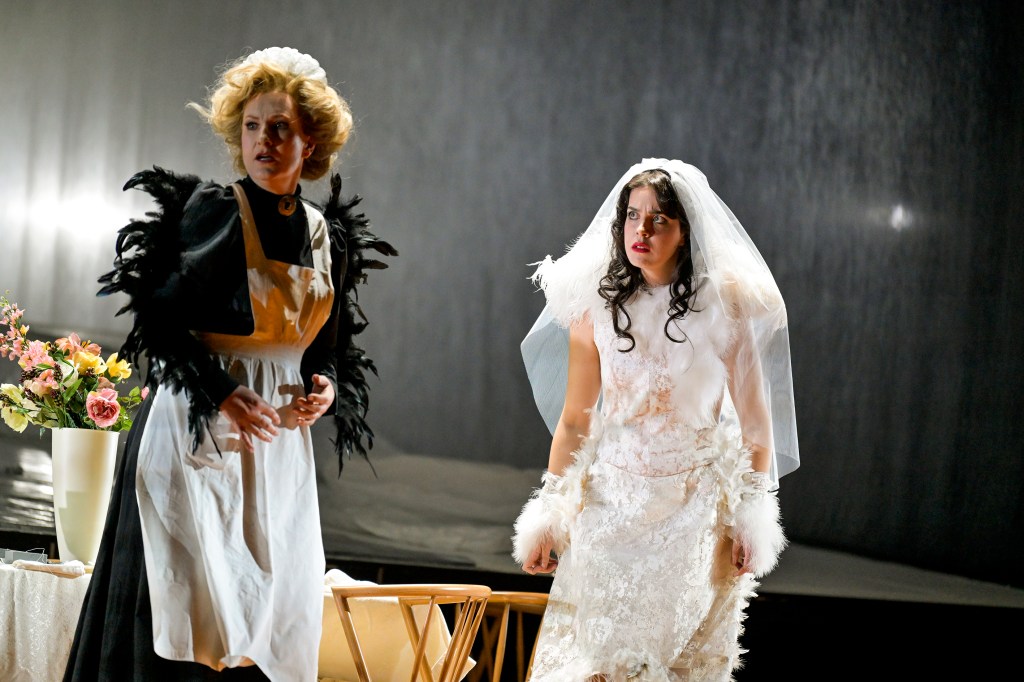
© Semperoper Dresden/Sebastian Hoppe
She doesn’t sing like the others. Markéta. Her voice slips in with a trembling, tender folk tone – raw, real, and rooted. It cuts through the operatic polish like a ghost drifting through glass. Earthy. Intimate. Haunting.
Finnish force of nature Venla Ilona Blom makes Markéta pulse with presence – or perhaps absence. She moves like a memory, sings like a spirit. There’s something unsettling in her tone, like the soft creak of floorboards in an empty house. And just like that, the opera tilts into thriller territory – with tension thrumming through every note.
It’s the kind of music that makes you glance over your shoulder. The kind that flickers like candlelight and seems to bend the shadows on the wall. Suddenly, you’re no longer sure if you’re alone.
The Illusion of Innocence
Innocence – what does it even mean? Is it something pure, untouched, or is it the fleeting state we lose and never truly get back? The more we try to define it, the more it slips away. Can innocence still exist in a world where tragedy has already rewritten its meaning?
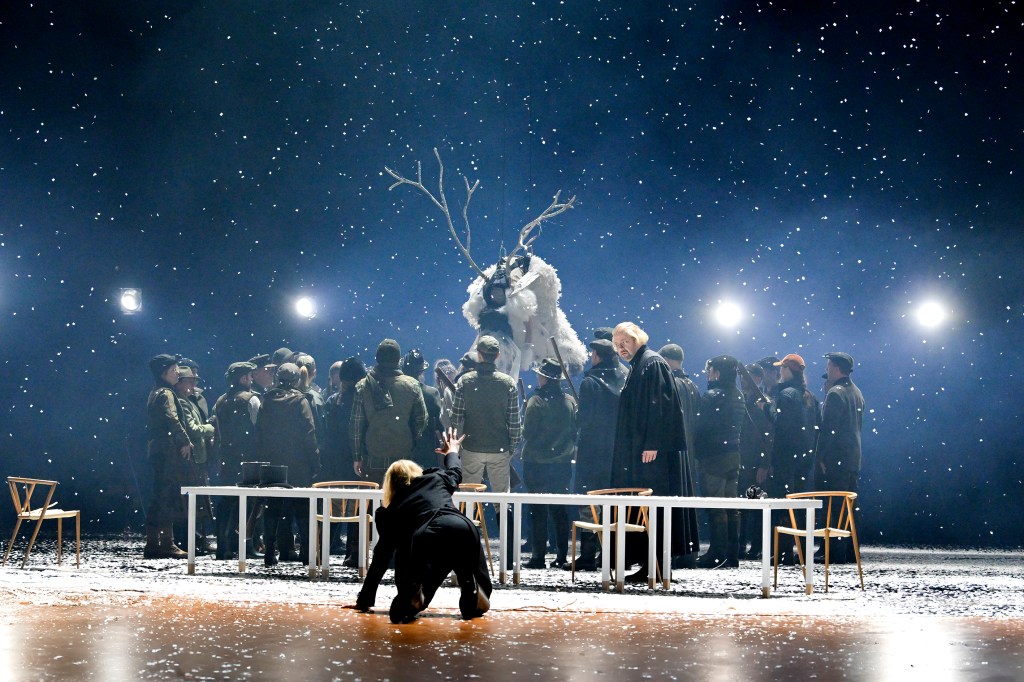
© Semperoper Dresden/Sebastian Hoppe.
Lorenzo Fioroni, the director, crafts images and situations that feel almost like being there when it all happened. The lights flicker and percussion instruments bang, like gunshots, while the students hide in sheer panic. They share their story – their guilt too. It’s revealed that many of them carry skeletons in their closets. Is there even anyone truly innocent in all of this?
All the survivors speak – not sing – to each other, their words heavy with pain, each one slipping out in one of nine different languages. They tell their truths, raw and unfiltered, like open wounds.
One teacher confesses how she scoured the murderer’s essays, clawing for any hint of what went wrong, only to be consumed by an all-encompassing paranoia. She became obsessed, watching her students with a relentless vigilance, until nothing felt safe, nothing could be trusted. She cannot teach anymore.
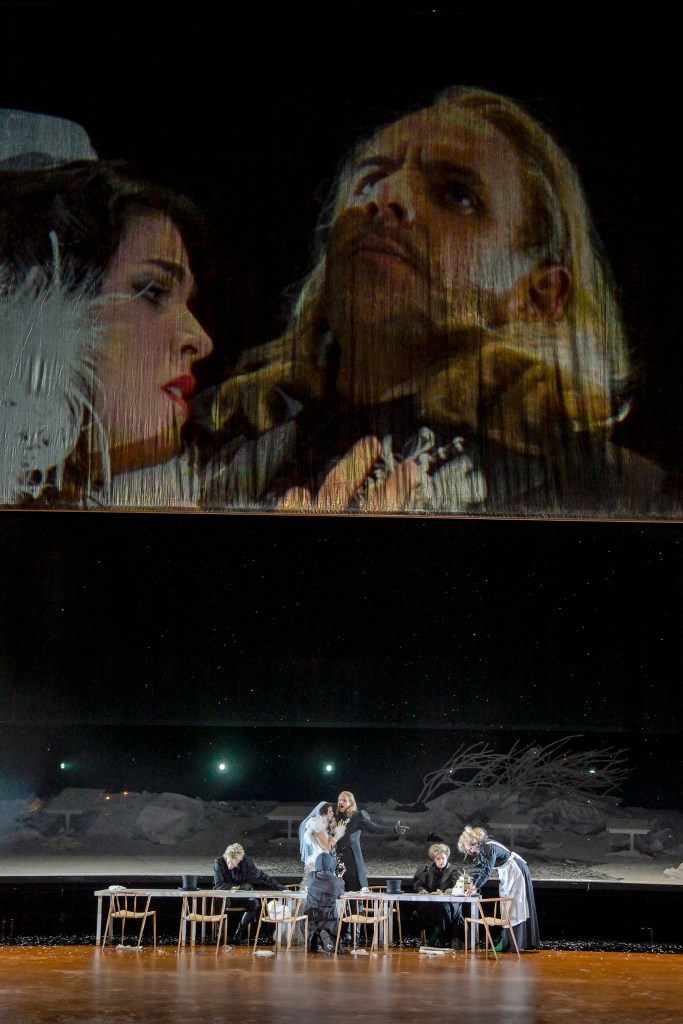
© Semperoper Dresden/Sebastian Hoppe.
The singers are swept up in a whirlwind of emotions (and vocal techniques). The groom’s father slips into falsetto a few times, and while Markus Butter captures the essence of the character, the role might feel slightly too deep for his voice. The mother, Anu Komsi (also Finnish), delivers notes that could easily be mistaken for screams. At times, a raw, unfiltered high note in forte fades into a soft piano, only for the orchestra to subtly take over, with the flutes occasionally echoing the vocal lines, amplifying the eerie, unsettling atmosphere.
Can you call it good when, at the same time, it’s absolutely horrible?
Yes, the opera is “modern” because it’s brand new, but don’t let that scare you. The music is unmistakable – at times, it even draws on elements of film music.
Sadly, last night was the final performance of this work for the season at Semperoper in Dresden, but if I were you, I’d keep an eye out for its next staging. Trust me, this is one experience you won’t want to miss – I’d recommend it to anyone, even those who’ve never stepped into an opera house or listened to classical music before!
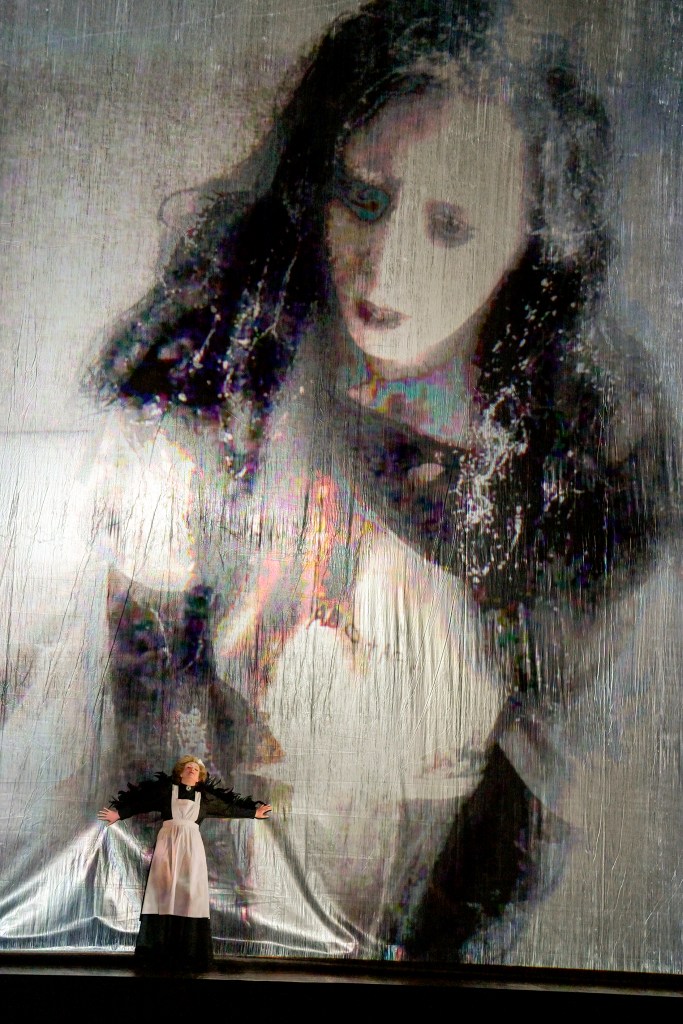
In the final moments, only Tereza and her daughter are left on stage. Markéta’s voice trembles, a fragile whisper, as she tells her mother to stop buying her favorite apples, to stop giving her birthday gifts. “Mum, let me go.” The words fall from her lips like a slow, painful surrender, the weight of them unbearable.
Tereza stands frozen, as if holding onto the last thread of a life that’s slipping away. The music rises, then falls—softly, cruelly—leaving a hollow ache. The final sound is Tereza’s sobs, raw and gut-wrenching, as if her heart is breaking all over again.
It’s the last goodbye, a shattering farewell that will echo in the silence long after the curtain falls.
Fun Fact:
Kaija Saariaho didn’t begin writing operas until she was nearly 50 – but once she did, she composed five in just over two decades. Innocence, her last, premiered in 2021 – only two years before her death in 2023.
Trailer:
Crumbs of critique
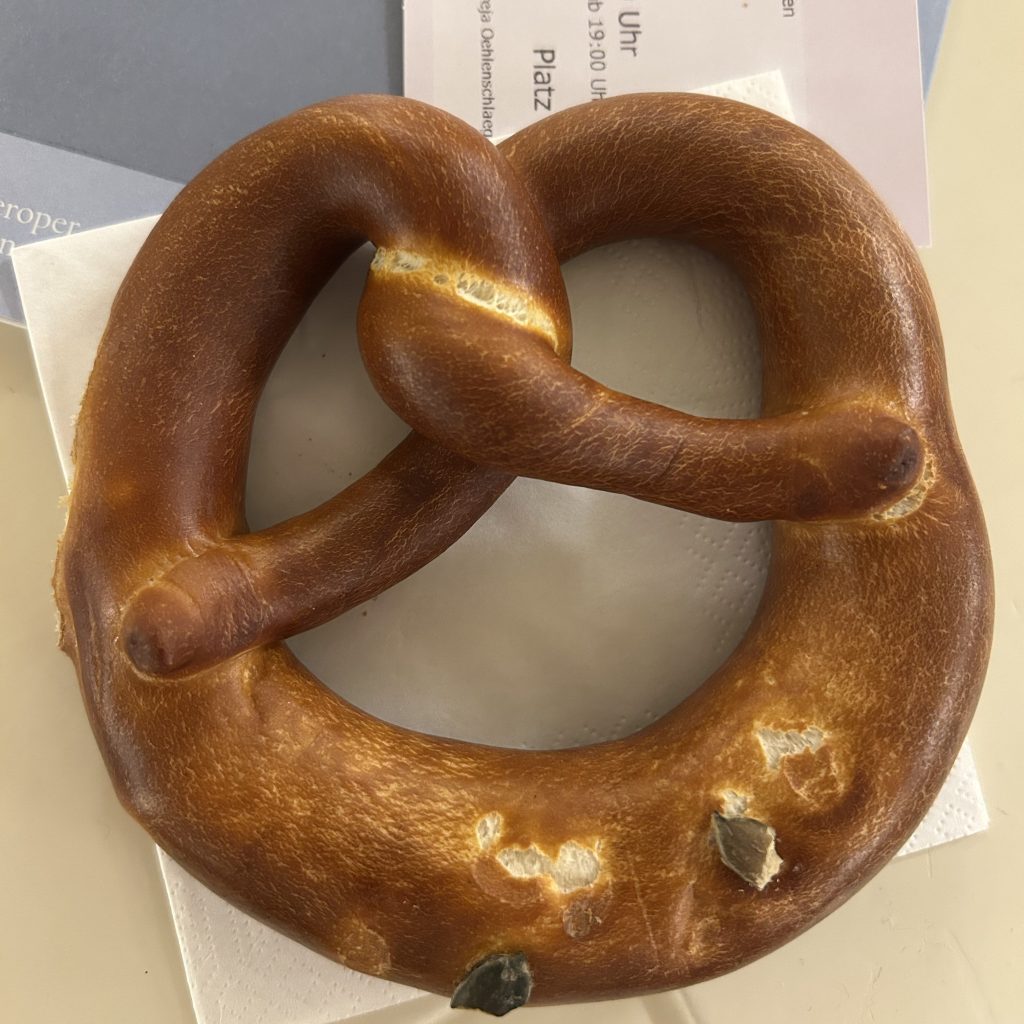
And what about the bretzels? Well, let’s just say Semperoper does opera better than baking. The dough was airy enough, but the crust was dry, and the flavour sadly forgettable—perhaps a victim of missing salt. So next time, skip the snack and head straight for the stage. That’s where the real flavour is.
Cast:
- Conductоr: Maxime Pascal
- Directоr: Lorenzo Fioroni
- Stаge Designer: Paul Zoller
- Сostume Designer: Annette Braun
- Sound Designer: Romualdas Urba
- Light Designer: Fabio Antoci
- Dramaturg: Dorothee Harpain
- Сhoir: Jonathan Becker
- Die Kellnerin (Tereza): Paula Murrihy
- Die Braut (Stela): Rosalia Cid
- Die Schwiegermutter (Patricia): Anu Komsi
- Der Bräutigam (Tuomas): Mario Lerchenberger
- Der Schwiegervater (Henrik): Markus Butter
- Der Priester: Timo Riihonen
- Die Lehrerin: Fredrika Brillembourg
- Schülerin 1 (Markéta): Venla Ilona Blom
- Schülerin 2 (Lilly): Jessica Elevant
- Schülerin 3 (Iris): Nusch Batut
- Schüler 4 (Anton): Simon Jensen
- Schüler 5 (Jerónimo): Carlo Nevio Wilfart
- Schülerin 6 (Alexia): Olga Heikkilä
- Fotograf: Julius Günzel
Sächsischer Staatsopernchor Dresden
Sächsische Staatskapelle Dresden
https://www.semperoper.de/spielplan/stuecke/stid/innocence/62473.html#ni_ev_31206


 Blogfløjten