
The whole journey erupts with a massive C major chord—bursting like an overfilled water balloon, its pressure finally too much to bear. The sound floods forth, cascading through the air and drenching the space in harmony. And just like that, we’re swept away, caught in the unstoppable current of the Meistersinger.
Okay, calling it a ‘journey’ might be a bit much, but seriously—four and a half hours of opera is a big commitment. If the performance gets it right, you’re not just watching—you’re living it, feeling every triumph and heartbreak (plus, the runtime gives you more bang for your buck!). It’s that strange, post-adventure feeling—coming back to reality and thinking, “Well… what now?”
That grandiose 10-minute prelude takes its sweet time to speak for itself. Richard Wagner’s orchestral wizardry unfurls before us, layer by intricate layer. The heavy crimson curtain doesn’t budge—until a piercing cymbal crash slices through the air, and suddenly, the music surges forward, accelerating like a storm breaking loose just as the stage is revealed.
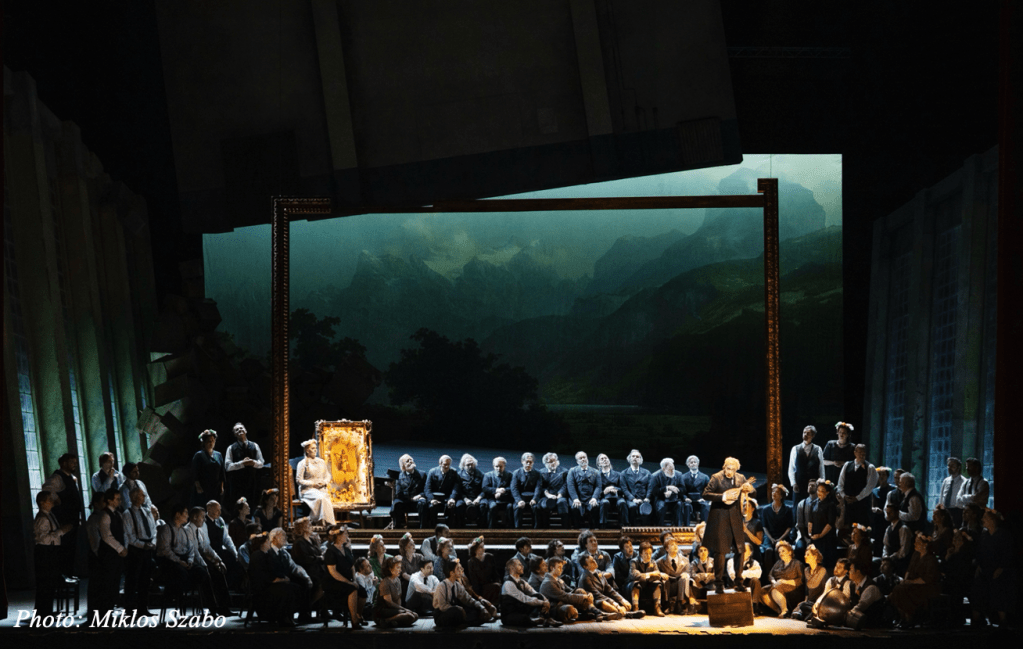
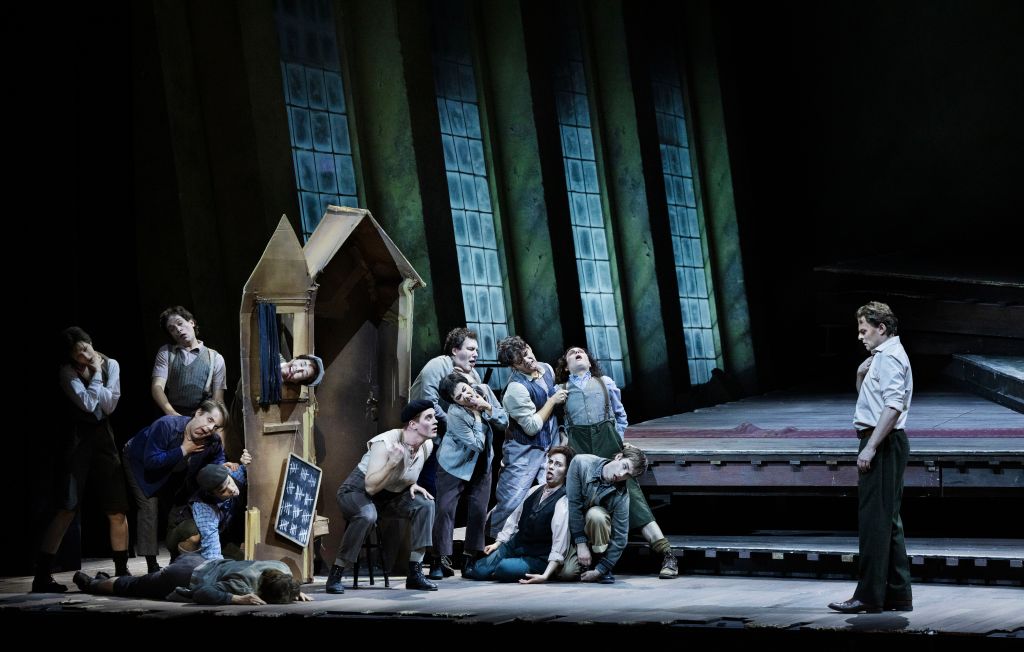
We find the young knight Walther von Stolzing sprawled on the floor. In the background, the choir—each member holding a delicate, flickering candle—sings their serene choral, their voices swell gently, like the warm, golden glow of the flames weaving seamlessly through the music.
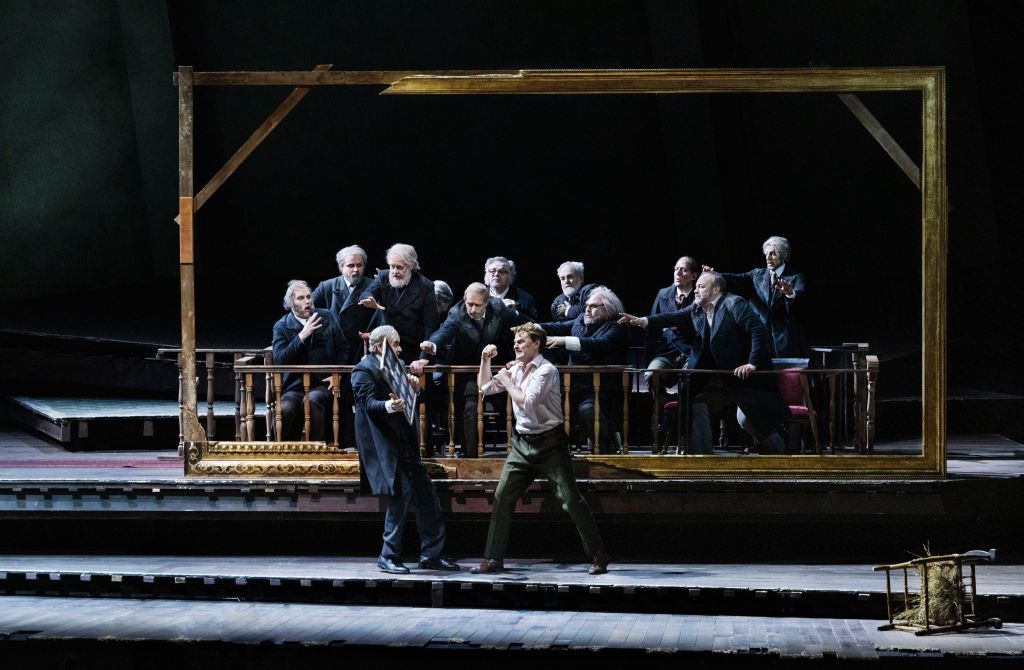
Walther’s got his eye on Eva. Only one tiny problem—she’s already promised to the winner of the Mastersinger competition. No worries, though—he’ll just go ahead and win it himself. The only issue? Walther’s not a Mastersinger, and he’s got zero clue about the rules… But hey, no harm in asking for a little help, right? After a crash course from the eager apprentice David, the 12 old, grey guys finally shuffle in. A picture frame lowers onto the stage, and once they’ve all made their entrance, they freeze—like someone shouted, “1, 2, 3, smile!” *camera click*.
They’re all wearing a white shirt, vest, tie, and a slightly dusty black jacket. Well, almost all of them. Hans Sachs decides to skip the tie, and his shirt is a more subtle shade of grey. He’s clearly not like the other Mastersingers! Every now and then, he hangs a pair of glasses where a tie should be— but it’s not quite giving the same vibe.
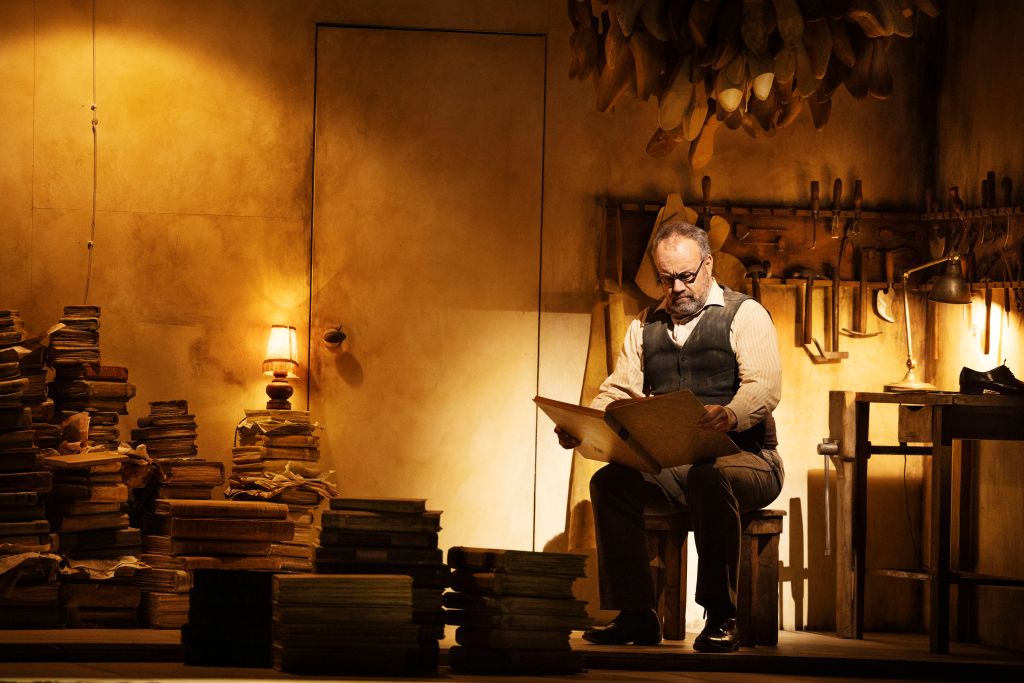
There’s a special kind of reverence for Hans Sachs, and by the end of Act 3, it’s almost like the other characters have caught a Taylor Swift-level obsession. Or maybe it’s more fitting to grab Wagner’s father-in-law, Franz Liszt, and talk about Lisztomania—because they all seem a bit crazy when he’s the one singing. His pupil, David, is a mix of awe and nerves, like a starstruck fan hoping not to trip in front of his idol.
Wagner’s comedy
This opera might be called a comedy, but don’t expect any highbrow jokes. Director Laurent Pelly, however, excels at embracing the goofy side of Die Meistersinger. The Mastersingers move across the stage with all the seriousness of a secret mission, their absurdly synchronized movements in perfect harmony with the music—like a choir of spies on a highly choreographed mission.
And then there’s Beckmesser—already a walking joke in the score—fumbling his way through the text like someone who’s just been handed the wrong script. It’s like watching someone try to play a serious role but getting every line wrong. And don’t even get me started on him and his lute in Act 2 and again in Act 3—it’s pure slapstick gold. Tom Erik Lie deserves a standing ovation—he brings Beckmesser to life as a brilliantly awkward mess, caught in his own disaster of a character.

Beckmesser reminded me a bit of Mr. Schwann, the ever-dapper but slightly ridiculous clothing salesman from Matador (sorry to those who haven’t had the pleasure of watching this Danish classic!). Like Schwann, Beckmesser tries to present himself as more refined than he really is, clinging to an air of sophistication that keeps slipping through his fingers. Both are characters who take themselves very seriously—only to have the world around them turn them into comic figures.
Big props to Urs Schönebaum for really shining a light on the situation—literally. In the final act, for example, five singers just stand there, each with their own little spotlight. It makes the whole moment feel more intense like time itself has slowed down.
It definitely helped that the singers showcased their great voices. The vocal level was high across the board! Norwegian Jens-Erik Aarsbø (whom I’ve also heard in Bayreuth) brought a unique, almost spoken quality to his portrayal of Pogner. Despite being a bass, his voice has this unexpected brightness, with clear high overtones that really catch your ear!

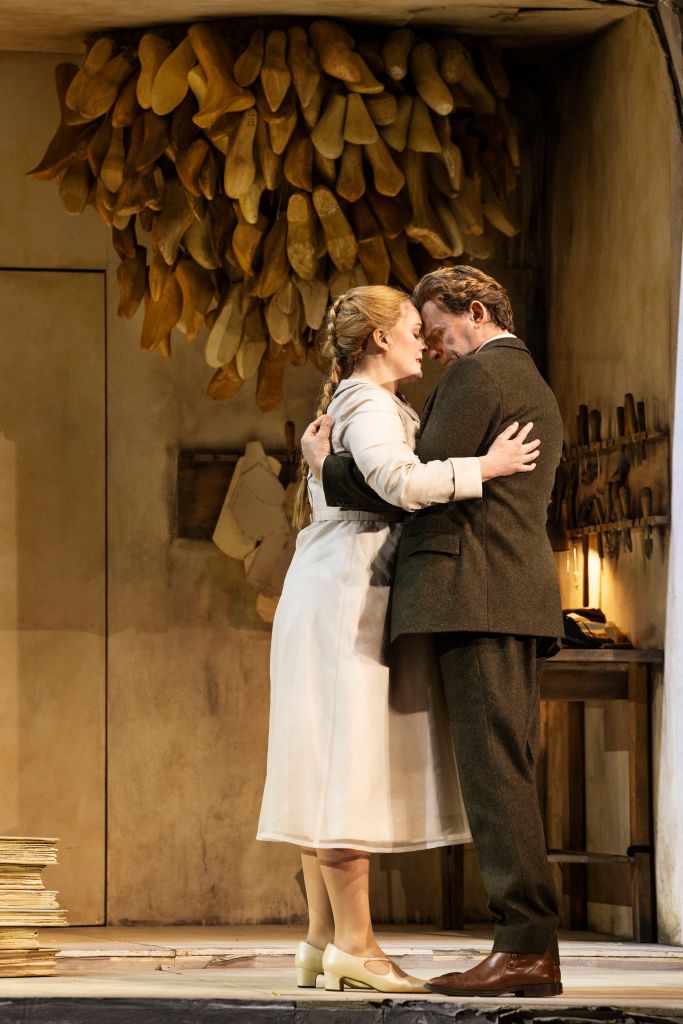
Danish bass-baritone Johan Reuter truly owned the role of Hans Sachs. In his monologue “Wahn! Wahn! Überall Wahn!” you could hear from the very first resonant “w” in “Wahn” that it was going to be something special. He and Magnus Vigilius (Walther von Stolzing) have performed together before at the Deutsche Oper in Berlin—a production I saw nearly a year and a half ago. So while it’s not their first time tackling these roles, they perform them with the precision of a fresh rehearsal. Both really bring out the depth of the words, their arms flying around as they emphasize every point they want to make. And just so you know—Vigilius is heading back to Berlin in less than a month to sing the role again! His voice carries a quality that reminds me of the highly sought-after Wagner tenor Klaus Florian Vogt.
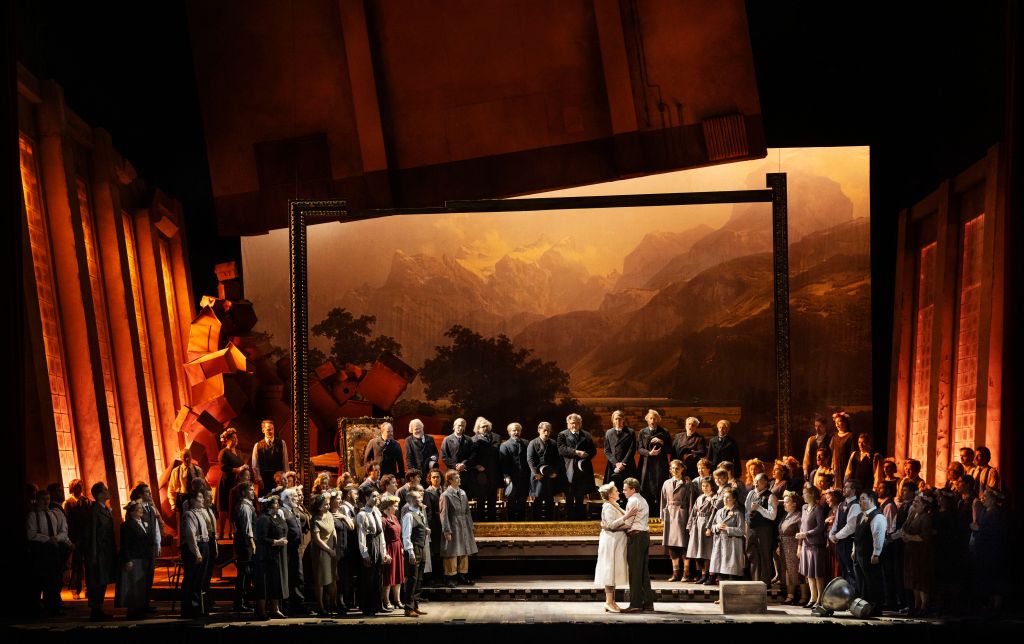
The third act is introduced with the heavy red curtain drawn tight. Rarely have I heard the prelude played with such dark intensity and inner turmoil. But then, a glimmer of hope appears as the brass enters, playing a hopeful ascending fourth. Yet, the sense of underlying drama is unmistakable. German conductor Axel Kober demonstrates excellent control over the orchestra, particularly in his handling of long, sweeping lines. The way he shapes the pauses, allowing the orchestra to subtly re-enter or shift the music’s character, is especially effective. His approach to dynamics, not shying away from bold, powerful moments, brings an impactful energy to the performance, and the final notes leave a lasting impression, with a surprising twist at the end…
Finally, we’re treated to the long-awaited mastersong from Magnus Vigilius. He pushes the tempo slightly, bringing his own interpretation to the piece. When he is finally offered the title of Mastersinger, however, he declines. It almost feels like a new competition emerges: which Mastersinger can look the most offended?
As I sit on a bus rattling its way toward Munich, I can’t help but feel a little reluctant to leave—I’d happily have gone back for another round if I were staying in Copenhagen. Productions like this make me proud—not just as an opera lover, but for the fact that Copenhagen has a house capable of something this extraordinary. It’s a journey I’m glad to have taken, and one that’ll linger in my thoughts for a while.
Fun Fact:
Hans Sachs, the witty, wordsmithing shoemaker in Die Meistersinger von Nürnberg, wasn’t made up marvel. The real Hans Sachs (1494–1576) was a legendary Meistersinger from Nuremberg who wrote over 4,000 master songs!
Cast:
- Conductоr: Axel Kober
- Directоr: Laurent Pelly
- Stаge Designer: Caroline Ginet
- Сostume Designer: Laurent Pelly
- Light Designer: Urs Schönebaum
- Сhoir: Alessandro Zuppardo
- Hans Sachs: Johan Reuter
- Veit Pogner: Jens-Erik Aasbø
- Eva: Jessica Muirhead
- Walther von Stolzing: Magnus Vigilius
- David: Jakob Skov Andersen
- Magdalene: Hanne Fischer
- Kunz Vogelgesang: Jens Christian Tvilum
- Konrad Nachtigall: Henning von Schulman
- Sixtur Beckmesser: Tom Erik Lie
- Fritz Kothner: Jens Søndergaard
- Balthasar Zorn: Fredrik Bjellsäter
- Ulrich Eißlinger: Niels Jørgen Riis
- Augustin Moser: Petter Moen
- Hermann Ortel: Simon Duus
- Hans Schwartz: Kyungil Ko
- Hans Foltz: Per Bach Nissen
- Nachtwächter: Nicolai Elsberg
- Lehrbube: Kirsten Voss, Ava Line Shokooh, Julie Husballe Hansen, Melike Uludag, Mathias Monrad Møller, Theodor Uggla, Ian Marcus Bjørsvik, Magnus Løvlie, Ivar Magnus Sandve, Gerald Geerink, Jonathan Keiding and Giacomo Schmidt
The Royal Danish Opera Orchestra


 Blogfløjten