
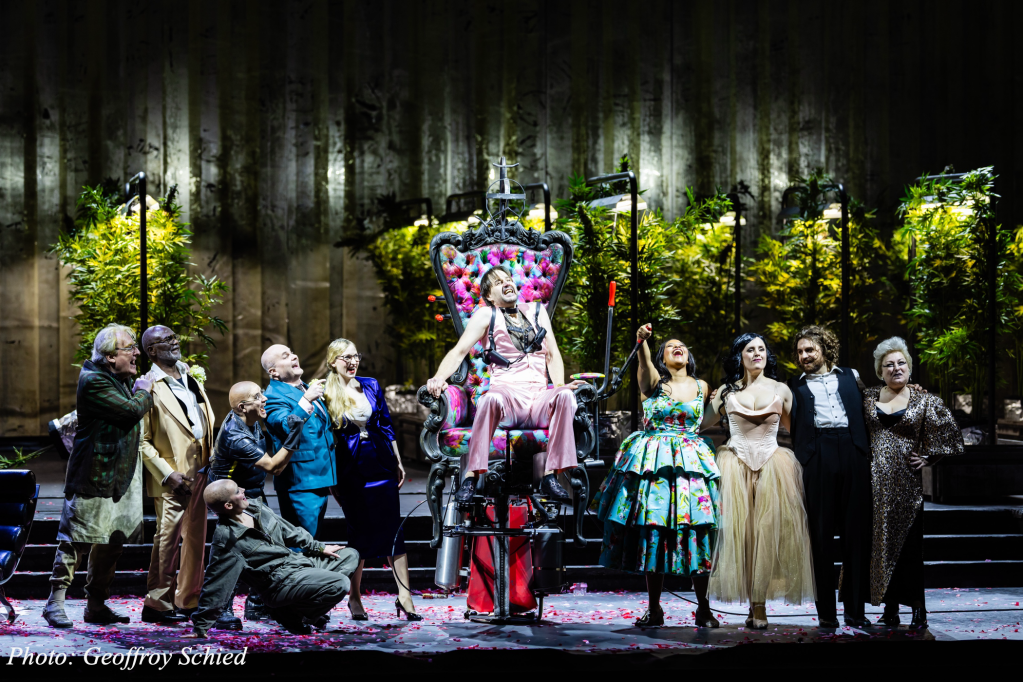
This production won’t be topping my list of favourites anytime soon, but musically? It’s a chef’s kiss of perfection! Boom. That’s all you really need to know—but hey, if you’re up for a slightly deeper dive, stick around.
Le Nozze di Figaro pretty much always fills the seats, and tonight at Bayerische Staatsoper was no different—sold out to the last chair. As Johannes Brahms once said, “Every single number in Figaro is a miracle; I have no idea how anyone could create something so perfect. Nothing like it ever happened again, not even with Beethoven.” And let’s be real, if Brahms said it, there’s gotta be something to it, right?
In the Beninging (if you know, you know)
The opera begins, as it always does, with its lively overture. Living with two bassoonists, I’ve heard this overture more times than I can count—it’s like my daily soundtrack at this point. It’s a popular choice for bassoon auditions, probably because it’s fast and demands some serious double-tonguing skills. After all, the bassoon opens the piece alongside the strings. Tonight, we got it in a fresh, upbeat tempo, and everyone kept up—no hiccups in sight!
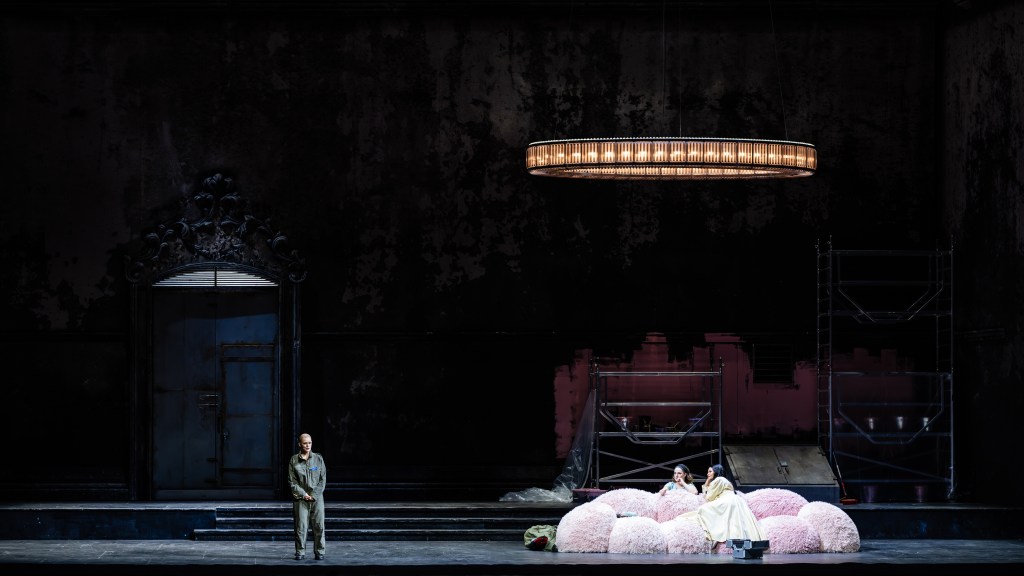
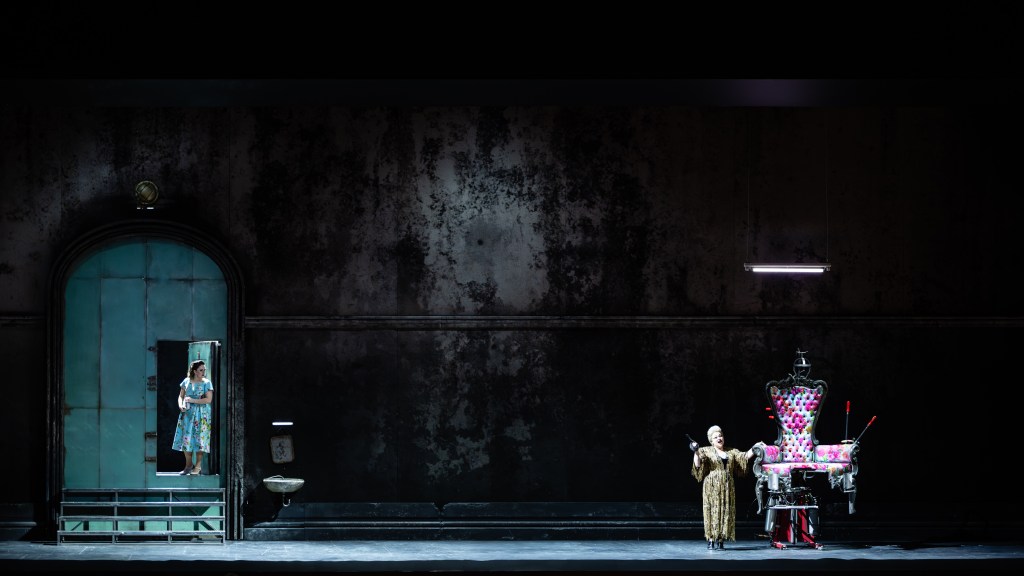
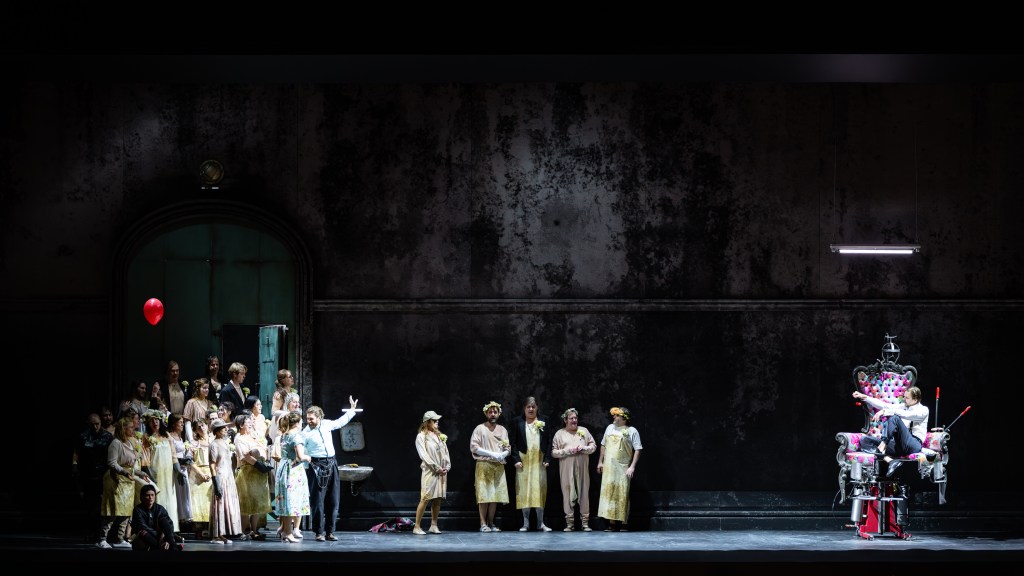
The curtain stays down for the first few minutes, which I’m totally on board with—it lets you focus on the music. When it lifts, we’re greeted with what’s supposed to be Figaro and Susanna’s new home. But to me, it looks more like a gloomy, soul-sucking hallway. The grey walls don’t exactly scream “welcome,” and there’s this enormous chair that could be a time machine—yet at the same time, it has the feel of a torture device. With its headrest and these strange, shears-like attachments, I’m still not sure if it’s supposed to send us to the past or just make us wish we’d never seen it.
The room also has two lamps: one hanging over this mysterious chair and another above a less-than-appealing sink with an even filthier mirror. Honestly, the mirror is so grimy it’s questionable whether it even qualifies as a mirror anymore—there’s not much reflection happening in that gunk. Overall, it’s not exactly a feast for the eyes.
But luckily (!), you don’t really need to look much, because the music is more than enough on its own. The Finnish chief conductor of the Helsinki Philharmonic Orchestra, Susanna Mälkki, guides us beautifully through the score.
There’s for example truly nothing like a good subito piano, and in Figaro’s aria “Se vuol ballare, signor Contino,” she delivers some absolutely stunning ones.
When Cherubino enters, he could easily be mistaken for a junkie straight out of a European city. His messy black hair looks like it was cut by someone who might have been blindfolded. As he shares his existential crisis with Susanna, I especially feel grateful for the orchestra. There’s a perfect balance between the different sections, and even in the softer moments, nothing gets drowned out—including the singing.
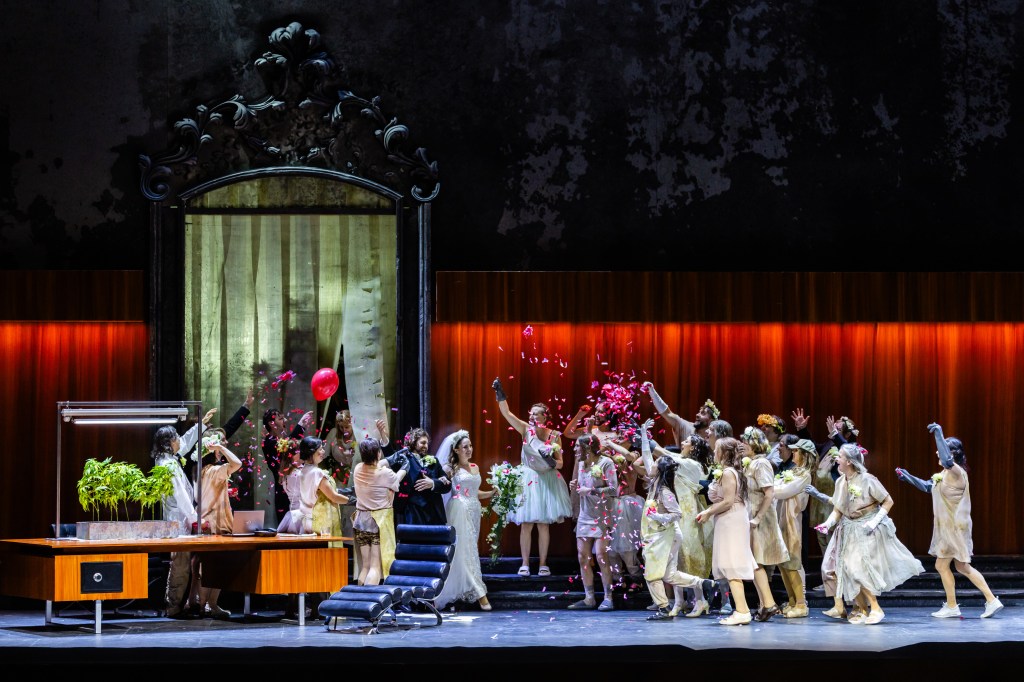
Throughout the entire evening, it was great to hear how relaxed and free the singers sounded. They seemed completely at ease, and the interplay between them and the orchestra was seamless—they were all in sync, following each other with natural ease.
The interplay between the different characters is great as well. They’re actually talking (or, well, singing) to each other. While that might sound like a given, it’s surprising how often singers will direct their voices out to the audience, instead of to each other. At one point, Peter Mattei, aka Figaro, is facing away from the audience and singing—and yet it’s still crystal clear! It definitely adds a little extra life to the performance.
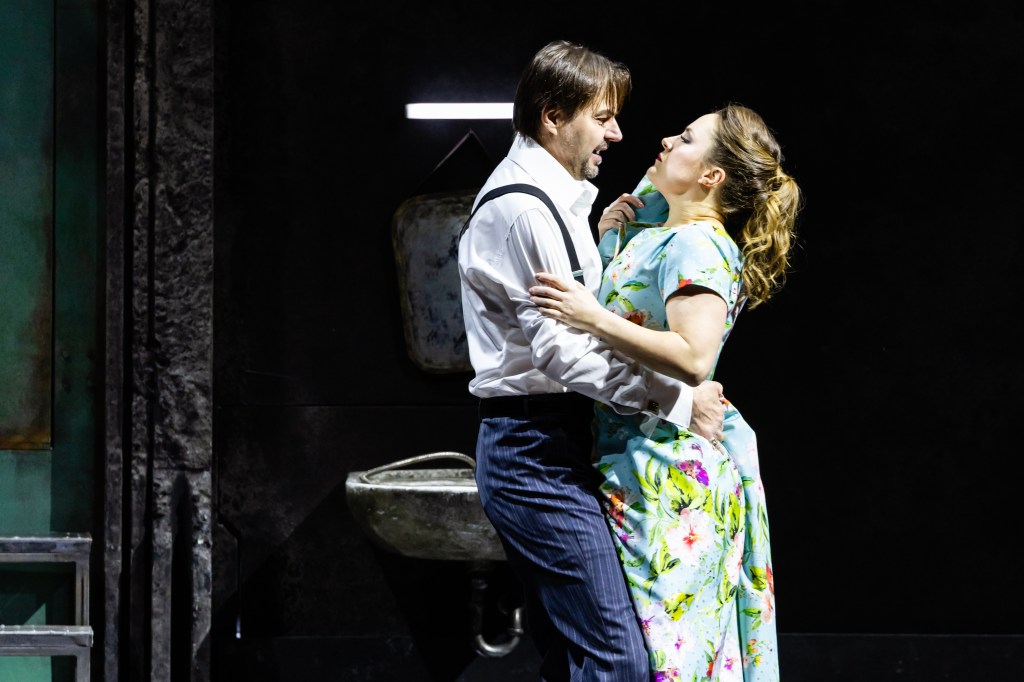
The Swedish baritone really nails the Count. He’s got that powerful presence, and his voice? Even more powerful. It’s a pleasure to listen to—clean and smooth, just the way it should be. His wife, the Countess (Golda Schultz), is no slouch either. She has a killer aria in the start of the second act (and the clarinet does a great job backing her up). Vocally, they’re a perfect match! Though, in the story, not so much… Still, both have amazing voices, and when the Count finally apologizes to the Countess in that last scene, it all comes together in the best way. I got legit goosebumps.
A better match storywise? Definitely Susanna and Figaro, also known as Louise Alder and Konstantin Krimmel. As for Figaro, though, there were moments when his role felt a bit too deep for his voice. But Krimmel still brings the character to life with plenty of charm.
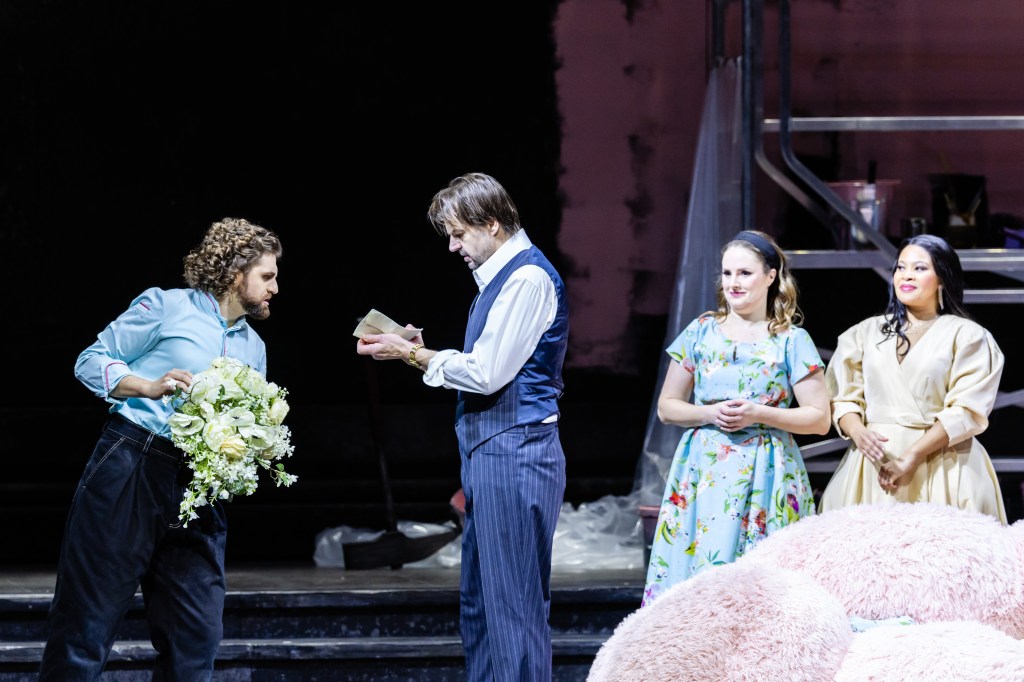
Barbarina (Eirin Rognerud) is supposed to hand Susanna a hairpin, but of course, she loses it. In the aria “L’ho perduta, me meschina!” she sings with such heartfelt distress, you can feel her panic as she frantically searches for it on stage. She looks all around, reaching for every corner, but that hairpin? Completely gone. It’s a tiny moment, but it completely steals the spotlight, and you can’t help but want to jump up from your seat and help her search!
The Classical vs. the Romantic Period
One thing that really sets Viennese Classical opera apart from the big romantic works of composers like Strauss and Wagner? The recitatives. And let’s be honest—sometimes they can be a bit… well, dull (at least, that’s my take). But hey, we need them for the plot to move forward, right?
However, tonight? Total game changer.
First off, a huge shout-out to the cellist who played one of the early recitatives. It wasn’t just “good”—it was extremely clean and well played.
And then—hold your phone—let’s talk about the harpsichordist. Forget broken chords; this person was practically having a mini party on stage. It felt like we got an impromptu concert, with some cheeky quotes thrown in. We got a little Beethoven’s 5th Symphony, a dash of Bach’s Toccata in D minor… and maybe a touch of Rossini from The Barber of Seville? Oh, but wait—if I’m not losing it, I could’ve sworn I heard something that sounded suspiciously like Darth Vader’s theme from Star Wars. And don’t get me started on the hints of Mendelssohn’s Violin Concerto?
I might be overinterpreting, but seriously—this was almost turning into a game of Name That Tune.
A Few Last Words About the Production.
Alright, so let’s talk about the set in Acts 3 and 4. I’ll give credit where credit’s due—it’s an upgrade. Act 3 gives us wooden walls and some furniture—nothing groundbreaking, but it’s a solid look. Then in Act 4, we’re in a garden with all these plants on stage. It’s a nice touch—plants can fix a lot of things, right? Overall, it’s all right.
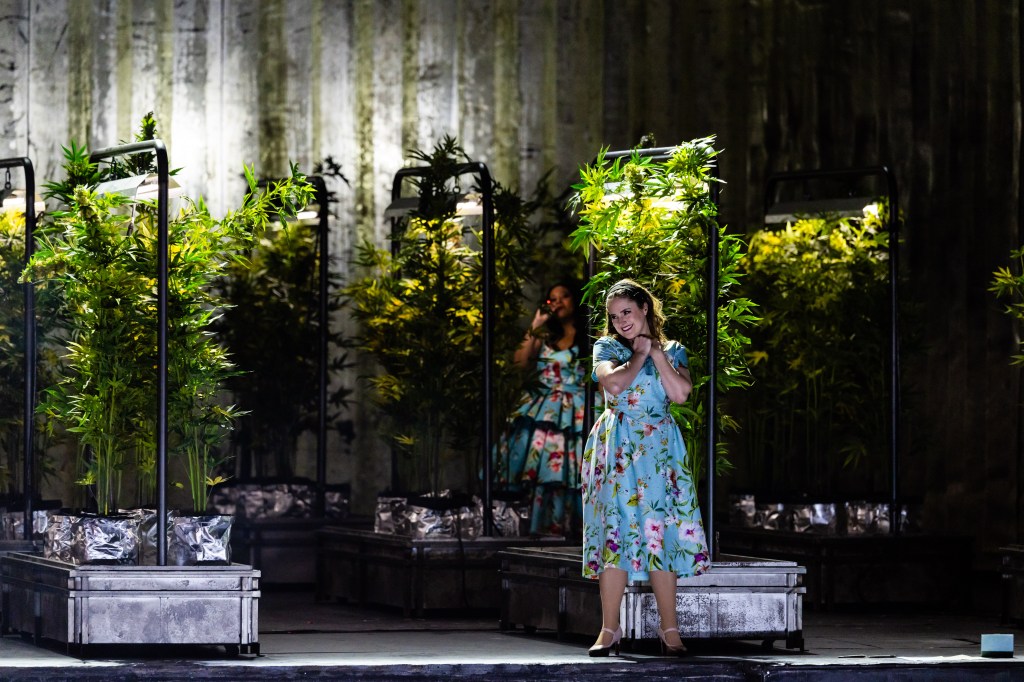
Here’s the deal: the set doesn’t really make or break the opera. It’s there. It doesn’t distract you, but it doesn’t exactly make you jump up and cheer either.
The mind behind all this is Evgeny Titov, a Kazakh director who’s clearly on the rise—he’s got future gigs lined up at Opéra-Comique in Paris and the Royal Opera House in London. He’s probably best known for his work on Œdipe at Komische Oper in Berlin, which got a lot of attention.
In the end, this production isn’t exactly going to be remembered for changing the game. But the music? That definitely was something. So, if you’re in it for the melodies, you’re in for a treat.
Fun Fact:
To prevent Le Nozze di Figaro from turning into an operatic marathon, Emperor Joseph II ruled that encores for ensemble pieces were off-limits. While soloists could still ‘bask in the spotlight,’ he declared that ‘no piece for more than a single voice is to be repeated.’ The idea was to keep the performance manageable without sacrificing the individual moments of glory. However, it’s unclear whether this decree was actually enforced
Trailer:
Cast:
- Conductor: Susanna Mälkki
- Director: Evgeny Titov
- Stage and Costume Designer: Annemarie Woods
- Lighting Designer: D. M. Wood
- Chorus: Franz Obermair
- Dramaturg: Janine Ortiz and Katja Leclerc
- Il Conte di Almaviva: Peter Mattei
- La Contessa di Almaviva: Golda Schultz
- Susanna: Louise Alder
- Figaro: Konstantin Krimmel
- Cherubino: Angela Brower
- Marcellina: Dorothea Röschmann
- Bartolo: Willard White
- Basilio: Tansel Akzeybek
- Don Curzio: Kevin Conners
- Barbarina: Eirin Rognerud
- Antonio: Martin Snell
- Mädchen: Seonwoo Lee and Ekaterine Buachidze
Bayerisches Staatsorchester
Bayerischer Staatsopernchor

 Blogfløjten