
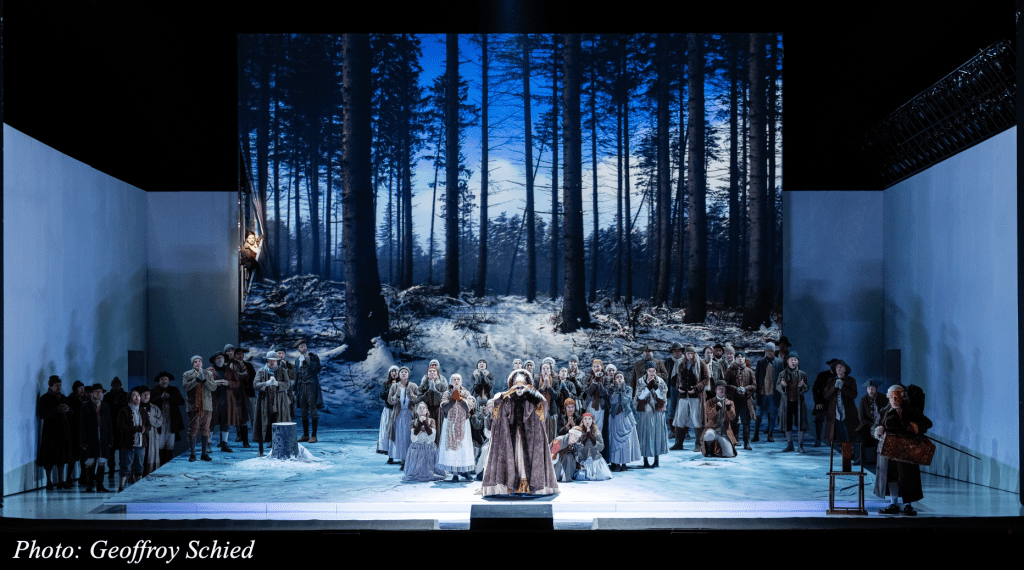
I’ve said it before: If someone steps out in front of the curtain before the music starts, alarm bells usually ring. Tonight, the tension built as a figure emerged—a dramatic silhouette with hips wider than Bruckner’s orchestration, topped by a wig that reached for the heavens like a diva’s final high note. The curtain itself seemed to join the fun, swaying as if eager to spill the secret. And just like that—phew! No disaster in sight; it’s only the spoken role that sets the stage!
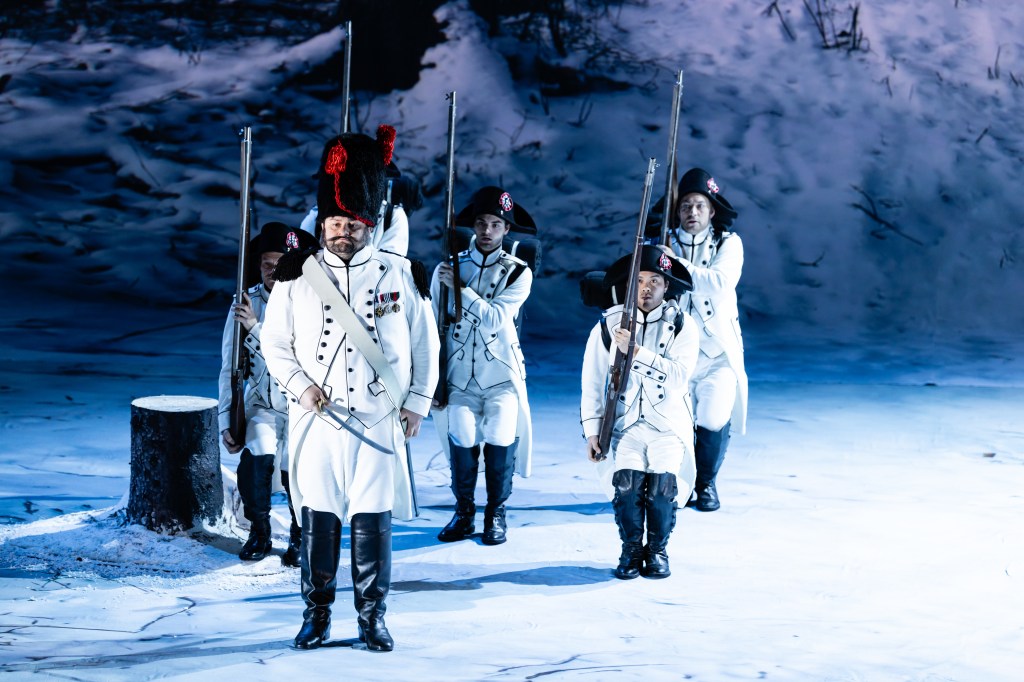
Produced by Italian director Damiano Michieletto—who also staged Aida, which I saw back in December (read about it here)—this is a co-production with Teatro San Carlo in Naples. Before heading south, it’s enjoying a brief run here in Munich. The opera in question is Donizetti’s La Fille du Régiment. Premiering in 1840 at Paris’s Opéra-Comique, it’s particularly famous for the tenor’s thrilling high C’s. So, does this newborn production hit the high notes, or does it stumble on the battlefield?
The opera has a rather nervous beginning—not for us in the audience nor the ones on the stage, but for someone down in the orchestra pit. It begins with six solo bars from a horn, and let’s be honest—if you’re the one holding that horn, the pressure’s on! But, no worries—thankfully, it was played quite well.
Once the music takes off, everything falls into place. The conductor for the evening is also Italian, Stefano Montanari, who led us through the piece and added tension at all the right moments.
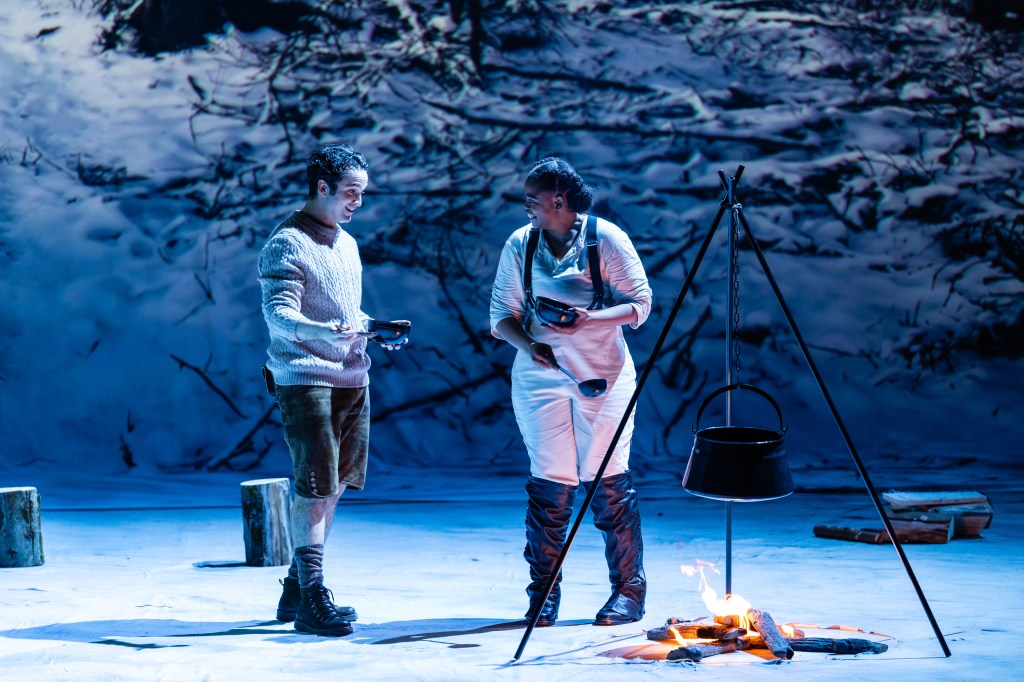
The plot’s pretty much the same as in most operas—two people in love, but of course, they can’t be together. Otherwise, where’s the drama? As they put it, ‘Better to lose our life than our love’—because, as we all know, that’s totally the logical sense.
Slay – What a Show-Off
Did the tenor hit those high C’s or what? The role of Tonio, a young Tyrolean dressed in lederhosen, a hat, and a grey sweater, is sung tonight by Xabier Anduaga—a Spaniard who also sang Sir Edgardo di Ravenswood in Lucia di Lammermoor back in November (check out the review here). The aria kicks off with ‘Ah! mes amis, quel jour de fête,’ probably the opera’s biggest hit. Anduaga hit nine out of the eight C’s on offer. Nine? Did I just mess that up? Nope. Some tenors like to push that final note just a little higher—why not? But I have to say, Anduaga performed it effortlessly and convincingly. You could tell he was putting in a bit more power on the first two, but then we were really launched into the Stra(uss)tophere. I wonder how high he could’ve gone?
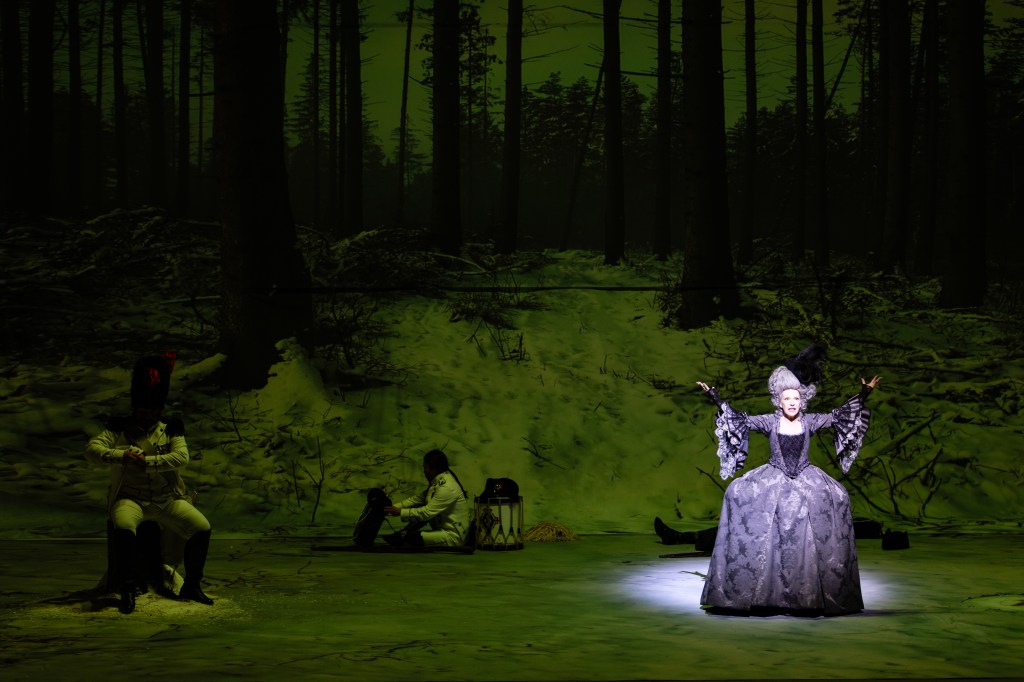
Marie is the woman Tonio can’t have. Her past? It’s a bit of a mess. Left as an infant and found by the regiment, she’s been raised by them, unaware of her origins—until now, when La Duchesse de Crakentorp shows up. A fine lady, the Duchess, and Marie is about to become one too. So, off she goes with her to get some proper schooling.
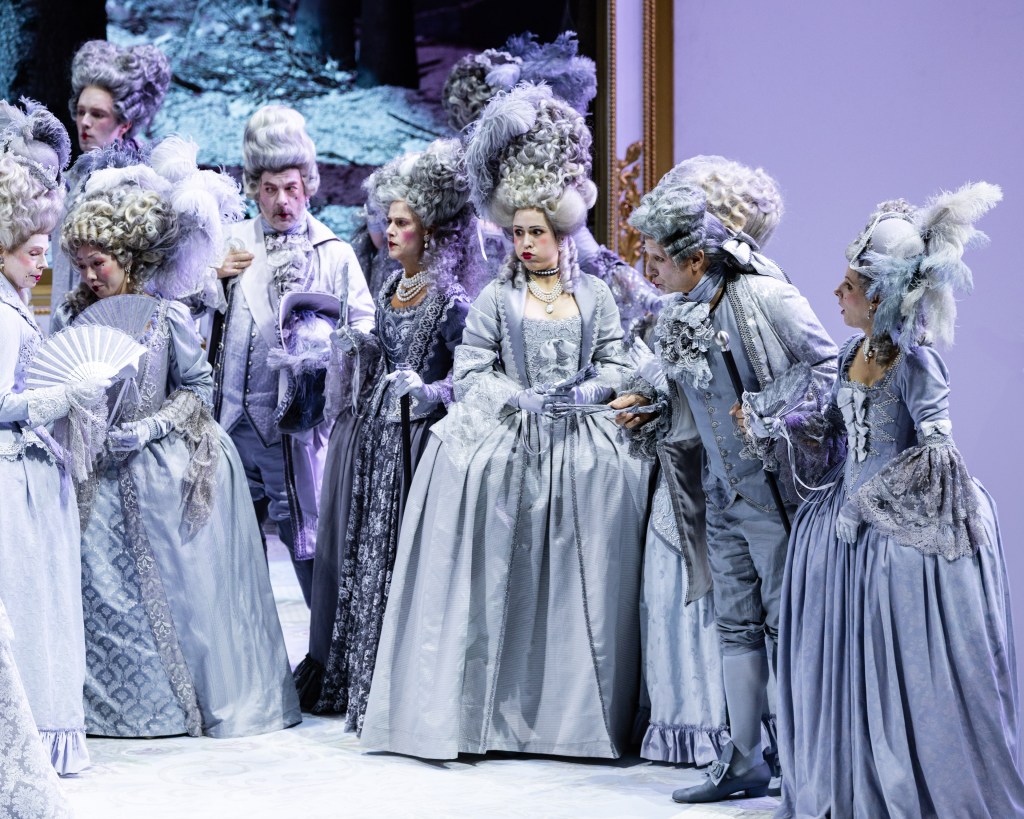
One part of Marie’s new education? Learning to sing while playing the harp. It’s a Pretty funny scene, with Yende exaggerating every piece of advice and singing terribly off-key. At one point, she hits a high note that turns into a comically frustrated scream. “Singing with the regiment came naturally,” she says. Apart from this hilarious moment, Yende sings beautifully—her tone is sharp and clear, and in every run, each note is distinct. She even sneaks in a few playful references—like a nod to the Queen of the Night’s aria from Die Zauberflöte and the start of the French national anthem, because, well, it’s a French regiment, after all.
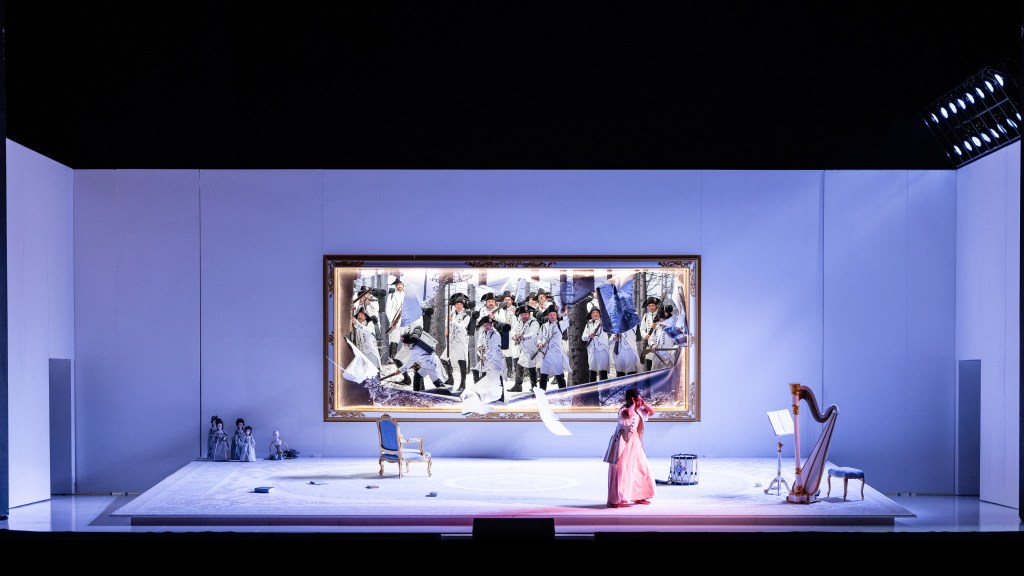
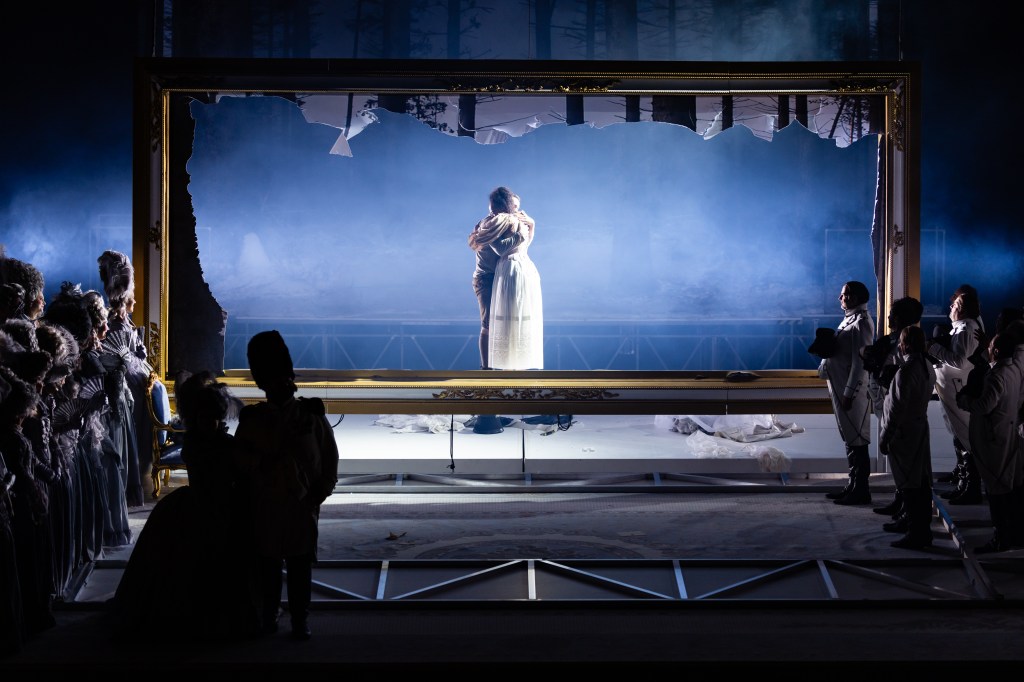
The staging is great as well. The entire first act features a backdrop of a forest covered in white snow, which reappears in the second act, framed in a picture that eventually comes to life when it’s torn open by the regiment emerging from the forest. It reminded me a bit of Philipp Stölzl’s Der fliegende Holländer production, which they’ve been experimenting with at the Staatsoper in Berlin.
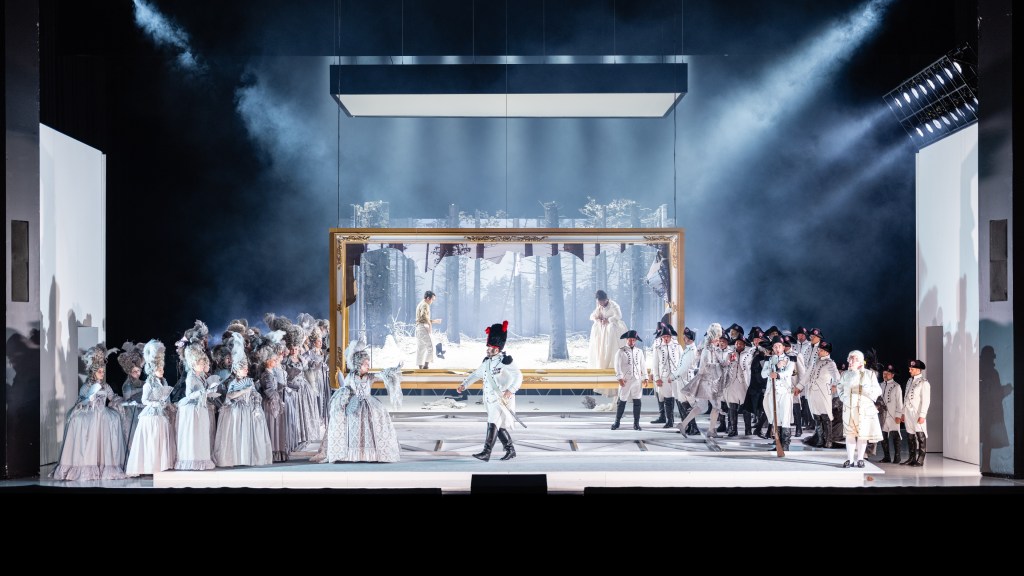
The set design is simple and supports the story well.
All in all, it’s a production that keeps you entertained from start to finish—just like that first dramatic entrance, full of surprises, and somehow, all the better for it.
Fun Fact:
The Duchess of Crakentorp is a spoken role, so directors often bring in a non-opera celebrity to have some fun with it.
Trailer:
Cast:
- Conductor: Stefano Montanari
- Director: Damiano Michieletto
- Stage Designer: Paolo Fantin
- Costume Designer: Agostino Cavalca
- Lighting Designer: Alessandro Carletti
- Choreographer: Thomas Wilhelm
- Chorus: Christoph Heil
- Dramaturg: Saskia Kruse and Mattia Palma
- Marie: Pretty Yende
- La Marquise de Berkenfield: Dorothea Röschmann
- La Duchesse de Crakentorp: Sunnyi Melles
- Tonio: Xabier Anduaga
- Sulprice: Misha Kiria
- Hortensius: Martin Snell
- A Corporal: Christian Rieger
- A Peasant: Dafydd Jones
Bayerisches Staatsorchester
Chorus of the Bayerische Staatsoper
- Innocence, The Royal Danish Opera 2026
- Die Walküre, Hamburgische Staatsoper 2026
- Werther, The Royal Danish Opera 2026
- Macbeth, Royal Danish Opera 2026
- Tosca, Opera Hedeland 2026


