

That’s it – Easter is over, and so is my five-Parsifal passion parade: five Grail quests, five solemn sagas, and enough sacred suffering to last me until Pentecost. New sets, new styles, new singers stepping solemnly onstage. Down in the pit, the orchestra at the Bayerische Staatsoper was the real holy hit: while everyone else was searching for the Grail, they quietly walked off with it under their arm.
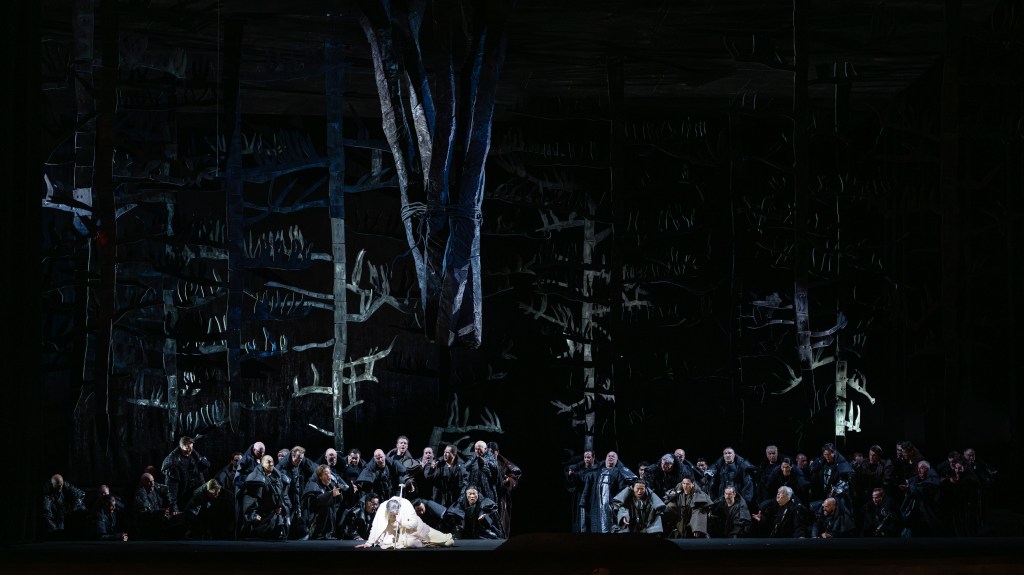
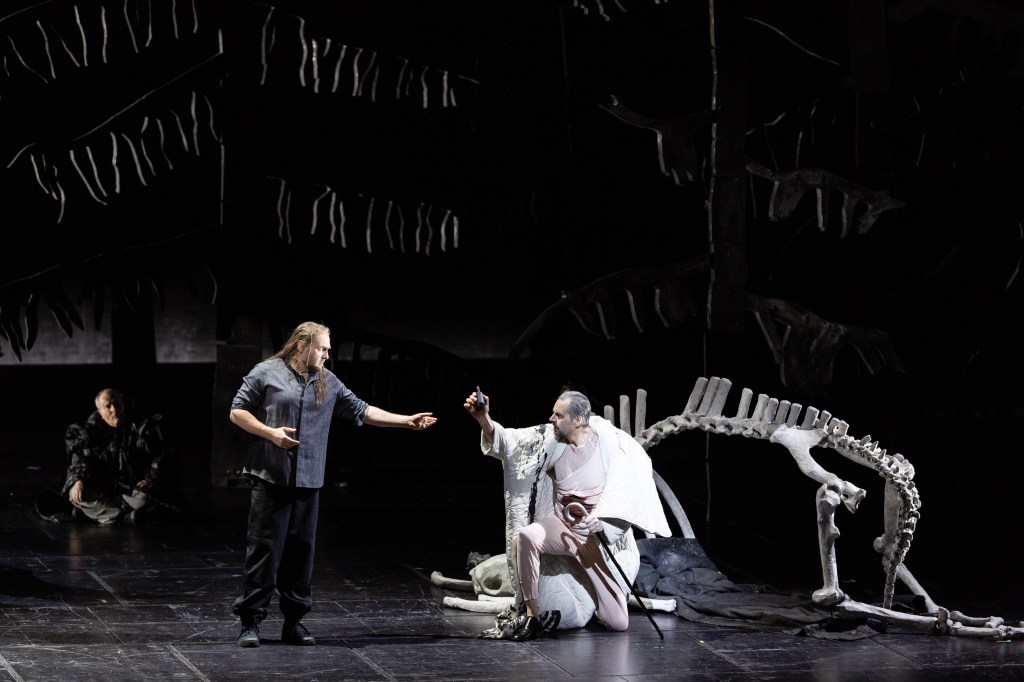
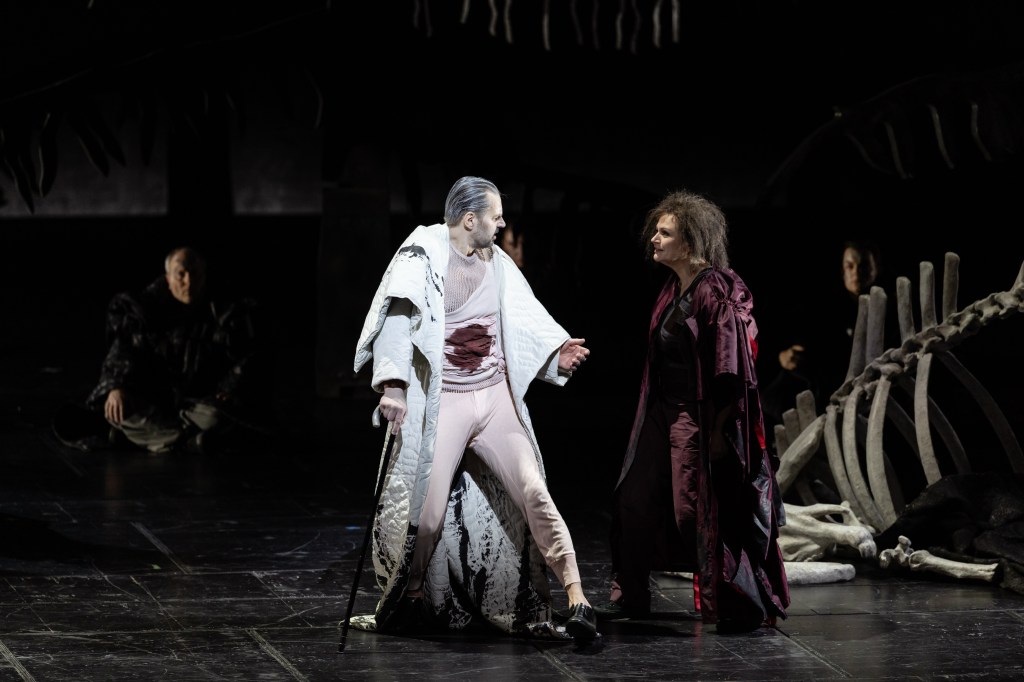
We are in a forest. The dark trees are two-dimensional, yet somehow still feel vividly alive. Light sends long shadows sliding across the stage, turning the scene into something both spooky and strangely awake. These are not real trees: they have no leaves, and their branches twist in peculiar, unnatural ways. Everything is wrapped in shadow and night; only the skeletal structure on the right (where Kundry lies) gives the stage its ghostly light. The set, both haunting and hypnotic, is designed by the German artist Georg Baselitz.
He’s got a style, that’s for sure. Everything on stage – the set as much as the costumes (even though those were actually created by Florence von Gerkan) – bears his stamp. It all makes me think of Expressionism: warped shapes, chunky lines, and that dark, uneasy, slightly nerve-wracking atmosphere. What feels less expressionist, though, is the colour palette… or rather, the lack of one. Colour is clearly not his thing.
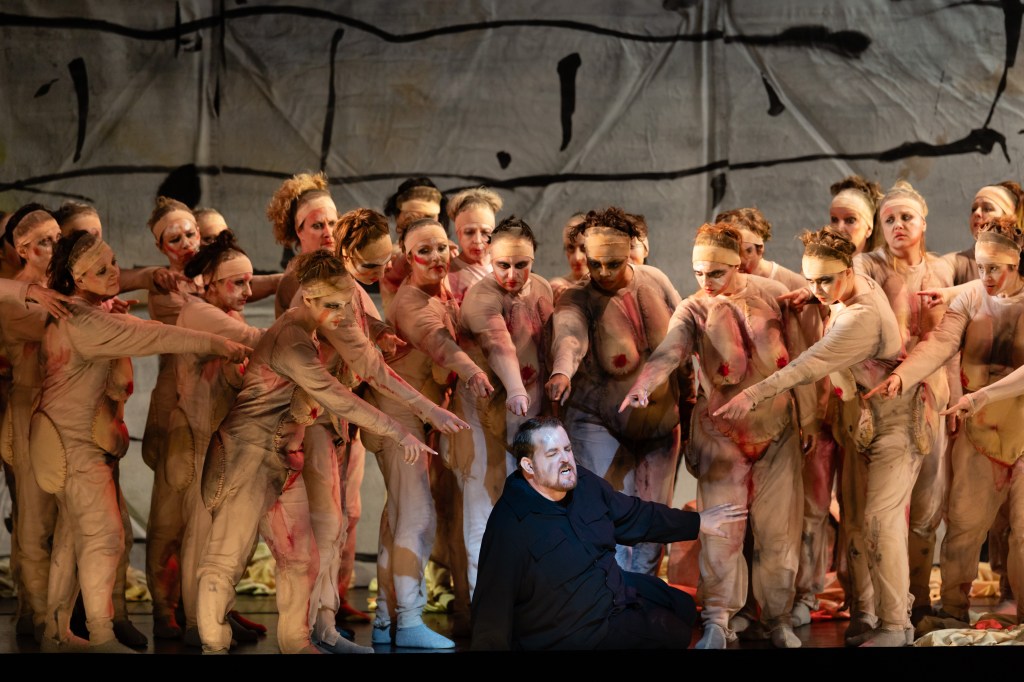
In the second half of Act I and first of Act II, the chorus arrives in nude bodysuits so strange and grand, they look like they’ve stepped from some surreal land. The whole thing brings back Ersan Mondtag’s Antikrist at the Deutsche Oper Berlin (link here).
Forest, Flips and Flowermaidens
Another very Baselitz thing: he loves turning his motifs upside down. Not because he paints while doing a handstand, but because upside-down subjects are simply part of his signature style (at least since 1969). And this production makes sure we notice. In Acts II and III, a hanging curtain shows four figures dangling upside down, and by the final act even the forest from Act I has been tossed onto the ceiling.
Why? Is Baselitz being Baselitz and giving us his trademark visual twist? Or does it reflect the characters, who by that point seem just as upside down and unable to make head or tail of their own world? Maybe both? Either way, the whole production feels built around this flipped perspective – more as a striking visual idea than as a grand philosophical statement.
The Sound of (Holy) Music
Gurnemanz, on the other hand, has plenty to say – and Christof Fischesser makes sure not a single word goes astray. Not a consonant was blurred, not an “r” escaped without a proper roll; text clarity was clearly his goal. He also sings with his whole body, giving the role a physical presence. It is a role that fits him like a glove – though there were a few bumps in Act III, and for those we may have to cast a glance down into the orchestra pit.
Sebastian Weigle conducted the Prelude to Act I as if every instrument had its own voice to sing. The orchestra breathed like one living organism, yet at the same time he made the little inner dialogues stand out beautifully – one line rising to the surface while another moved quietly underneath, making Wagner’s layered polyphony feel especially vivid. He clearly brings his own ideas to the score, shaping it with plenty of tempo shifts and some striking dynamic contrasts. It was especially those changing tempi that occasionally made it hard for the singers and orchestra to stay perfectly together.
Parsifal is a piece that lives and breathes through sound – shimmering, swelling, slowly spinning. And after an Easter packed with Parsifal instead of Easter eggs, I can safely say one thing: this score is no easy beast to tame. Not one of the orchestras I heard made me sit back and think, “Wow, that was just perfect” – and these were hardly bargain-bin bands: the orchestras of the Deutsche Oper Berlin, Semperoper Dresden, Tiroler Festspiele, Hungarian State Opera, and now the Bayerische Staatsoper.
The challenge is that Wagner lets the music linger and loiter. The tempos often take the scenic route, which means every glowing chord hangs in the air long enough for even tiny tuning troubles to wave hello. Sebastian Weigle also likes to let certain instruments pop out and play peekaboo: a fluttering flute trill here, a teasing trumpet there. He clearly has ideas.
What I missed, though, was that one truly golden Grail moment: that place – perhaps in the Karfreitagszauber? – where the music suddenly blooms and you think, “Yes, this is the summit, the sonic sunrise!” That moment never quite arrived. There was shape and direction, yes, but now and then his choices felt a little random, and in some of Wagner’s big textual moments, the musical punch was oddly pulled away.
Bari-Tone of Pain
Is it odd to find yourself secretly hoping a man in endless agony will keep on complaining? Or to think, “Please, tell me more about your suffering”? If so, then guilty as charged. Tonight brought, without a doubt, the most fascinating Amfortas of my entire Easter. The Swedish baritone Peter Mattei came in and completely changed the game.
Mattei makes misery sound marvellous. His overtones shimmer in a way that seems unfair to other baritones. The way he bends and shapes a phrase can send goosebumps marching straight up your arms. His Amfortas is less raging, wounded ruler and more lyrical, aching king – gentler, more vulnerable, and far less thunderous than we often see. But somehow that softer version works brilliantly.
His people are right behind him – quite literally – and they are not just following his lead, they are fully in his forest fashion fold. Clad in costumes cut from the same Baselitz cloth, the chorus is in absolutely blooming form tonight. Every section is finely tuned, the balance is great, the crisp little “t”s land with clockwork click, and even the smaller solo turns from the Flowermaidens are enough to make you stop and smell the vocal roses. It all says the same thing: at the Bayerische Staatsoper, the singing standard is in full flower.
The title role of Parsifal is sung by the American tenor Clay Hilley (aka Heldenhilley) – though from the sound of his German, you would hardly place him on the other side of the Atlantic. He has a fine, focused voice. His Parsifal often seems to move in two clear vocal gears: either half power or full power.
Anja Kampe’s Kundry shows many a face, and she brings each one vividly into place. She is utterly convincing in sound as well as stage presence. Even in a single word like “ach,” she shapes the sound with striking detail. The “ch” seems to come from somewhere deep in the back of her throat, giving the word an almost physical intensity.
Spear Me the Logic
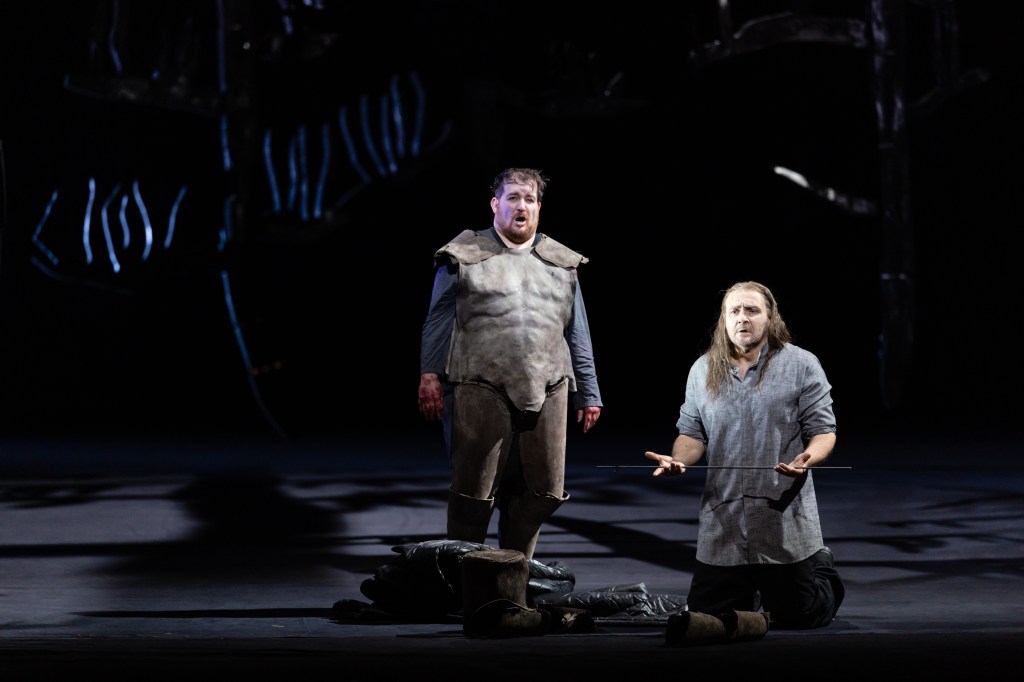
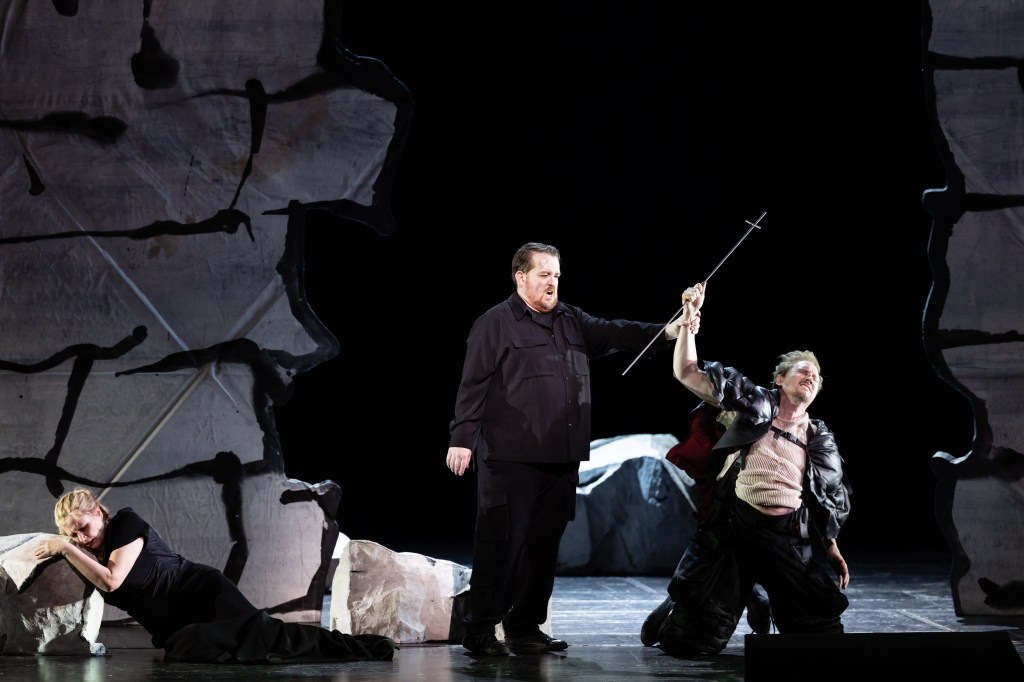
Parsifal must get hold of the spear so he can bring about Amfortas’s Erlösung and free him from his suffering. Only here, there is no spear – instead, we get a rather long metal cross. Now, the spear is meant to be the Holy Lance. You know, the one that pierced Christ’s side as he hung on the cross on Good Friday. This leaves us with a rather cross-making question: how exactly does it make sense for Christ on the cross to be stabbed with… a cross?
At moments, the production gives the impression that certain choices have been made simply because they fit the libretto – not necessarily because they quite fit together with everything else.
What really does click, though, are the final minutes. The chorus fills the air all around us, while Amfortas sits curled up at the very front of the stage, small and solitary beneath the sound. Behind him, the upside-down figures have vanished – only a great splattered mass of paint remains. Maybe that is the point: Amfortas is no longer dangling in limbo up there, but has finally been let off the hook and granted a little peace.
Fun Fact:
Bayreuth treated its original Parsifal sets like sacred relics for 50 years – no one dared touch what Wagner had once laid eyes on. The Grail temple stood steadfast until 1934 – but Wagner’s vision of Kundry as a bare, bold “Titian Venus” stayed safely in the sketchbook…
Cast:
- Conductоr: Sebastian Weigle
- Directоr: Pierre Audi
- Stаge Designer: Georg Baselitz
- Сostume Designer: Florence von Gerkan
- Lightning Designer: Urs Schönebaum
- Dramaturg: Benedikt Stampfli and Klaus Bertisch
- Сhoir: Christoph Heil
- Amfortas: Peter Mattei
- Titurel: Bálint Szabó
- Gurnemanz: Christof Fischesser
- Parsifal: Clay Hilley
- Klingsor: Josef Wagner
- Kundry: Anja Kampe
- 1. Gralsritter: Kevin Conners
- 2. Gralsritter: Paweł Horodyski
- 1. Knappe: Elene Gvritishvili
- 2. Knappe: Shannon Keegan
- 3. Knappe: Dafydd Jones
- 4. Knappe: Samuel Stopford
- Klingsors Zaubermädchen:
- Iana Aivazian, Elene Gvritishvili, Shannon Keegan, Nontobeko Bhengu, Mirjam Mesak, Meg Brilleslyper
- Stimme aus der Höhe: Shannon Keegan
Bayerisches Staatsorchester, Bayerischer Staatsopernchor und Zusatzchor der Bayerischen Staatsoper, Extrachor der Bayerischen Staatsoper
- Parsifal, Bayerische Staatsoper
- Parsifal, Hungarian State Opera 2026
- Turandot, Landestheater Linz 2026
- Parsifal, Semperoper 2026
- Der Rosenkavalier, The Royal Danish Opera 2026
Parsifal, Hungarian State Opera 2026
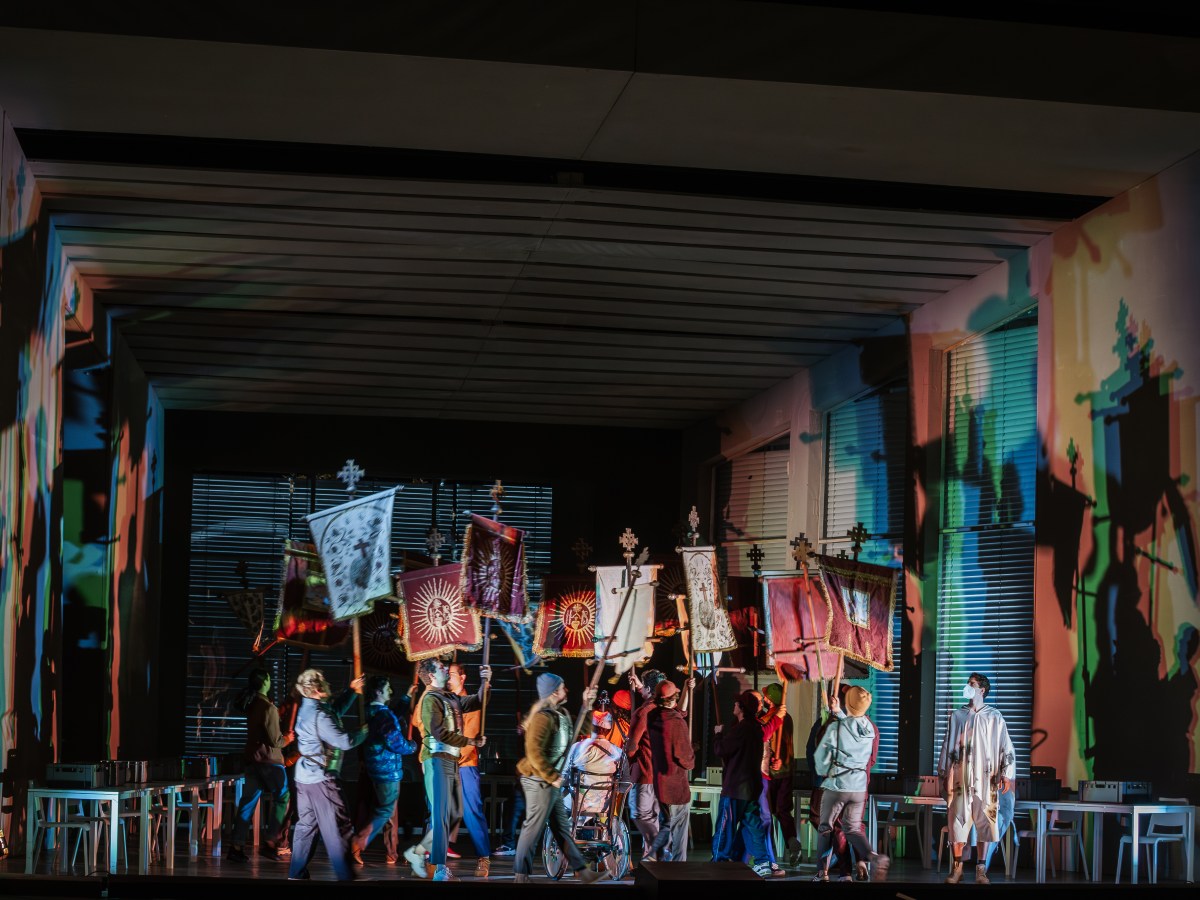
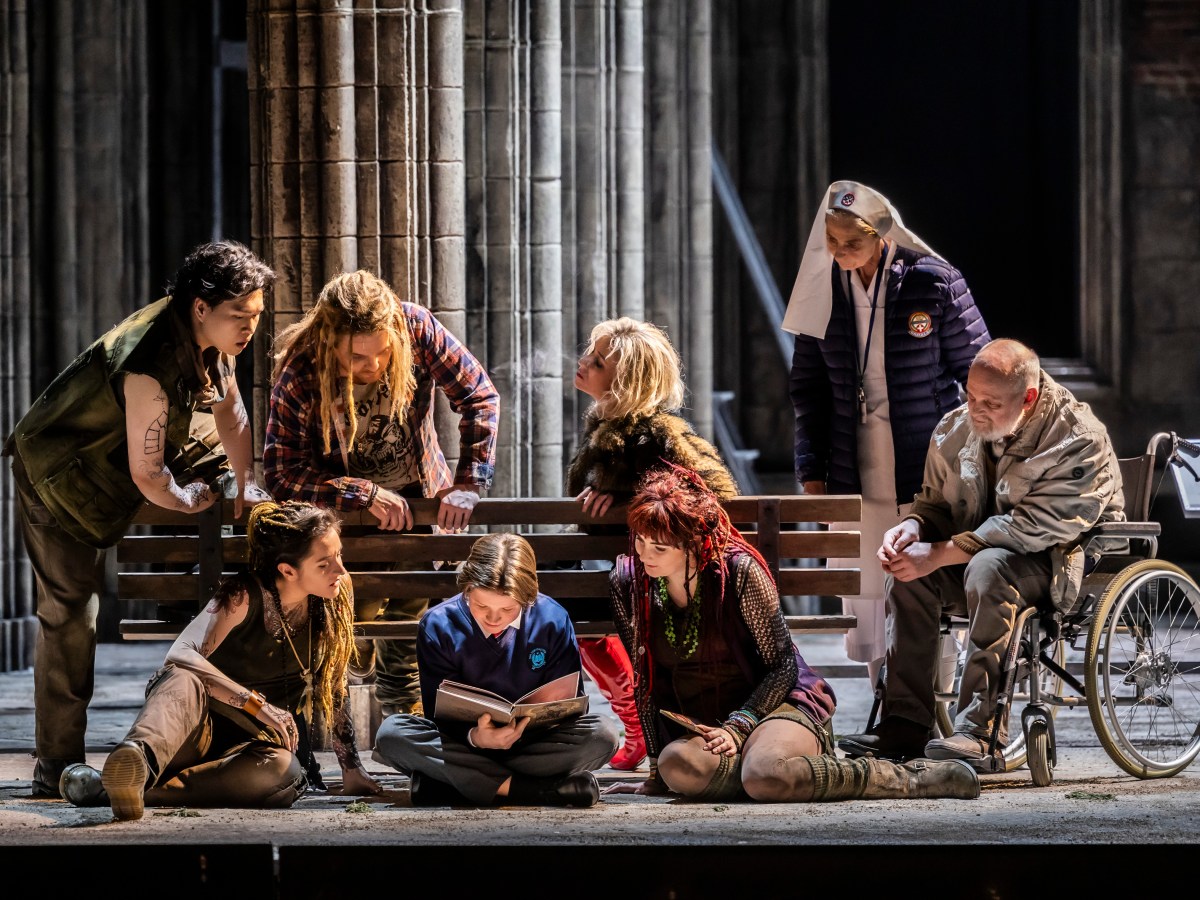
A red hookah, a guitar, water sloshing in jerry cans, Elvis hair – and Gurnemanz and his gang in puffer jackets, pairing polished shirts and ties with metal breastplates. Not exactly your standard Parsifal picture. But that’s the unholy cocktail the Hungarian director András Almási-Tóth poured into the Grail Knights’ world in his 2022 production.…

Turandot, Landestheater Linz 2026
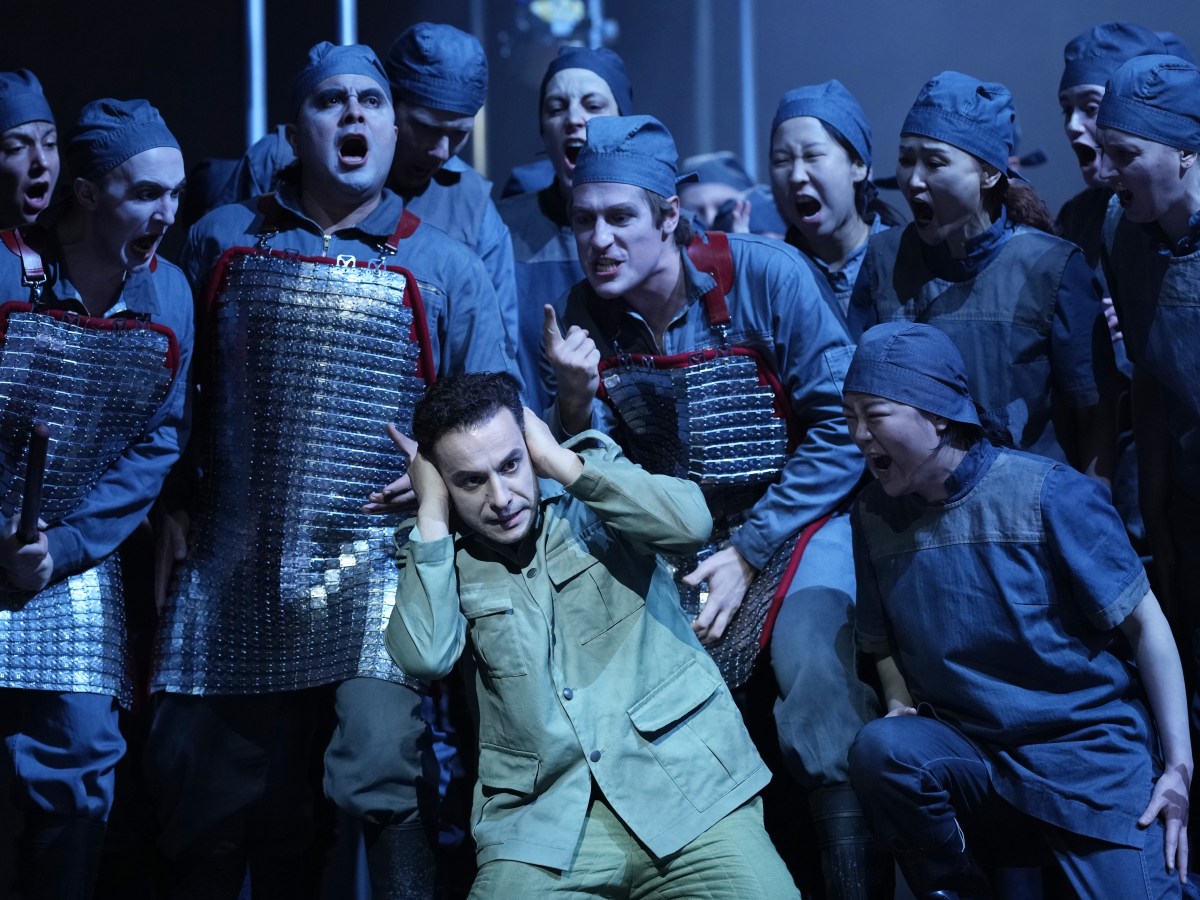
Four notes followed by a chord, like a door being flung open. No warning, no warm-up – just bam. At the Landestheater Linz – about an hour from Vienna – they didn’t hold back. Especially the percussion, which seemed determined to make those opening bars really land. At first, it felt like opening-night energy – everyone…
Parsifal, Semperoper 2026
Richard Wagner wrote Parsifal for his very own theatre in Bayreuth. Ideally, that’s where it would have lived happily ever after. It didn’t. Clearly. Because Parsifal isn’t just an ‘opera’, it’s a piece of architecture in sound. Written for that exact acoustic, those stubborn wooden seats, the wide, bowl-shaped hall, the hidden orchestra pit, the…
 Blogfløjten