
What’s better than one opera in an evening? TWO, obviously! Double the drama, twice the trauma. Two scores, two composers, two tragic tales… or, well… something like that.
Lights dim, doors click, conductor steps in — let the magic begin. But hang on — who’s that? A man waltzing in with a red suitcase and a matching clown nose?
Umm… weren’t we supposed to kick things off with Mascagni’s Cavalleria rusticana and not tumble straight into Leoncavallo’s Pagliacci?
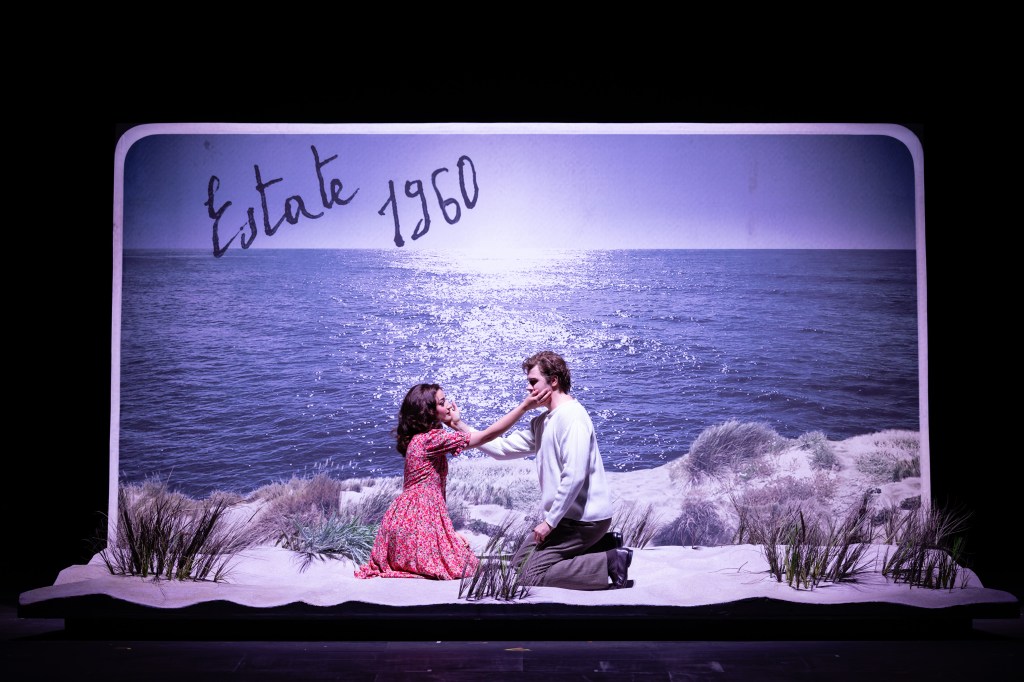
As the violins tiptoe in with their shimmering opening, it’s clear we’re in that story — the one where Easter morning ends not with eggs and alleluias, but with cheating hearts, broken parts, and… well, yeah, a knife in the back.
Or at least, that’s how Cavalleria rusticana usually rolls. But Italian director Francesco Micheli had other pasta on the boil. The original plan? Jonas Kaufmann singing both tenor roles — Turiddu and Canio. Double trouble! Dream casting! But, alas, voices have minds of their own. And Kaufmann’s? It packed its bags, took a scenic detour, and never quite made it to Turiddu’s front porch. Che pasticcio!
So! Time to get creative — that role got tossed around like a flaming hot potato at a summer BBQ.
But don’t freak out! Just follow the fella with the flashy red suitcase — he’s the Grillmaster flipping tonight’s drama!
Who forgot to check the dress code?
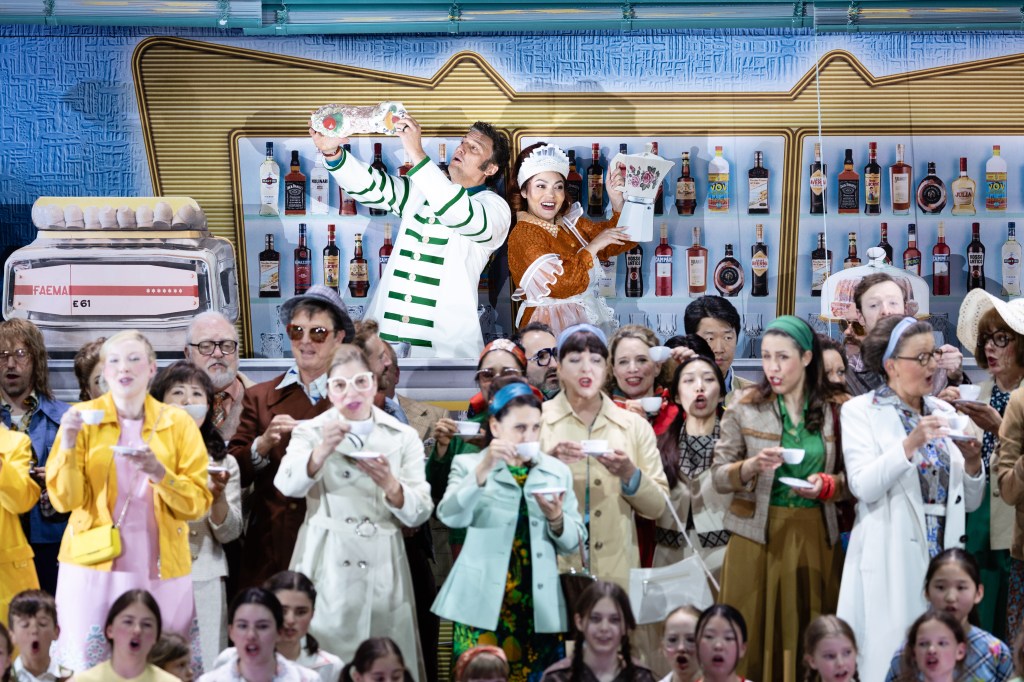
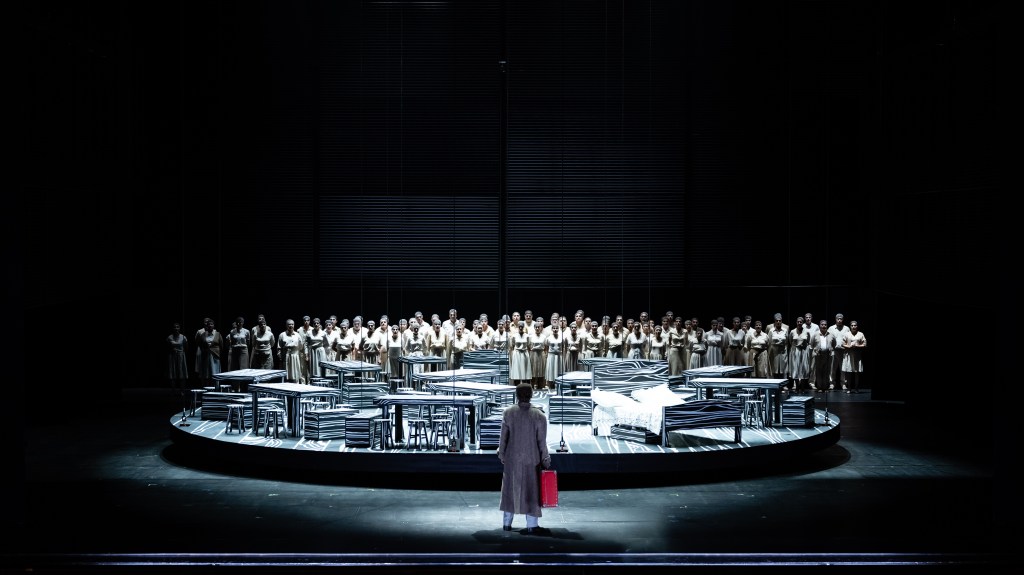
On stage, it looks like someone’s thrown a “white party.” Everyone’s dressed in spotless white — as if they’re heading to an Italian midsummer wedding. Or maybe it’s just a fancy BBQ?… okay, nope, that’s enough of roasting. I’m stepping onto hot coals now!
Buuut maybe not everyone got the memo. Santuzza shows up cloaked in black, like she crash-landed straight from a funeral. But here’s the million-dollar question — is she really as heartbroken as she’s playing it?
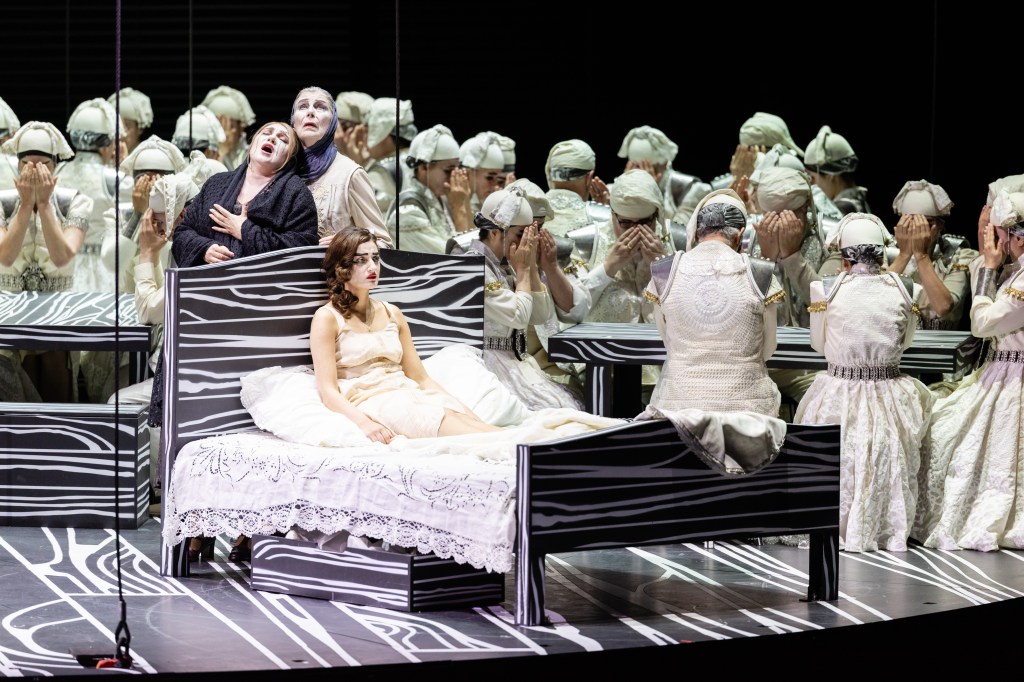
Sure, Turiddu’s gone and fallen for someone else. Boo hoo. But honestly — was he ever her Prince Charming? The whole thing kicks off with what seems to be a violent assault, and soon after—surprise!—a pregnancy.
And we all know: you don’t go flaunting a baby bump unless there’s a ring on your finger and church bells ringing in the background…
Zebra Stripes and Wedding Woes
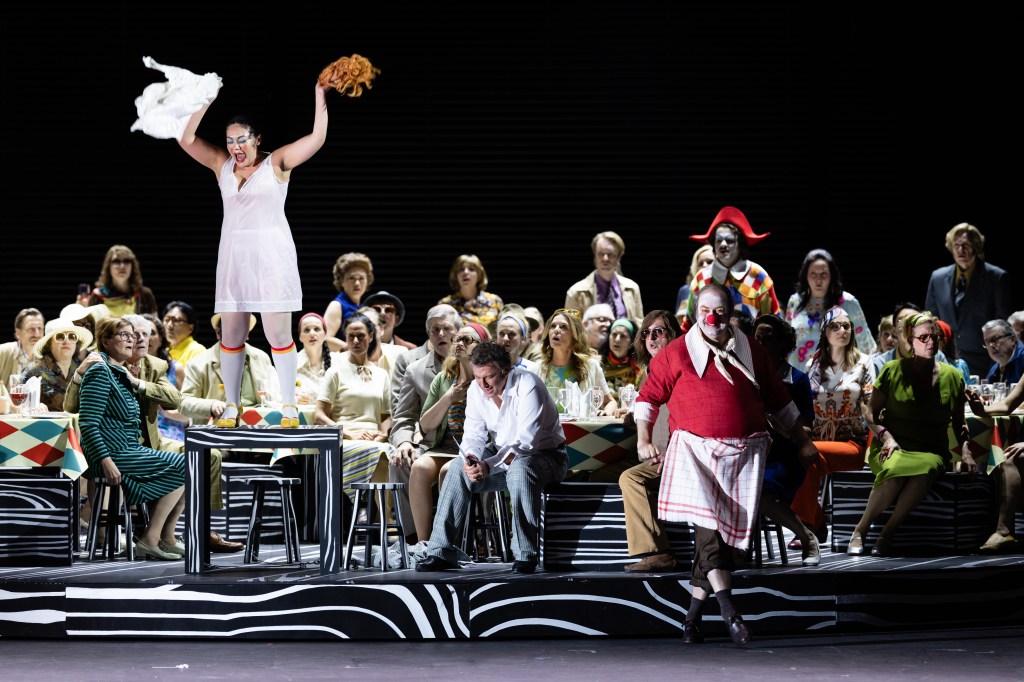
A big round platform rules the stage, decked out in full zebra theme. Black-and-white stripes on the chairs, the tables, the floor. It’s like someone planned a safari-themed brunch.
Perhaps all those stripes aren’t just for show? Maybe they’re a sneaky nod to the messy layers beneath — the blurry lines between guilt and innocence, love and revenge, black and white. Or maybe… not.
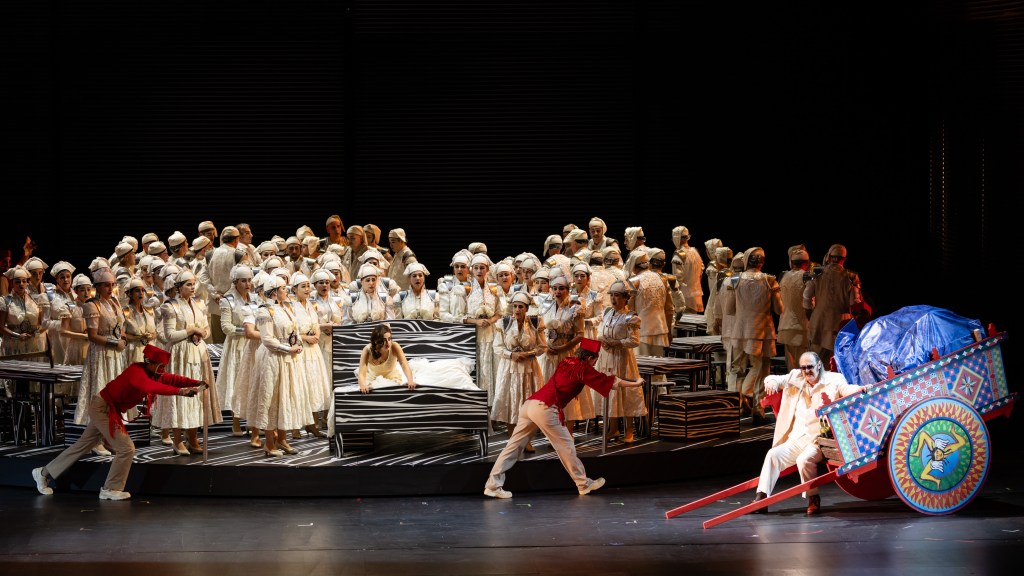
And tucked into all this stripey symbolism: Santuzza hugging a white wedding dress like it’s her long-lost lover. She even tries to put it on, but it doesn’t fit like it used to. A desperate attempt to squeeze back into a time when everything wasn’t quite so dark—literally.
There’s actually one more character who skips the all-white dress code: Turiddu. He shows up in grey. A stubborn stain on a sea of white. Fitting, really, since he spends most of the time swimming around in a grey zone anyway.
He’s also found sitting on a train, watching the countryside blur past—heading north. Next stop: Munich.
Wait… that’s where we are! Small world!

Pagliacci or something
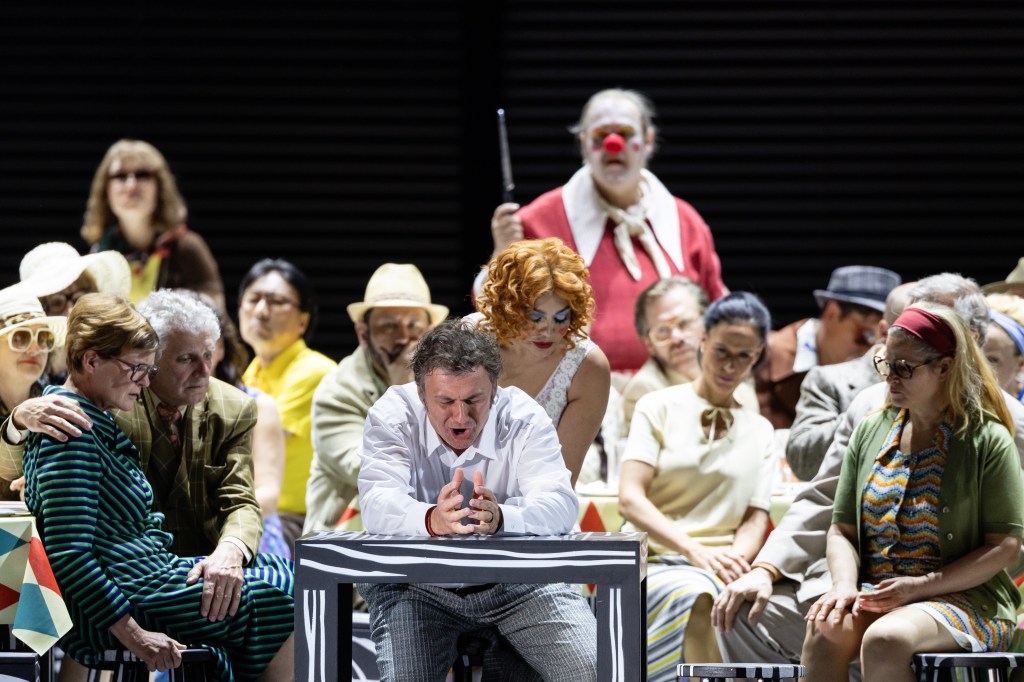
Fast forward a few years, and Turiddu’s — or should I say Canio? — swapped the drama for drafts—he’s opened a bar! So there he is, clutching a liter of beer, when a cart wheels in with a screen showing the 1970 FIFA World Cup semifinal: Germany vs. Italy. Italy’s been cruising ahead most of the game, and the Germans, with ever the loyal fans, inch closer and closer, running up on victory… but nope, Germany still ends up losing despite their faithful cheering squad.
Just a thought
So, we’re really dealing with two totally different operas here. Both clock in at just over an hour, which is why they’re often tossed together, like a big cheesy lasagna.
Francesco Micheli’s production plays up their differences with two distinct worlds on stage — two countries, two cities, two very different vibes. But somehow, it still all weaves together into one unfolding story.
Okay, but listen — why don’t we get more nights like this? Why not spice things up with a full operatic tasting menu? Just tossing it out there: imagine a double feature of Salome and Elektra. Or throw in Wozzeck as the rich, unexpected sauce, and suddenly you’ve got a feast that hits all the right notes!
Real Tears, Fake Noses
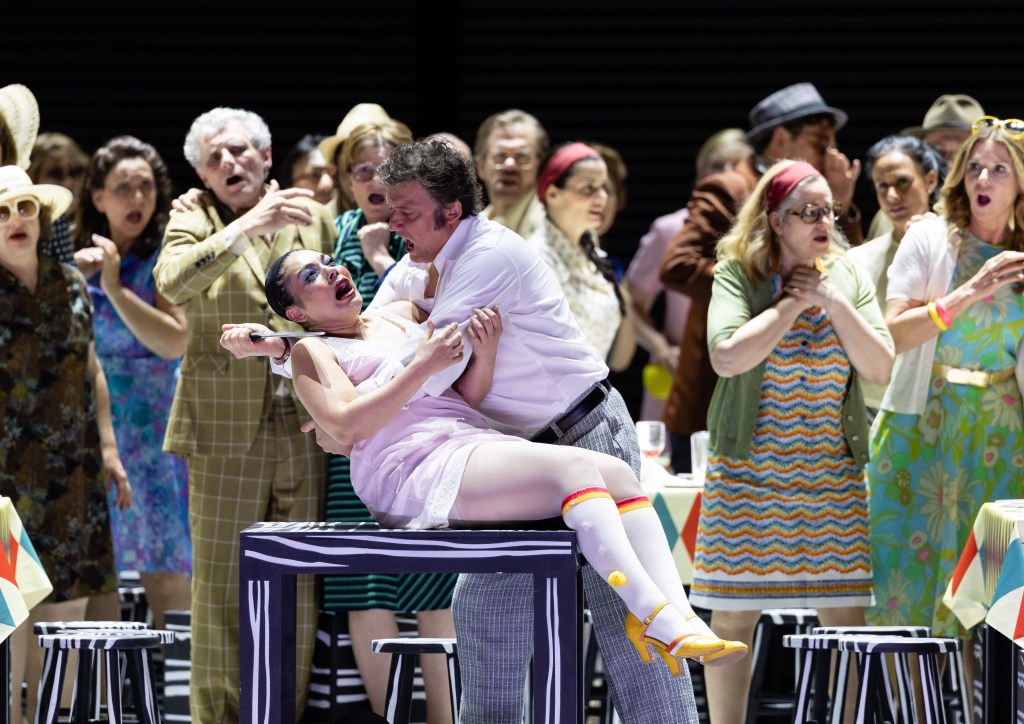
Right from the prologue—sung by a guy we’ve already met?—we’re told loud and clear: this isn’t just some circus act. It’s real. Real feelings, real heartbreak, real mess. The story’s pretty simple: the troupe’s on tour, Nedda falls head over heels for Silvio (which her husband Canio is not so thrilled about), and Tonio? Well, he’s just there to stir up all kinds of trouble.
We’re basically strapped into a rollercoaster here. And that giant round spinning platform? Oh yeah, it makes another appearance. But this time, it’s sprinkled with tablecloths, turning the whole scene into what feels like a wild kids’ birthday party. Toot toot!
Mamma Mia!
The music? Pure Italian espresso with a splash of Puccini’s passion. Both composers were born and brewed in Italy, and of course, they sing in Italian — complete with the classic hand-throwing gestures you’d expect. Musically, Cavalleria Rusticana flirts with a bit of Riccardo Wagner’s Lohengrin mystique, while Pagliacci sways with seductive cello vibes that could make even the Leipzig-born maestro raise an eyebrow.
So, what on earth am I even trying to say with all this? Honestly, no clue. I’m just tossing out some thoughts buzzing around my brain. But one thing’s for sure — the music definitely has its moments. Actually, quite a few highlights, and Daniele Rustioni, the conductor (Italian, naturally), seems pretty eager to grab onto them. With his sharp eye, I’m guessing he was ready to catch the singers if they stumbled — but thankfully, no catching was needed.
As I’ve said more times than I can count, Bayerische Staatsoper really knows how to line up top-notch singers.
Take Yulia Matochkina as Santuzza — officially a mezzo, no doubt about it, but she tackled that role (usually belted by a dramatic soprano) like it was custom-made just for her. Not too long ago, she was diving deep as Ulrica in Un ballo in maschera (check out my review here), a role so rich and dark it practically requires scuba gear. Talk about vocal gymnastics — this lady’s got the range, the power, and the guts to swim with the big fish.
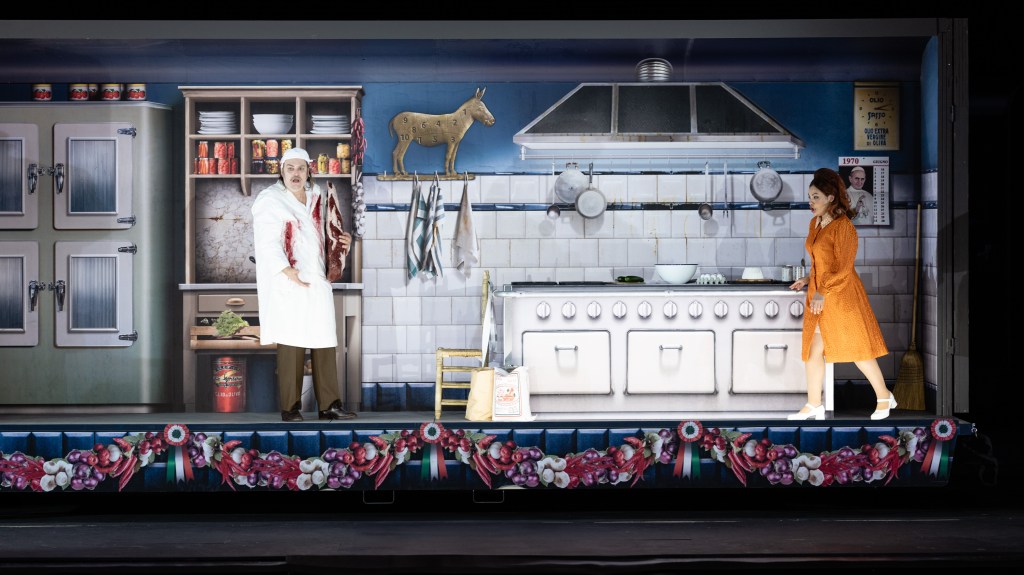
Then there’s the man with many names, Wolfgang Koch. He sings both Alfio and Tonio here, and—wait—same voice, different moustache?? Maybe. I’m a bit lost.
At the end of Cavalleria Rusticana, Alfio’s all “I will have revenge!!” and then five minutes later in Pagliacci, he’s just casually chillin’ on a train, offering Turiddu a job like nothing ever happened. Parallel universe? Opera logic? Who knows. Let’s just agree the man can sing and move on.
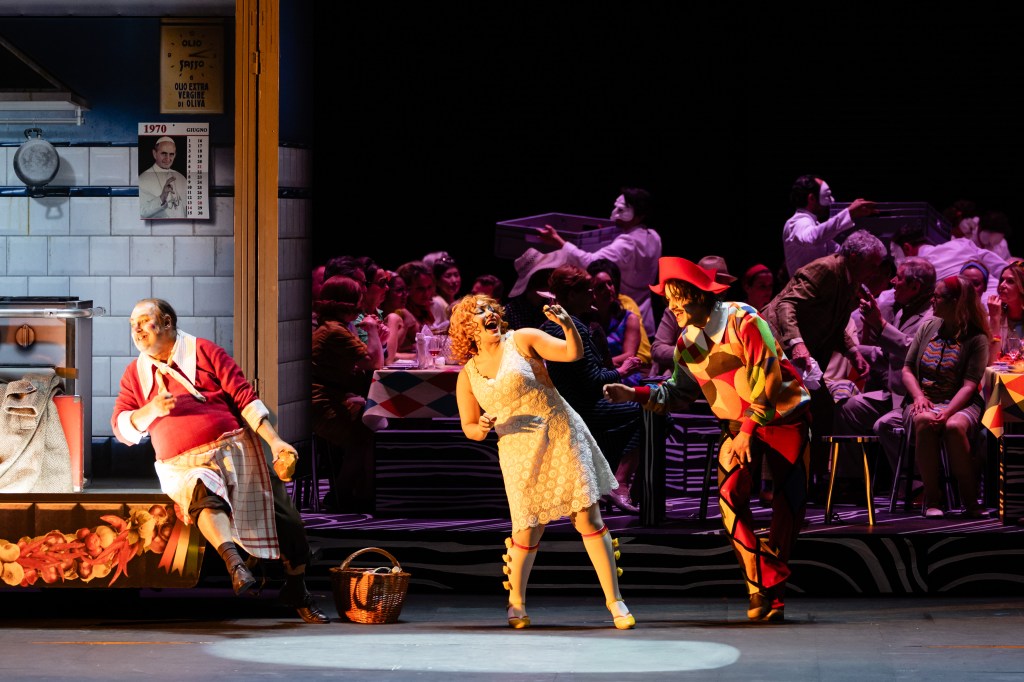
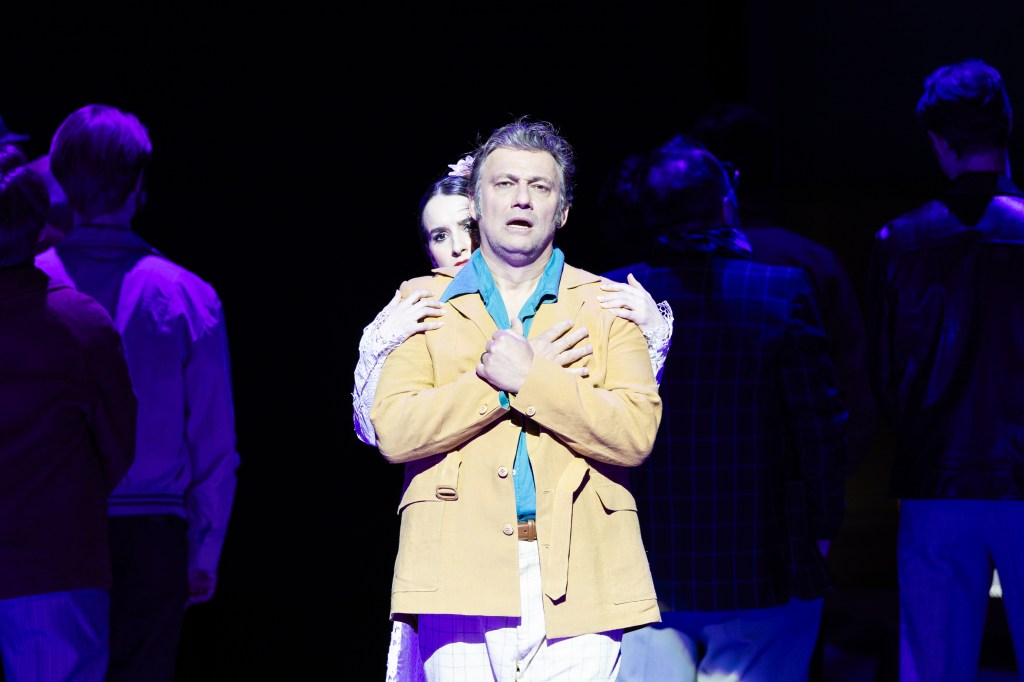
And then there’s Ivan Gyngazov as Turiddu in Cavalleria — but when Pagliacci rolls around, poof! He’s gone. Instead, boom: Jonas Kaufmann strolls in like it’s the world’s most casual understudy swap (it’s not — it was planned). He kicks off with “Recitar! Mentre preso dal delirio…” no sweat. And Ailyn Pérez as Nedda? Her voice is nothing short of stunning.
La vita, l’amore, la vendetta… maybe it was all one story after all.
Fun Fact!
In 1888, a competition called for one-act operas by unknown composers. Legend says Mascagni only heard about it two months before the deadline, slapped something together with a libretto arriving in chaotic bits by mail — then gave up. Luckily, his wife didn’t. With just days to spare, she swiftly sent the score — securing Mascagni’s stunning success.
Trailer:
Cast:
- Conductor: Daniele Rustioni
- Director: Francesco Micheli
- Stage Designer: Edoardo Sanchi
- Costume Designer: Daniela Cernigliaro
- Choreographer : Mattia Agatiello
- Lighting: Alessandro Carletti
- Chorus : Christoph Hei and lKamila Akhmedjanova
- Dramaturge: Alberto Mattioli and Malte Krasting
Cavalleria rusticana
- Santuzza: Yulia Matochkina
- Turiddu: Ivan Gyngazov
- Lucia: Rosalind Plowright
- Alfio: Wolfgang Koch
- Lola: Ekaterine Buachidze
- Pagliacco (Canio/Turiddu): Oliver Exner
- Mastro Cola, Santuzzas Father: Jürgen Klisch
Pagliacci
- Nedda: Ailyn Pérez
- Canio: Jonas Kaufmann
- Tonio: Wolfgang Koch
- Peppe: Andrés Agudelo
- Silvio: Thomas Mole
- Bauer: Christian Rieger
- anderer Bauer: Zachary Rioux
Bayerisches Staatsorchester
Chorus of the Bayerische Staatsoper
Children’s chorus of the Bayerische Staatsoper


 Blogfløjten