
A grand, golden-brown grandfather clock stands center stage, glowing like it has something very important to say. The hands read 10:35. Wait—already? As the orchestra launches in, the clock suddenly springs to life. First, it chimes (and honestly, what kind of clock rings at this hour?), then the hands start whizzing around like they’ve had one too many espressos. Before you know it, the whole thing is hoisted into the air, spinning in wild circles, making everyone—onstage and off—question their sense of balance.
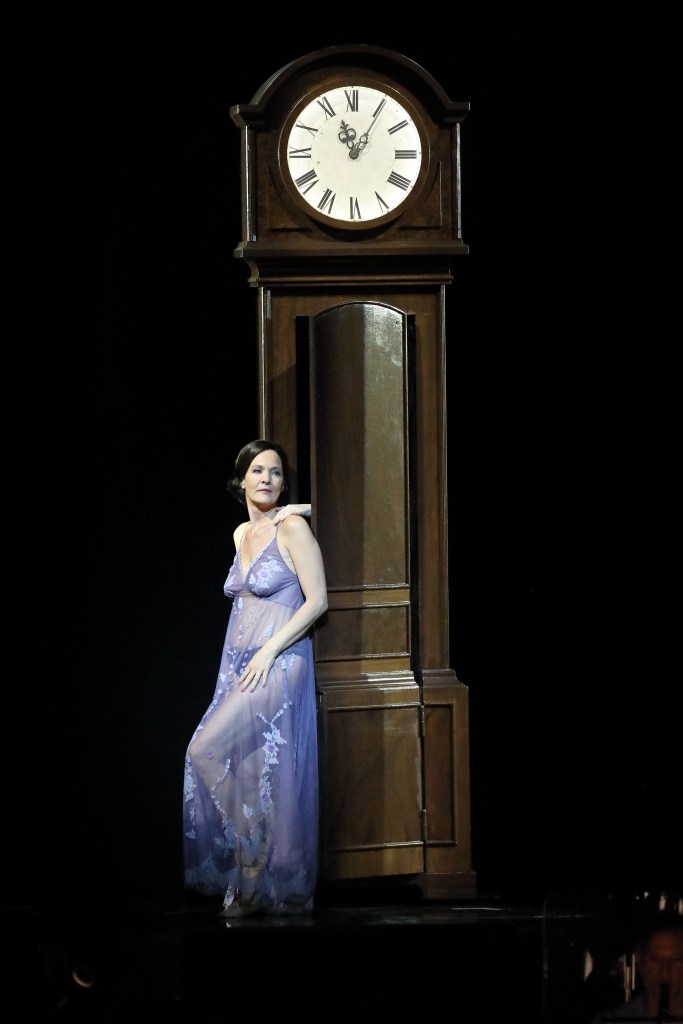
Some say Strauss composed the prelude to set the mood for a certain ahem moment between the Marschallin and her young lover—seventeen years and two months old, if we’re being precise—Octavian. And wouldn’t you know it, as soon as the clock finally lands back on solid ground, out steps the Marschallin herself. She looks a little dazed, but not in the I-just-spent-several-minutes-spinning-midair way…
The Scene
The opera unfolds in three acts, and Australian director Barrie Kosky seizes the structure and spins it into three strikingly separate settings.
In Act One, we find our lovebirds outside the Marschallin’s palace. But they’re not the only ones floating through the air. As a delicate flute motif flutters up from the orchestra, fishing rods suddenly appear on stage—except instead of fish, they’re reeling in… birds? A funny homemade touch that makes you wonder if someone in the props department got a little too creative.
And speaking of hands-on stage magic—there’s no fancy automated set here. If things need moving, “real” people have to do it. Dressed in black, they scuttle across the stage at intervals, like a team of undercover stagehands on a top-secret furniture mission.
The Marschallin might be married, but when her husband’s away, she’s definitely not sitting around twiddling her thumbs…
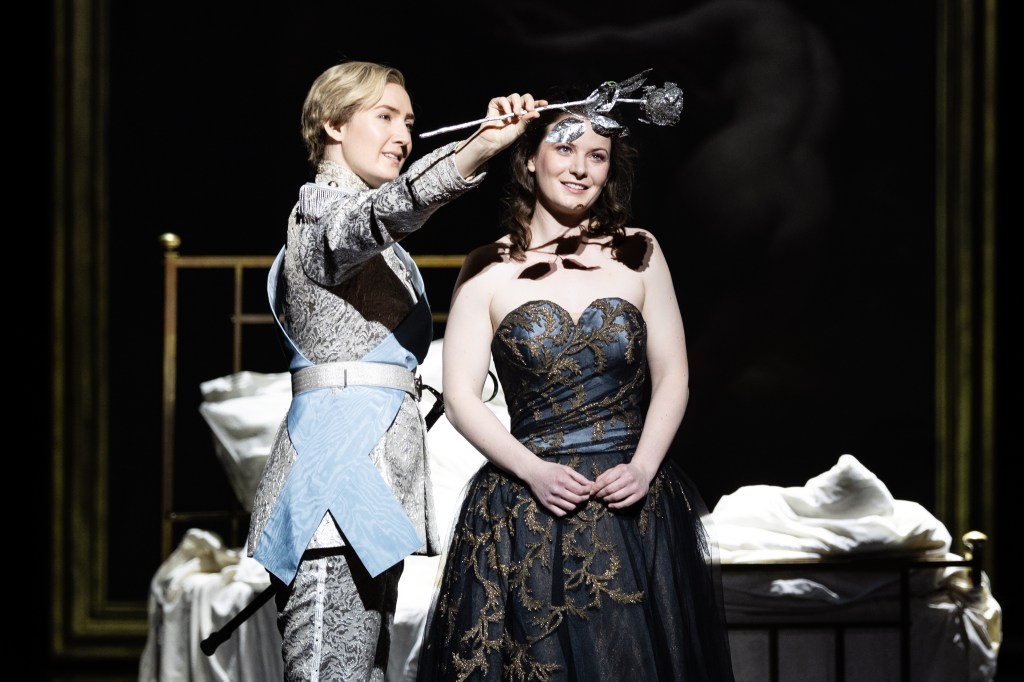
Enter her cousin, Baron von Ochs, who’s about to marry Sophie and—naturally—needs to find a Rosenkavalier to deliver a silver rose to her. I mean, who doesn’t need one of those for a proper proposal, right? But, of course, the person for the job is none other than Octavian, the very same guy she’s just shared the sheets with. And just to make things a bit more interesting, he’s now disguised as a maid to keep his identity under wraps. Classic opera chaos.
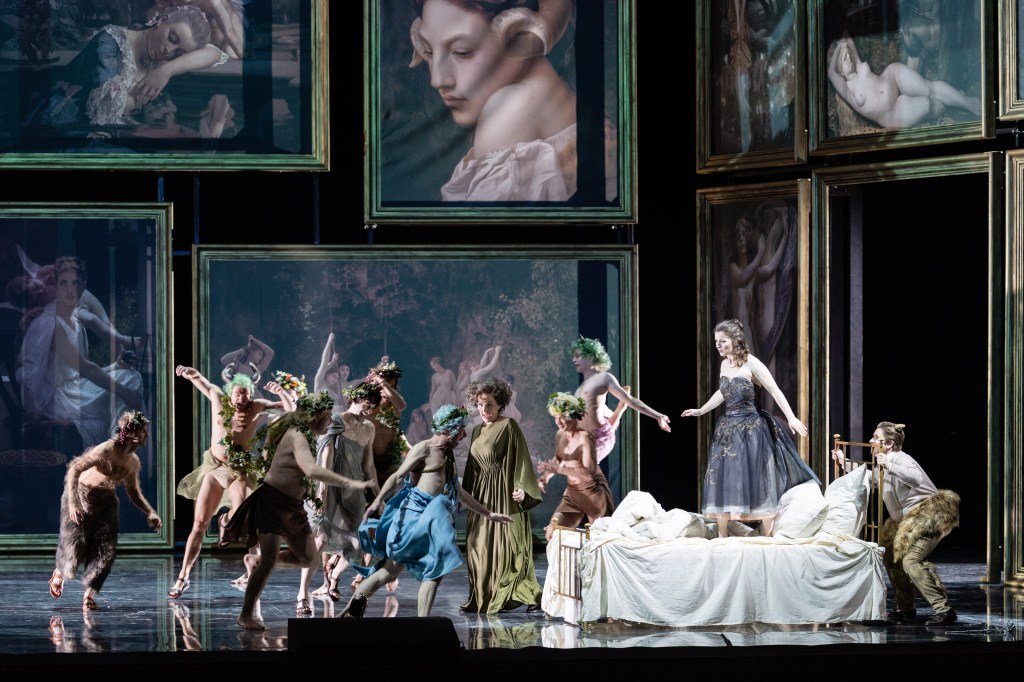
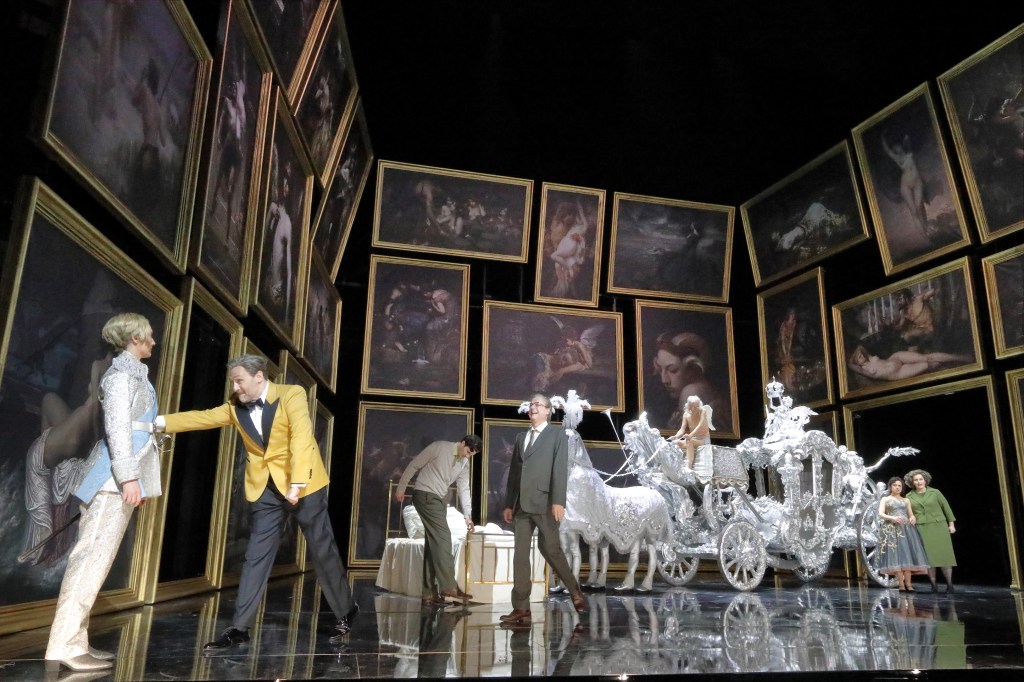
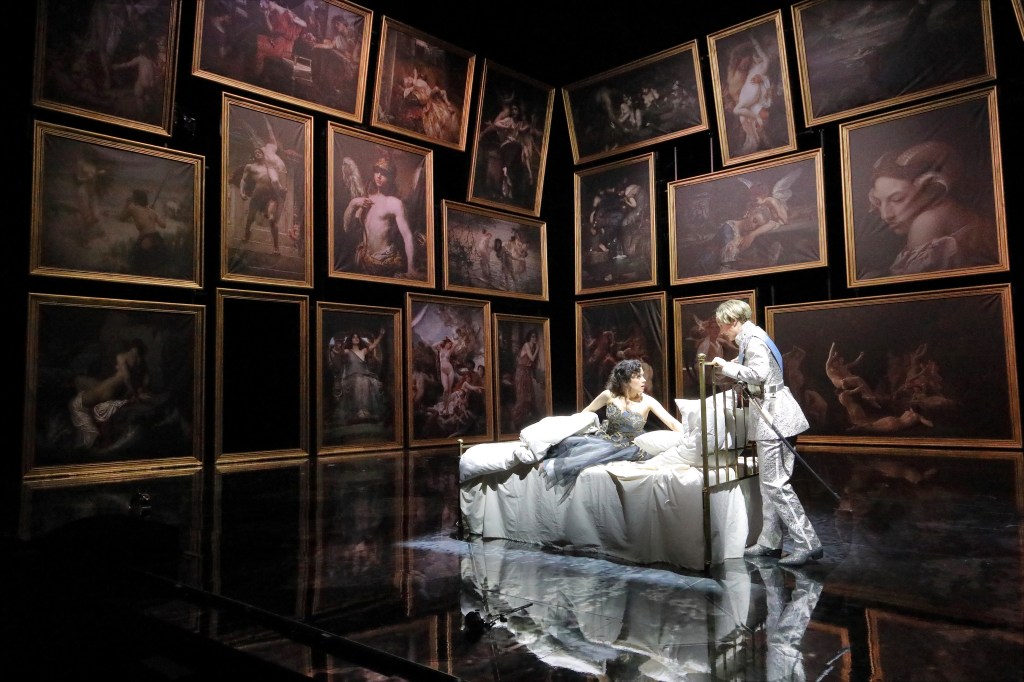
In Act Two, we’re pulled back into time by a ringing clock. As the chimes fade, Sophie reaches out from behind the red curtains to silence it—only to hand the reins over to the orchestra, which takes us straight into the prelude. Meanwhile, the walls of the grand room are plastered with paintings (in Baroque styles?). Or wait—scratch that, there aren’t any walls at all. Instead, it’s just huge panels covered with massive, dramatic paintings.
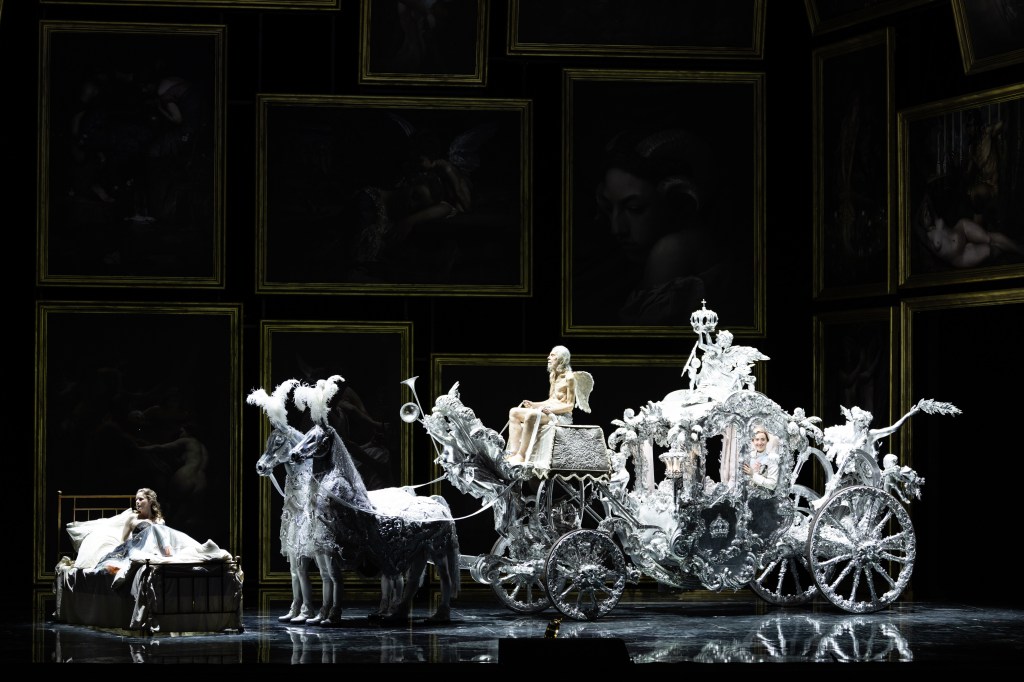
When the Rosenkavalier arrives (through a picture, no less!), a grand silver carriage rolls in, pulled by two human-made horses. It’s so spectacular that it actually gets a round of applause from the audience! I didn’t even know clapping was allowed before the act’s over!
Anyway, as expected in opera, Octavian and Sophie naturally fall head over heels for each other. Cue the drama as Ochs stumbles in.
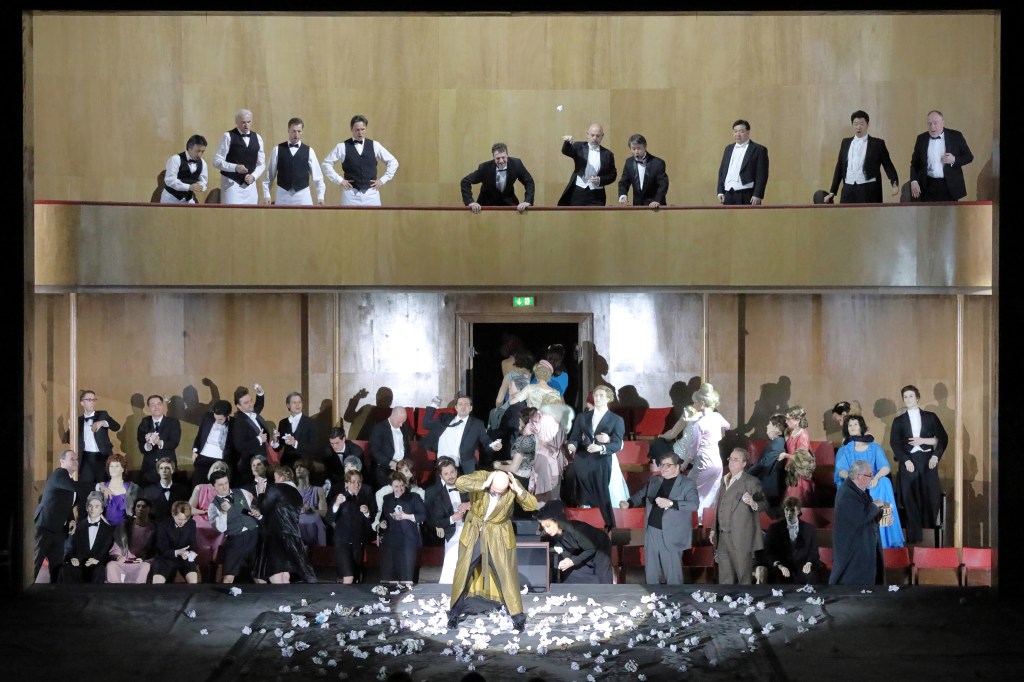
In the third act, we find ourselves in the opera—yes, obviously, we’ve been there the whole time, duh—but this time, the set is a miniature version of the Bayerische Staatsoper itself. At first, I kept wanting to turn around to check if the singers were actually entering from the door behind me—even though I knew perfectly well it wasn’t a literal mirror image.
Voices, Virtuosity, and Viennese Charm
The opera is actually set in Vienna in the mid-1700s. But singing Der Rosenkavalier isn’t just about mastering German—it also means tackling the Viennese dialect. Even the surtitles, both in German and, surprisingly, in English, reflected this linguistic flair. Quite entertaining to follow along, really!
English bass Brindley Sherratt didn’t just tackle the German language—he even threw in a bit of dialect for good measure. His voice carried well through the hall, and beyond his clear diction, he had a wonderfully entertaining stage presence. His face practically narrated the story on its own! Some of his lowest notes flirted dangerously with sounding like a burp, but overall, he delivered a rich and resonant performance.
Being good with words is one thing, but storytelling goes beyond just language. The orchestra might not have syllables to sing, but it certainly had a voice—and what a compelling one at that!
General Music Director Vladimir Jurowski knew exactly what his musicians could do, and he had clearly delved deep into every single word of the libretto. Not only did the singers infuse their lines with meaning, but Jurowski made sure the orchestra echoed, colored, and amplified every nuance.
The result? A performance where music and drama wove together seamlessly—just the kind of Gesamtkunstwerk our good friend Richard Wagner would have tipped his hat to.
There’s not a single moment where the orchestra doesn’t have something to say or a clear direction to follow. Well—except when the Marschallin sends Octavian away, and the music briefly becomes almost static. But then again, that only reinforces the stillness of the moment on stage. Cleverly done! A well-deserved round of applause for the maestro!
I think this was the first time I could actually see the conductor from the stalls—and honestly, that was a show in itself. It was incredibly satisfying to watch every sound take shape in his hands, each gesture sculpting the music with absolute clarity. Not once was there any doubt about his intentions—which, unsurprisingly, was reflected in the musicians as well!
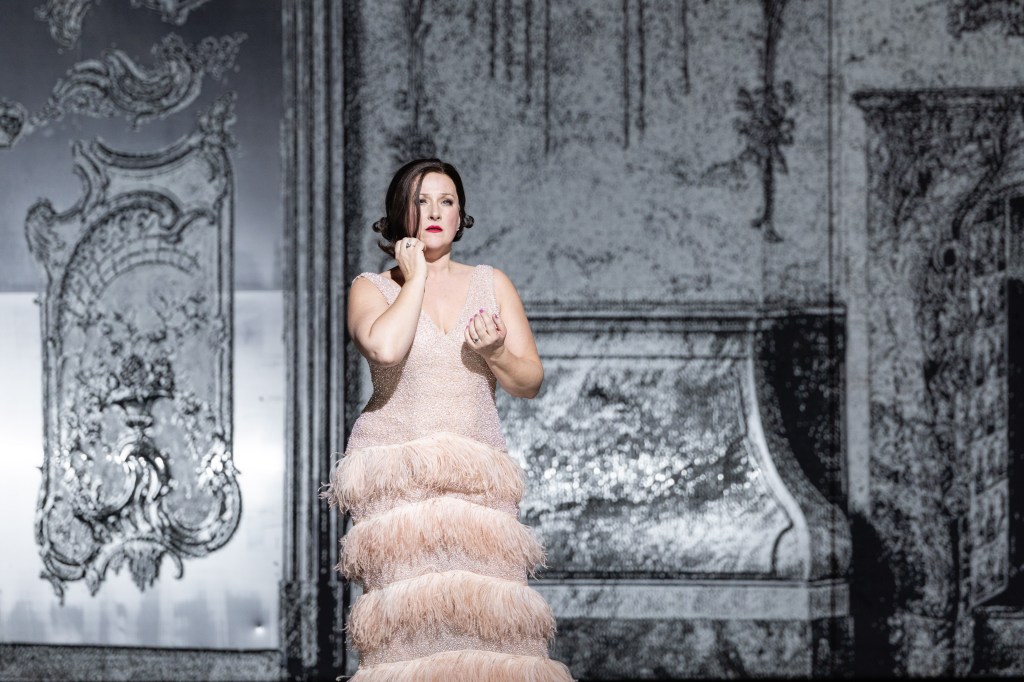
The audience wasted no time showering German soprano Diana Damrau (The Marschallin) with applause when she stepped onto the stage—and fair enough. Her warm, velvety voice melted seamlessly into the breathtaking final trio and suited the role perfectly: a high-society woman with a taste for life on the edge.
At times, though, her voice seemed to take that ‘living on the edge’ thing a bit too literally, teetering on the brink of being overpowered by the orchestra. The way she shaped her vowels didn’t exactly make it easier to catch the words either. It wasn’t a dealbreaker, but I couldn’t shake the feeling that if someone had given her a friendly tap on the shoulder about it, she might have unlocked an extra layer of brilliance.
Octavian is a trouser role—a clever little trick most famously used by Mozart (and given Strauss’ admiration for him, it’s no surprise he carried the tradition forward here). The idea is simple: since the character is a young man whose voice hasn’t quite dropped yet, you cast a mezzo-soprano to capture that youthful brightness. Enter American mezzo Samantha Hankey, who mastered both the moody, love-struck Octavian and his (or should I say her?) mischievous masquerade as a cunning chambermaid.
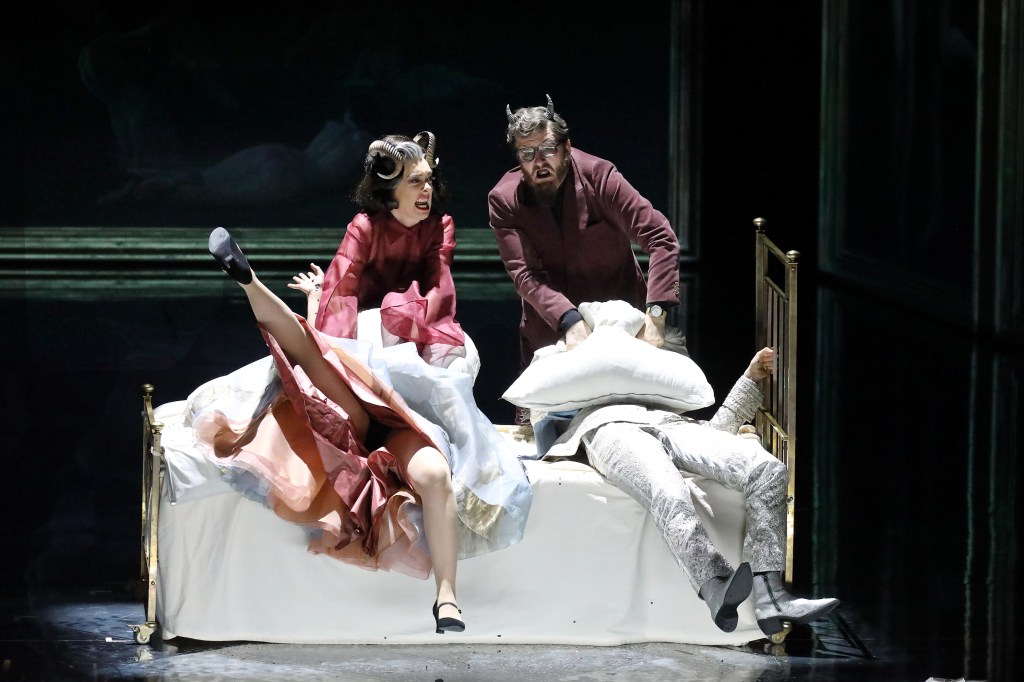
Something tells me Hofmannsthal wrote this scene with a straight face, but Strauss? He was definitely sharing a wink with the role. And as odd as it sounds—meant in the best way possible—Hankey hit all the “wrong” notes in the most delightful way! It’s one thing to sing in tune (and let’s be honest, that’s hard enough), but singing straight off-pitch on purpose? That is something. And Hankey nailed it.
She slid through the deliberately misaligned phrases with playful precision, her voice bending and shifting but never losing control. When it came to her usual, smooth tone, though, there was no wobble—just pure, confident clarity. Only the notes meant to stumble, did!
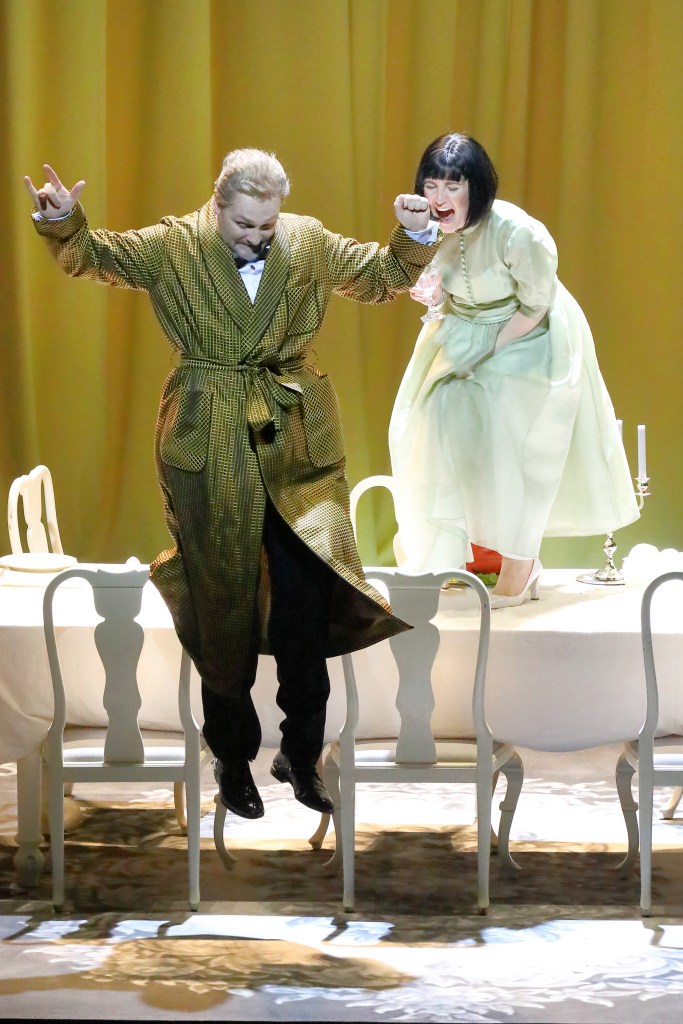
Sophie also came to life beautifully thanks to Liv Redpath. All in all, it was a luxury cast, with even the smaller roles filled by top-tier singers like Claudia Mahnke, Daniela Köhler, Gerhard Siegel, Martin Snell, Galeano Salas, and Kevin Conners. Honestly, I could just list the entire cast—each and every one brought something special to the table!
The opera closes with the same grand clock that first ticked away the time. Then, Octavian and Sophie glide gracefully across the stage, harnessed in their slings, singing the final, flawless duet as they soar into the strange, surreal world that lies ahead.
Fun Fact:
At Richard Strauss’ funeral, Georg Solti conducted the final trio from Der Rosenkavalier, as requested in Strauss’ will. The singers broke down in tears, but somehow, they managed to finish together!
“I conducted at his funeral. As he had requested in his will, the music was the final trio from Der Rosenkavalier. Marianne Schech sang the part of the Marschallin, Maud Cunitz was Oktavian, and Gerda Sommerschuh was Sophie. One after the other, each singer broke down in tears and dropped out of the ensemble, but they recovered themselves and we all ended together.” – G. Solti
Trailer:
Cast:
- Conductor: Vladimir Jurowski
- Director: Barrie Kosky
- Stage Designer: Rufus Didwiszus
- Costume Designer: Victoria Behr
- Light Designer: Alessandro Carletti
- Choir: Christoph Heil
- Dramaturg: Nikolaus Stenitzer
- Die Feldmarschallin: Diana Damrau
- Der Baron Ochs auf Lerchenau: Brindley Sherratt
- Octavian: Samantha Hankey
- Herr von Faninal: Jochen Schmeckenbecher
- Sophie: Liv Redpath
- Jungfer Marianne Leitmetzerin: Daniela Köhler
- Valzacchi: Gerhard Siegel
- Annina : Claudia Mahnke
- Ein Polizeikommissar: Martin Snell
- Der Haushofmeister bei der Feldmarschallin: Kevin Conners
- Der Haushofmeister bei Faninal: Samuel Stopford
- Ein Notar: Christian Rieger
- Ein Wirt: Kevin Conners
- Ein Sänger: Galeano Salas
- Adelige Waise: Eirin Rognerud, Seonwoo Lee and Ekaterine Buachidze
- Eine Modistin: Louise Foor
- Ein Tierhändler: Dafydd Jones
- Kinder: Eirin Rognerud, Louise Foor, Dafydd Jones, Ekaterine Buachidze and Seonwoo Lee
Bayerisches Staatsorchester
Bayerischer Staatsopernchor

 Blogfløjten