


Blood, betrayal, and a boatload of bad decisions. Verdi’s Macbeth isn’t exactly a feel-good story. It’s a world where danger lurks in every shadow, and a man’s paranoia slowly consumes him from the inside. In Nuremberg, this dark tale unfolded in a production that made clear choices—some more effective than others. The real question? Did the drama sear through the night like a scorching prophecy, or did the fire fizzle out before the final dagger fell?
Director Kateryna Sokolova had a strong vision for the production: it’s all about Macbeth—well, obviously, that’s after all the name of the opera. But she took it up a notch by dressing the witches in costumes that made them look like they’d just jumped off a Pirates of the Caribbean set—a ghostly crew who apparently swapped the ominous seas of The Flying Dutchman for a quick pit stop in the land of Shakespearean chaos.
They weren’t just witches, but eerie reflections of Macbeth himself. Less hags with bubbling cauldrons, more ghostly doppelgängers, shadowing Macbeth like fragments of his own unravelling mind. They did, however, have a bit of fun with broomsticks.
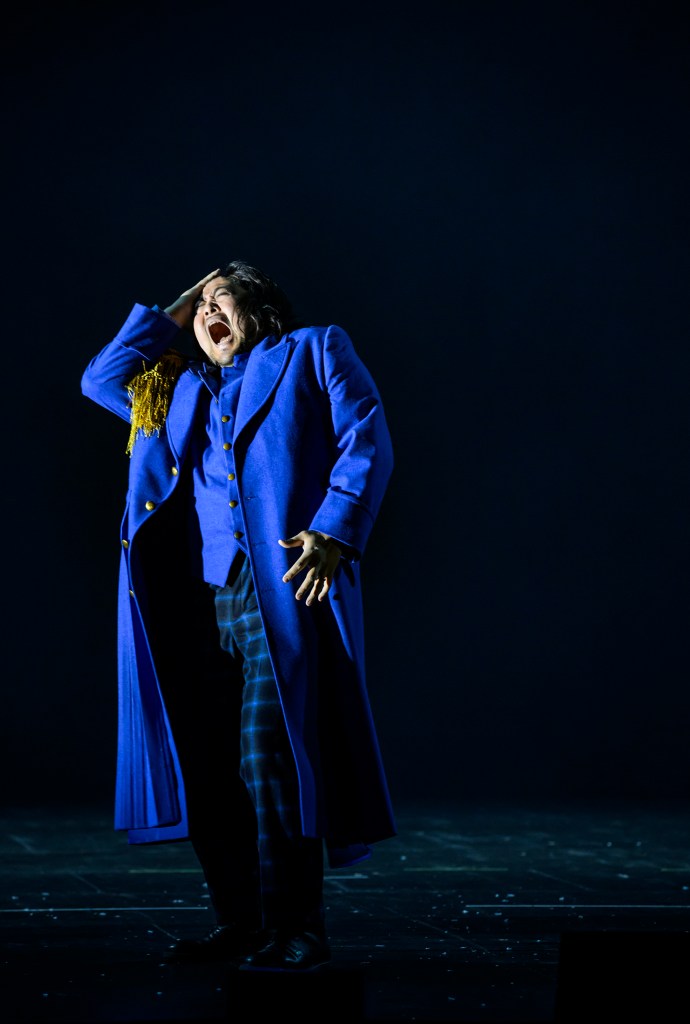
The entire opera begins in near darkness—a bare stage only lighted by an eerie blue glow, with Macbeth standing there, cloaked in the same cold hue. Just as the tension starts simmering, down comes a giant mirror, and out steps… Macbeth? Well, sort of. It’s like his reflection decided to break free and join the fun. This character seems to try and add a bit of comedy to an otherwise serious opera, like that one character in Disney films who always feels the need to crack a joke. But here, it feels a bit out of place—almost too silly for the dark world unfolding on stage.
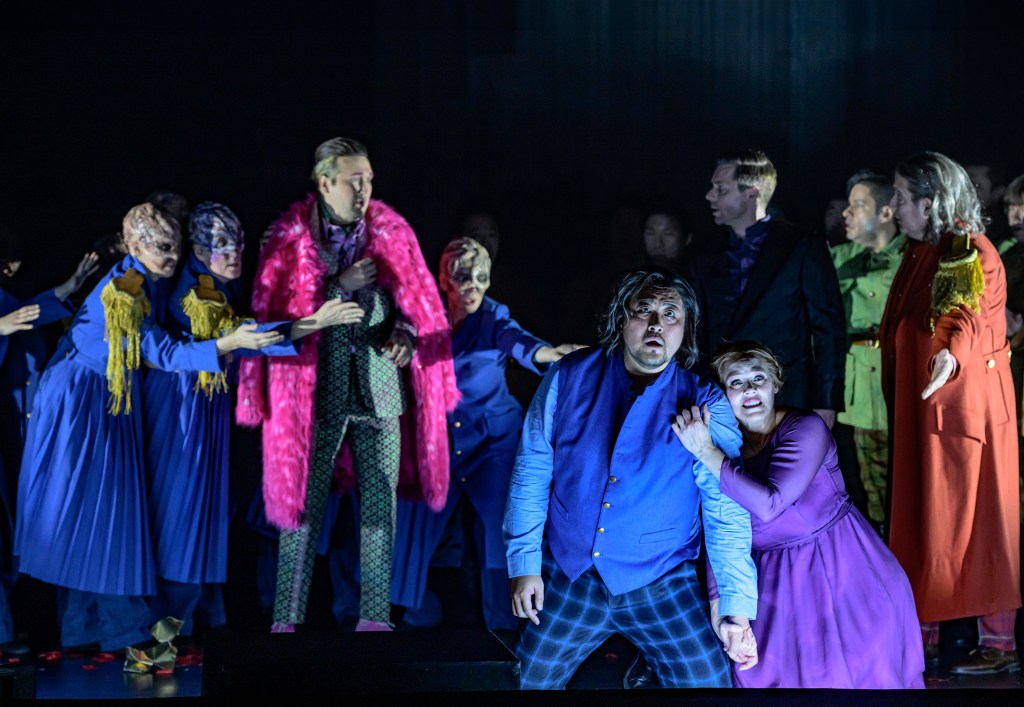
This shadowy doppelgänger sticks to Macbeth like a bad conscience, lurking around as his paranoia spirals. His inner chaos isn’t just a nagging whisper—it’s out in the open, walking, breathing, messing with his mind. And he’s not alone in that struggle. Other characters morph into voices in his head, splintered fragments of his unravelling psyche. It’s like his own personal horror show, a constant reminder that the real danger isn’t just on the battlefield—it’s inside him.
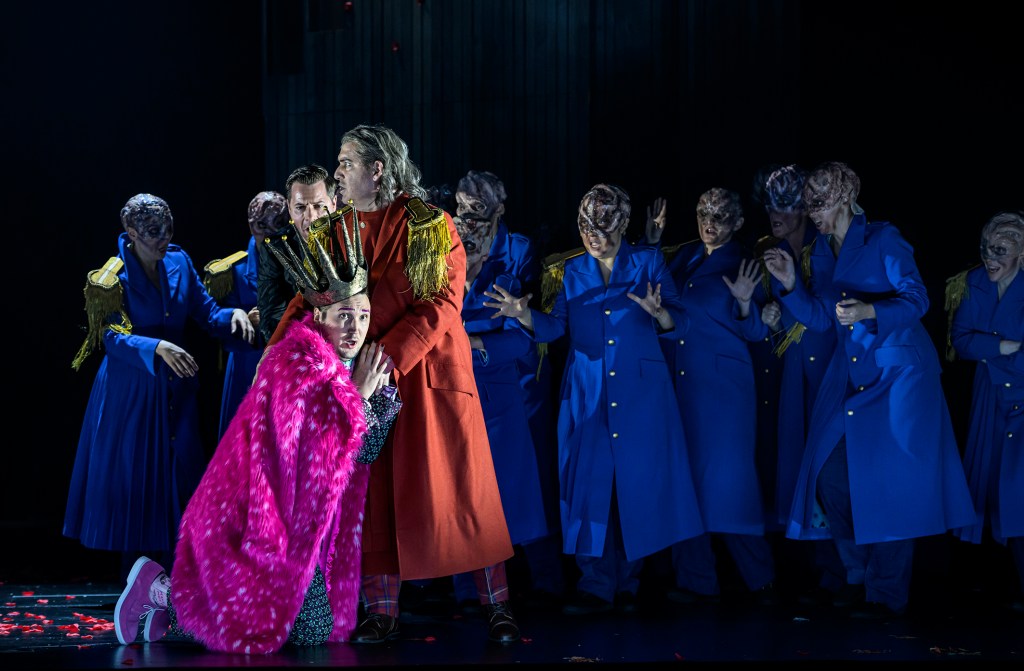
What’s on the floor?
The stage is stark and stripped down, with shadows swirling around as we’re slowly introduced to shifting spaces, shaped by rolling, ragged wooden walls.
The set is mostly bare, its emptiness only broken by the occasional descent of a grand chandelier, casting a fleeting flash of opulence in the otherwise bleak scene.
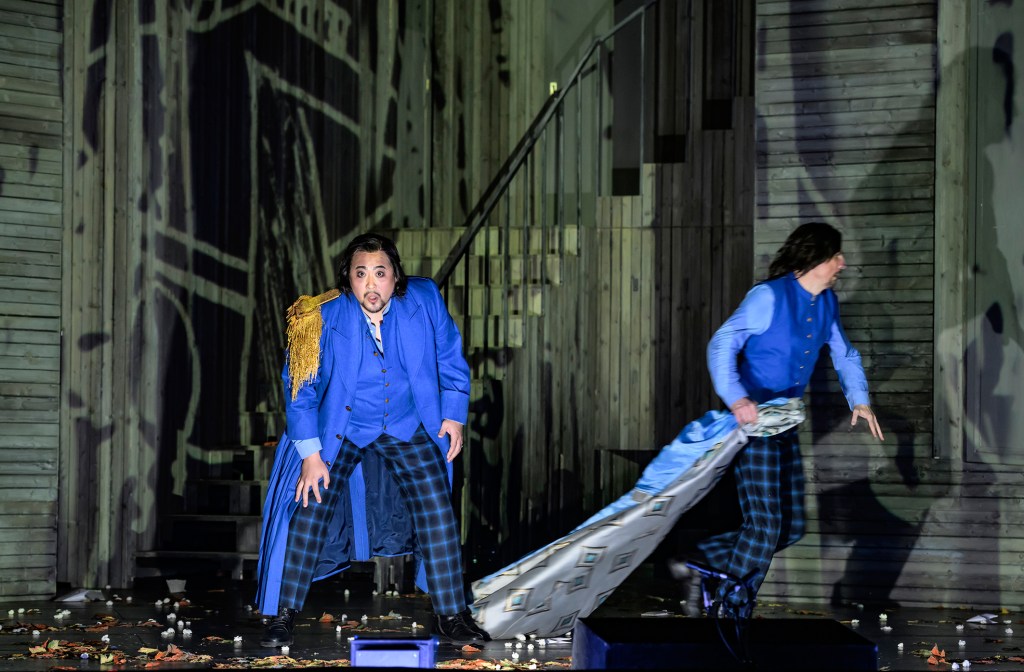
Bloodshed is strictly BYO-imagination—Macbeth stabs the air in the act of killing the king, and instead of a bloody mess, we get… rose petals? A poetic touch, sure, but also a bit like death by Potpourri—unexpectedly gentle, as though the murder’s aftermath got lost in a flowery fantasy. The petals tumble onto the floor like macabre confetti, marking the king’s violent exit in a strangely poetic way—it is Shakespeare, after all.
And it’s not just the stage that’s stripped down. The Nürnberg Staatsoper isn’t exactly a grand palace of opera, so it’s no surprise that this is reflected in the size of the orchestra pit. With a smaller orchestra, the whole thing feels a bit more snug—like you’ve stumbled into a private concert in someone’s living room. It gives the performance a warm, almost cozy vibe, like they’re playing just for you, in your own little opera bubble.
But here’s the twist: with the smaller orchestra, the brass and woodwind sections don’t have to elbow their way into the sound. Instead, they naturally waltz right to the front, their notes standing out like brightly coloured brushstrokes on a canvas—filling the air in a way that makes you hear the music from a new perspective.
Verdi 2.0
Verdi’s opera premiered in 1847 at the Teatro della Pergola in Florence, but he wasn’t quite done with it yet. He came back for a makeover and presented a revamped version in 1865 at the Théâtre-Lyrique in Paris. Among the updates? A ballet, of course—an absolute must if you wanted to be on trend in French opera at the time.
In Nürnberg, they’ve opted for the more musically developed Parisian version, but kept the darker Florentine ending. Sokolova paints the final scene as one where Macbeth is left all alone on a nearly empty stage, staring into the void—no future, no hope. It’s all about his mental meltdown—forget the political drama, we’re getting a front-row seat to his inner chaos as it all falls apart.
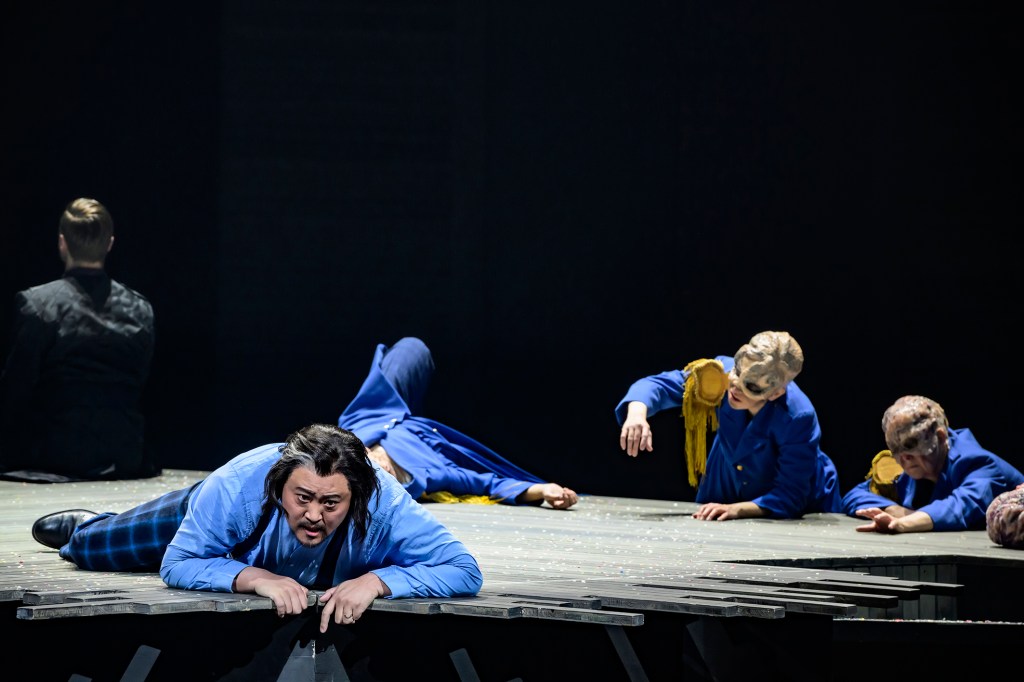
The cast for the evening is all well-known around the house. South Korean baritone Sangmin Lee handles the role of Macbeth very well, and it’s easy to follow his voice throughout the performance. American Emily Newton, playing Lady Macbeth, doesn’t shy away from the role, though her vibrato can sometimes tip into the over-the-top territory (but that’s also just a question about taste). Still, her articulation keeps things sharp, letting us in on her character’s scheming manipulation and madness.
General Banquo is sung by Nicolai Karnolsky, who, after a bit of warming up, delivers a strong performance, particularly in “Studia il passo, o mio figlio,” where his voice truly comes to life.
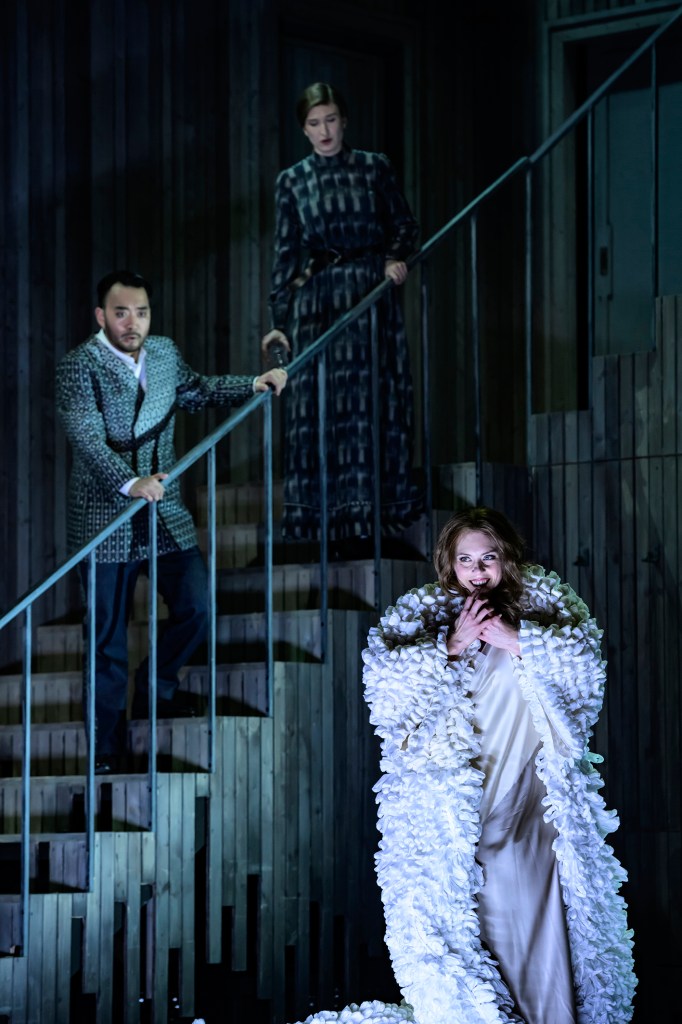
And we can’t forget about the smaller, yet surprisingly essential roles. Danish mezzo-soprano Laura Hilden gives a lovely performance as the chambermaid, offering a backstage pass to the less-than-glamorous life of serving the Macbeths. Her scene with Wonyong Kang, who brings a refreshing vocal energy to the evening, adds a lovely layer of contrast to the darker drama unfolding on stage.
So, it’s not a happy ending, but then again, when was Macbeth ever about sunshine and rainbows? The production digs deep into the chaos of the mind, leaving us with a haunting glimpse into Macbeth’s unraveling. And in the end, doesn’t the mess in his mind say more than any victory ever could?
Fun Fact:
In a letter, Verdi wrote that he preferred Lady Macbeth’s voice to be “rough, hollow, stifled… something devilish,” rather than beautiful. He wanted her character to sound as dark and manipulative as she was!
Trailer:
Cast:
- Conductоr: Roland Böer (GMD)
- Directоr: Kateryna Sokolova
- Stаge Designer: Nikolaus Webern
- Сostume Designer: Constanza Meza-Lopehandia
- Video Designer: Philipp Fleischer
- Light Designer: Sebastian Alphons
- Dramaturg: Wiebke Hetmanek and Katharina John
- Сhoir: Tarmo Vaask
- Macbeth: Sangmin Lee
- Lady Macbeth: Emily Newton
- Banquo, General: Nicolai Karnolsky
- Macduff: Hans Kittelmann
- Malcolm: Sergei Nikolaev
- Kammerfrau der Lady: Laura Hilden
- Ein Arzt: Wonyong Kang
- Diener/1. Erscheinung: Gor Harutyunyan
- Mörder/Herold: Moon Shick Oh
- 2. Erscheinung: Ntombizodumo Mahlaba
- Fleance/3. Erscheinung: Nikita Gettich
- Alter Ego von Macbeth: Sebastian Eilers
Staatsphilharmonie Nürnberg
Chor des Staatstheater Nürnberg
Freja Oehlenschlæger Holte, March 20, 2025

 Blogfløjten