

This opera is one of the most performed—and no wonder! It keeps packing the house. Puccini sure knew how to spin a good tune, and when top-notch singers bring those golden notes to life, it’s a feast for the ears!
Pene Pati—born in Samoa, a sun-drenched island nation in Polynesia, floating out in the vast Pacific between Australia and South America. Not long ago, he made his Met debut in New York as the Duke in Rigoletto, and now he’s stepped onto the stage of the Bayerische Staatsoper as the penniless poet Rodolfo. And let me tell you—this man can sing. A new favorite tenor, perhaps? He’s certainly got the chops. There’s something in his voice that reminds me of the great Pavarotti. His light tenor soars through the air with effortless ease. The only thing effortless here, really—because life? Not so much. At least not for Rodolfo.

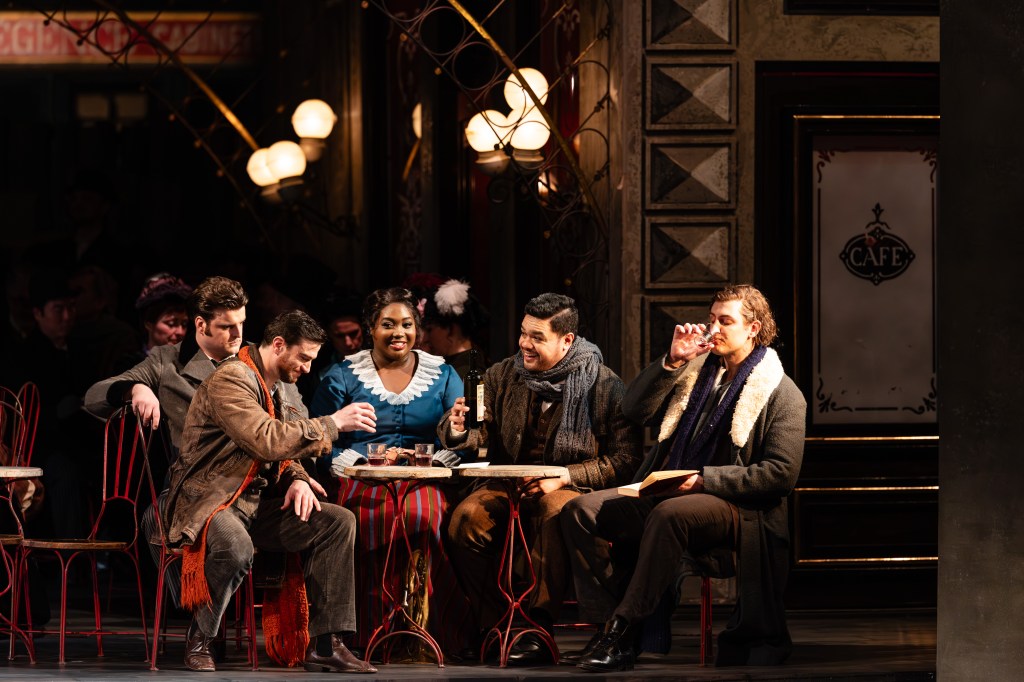
As the curtain rises, we’re greeted by an attic apartment with slanted roofs and large windows. The only light comes from the moon, spilling in through the skylights. Rodolfo is hanging out with the guys, lounging on a mismatched collection of chairs around a small square table, getting a bit of ethanol in their systems before heading down to the local spot for a bite to eat. Rodolfo, however, insists on finishing up some reading and sends the others ahead—almost as if he knew someone was about to knock on the door two seconds later.

Enter Angel in a Blue blouse. Total coincidence that Angel Blue is wearing blue? Sure. Still funny. After all, for Rodolfo, she’s a bit of an angel (who then happens to be dressed in blue). Blue’s velvety soprano floats effortlessly through the room, rich in color and warmth.
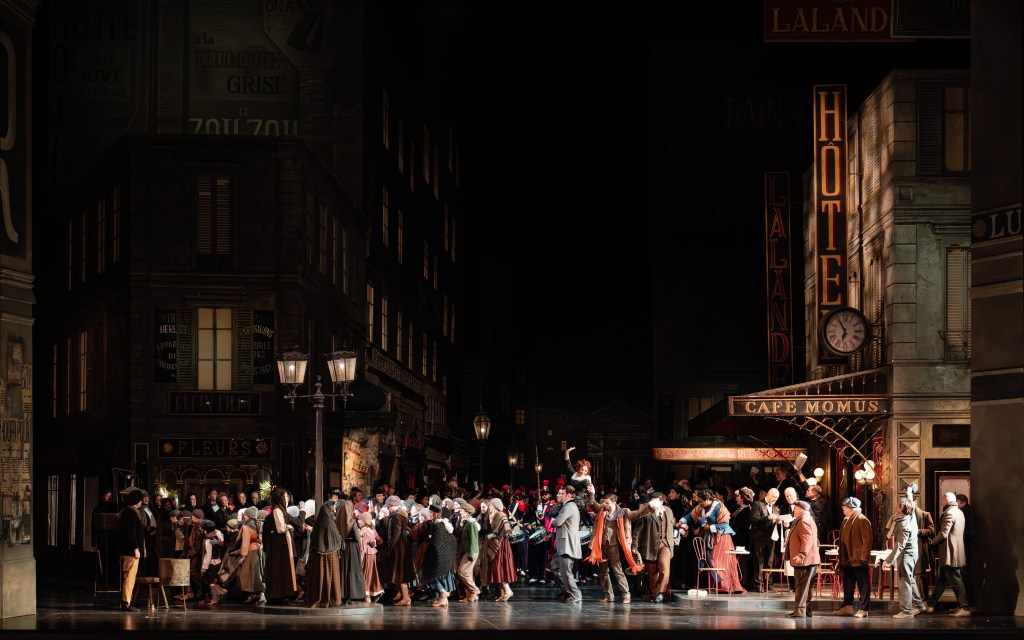
Otto Schenk’s production dates back to 1969—and it’s still going strong. Sadly, the same can’t be said for Schenk himself, who passed away just over a month ago at the age of 94. His staging is as classic as it gets, sticking faithfully to the story without any grand reinterpretations—but then again, none are needed. Rudolf Heinrich’s stage design is a feast for the eyes, and I mean that in the best way possible. The entire production is stunning to look at, and the street scene in Act II doesn’t just feel alive because of the packed stage—it’s the surrounding buildings, too. They aren’t just flat backdrops; they tilt and angle across the stage, creating a sense of movement that makes the whole scene feel even more vibrant.
In Act III, it snows. The air is misty, with tiny snowflakes drifting down, and some linger in the air—such a lovely little detail. Then, someone coughs violently, and I almost think, “Well, that’s some bad timing,” before I realize it’s coming from the right side of the stage. It’s cold, and Mimi is freezing, which, let’s be honest, she’s been doing since Act I when Rodolfo sings about how cold her little hand is. And that hand is still cold throughout the opera, right until she lies in bed, trembling, at death’s door.
Angel Blue plays this beautifully—such a subtle touch, but it completes her already strong performance. The same goes for her beautiful voice, which showcases both Puccini’s emotional depth and her high caliber as a singer. She and Pati are a dream duo. It’s just a shame it doesn’t last, as the cruel tuberculosis claims her before the curtain falls.

Throughout the opera, we also follow Rodolfo’s friends. Among them is Marcello (Mattia Olivieri), the painter, who brings a fantastic baritone sound to the role. Philosopher Colline is nicely portrayed by William Thomas, who gets his shining moment toward the end of the opera. And last but not least, there’s Schaunard (Andrew Hamilton), the musician, who could practically be mistaken for Elvis with that outfit and, of course, that hair!
But it’s not just the main love story we follow. On the sidelines, Marcello and Musetta are also part of the drama—and their relationship isn’t exactly one to celebrate. Andrea Carroll, with her bright and piercing soprano, brings the lively Musetta to life, capturing her sharp, flirtatious energy.
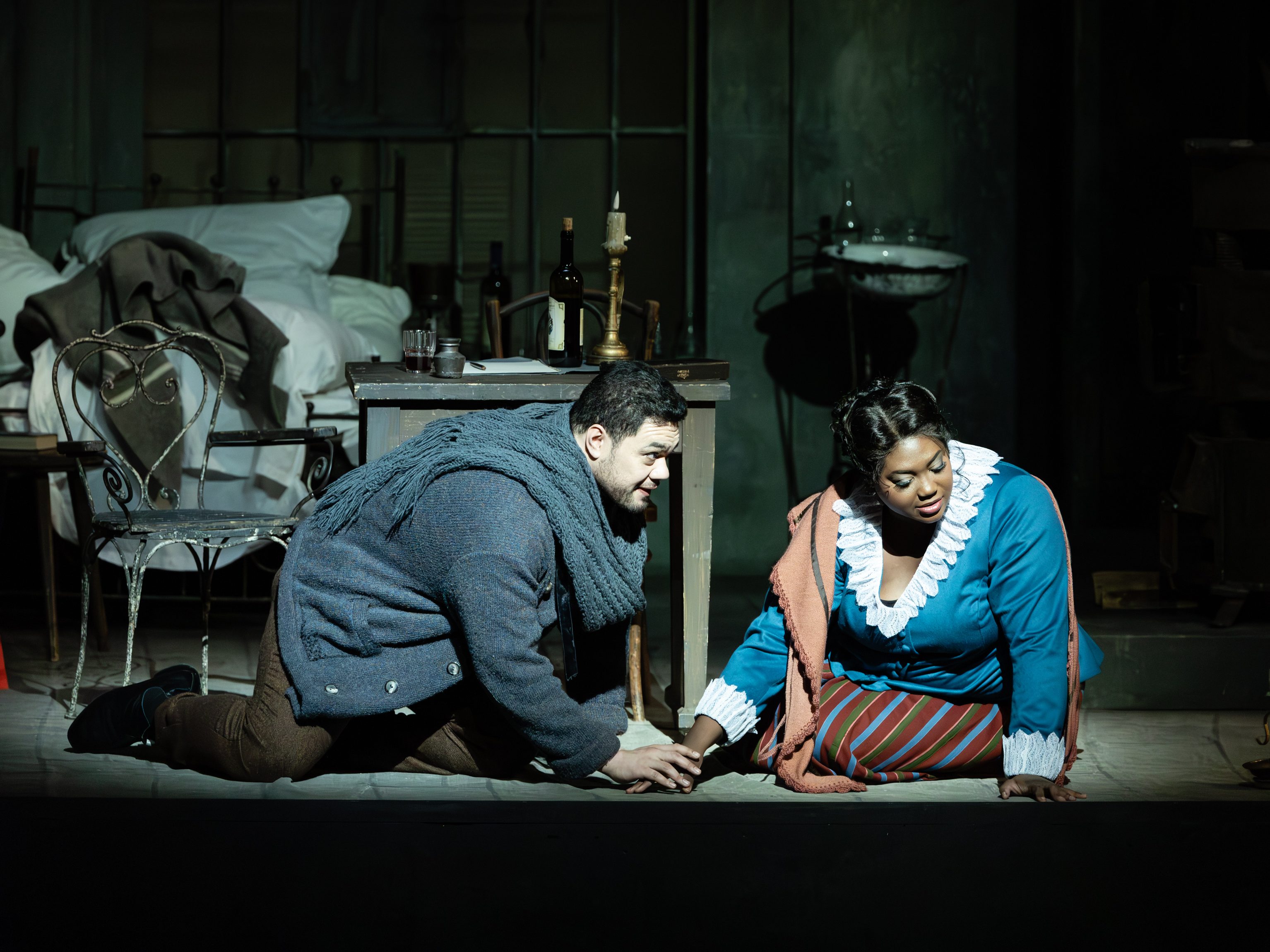
The final scene, with Mimi lying lifeless in bed, is incredibly moving. If I’m being honest, I don’t often get deeply emotional from what’s happening on stage. I mean, I didn’t exactly burst into tears tonight or anything, but the phenomenal acting from all of the singers and the sound from the orchestra pit were undeniably compelling. And Pati’s cry for Mimi? It practically sliced through the air, tugging at some of the audience’s tear ducts in the process.
Overall, Carlo Rizzi does a fantastic job leading the music, creating an excellent balance between the orchestra and the singers. He brings out strong, driving lines in the music and highlights the solos from the instrumentalists beautifully.
The opera is just shy of two hours, and tonight, time flew by so quickly that it felt like I’d barely settled in before the last note had already rung out. I was entertained from the first note to the very last. I didn’t even have time to wonder if I’d accidentally forgotten to leave my phone on silent or if my plants were judging me for forgetting to water them—totally wrapped up in the moment! Enjoying everything that the Bayerische Staatsoper had to offer!
Fun Fact:
La Bohème was originally meant to have five acts, including an extra party scene where Mimì met the Viscount—aka Rodolfo’s perfect jealousy trigger—but Puccini scrapped it, keeping the drama lean and mean.
Trailer (ish):
Cast:
- Conductоr: Carlo Rizzi
- Directоr: Otto Schenk
- Stаge and Сostume Designer: Rudolf Heinrich
- Сhoir: Franz Obermair
- Mimì: Angel Blue
- Musetta: Andrea Carroll
- Rodolfo: Pene Pati
- Marcello: Mattia Olivieri
- Schaunard: Andrew Hamilton
- Colline: William Thomas
- Parpignol: Samuel Stopford
- Benoît: Christian Rieger
- Alcindoro: Martin Snell
- Ein Zöllner: Yosif Slavov
- Sergeant der Zollwache: Bruno Khouri
Bayerisches Staatsorchester
Bayerischer Staatsopernchor
Kinderchor der Bayerischen Staatsoper

 Blogfløjten